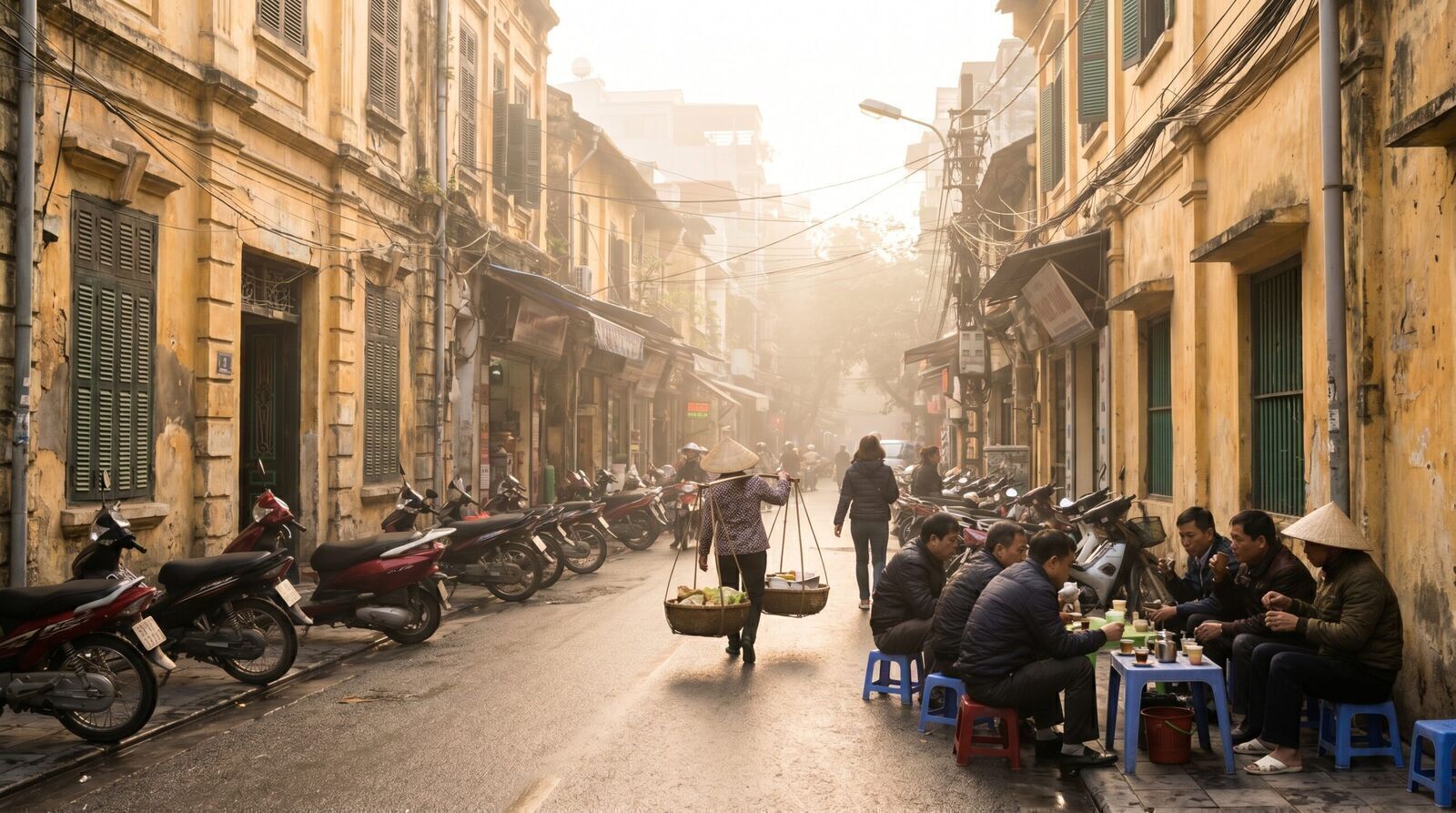
Hanoi does not perform for visitors — it simply continues, as it has for a thousand years, and lets you catch up. That is exactly why fast trips bounce off it: two days gets you traffic and a temple; six days gets you the city — dawn tai chi at the lake, phở rituals, egg-coffee hideouts, the slow theater of Old Quarter life. This is the slow guide to Vietnam’s capital: 5–6 unhurried days.
Where to Stay
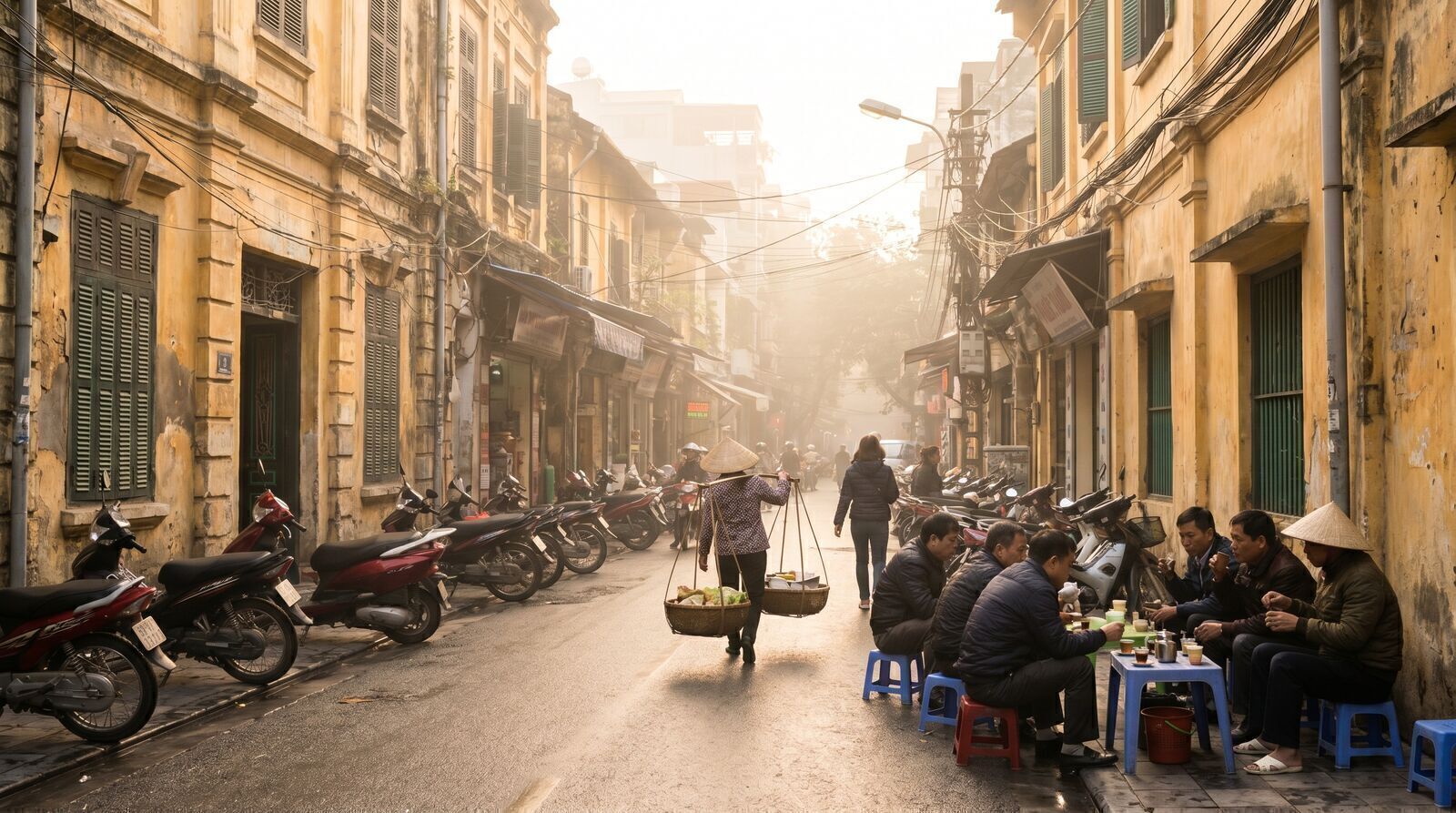
- Old Quarter edges / French Quarter border: walkable to everything, slightly buffered from the 24-hour noise core. The sweet spot for first-timers ($25–60).
- Tay Ho (West Lake): the long-stay favorite — lakeside cafés, expat services, breathing room, 15 minutes from the action (base comparison).
- Skip: hotels directly on beer street unless you are the party.
- Full comparison: our where to stay in Hanoi guide sorts all four zones — prices, noise and the winter heating note.
The Slow Week
- Arrive & walk: evening loop of Hoan Kiem Lake — the city’s living room at its gentlest hour. First phở within two hours of landing (mandatory).
- Old Quarter deep day: 6:30 AM lake tai chi + morning market streets; the 36 guild streets by theme (silk, tin, herbs, paper); egg coffee mid-morning; Heritage House + Bach Ma temple; train street café at the evening timetable slot.
- The grand circuit: Ho Chi Minh complex early (mausoleum queue moves fast; dress modestly), One Pillar Pagoda, Temple of Literature slowly, Fine Arts Museum (underrated), water puppets at dusk — touristy, yes; skip it anyway, no.
- Food pilgrimage day: no sights — bún chả lunch (the Obama-Bourdain combo shop if you like queues, any busy one if you like lunch), bánh cuốn watching the crepe-steamers work, chả cá turmeric fish for dinner, bia hơi corner ($0.40 fresh beer) after.
- Day trip: Ninh Binh (Tam Coc/Trang An river through the karsts — 90 min away) or an overnight Lan Ha Bay cruise. One, not both; slow travel means choosing (the month route explains why).
- The soft landing: Tay Ho lake loop by bicycle, last egg coffee, museum you missed, evening train to the south or flight onward.

Eat This (Hanoi’s Greatest Hits)
- Phở bò — born here; northern-style, minimal garnish, maximal broth. Breakfast, from a shop that sells one thing.
- Bún chả — grilled pork patties in dipping broth with herbs and noodles. Lunch only; sells out for a reason.
- Egg coffee (cà phê trứng) — invented in the 1940s when milk was scarce; find the old-cafe originals up narrow staircases.
- Bánh cuốn, chả cá, bia hơi — the supporting cast that would headline anywhere else.
- The full eating map: dish by dish, with the hours that matter, in our Hanoi food guide.
Surviving (and Loving) the Chaos
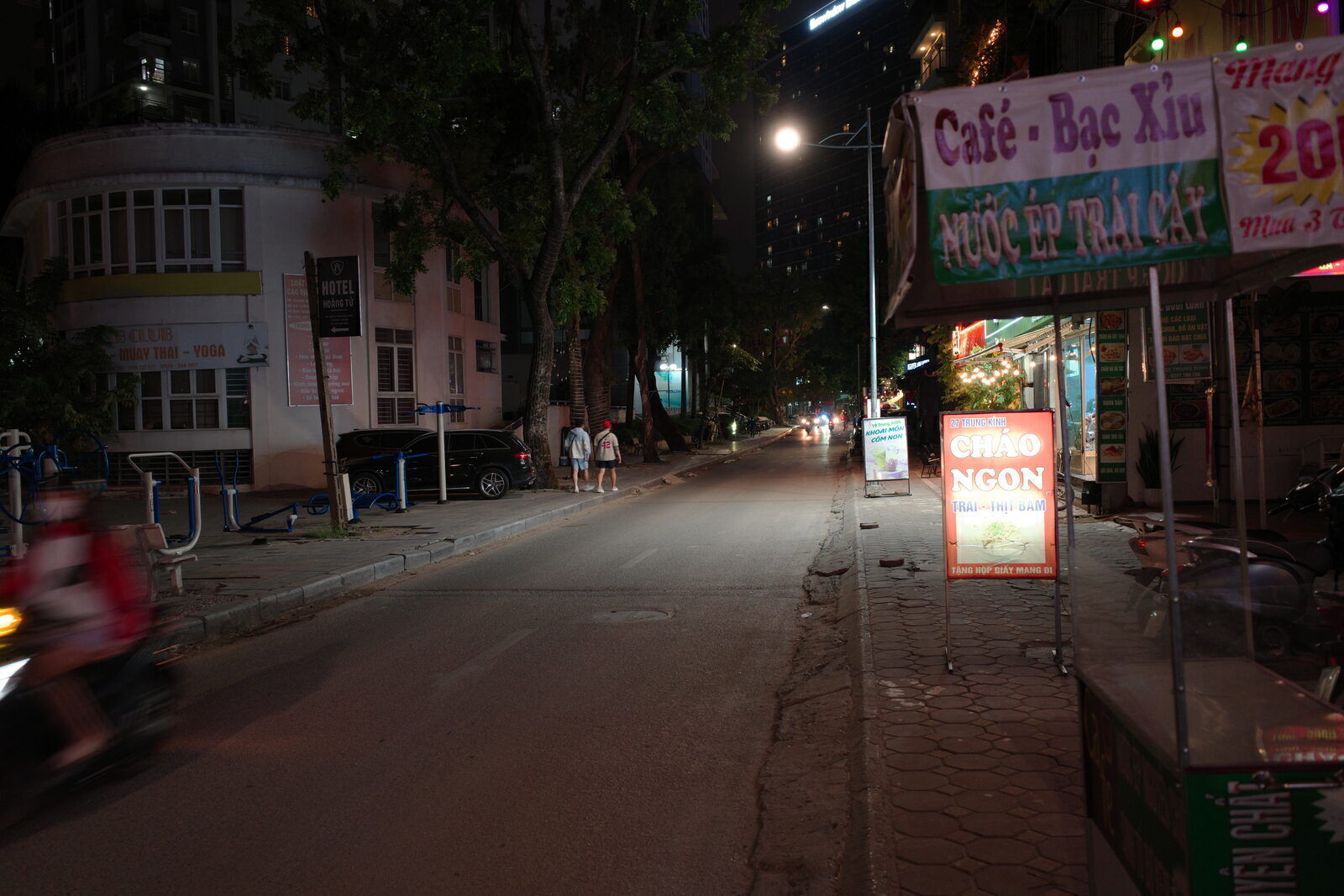
- Crossing streets: walk steady and predictable — the motorbike river flows around you. Hesitation is the only mistake.
- Weather honesty: Oct–Nov and Mar–Apr are gorgeous; Dec–Feb is grey, damp, 12–18°C (pack a real jacket — nobody believes this until they shiver); Jun–Aug is a steam bath.
- Air quality: has bad weeks, especially winter. Sensitive lungs: check the AQI apps, plan café days.
- Scams are minor-league: confirm taxi meters or use Grab, count change at tourist stalls, ignore the shoe-shine hustle. Violent crime is virtually a non-issue.
- Getting around: the Old Quarter is walking city; Grab bikes ($1–2) for everything else. Do not self-drive a scooter here as a first-timer — this is not island riding.
What Should You Not Do in Hanoi?
Don’t schedule Hanoi like a checklist city. The classic mistakes are sleeping through the mornings, eating at big-menu restaurants aimed at tourists, treating coffee as a takeaway, and trying to bolt the city onto two rushed days between flights. Hanoi rewards repetition and punishes hurry — almost every disappointment we hear traces back to one of those four.
The morning one matters most. Hanoi is a dawn city: the lake crowd is stretching at 5:30, the best noodle pots are at their peak before 8, and by late morning the light is flat and the traffic is at full boil. Arrive at the sights at 10 AM every day and you will meet the city at its worst hour, then wonder what everyone raves about.
On food, the reliable filter is simple: the fewer things a place sells, the better it usually is at them. A shop with one dish, low stools and a lunchtime queue of office workers will beat a laminated fifty-item menu every single time. This is the whole logic of traveling Vietnam slowly compressed into a lunch decision.
One calendar warning: if your dates land on Tet (the lunar new year, usually late January or February), expect much of the city — including many food shops — to close for several days. It is a fascinating time to be here, but not the week for a food pilgrimage.
A Day on Hanoi Time
The city runs on a rhythm that has nothing to do with a visitor’s schedule. Sync with it and everything gets easier, cheaper and prettier.
| Time of day | What the city is doing — and your best move |
|---|---|
| 5:30–7 AM | Lake exercise, market deliveries, empty streets — the golden hour for walking and photos |
| 7–9 AM | Noodle-soup prime time — eat breakfast where the locals are standing in line |
| 11:30 AM–1 PM | Lunch rush; the lunch-only kitchens sell out — go early, not late |
| 1–3 PM | The city’s quiet exhale — museums, long coffees, or a nap like everyone else |
| 4–6 PM | Streets refill, lake loop turns social — best hour for aimless wandering |
| 6–9 PM | Dinner, fresh-beer corners, night streets — then the Old Quarter winds down surprisingly early |
Notice what is missing: late nights. Hanoi is not a late city outside a few tourist blocks, and that early-to-bed rhythm is precisely what makes the 6 AM city so alive.
How Much Does a Slow Week in Hanoi Cost?
Less than almost any capital you could compare it to. Using the room rates above and street-food pricing, a comfortable slow week runs roughly like this: a good double room in the $25–60 range, meals that rarely pass a few dollars a plate when you eat where the city eats, Grab bike hops at $1–2, and museum entries that feel like rounding errors. Two people traveling this way can live well — genuinely well, not backpacker-well — on a budget that would cover coffee and pastries in a Western capital.
The spending trap is not the food or the rooms; it is friction. Every hurried decision — the hotel-lobby tour desk, the restaurant chosen out of tiredness, the taxi flagged without checking — costs double what the unhurried version does. Slow is not just the pleasant way to do Hanoi; it is the cheap way. And if the week tempts you into something longer, Vietnam makes staying on straightforward — see our note on extending your visa before your dates get tight.
FAQ
Hanoi or Saigon — which deserves my time?
Both, ideally; Hanoi if forced — more history per block, better street food case, and the north’s day trips. Saigon wins on energy and nightlife.
Is 3 days enough?
For the monuments, yes. For the reason people love Hanoi, no — the city reveals itself in mornings four, five and six. If three days is what you have, spend them well: our 3 day Hanoi itinerary is the hour-by-hour version.
Is it good for a longer base?
The cheapest quality month in Vietnam and the deepest — if you can live without a beach (monthly costs). Tay Ho is the neighborhood.
Ha Long Bay from Hanoi — worth it?
The bay is spectacular; the day-trip version is mostly bus. Do the overnight cruise (Lan Ha side is quieter) or trade it for Ninh Binh‘s rivers, which cost half and charm double.
Bottom Line
Give Hanoi six days and your mornings. Eat where the menu is one dish, drink coffee up hidden staircases, choose one karst day trip, and let the Old Quarter’s chaos become choreography. It is the least relaxing stop in Vietnam — and, given time, the one travelers miss most. Then fly south and let an island put you back together.
Some links in this guide are affiliate links: if you book through them we may earn a small commission at no extra cost to you. It helps keep our guides honest and free.
Get our free Phu Quoc Trip Kit — the pre-departure checklist, a 5-day plan and our honest booking picks. No spam; at most one email a month.
By subscribing you agree to our privacy policy. Unsubscribe anytime.