
Vietnam is 1,700 kilometers tall and maybe 50 wide in places, and that shape decides how you should move through it. The honest answer: fly the long jumps, take a limousine van for the 2–4 hour hops, ride the train once for the coast between Hue and Da Nang, and let Grab handle everything inside the cities. Do that and transport becomes the cheapest, least stressful part of the trip. Try to do the whole country by bus and the country starts doing you.
Short version: two domestic flights ($30–80 each, booked ahead) carry a two-week trip; vans cost $10–20 door to door; a train seat over the Hai Van Pass is under $10; a Grab bike across a city is about a dollar. The details, the traps and the one sleeper-bus rule are below.
The Distance Problem
Maps flatten Vietnam into something that looks drivable. It is not, at least not on a holiday. Hanoi to Saigon by road is 30-plus hours of actual driving, and the Reunification Railway takes 33–36 hours end to end. So the country behaves like three separate trips — north, center, south — connected by cheap flights, which is why our two-week itinerary is built on the rule “three bases, two flights.” Everything below is about choosing the right tool for each leg rather than one tool for the whole country.
Domestic Flights: the Backbone
Three airlines fly the triangle that matters — Hanoi, Da Nang and Ho Chi Minh City — plus the spokes to Hue, Nha Trang (Cam Ranh), Da Lat and Phu Quoc. Vietnam Airlines is the full-service option with a checked bag included and the most reliable timetable. VietJet is the low-cost carrier: fares from $20–30 when booked early, but add the bag (buy it online, never at the counter), expect evening flights to slip, and treat the last departure of the day as a risk. Bamboo Airways still flies a reduced network and sits somewhere between the two.
Practical rules: book three to six weeks out for the $30–80 band; morning flights are more punctual than evening ones on every carrier; and check which terminal you are leaving from — the big airports split domestic and international, and Ho Chi Minh City opened a new domestic terminal in 2025, so your taxi driver needs the terminal, not just the airport. Allow 90 minutes; domestic security in Vietnam is quick but queues at peak times are not.
The Train: Ride It Once, in the Right Place
The north–south line is the slow, romantic spine of the country and, candidly, most of it is better imagined than ridden. The full Hanoi–Saigon run is a day and a half in a four-berth soft sleeper — fine for rail obsessives, a lost day and a half for everyone else. The trick is to pick the scenic stretches and fly the rest.
| Leg | Time | Why it is worth it |
|---|---|---|
| Hue → Da Nang | 2.5–3 hours | The Hai Van Pass from cliff height — the prettiest hour of track in Southeast Asia. Under $10 in a soft seat; sit on the left heading south, the right heading north |
| Hanoi → Ninh Binh | 2–2.5 hours | Cheap, painless, arrives in town — a good alternative to the van for Ninh Binh |
| Hanoi → Lao Cai (overnight) | ~8 hours + 1h shuttle | The civilized way to reach Sapa: sleep flat, wake up at the mountains |
| Da Nang → Nha Trang or Nha Trang → Saigon (overnight) | 8–10 hours | A sleeper berth that replaces a hotel night and a night bus at once |
Berths book out on weekends and holidays, so reserve a few days ahead: the Vietnam Railways site sells direct (it works, with patience), and agents such as Baolau and 12Go add a small fee for a smoother checkout and e-tickets. Soft sleeper beats hard sleeper for anyone over 175 cm; the lower berths sell first.
Buses and Limousine Vans: Know the Difference
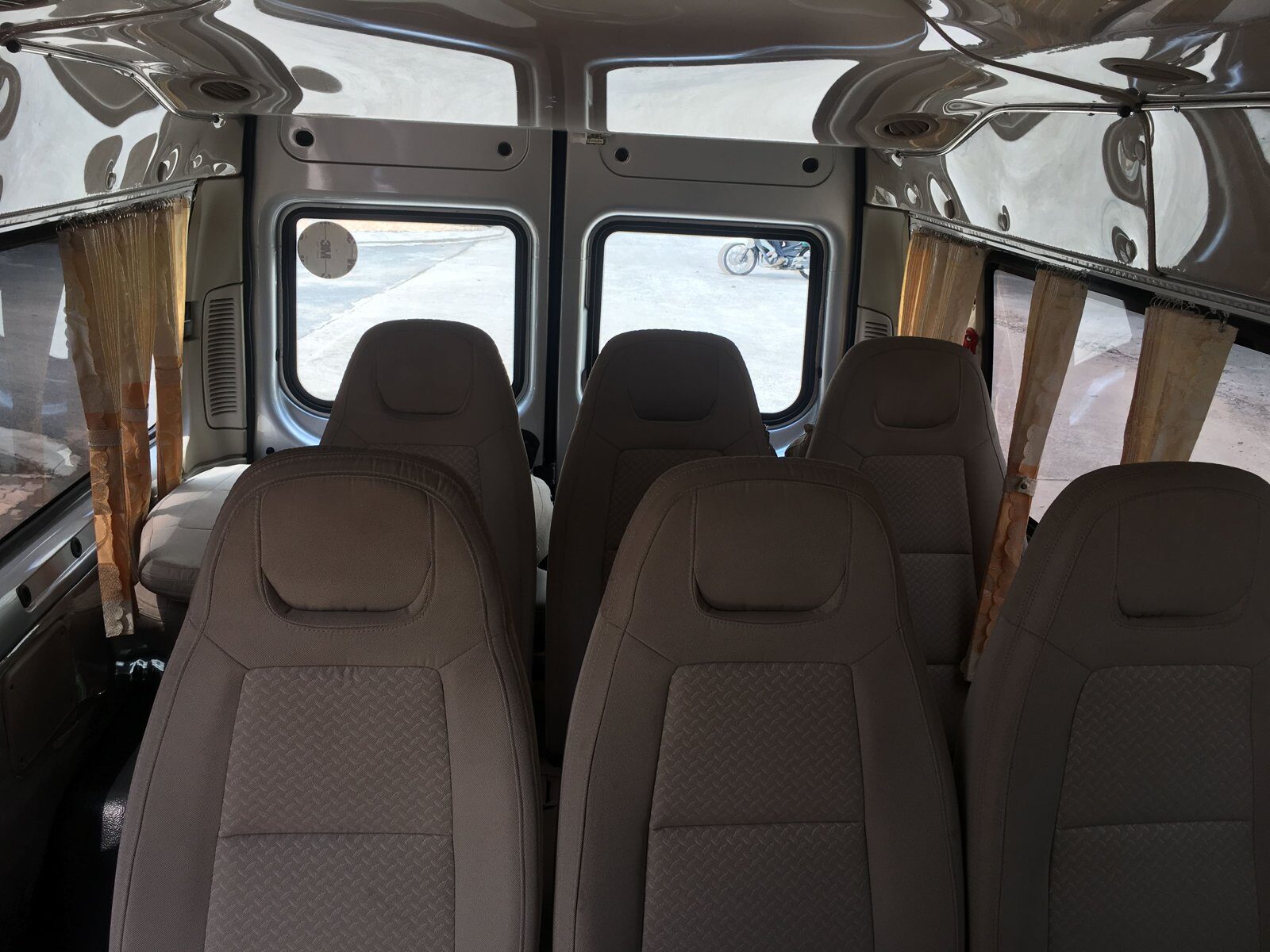
Two very different things hide under the word “bus.” The limousine van is a 9–16 seat van with wide reclining seats, hotel pickup, Wi-Fi and a timetable every hour or two on popular corridors; it costs $10–20 and it is the correct answer for Hanoi–Ninh Binh, Hanoi–Ha Long, Hanoi–Sapa, Saigon–Mui Ne and Saigon–Can Tho. Book through your hotel or online the day before; on the morning runs you will be picked up at the door.
The sleeper bus is the long-distance coach with three rows of reclining bunks (Futa/Phuong Trang’s orange fleet in the south, Sinh Tourist and a dozen others on the open-bus route). It is the cheapest way to cover real distance — $10–25 for 8–12 hours — and it comes with honest caveats: bunks are built for Vietnamese heights, the driving is brisk, and overnight services land you in a new city at 4 or 5 a.m. with nowhere open. Use it when the budget demands; then apply the one rule below.
The one rule: never chain a night bus into a big activity the same morning. Arriving at dawn and starting the Ha Giang loop, a trek, or a cruise on no sleep is the most common way we see people ruin the best part of their trip. Buffer one soft morning, or pay the $30 to fly.
Inside the Cities: Grab, Xanh SM and the Metro
Grab is the default and it works from the airport curb if you have an eSIM installed before landing. GrabBike is the city at its cheapest — a 10-minute ride is roughly a dollar — and GrabCar for luggage or rain. Eight real GrabCar receipts with the per-kilometre maths are in our Hanoi prices snapshot. The fare is fixed in the app, so the classic meter games disappear; the only trick is the airport pickup zones, which are signed and a short walk. Xanh SM, the green electric taxi and bike service, is a good second app with clean cars and polite fixed pricing. Old-school metered taxis are fine if they are Mai Linh or Vinasun — two names worth remembering.
Both big cities now have a metro worth using: Hanoi’s elevated lines, and Ho Chi Minh City’s Line 1 from Ben Thanh out to Thao Dien and beyond, which quietly changed the math on where to stay in Saigon. And walking is underrated in every old quarter — the crossing technique is the same everywhere: steady pace, no sudden moves, let the motorbikes flow around you.
Motorbikes, Private Cars and Ferries
Renting a motorbike ($5–10 a day) is glorious in the countryside and a bad idea in Hanoi or Saigon traffic for a first-timer. The legal reality: you need an International Driving Permit under the 1968 convention with a motorcycle category; without it you are uninsured, and that matters most on the Ha Giang loop and the Hai Van Pass. Easy-rider tours and private cars with driver ($50–90 a day, or about $60–80 for the Hue–Hoi An crossing with stops) exist precisely for that gap. Islands run on ferries: Cat Ba and Phu Quoc have fast boats and car ferries from the mainland, both weather-dependent in the wet months.
Which Mode for Which Leg
| Leg | Best choice | Time / cost |
|---|---|---|
| Hanoi → Ha Long / Cat Ba | Limousine van (or cruise transfer) | 2.5–3 h / $10–20 |
| Hanoi → Ninh Binh | Van or train | 2–2.5 h / $8–15 |
| Hanoi → Sapa | Van (fast) or night train (comfortable) | 5–6 h / $15–20 · 8 h + shuttle / $30–45 |
| Hanoi → Hue / Da Nang | Fly | 1 h 15 / $30–70 |
| Hue → Da Nang / Hoi An | Train over the Hai Van Pass, or car with stops | 2.5–3 h / under $10 · 3–4 h / $60–80 per car |
| Da Nang → Nha Trang | Overnight train | 9–10 h / $20–35 berth |
| Saigon → Mui Ne / Da Lat | Limousine van or sleeper bus | 4–6 h / $10–20 |
| Saigon → Can Tho (Mekong) | Van or bus | 3–4 h / $8–12 |
| Saigon → Phu Quoc | Fly | 1 h / $30–60 |
For the shape of a whole trip, those legs plug straight into the one-week, ten-day and two-week routes — and into the slower month-long version in our slow-travel guide, where the van-and-train combination really earns its keep.
Booking and Paying
Flights: book direct with the airline or through a major OTA, in the local currency where possible. Trains and buses: Baolau and 12Go cover most routes with e-tickets; hotels will book vans for a small markup that is usually worth it for the door pickup. Private transfers and the Hai Van Pass by car or jeep are easiest to compare on Klook, with free cancellation on most listings. Carry small dong notes for station counters and GrabBike drivers — the card-versus-cash picture is in our money guide.
Compare Transfers & Hai Van Pass Rides on Klook →
Three Mistakes That Cost the Most
Chaining overnight buses to “save hotel nights” — you save $15 and lose two days to fatigue; fly one leg instead. Booking the last VietJet flight of the day before something you cannot miss (a cruise, an international connection) — take the morning one. Treating the Hai Van Pass as a transfer — it is the best hour of transport in the country; take the train or a car with stops, not the tunnel express.
FAQ
What is the best way to get around Vietnam?
Combine modes by distance: domestic flights for the north–center–south jumps, limousine vans for 2–4 hour hops, the train for the Hue–Da Nang coast and overnight legs, and Grab inside cities. No single mode suits the whole country.
Is the train in Vietnam worth it?
For specific stretches, absolutely — Hue to Da Nang over the Hai Van Pass is one of the great short rail rides anywhere, and overnight sleepers replace a hotel night comfortably. The full 33-hour Hanoi–Saigon run is for enthusiasts only.
Are sleeper buses safe in Vietnam?
They are widely used and generally fine with the larger operators, though the driving is fast and the bunks are short. The real risk is fatigue: arriving at dawn and starting a big activity without sleep. Buffer a morning, or fly the long legs.
Does Grab work in Vietnam?
Yes, in every city and most towns. Install it and an eSIM before you land, pay in cash or with a card added to the app, and use GrabBike for short solo rides and GrabCar with luggage. Xanh SM is a good alternative.
Do I need to rent a car in Vietnam?
No — self-drive car rental is rare and impractical for visitors. Hire a car with a driver by the day ($50–90) when you want one, and rely on vans, trains, flights and Grab the rest of the time.
Some links in this guide are affiliate links: if you book through them we may earn a small commission at no extra cost to you. It helps keep our guides honest and free.
Get our free Phu Quoc Trip Kit — the pre-departure checklist, a 5-day plan and our honest booking picks. No spam; at most one email a month.
By subscribing you agree to our privacy policy. Unsubscribe anytime.