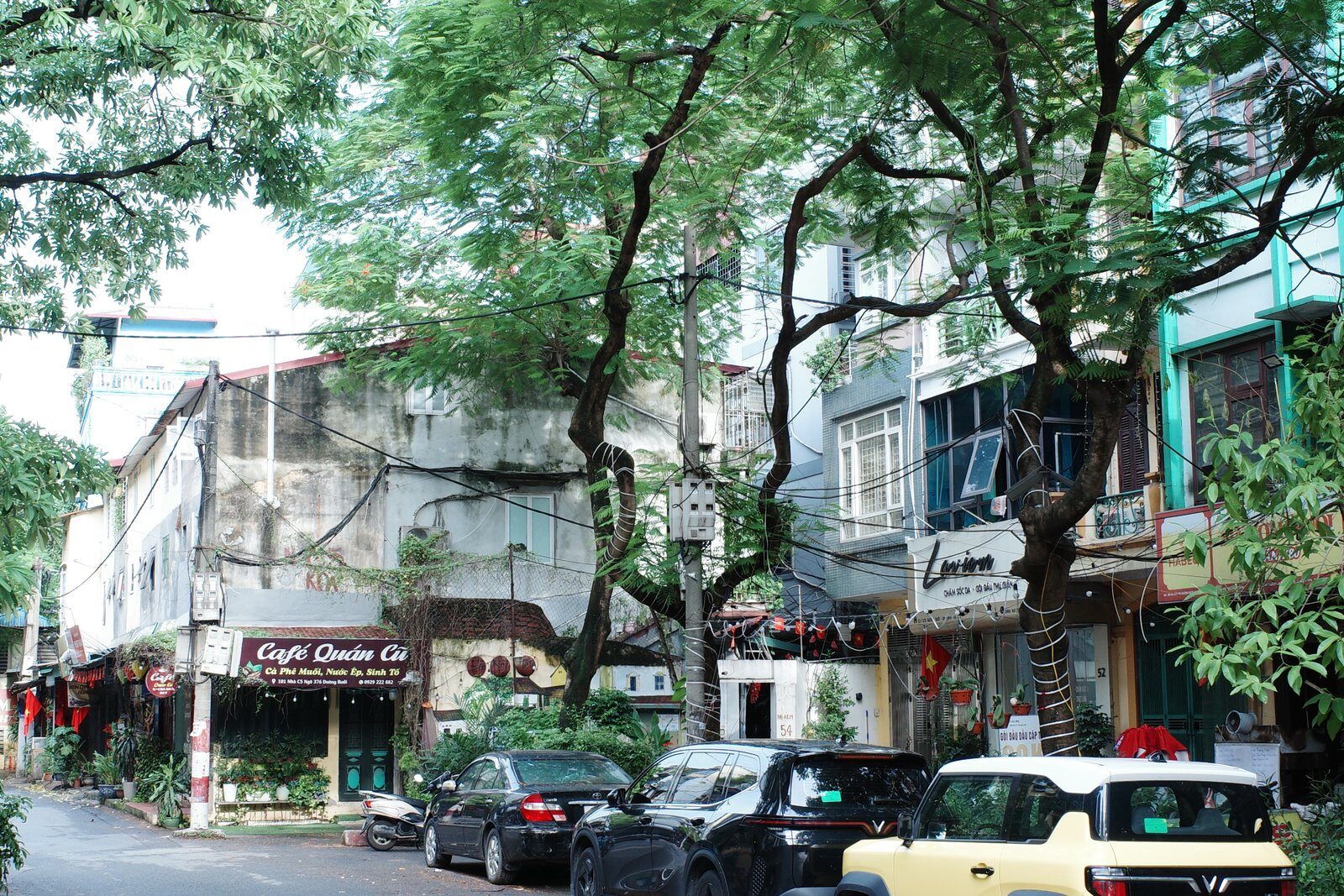
Here is what Hanoi actually costs in September 2026, from receipts and price tags rather than estimates: a GrabCar ride runs about 13,000–16,000₫ per kilometre on short city hops (my last eight rides, 1.25 to 7.24 km, cost 42,000–100,000₫ each), Vietnamese vegetables at a supermarket are roughly a dollar an item, and anything imported — beef, Korean groceries, cooking oil in bulk — costs close to what it does in Seoul or Sydney. I am writing this from Hanoi, where I have been since August. The prices below are the ones I paid or photographed, with dates, converted at the September 8 Vietcombank rate of about 26,100₫ to the US dollar.
Short version: budget 60,000–100,000₫ ($2.30–3.85) per Grab ride inside the city, 250,000–400,000₫ ($10–15) for a week of vegetables if you cook, and expect a Tet-style shock only in the imported aisle. Cash is still king at markets; Grab and supermarkets take cards. Our money guide covers how to carry it.
How I Collected These Numbers
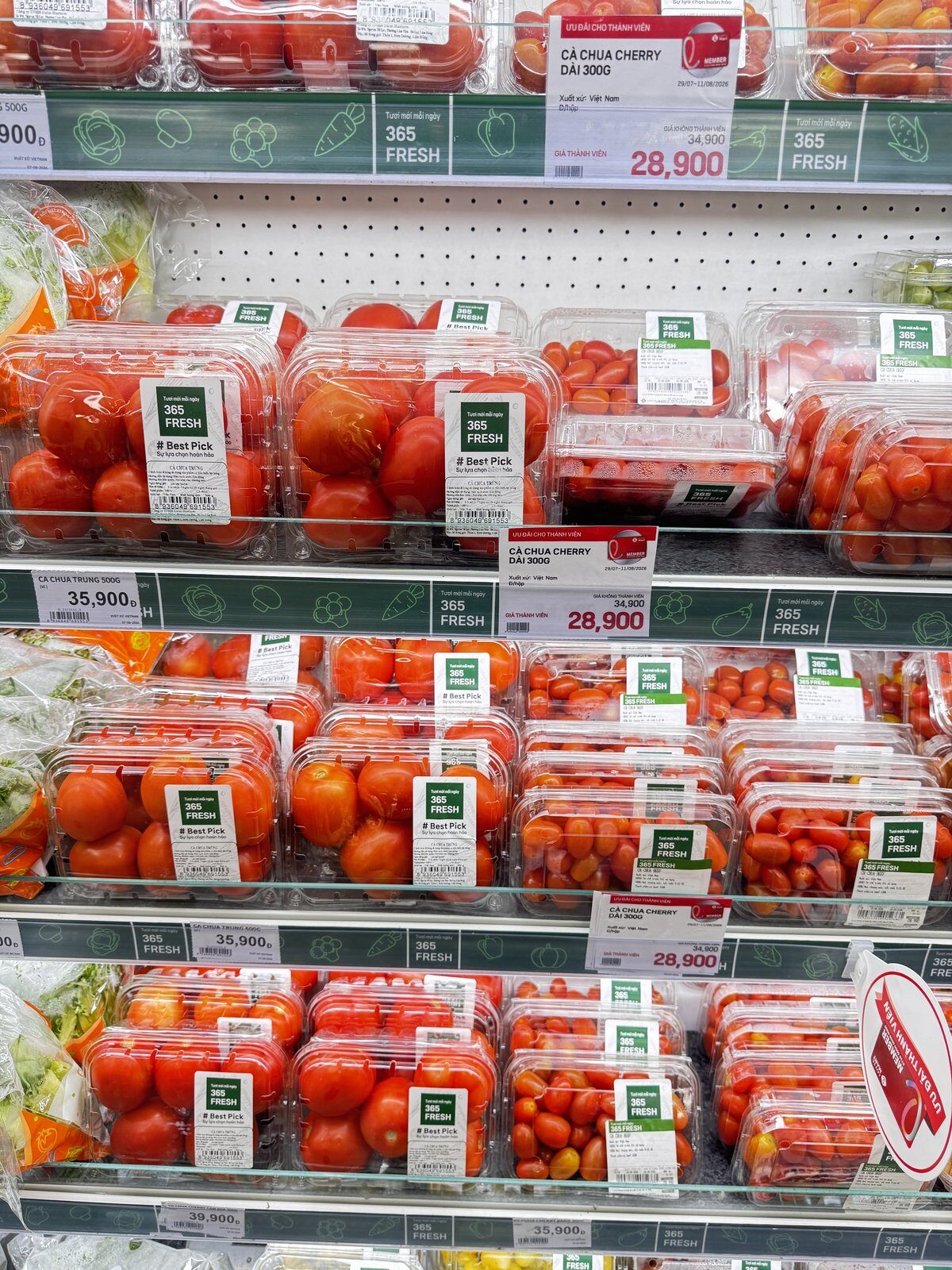
Two sources, both mine. The transport figures are eight GrabCar receipts from September 5–7, 2026, with the distance and duration Grab prints on every e-receipt, so the per-kilometre maths is exact. The grocery figures are 71 photographs of price tags I took on August 10, 2026 at a Korean-run supermarket chain in western Hanoi, where my family shops — the kind of place with clean packaging, VietGAP stickers and prices about 20–40 percent above a wet market. I chose it precisely because the tags are printed and photographable; a market stall gives you a number, a tag gives you evidence. Vietnamese chains such as WinMart and Co.opmart sit somewhere between the two.
Grab Fares in Hanoi, September 2026: Eight Real Rides
All eight were GrabCar Plus, the four-seat tier one step above standard GrabCar, booked in the app and paid by card. Promotions were applied automatically by the app; I did nothing to earn them.
| Date, time | Distance | Duration | Fare | Promo | Paid | Per km |
|---|---|---|---|---|---|---|
| Sept 5, 3:14 pm | 7.24 km | 23 min | 99,000₫ | — | 99,000₫ ($3.80) | 13,700₫ |
| Sept 5, 8:13 pm | 1.25 km | 6 min | 46,000₫ | −4,000₫ | 42,000₫ ($1.60) | 36,800₫* |
| Sept 5, 10:11 pm | 4.67 km | 14 min | 90,000₫ | −9,000₫ | 81,000₫ ($3.10) | 19,300₫ |
| Sept 6, 12:45 am | 6.18 km | 11 min | 100,000₫ | — | 100,000₫ ($3.85) | 16,200₫ |
| Sept 6, 3:05 am | 1.88 km | 4 min | 59,000₫ | — | 59,000₫ ($2.25) | 31,400₫* |
| Sept 6, 11:51 am | 4.39 km | 17 min | 62,000₫ | −6,000₫ | 56,000₫ ($2.15) | 14,100₫ |
| Sept 6, 4:29 pm | 6.24 km | 25 min | 86,000₫ | −8,000₫ | 78,000₫ ($3.00) | 13,800₫ |
| Sept 6, 6:36 pm | 3.89 km | 11 min | 56,000₫ | — | 56,000₫ ($2.15) | 14,400₫ |
* Minimum-fare effect: anything under about 2 km costs 45,000–60,000₫ regardless of distance.
Three things the table shows that no fare calculator does. First, daytime rides settle at 13,000–14,500₫ per kilometre once you are past the minimum fare, which makes a 5 km hop across the city about 70,000₫ ($2.70). Second, late night costs more: the 12:45 am and 10 pm rides ran 16,000–19,000₫ per kilometre, and the 3 am ride hit the surge floor. Third, the promos are real but small, 4,000–9,000₫, roughly 10 percent, and they appear on some rides and not others for reasons Grab does not explain. Standard GrabCar is typically 10–15 percent cheaper than the Plus tier I used; GrabBike is closer to 40 percent of the car fare and far faster in Old Quarter traffic. The wider mechanics of Grab versus taxis, airport runs and intercity options are in our getting-around guide.
Supermarket Prices in Hanoi, August 2026: The Tags I Photographed
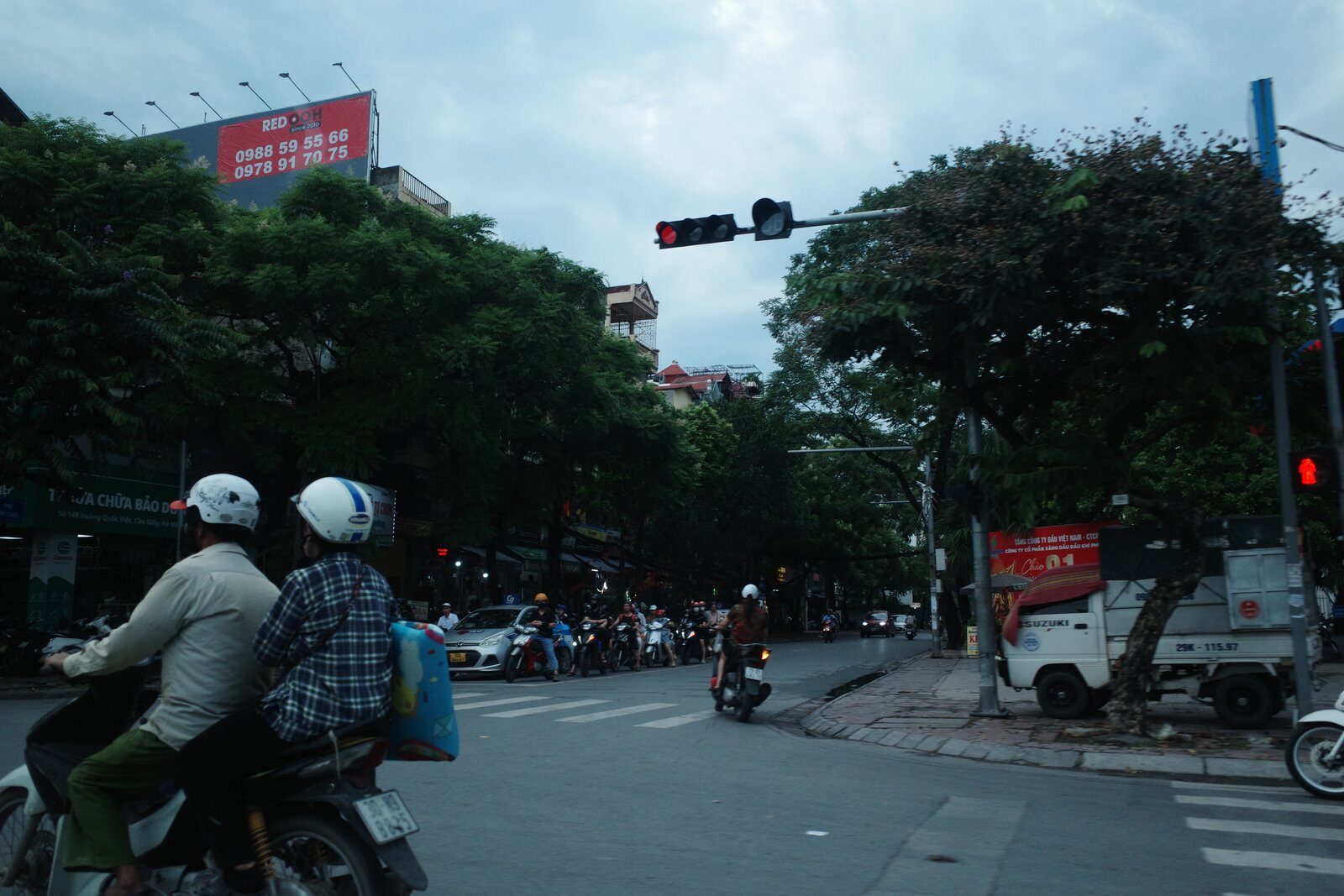
Prices are the shelf price on August 10, 2026, in Vietnamese dong, with dollars at 26,100₫. Where the tag showed a members-only price I list the standard one. Weights are as printed on the tag.
Vegetables (Vietnamese-grown)
| Item | Size | Price | USD |
|---|---|---|---|
| Lettuce, leaf (rau xà lách) | 1 pack | 9,900₫ | $0.38 |
| Sweet leaf greens (rau ngót) | 1 bunch | 15,900₫ | $0.61 |
| Mustard greens (cải bẹ xanh) | 300 g | 19,900₫ | $0.76 |
| Malabar spinach (mồng tơi) | 1 pack | 20,900–22,900₫ | $0.80–0.88 |
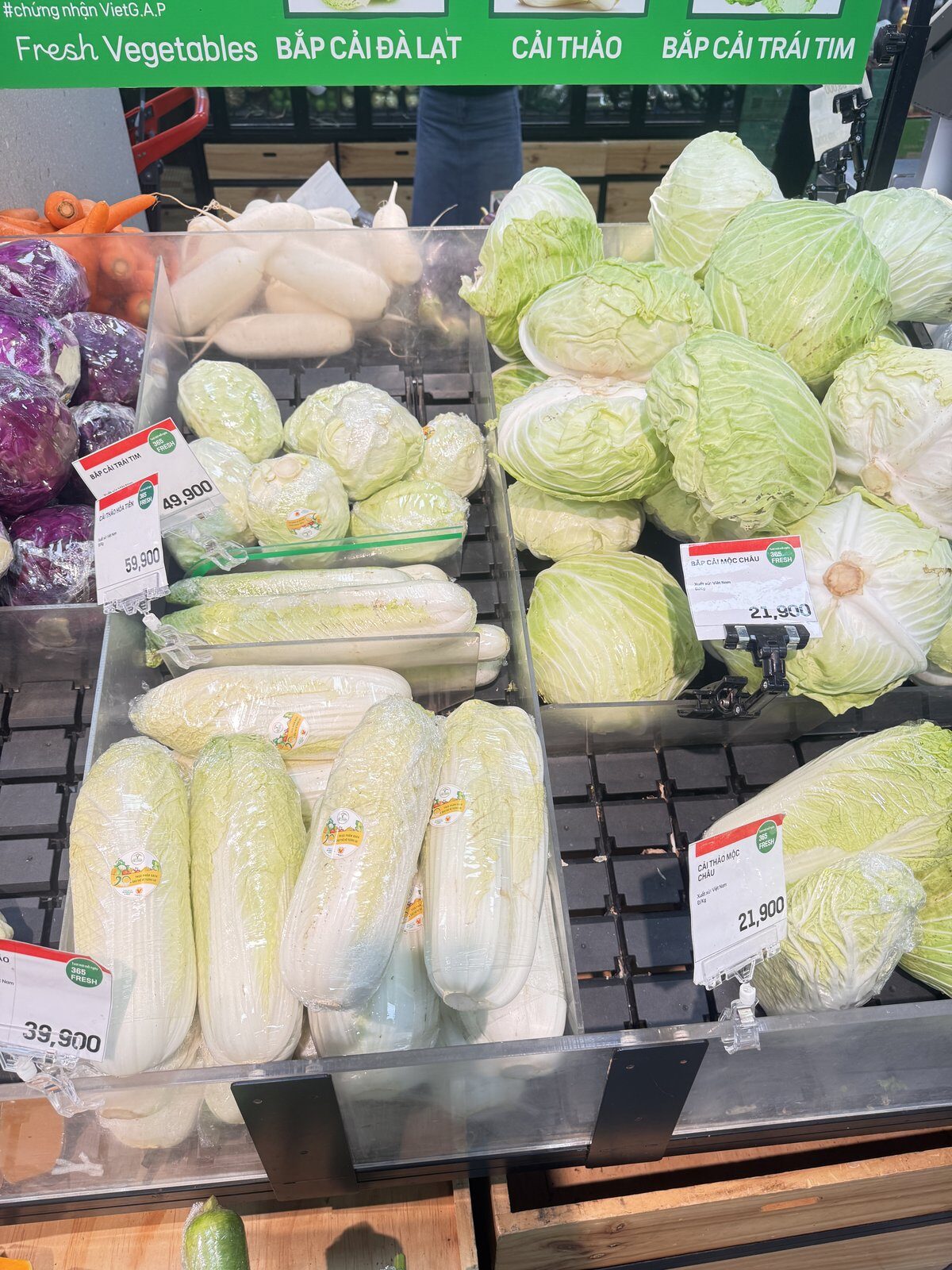
| Da Lat cabbage | 1 head | 21,900₫ | $0.84 |
| Cherry tomatoes | 300 g | 28,900₫ | $1.11 |
| White radish (củ cải trắng) | 1 pack | 29,500₫ | $1.13 |
| Enoki mushrooms | 1 pack | 31,900–36,900₫ | $1.22–1.41 |
| Ly Son shallots | 300 g | 33,500₫ | $1.28 |
| Carrots | 500 g | 34,900₫ | $1.34 |
| Tomatoes (cà chua) | 500 g | 35,900₫ | $1.38 |
| Chinese cabbage (cải thảo) | 1 head | 39,900₫ | $1.53 |
| Broccoli | 1 head | 76,900₫ | $2.95 |
| Cauliflower | 1 head | 92,900₫ | $3.56 |
The pattern is simple: anything that grows in the Red River delta or in Da Lat costs a dollar or less; anything that has to be grown in a cool climate and trucked (broccoli, cauliflower) costs three. At a wet market the same leafy greens are 10,000–15,000₫ a bunch, but you are paying for the printed tag and the fridge here, and for a traveler on a short stay that trade is usually worth it.
Meat and seafood
| Item | Size | Price | USD |
|---|---|---|---|
| Fresh octopus | 1 tray | 29,900₫ | $1.15 |
| Clams (Lenger, cleaned) | 1 pack, on promotion | 37,000₫ (was 45,000₫) | $1.42 |
| Chicken feet (CP, VietGAP) | 500 g, 30% off | 37,030₫ (was 52,900₫) | $1.42 |
| Clams, larger pack | 1 pack | 76,000₫ | $2.91 |
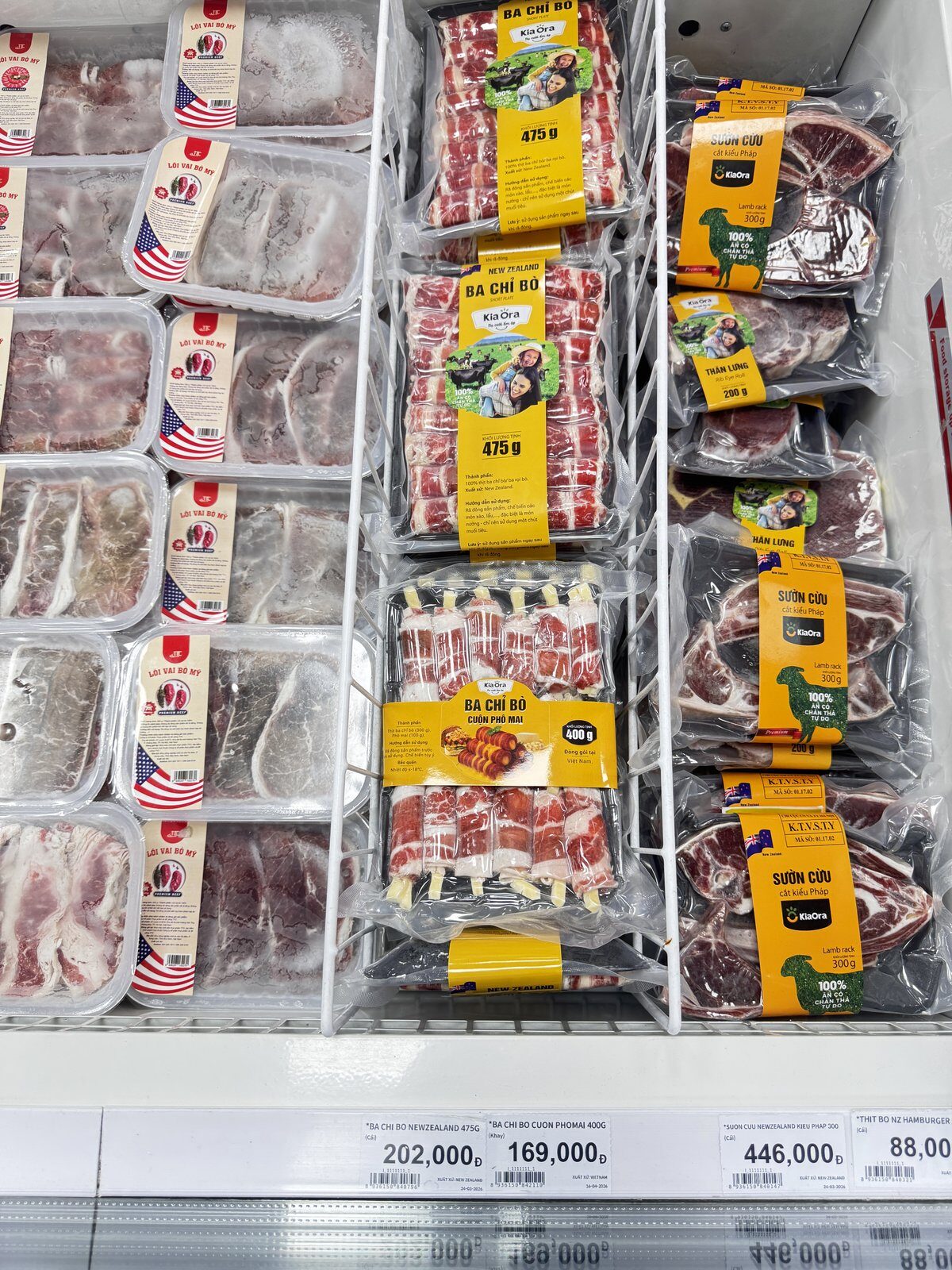
| Beef roll with cheese (imported) | 1 pack | 169,000₫ | $6.48 |
| Beef belly, New Zealand | 475 g | 202,000₫ | $7.74 |
| Lamb ribs (imported) | 1 pack | 446,000₫ | $17.09 |
This is the two-speed economy in one fridge. Local seafood — octopus, clams — is startlingly cheap, and chicken sold whole (Gà Ta CP, the free-range brand) is priced by the bird at around the cost of a café lunch. Cross the aisle to New Zealand beef or Australian lamb and you are paying Seoul prices, because you are buying Seoul’s imports. If you are cooking on a long stay, eat what the city eats.
Pantry and imported groceries
| Item | Size | Price | USD |
|---|---|---|---|
| Korean glass noodles (Ottogi), promotion | 1 pack | 14,500₫ (was 17,900₫) | $0.56 |
| Green-onion kimchi | 1 tub | 31,900₫ | $1.22 |
| Korean rice cakes (Jongga) | 500 g | 59,200₫ | $2.27 |
| Korean rice cakes (Jongga) | 1 kg | 102,800₫ | $3.94 |
| Frozen Korean fish cakes / dumplings | 1 pack | 103,900–131,900₫ | $3.98–5.05 |
| Cooking oil (Neptune Light) | 2 litres | 134,900₫ | $5.17 |
Korean and Japanese imports are 30–60 percent above what they cost in Korea, which is the normal import margin here; oil, rice and noodles from Vietnamese brands are a fraction of that. The lesson for anyone stocking an apartment kitchen — the setup we describe in our one-month Vietnam cost guide — is to buy the staples Vietnamese and treat the imported aisle as the occasional treat it is.
What This Means for a Hanoi Budget
- Getting around: six Grab rides a day inside the centre, the tourist pattern, is 350,000–500,000₫ ($13–19). Walk the Old Quarter and take one long ride a day and it drops to 100,000₫. Where you stay decides this more than anything else.
- Cooking: a week’s vegetables for two, bought at the supermarket, is about 300,000₫ ($11.50); add local chicken and seafood and a two-person kitchen runs 700,000–900,000₫ ($27–35) a week. Add imported beef and it doubles.
- Eating out instead: the same week of street food and cafés costs 1.2–1.8 million₫ per person, which is why so few long-stayers bother with a kitchen. Our Hanoi food guide has the dishes and the going rates.
- The exchange rate helps. The dong has been drifting stronger through September (Vietcombank sold dollars at 26,210₫ on September 8, down from about 26,250₫ a day earlier), so dollar prices creep up by a percent or two; the direction is small, the level is what matters.
Paying for Things in Hanoi Without Getting Stung
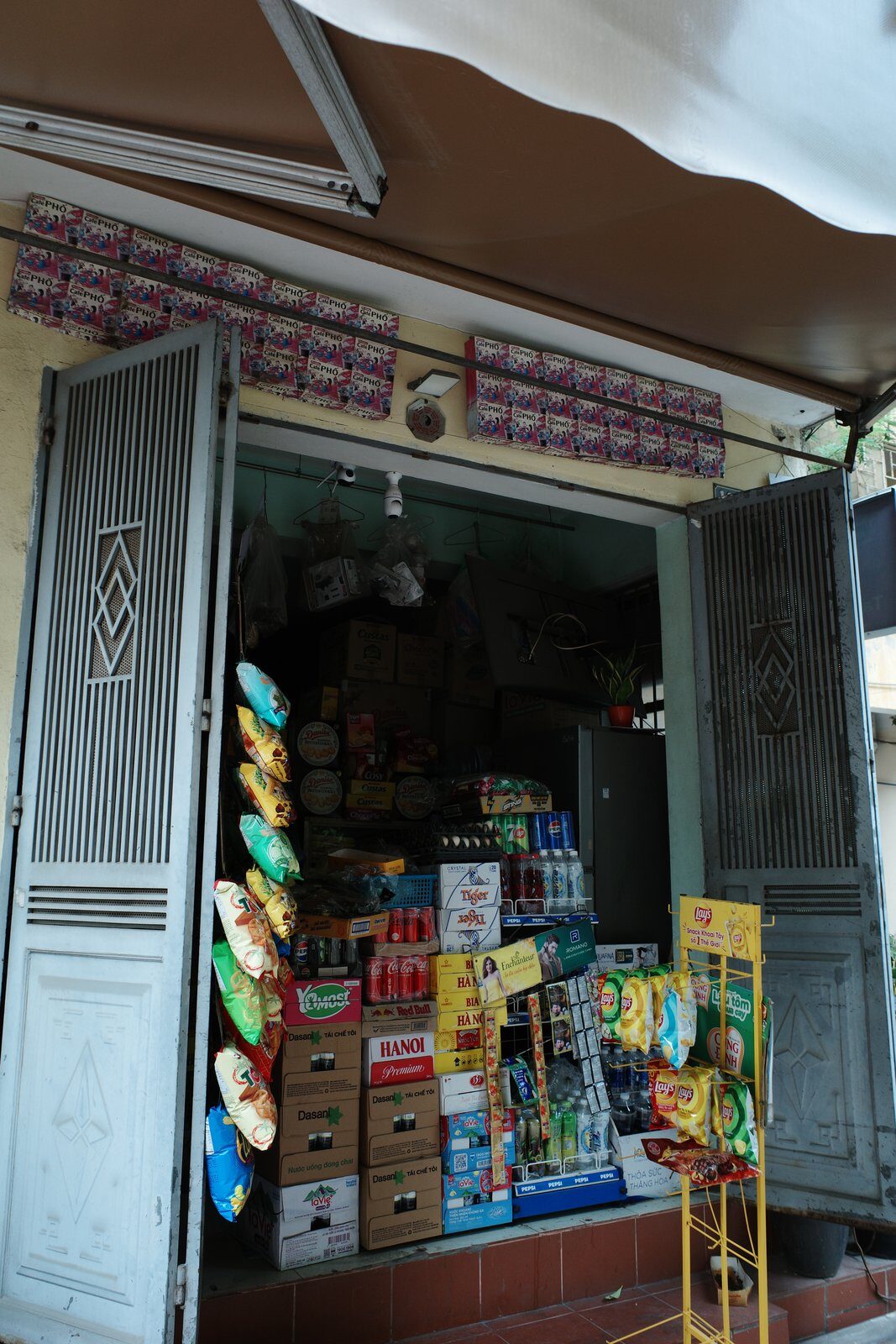
Grab takes international cards inside the app, and every supermarket in this guide took a foreign Visa without a fee. Markets, street food, corner shops and most taxis are cash, and the useful notes are 10,000, 20,000 and 50,000₫; a 500,000₫ note at a noodle stall is a small social problem. Withdraw from bank ATMs with the fee displayed, keep the small notes separate, and read the money guide before your first withdrawal. For a base in the city, comparing Hanoi stays on Agoda alongside our slow guide to Hanoi is the fastest way to see where the Grab money goes.
Hanoi Prices FAQ
Is Hanoi expensive in 2026?
For local goods and transport, no: a city Grab ride is $2–4, local vegetables are under a dollar an item, and street meals are $2–3. For imported food, Western-style restaurants and international-brand hotels, Hanoi is close to regional prices and rising a few percent a year.
How much does Grab cost per kilometre in Hanoi?
From my September 2026 receipts: 13,000–14,500₫ per kilometre by day for GrabCar Plus after a 45,000–60,000₫ minimum, and 16,000–19,000₫ per kilometre late at night. Standard GrabCar is slightly cheaper; GrabBike is much cheaper.
Are supermarkets cheaper than markets in Hanoi?
No. Supermarkets are 20–40 percent dearer for produce but sell it packaged, weighed and priced on a printed tag. Markets win on price; supermarkets win on certainty for a visitor who does not bargain in Vietnamese.
What is the exchange rate in Vietnam right now?
About 26,100₫ per US dollar in the second week of September 2026 (Vietcombank buy 25,830₫, sell 26,210₫ on September 8). Banks and gold shops in the Old Quarter give rates within a percent of that; airports do not.
Do prices go up during holidays?
Yes. Grab surges on National Day (September 2) and around Tet; restaurants add a 10–20 percent surcharge over the Tet holiday; supermarket prices barely move.
Some links in this guide are affiliate links: if you book through them we may earn a small commission at no extra cost to you. Prices were photographed and paid by the author on the dates stated and will drift; treat them as a calibrated snapshot, not a quote.
Get our free Phu Quoc Trip Kit — the pre-departure checklist, a 5-day plan and our honest booking picks. No spam; at most one email a month.
By subscribing you agree to our privacy policy. Unsubscribe anytime.