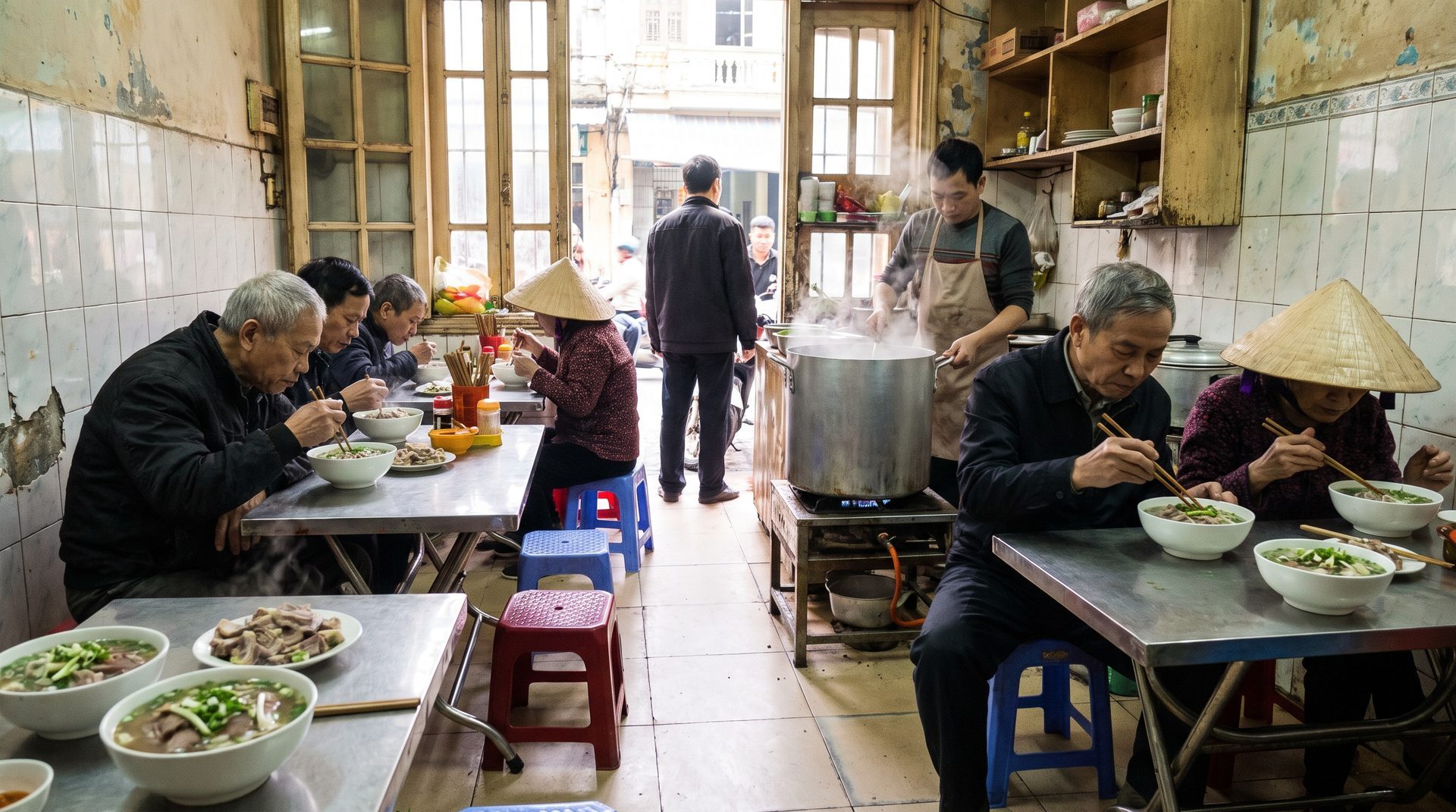
Hanoi is the deepest food city in Vietnam, and it runs on a system most visitors never decode: the specialist shop. A Hanoi kitchen does not have a menu — it has a dish, usually one, often unchanged for two or three generations, served at the hours that dish has always been served and not a minute past. Understand that, and the city becomes the best eating of your life at $2 a plate. Miss it, and you end up in a tourist restaurant ordering everything at once, wondering what the fuss was about. This guide is the decode: the dishes, the prices, and — most importantly — the clock.
Short version: phở for breakfast, bún chả for lunch (it sells out), bánh cuốn in the afternoon lull, chả cá or a street grill for dinner, bia hơi after, egg coffee whenever you need the city to pause. Eat only where one dish is made and the stools are full. The dish-by-dish table with hours and prices is below.
The Three Rules of Eating in Hanoi
Specialists only. The shop that makes one thing has made it ten thousand times; the shop with a laminated photo menu is for people who gave up. The clock matters. Hanoi dishes have hours — phở is a morning ritual, bún chả a lunch that runs out, chả cá a dinner event — and arriving at the wrong hour gets you yesterday’s broth or a closed shutter. Follow the full stools. Plastic-stool turnover is the city’s own hygiene rating and quality score in one; the crowded place is both the safe place and the good place.
The Non-Negotiables
| Dish | What it is | When | Street price |
|---|---|---|---|
| Phở bò | The original — beef, broth, restraint | Morning | 40–60k VND |
| Bún chả | Grilled pork in dipping broth, herbs, noodles | Lunch only | 40–60k |
| Bánh cuốn | Steamed rice crepes, watched being made | Morning–afternoon | 30–40k |
| Chả cá | Turmeric fish sizzled at the table with dill | Dinner | 120–200k |
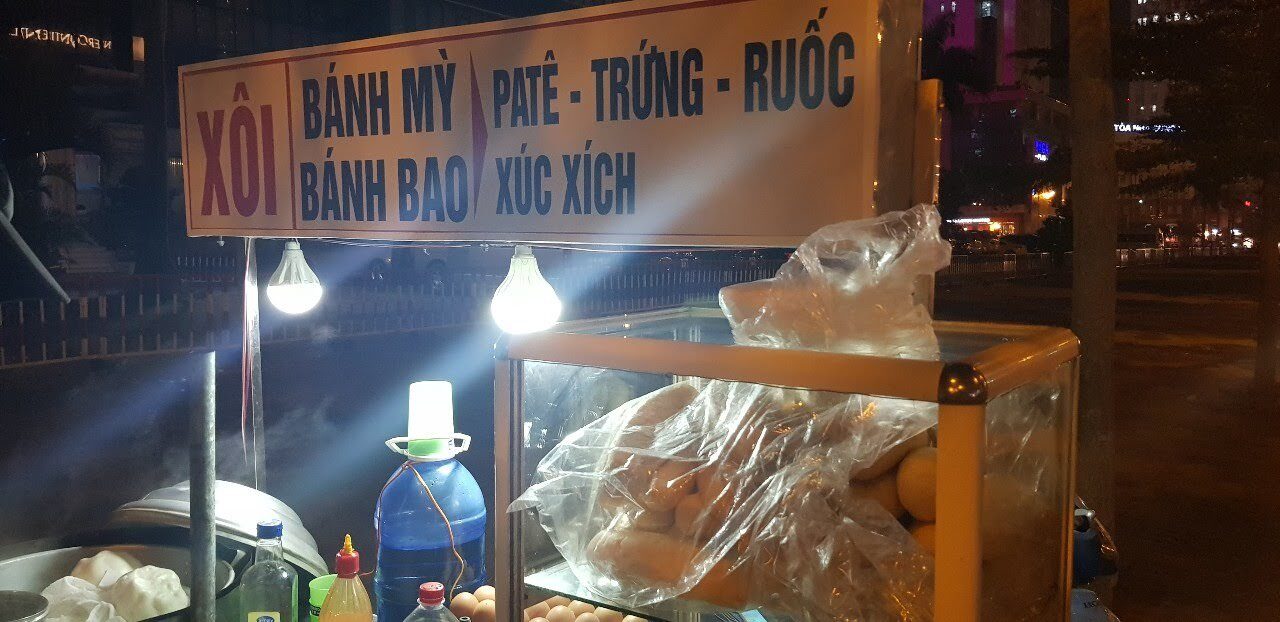
| Bánh mì | The baguette, northern-style and lighter | All day | 20–35k |
| Egg coffee | Whipped yolk over dark coffee | Anytime | 35–50k |
| Bia hơi | Fresh daily beer on a plastic stool | Evening | 10–15k a glass |
The Morning: Phở, Done Properly
Phở was born in Hanoi, and the hometown version surprises people raised on the southern export: no basil hedge, no bean sprouts, no hoisin — just beef, noodles, scallion and a broth that has been justifying itself since before dawn. Order bò chín (brisket) for the classic, tái (rare beef) if you want the drama, and eat it before nine, when the pots are at their best and the shop is full of people for whom this is not an experience but a Tuesday. A proper bowl runs 40–60k; if the menu has photos and ten other dishes, keep walking.
The Lunch: Bún Chả and the Sellout Rule
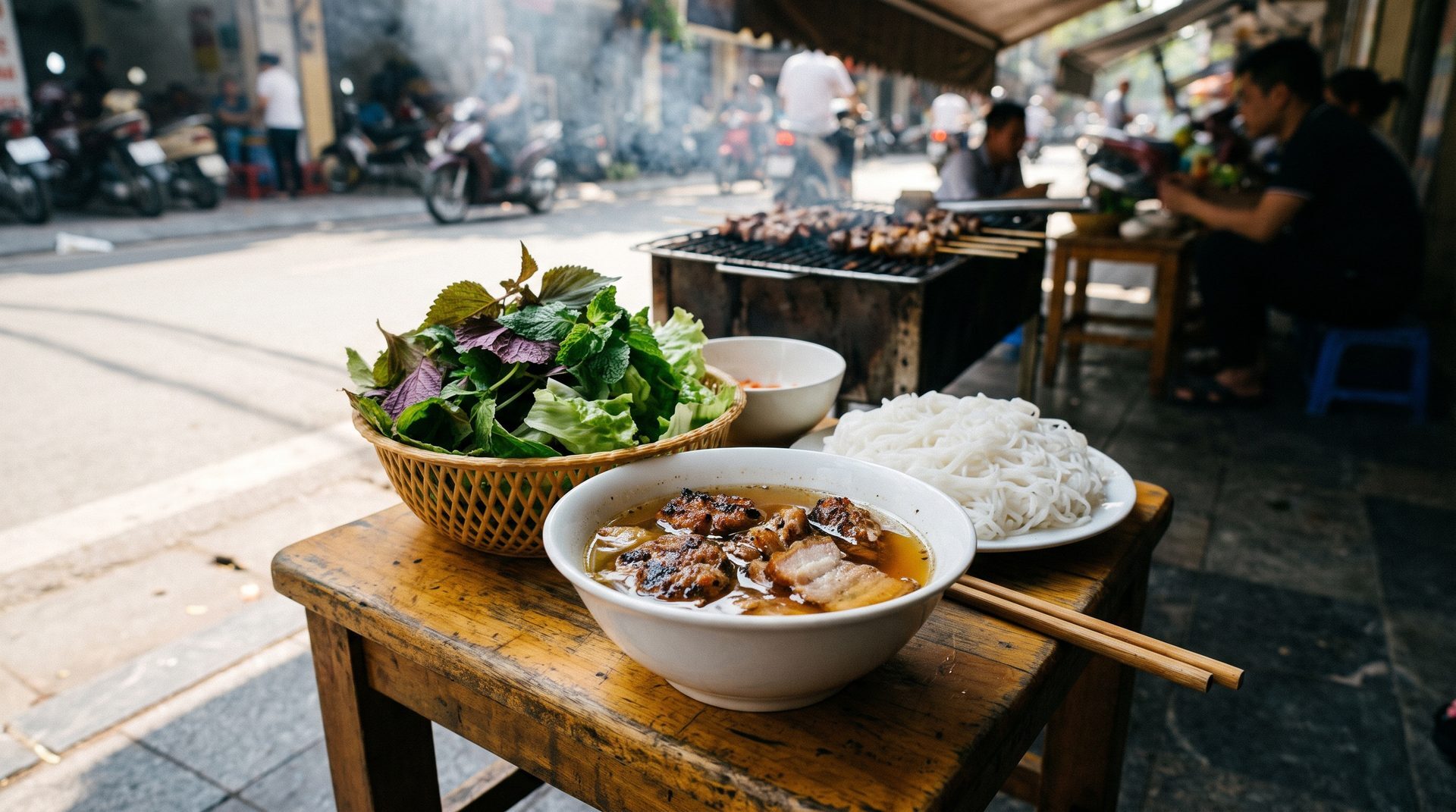
At half past eleven, whole blocks of the Old Quarter start smoking — that is the bún chả charcoal, and it is the city’s official lunch bell. Pork patties and belly slices come off the grill into a bowl of sweet-sour dipping broth; you swish in rice noodles and herbs and assemble each bite yourself. The famous Obama-and-Bourdain shop still queues; the honest secret is that any busy neighborhood version delivers ninety percent of the same lunch with none of the wait. The rule that matters: bún chả is a lunch dish — the good places sell out and close by mid-afternoon, and no correction exists at dinner.
The Evening: Chả Cá, Street Grills and the Bia Hơi Corner
nn
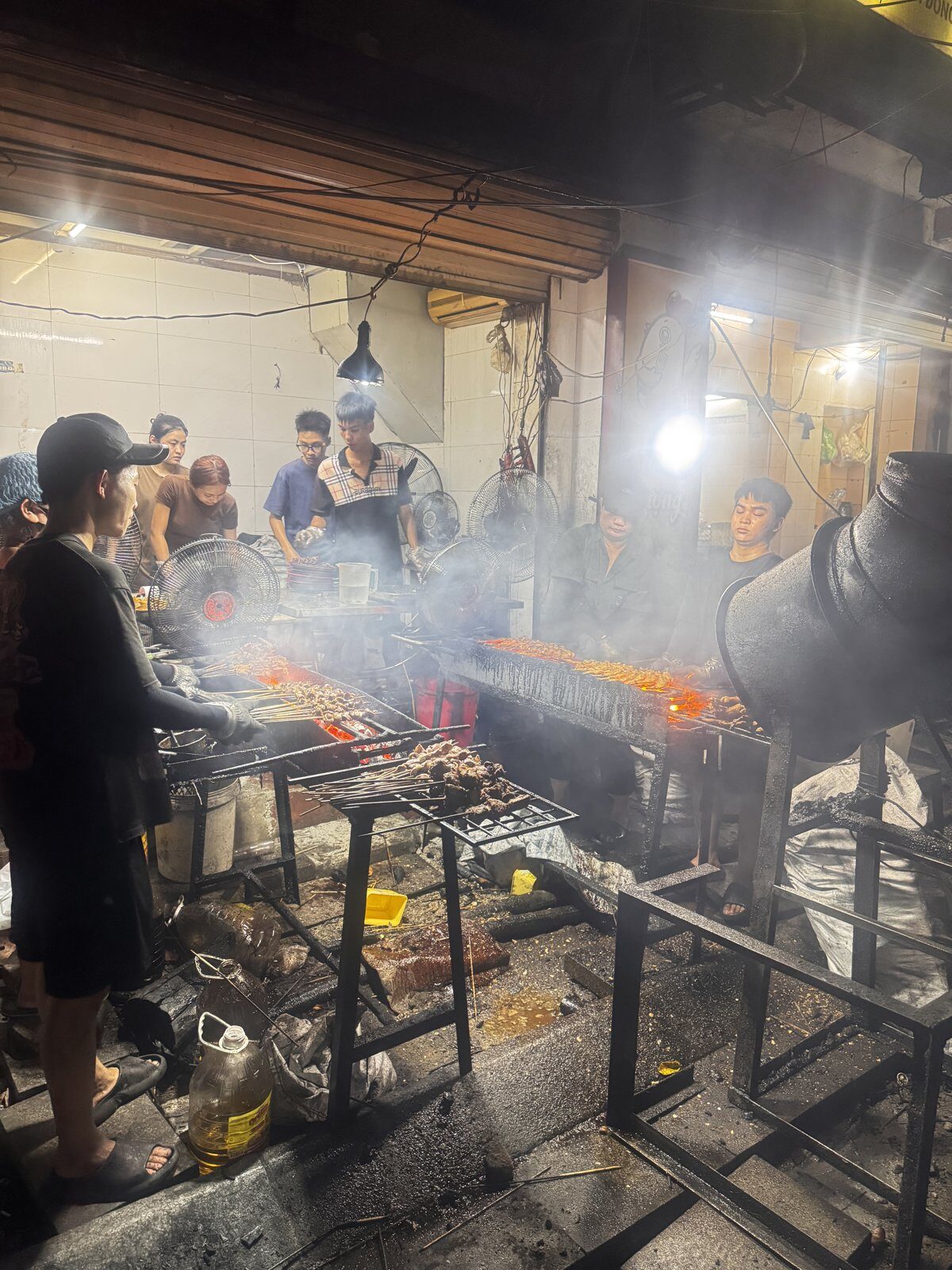
Dinner’s headline act is chả cá — turmeric-marinated fish sizzled at your table with a forest of dill, eaten over noodles with peanuts and shrimp paste for the brave. It is Hanoi’s one properly theatrical dish, a century old and worth its 120–200k price tag once per trip. After, do what the city does: pull up a plastic stool at a bia hơi corner, where the beer was brewed this morning, costs about forty cents a glass, and pairs with fried peanuts and the best people-watching in the country. The corners wind down early — this is Hanoi, not Saigon — which is exactly the rhythm our slow guide is built around.
The Pause: Egg Coffee
Invented in the 1940s when milk was scarce and ingenuity was not, cà phê trứng is whipped egg yolk and condensed milk floated over dark robusta — closer to warm tiramisu than to coffee, and the single best mid-morning stop in the city. The originals hide up narrow staircases in old Quarter buildings, which is part of the point. The full story, plus the rest of Vietnam’s coffee canon, lives in our Vietnamese coffee guide.
Where the Eating Actually Is
nn
You do not need addresses so much as zones. The Old Quarter’s guild streets hold the highest specialist density on Earth — pick any morning street with steam coming off it. The Truc Bach island loop is the phở cuốn quarter, fresh rice-paper rolls in a lakeside neighborhood most tourists only drive past (it doubles as the quiet stay zone in our Hanoi stay guide). And the food-pilgrimage day — no sights, all stomach — is mapped hour by hour in the 3 day itinerary. If you want a local to decode the first evening for you, the Hanoi food tours on Klook are a legitimate shortcut — after one night you will have the pattern and never need another.
How Hanoi compares: the north eats austere and herbal, and the capital is its masterpiece — for the sweeter, louder southern register see our Saigon food guide and the Phu Quoc island version, and for the central coast’s price-tagged reality check, the Da Nang food guide. Nationwide menu-level numbers live in the Vietnam price index.
FAQ
What food is Hanoi famous for?
Phở — invented here — plus bún chả, chả cá turmeric fish, bánh cuốn rice crepes, egg coffee and bia hơi fresh beer. Hanoi’s signature is restraint: minimal garnish, maximal broth, dishes perfected by shops that make nothing else. It is widely considered Vietnam’s deepest food city, and we agree.
Is street food in Hanoi safe to eat?
At busy specialist stalls, yes — high turnover means nothing sits around, and the full-stools rule does your vetting for you. The practical precautions: eat where locals are eating, favor cooked-to-order over displayed food in the heat, and ease in over your first day or two. The crowded stall is safer than the empty restaurant.
What is bún chả?
Charcoal-grilled pork patties and belly served in a bowl of sweet-sour dipping broth, with rice noodles and a basket of herbs on the side — you dip and assemble each bite. It is Hanoi’s definitive lunch, it is only a lunch, and the good shops genuinely sell out by mid-afternoon.
Where should I eat on a first morning in Hanoi?
Walk into the Old Quarter before eight, find a phở shop that sells only phở with a full house of locals, and order bò chín. Follow it with an egg coffee up a staircase cafe an hour later. That two-stop morning teaches you the city’s entire operating system for under $4.
How much should food cost in Hanoi?
Street benchmarks: phở and bún chả 40–60k VND ($1.60–2.40), bánh mì 20–35k, egg coffee 35–50k, bia hơi under a dollar a glass. A $10 day eats magnificently. The only premium dish is chả cá at 120–200k — worth it once. If a street stall quotes double these numbers, smile and try the next street.
Some links in this guide are affiliate links: if you book through them we may earn a small commission at no extra cost to you. It helps keep our guides honest and free.
Get our free Phu Quoc Trip Kit — the pre-departure checklist, a 5-day plan and our honest booking picks. No spam; at most one email a month.
By subscribing you agree to our privacy policy. Unsubscribe anytime.