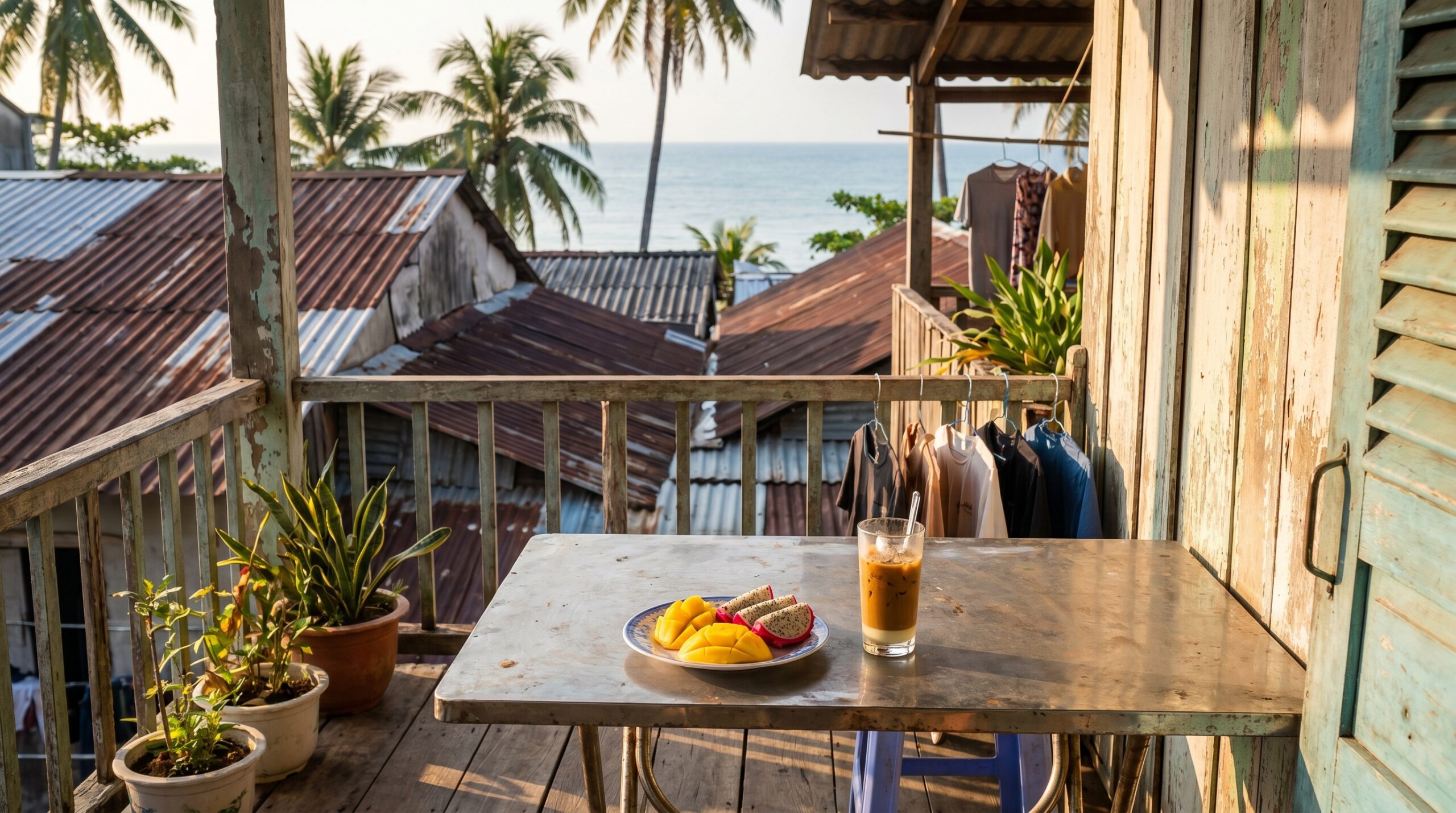
Here’s a fact that makes Phu Quoc quietly perfect for slow travel: the island’s special visa exemption gives most nationalities 30 days, free, no paperwork — which means “a month in Phu Quoc” isn’t just a daydream, it’s the exact length the immigration stamp hands you. Add $300–600 monthly apartments, $1.50 meals, fast Wi-Fi and a beach for every mood, and you have one of Southeast Asia’s most underrated long-stay bases. This guide covers everything: costs, neighborhoods, rentals, and the honest downsides.
New to the idea of staying longer? Start with our complete Vietnam long-stay guide.
This isn’t an “expat guide” — it’s for travelers doing an extended stay: a month (or two or three) of living slowly, working remotely maybe, and actually getting to know a place instead of sprinting through it.
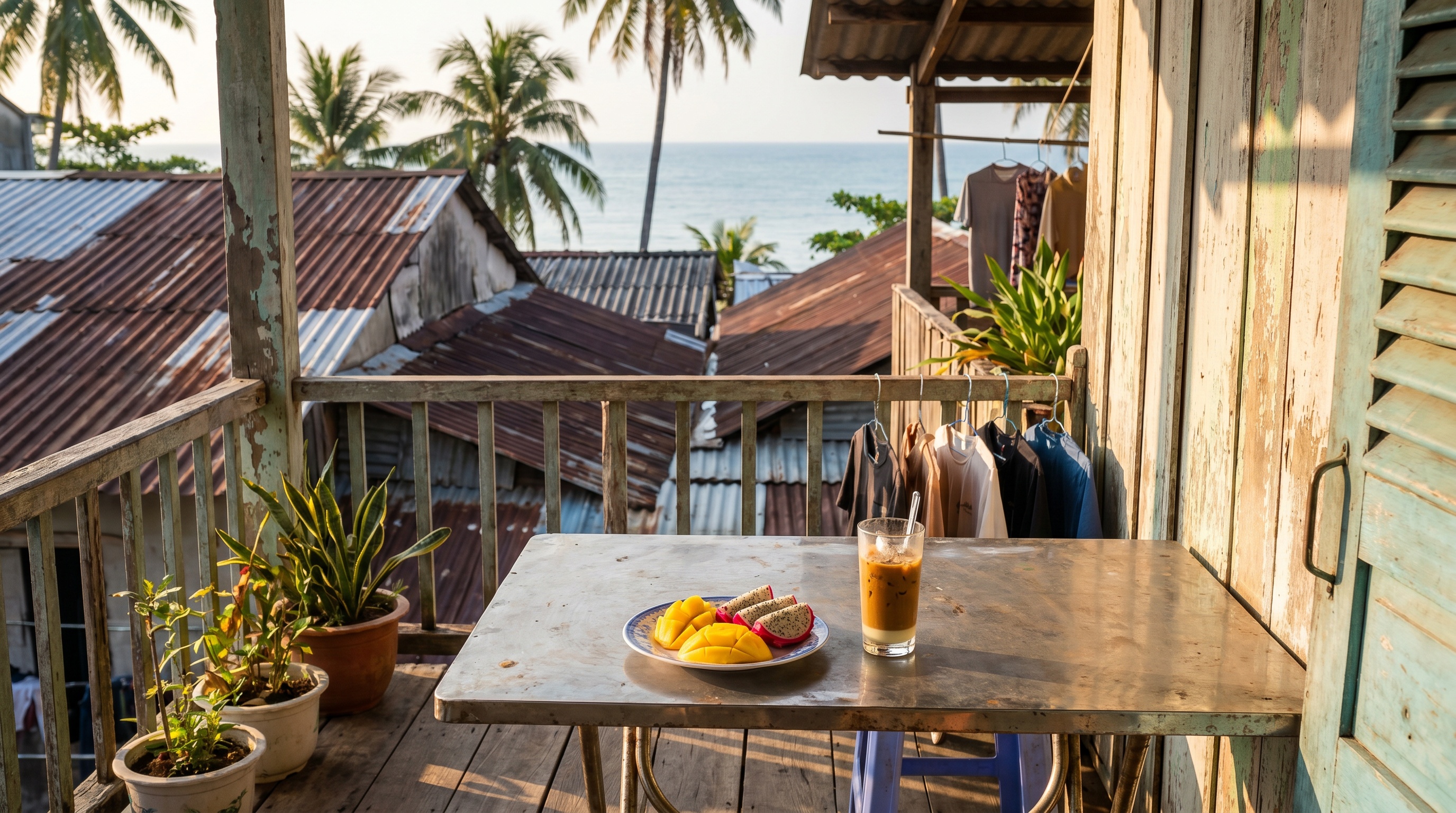
Why Phu Quoc for a Month (and Why Maybe Not)
The case for:
- The 30-day visa-free stamp — arrive on a direct international flight and the month is yours, no e-visa needed (staying longer or touring mainland Vietnam? Get the 90-day e-visa instead — it’s cheap and online).
- Cost: a comfortable month runs $700–1,200 all-in — less than a week at the island’s fancier resorts.
- Livability: real supermarkets, hospitals (including an international-standard one), gyms, laundry on every block, Grab everywhere.
- The seasonal trick: there’s always a good coast — west in dry season, east in rainy season. A month gives you time to use both. (Full logic in our seasons guide.)
The honest case against: Phu Quoc is a beach island, not a culture capital — no old town, limited cafés-with-character compared to Da Nang or Hanoi, and you’ll want a scooter for daily life. If your month needs museums and street energy, this isn’t the pick. If it needs sea, calm and routine, it absolutely is.
Where to Base Yourself
- Duong Dong town & fringes — the practical pick. Markets, cheap food, gyms, laundry, real life. Apartments and guesthouse monthlies are cheapest here, beach is 10–15 minutes away.
- Ong Lang — the serenity pick. Garden bungalows and small apartments, quiet beach walking distance, but you’ll scooter into town for errands. Perfect for writers and burnout recovery.
- Long Beach southern stretch — the balance. Beach access plus enough restaurants, with monthly rates in newer condo buildings.
- Skip for long stays: the far north (isolated resort bubble) and the deep south (construction, distances). Area details in where to stay.
Finding a Monthly Rental (The Real Methods)
- Facebook groups (“Phu Quoc expats”, “Phu Quoc housing/rentals”) — where the real listings live. Post what you want; agents and owners reply within hours.
- Booking apps with weekly/monthly filters — many hosts discount 30–50% for month-long bookings; message and negotiate further. Great for the first month while you look around.
- The classic move: book one week online, then hunt in person — walk neighborhoods, ask café owners, check building signs (full playbook: monthly rentals guide). In-person prices routinely beat online ones.
What things cost (2026 ballparks): guesthouse room monthly $200–350; studio apartment $250–450; modern 1BR with pool/gym $400–700; villa splits with friends from ~$800. Utilities (aircon-heavy) add $30–60.
The Monthly Budget, Line by Line
- Rent (nice studio): $350
- Food: $250–350 — local meals $1.50–3, market cooking, a few Western dinners
- Scooter rental: $60–80/month + ~$15 fuel
- Data/SIM: $10–20 — local Viettel SIM for long stays; travel eSIM to land with (our comparison)
- Coffee & coworking: $40–80 (most people work from cafés; the phin coffee habit is mandatory)
- Fun (boat day, massages, cable car, nights out): $100–150
Realistic total: $850–1,050/month living well, not backpacker-scraping. Frugal months under $700 are doable; comfort-first months with a pool condo run $1,300+.
Working Remotely: The Wi-Fi Reality
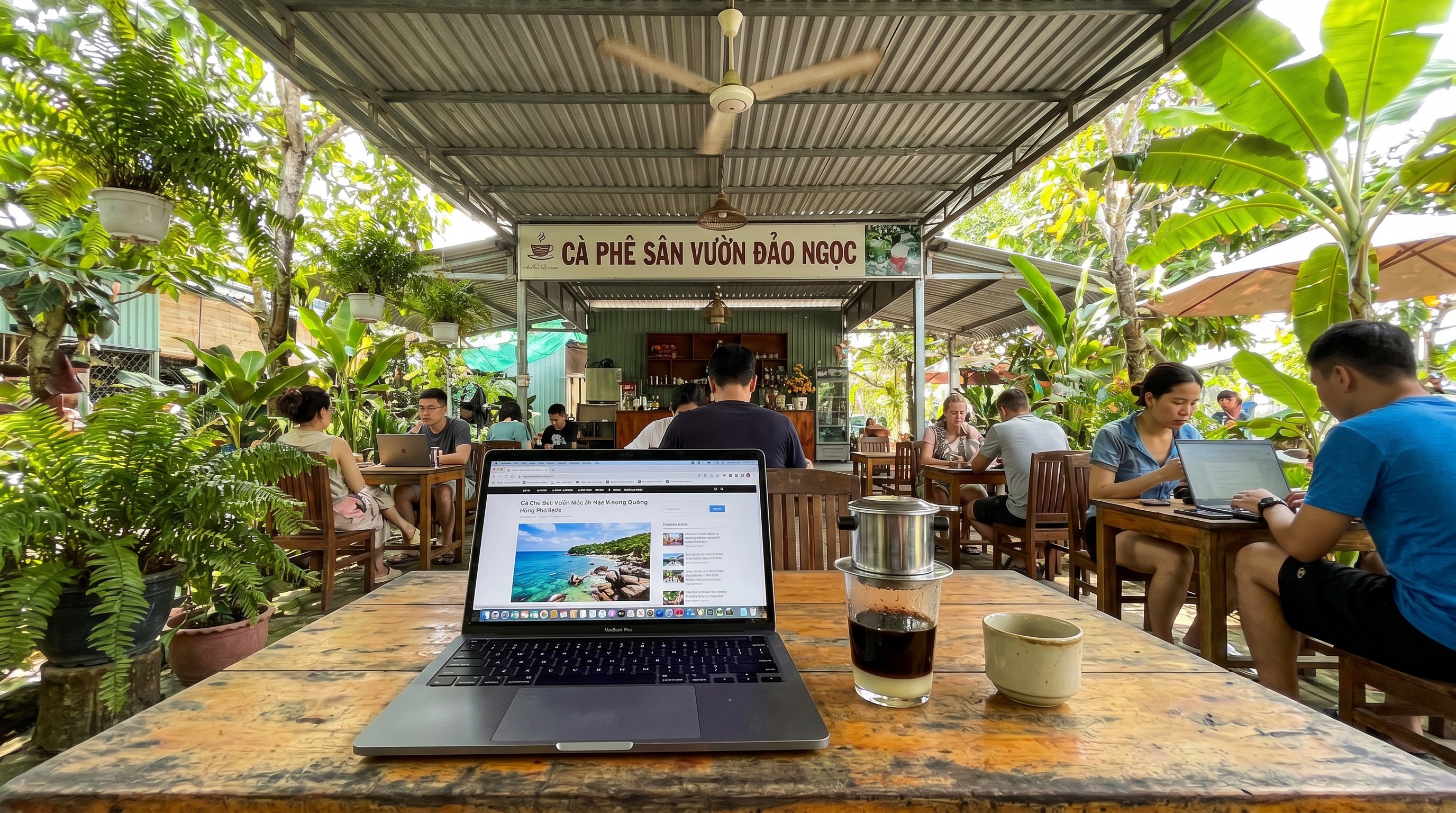
Genuinely good news: fiber is standard, café Wi-Fi routinely tests fast enough for video calls, and 4G/5G blankets the developed coasts as backup. There’s no big coworking scene — the culture is “laptop café,” and a dozen spots in Duong Dong and along Long Beach tolerate hours-long sessions if you keep ordering coffee ($1–2 a glass). Time zone: GMT+7 — brutal for US-East meetings, comfortable for Europe-morning/Asia-anything.
Daily-Life Notes That Matter
- Scooter: effectively required. $60–80/month, wear the helmet, get an International Driving Permit before you leave home to stay legal and insured.
- Healthcare: a modern international hospital handles real problems; pharmacies everywhere for small stuff. Travel/nomad insurance strongly recommended.
- Groceries: morning wet markets for produce and seafood (learn six Vietnamese numbers, save 30%), supermarkets and convenience stores for the rest.
- Laundry: wash-dry-fold shops ~$1/kg, next-day.
- Rainy-season stays (May–Oct): embrace the rhythm — bright mornings, an afternoon downpour, golden evenings. Cheapest rents, emptiest beaches, and the east coast is at its best (see Sao & Khem).
What Should You Do in Your First 48 Hours on the Island?
Spend the first two days building systems, not sightseeing: sort the scooter, walk your market, locate the laundry-pharmacy-supermarket triangle, and start viewing rooms for weeks two through four. A month is long enough that early logistics beat early beaches — the sea will still be there on day three, and everything after it runs smoother.
Here is the setup sequence we would follow on any new long stay:
| First-48-hours task | Why it comes first |
|---|---|
| Rent the scooter | Room viewings, markets and beaches all get dramatically easier. Photograph existing scratches before riding off. |
| Walk the wet market once, buying little | Learn the stalls and watch what locals pay before you start shopping in earnest. |
| Map your boring triangle | Laundry shop, pharmacy, supermarket — the three places you will use weekly, ideally within a short ride. |
| View two or three rooms in person | Check aircon noise, water pressure, mattress and evening street sound — none of which photos reveal. |
| Test your work setup | Run a real video call from the cafe you plan to rely on before a deadline depends on it. |
Mistakes We Keep Seeing Long-Stayers Make
- Paying for the whole month sight unseen. The post above says it, and it bears repeating as a mistake: the first week booked online, the rest negotiated in person, wins almost every time.
- Basing inside the resort bubble. A week there is bliss; a month means every meal and errand at resort prices, far from ordinary life. Check the island price index and you will see how wide that gap runs.
- Fighting the climate instead of adopting its schedule. Locals move at dawn and after four; the long-stayers who burn out are the ones who keep midday plans.
- Overloading week one and underplanning week three. The novelty dip around day eighteen is real. Save the safari, a boat day and one splurge dinner as mid-month treats rather than spending all the excitement early.
- Cooking every meal on principle. With local food this cheap, a kitchen is for breakfast and coffee; forcing full self-catering usually saves little and costs you the island’s best experiences.
The Rhythm That Makes the Month Work
By week two, most people settle into a shape like this: beach or market before nine, work or reading through the heat, errands at five, sunset as the fixed evening appointment. It sounds plain written down. It feels like the reason you came — and it is exactly the rhythm a two-week vacation never has time to reach.
Build in one anchor per week — a new beach from the full beach list, a boat day, a village lunch — and let the other six days repeat. We keep coming back to this structure because it solves the long-stay paradox: enough routine to feel at home, enough novelty to remember which week is which. The travelers who struggle here are rarely bored by the island; they are unsettled by unstructured time. Give the days a light frame and the month carries itself.
FAQ
Can I really stay 30 days without a visa?
Yes — Phu Quoc has a special 30-day visa exemption for direct arrivals, separate from mainland rules. Want mainland travel too, or 60–90 days? Vietnam’s 90-day e-visa is inexpensive and applied for online — the full long-stay playbook (extensions, visa runs, the overstay rules) is in our visa extension guide. Rules evolve: check the current rules before booking.
Is a month in Phu Quoc boring?
Honest answer: if you need urban stimulation, by week three, maybe. If your ideal month is beach mornings, work blocks, market cooking, boat weekends and sunset routines — it’s the opposite of boring. Know your type.
Phu Quoc or Da Nang for a long stay?
Da Nang wins on nomad scene, food variety and city energy; Phu Quoc wins on island calm, the 30-day stamp and having a beach for every season. Many people do both (or route a whole month across Vietnam) — a month each.
Can I do a month with kids?
Yes — the island is safe and calm, and VinWonders/safari/Aquatopia cover the “entertainment” column. Schooling is the limiting factor beyond a month.
How do I get money?
ATMs everywhere (choose bank-owned ones, withdraw large amounts to minimize fees) and cards work at supermarkets and bigger restaurants. Cash still rules markets and street food.
Bottom Line
A month in Phu Quoc costs about $900, needs zero visa paperwork, and hands you a rhythm most vacations never reach: market breakfasts, café work sessions, a different beach every weekend, sunset as a daily appointment. Come in a shoulder month, base near Duong Dong or Ong Lang, rent the scooter, learn the coffee order. The island does the rest.
Some links in this guide are affiliate links: if you book through them we may earn a small commission at no extra cost to you. It helps keep our guides honest and free.
Get our free Phu Quoc Trip Kit — the pre-departure checklist, a 5-day plan and our honest booking picks. No spam; at most one email a month.
By subscribing you agree to our privacy policy. Unsubscribe anytime.