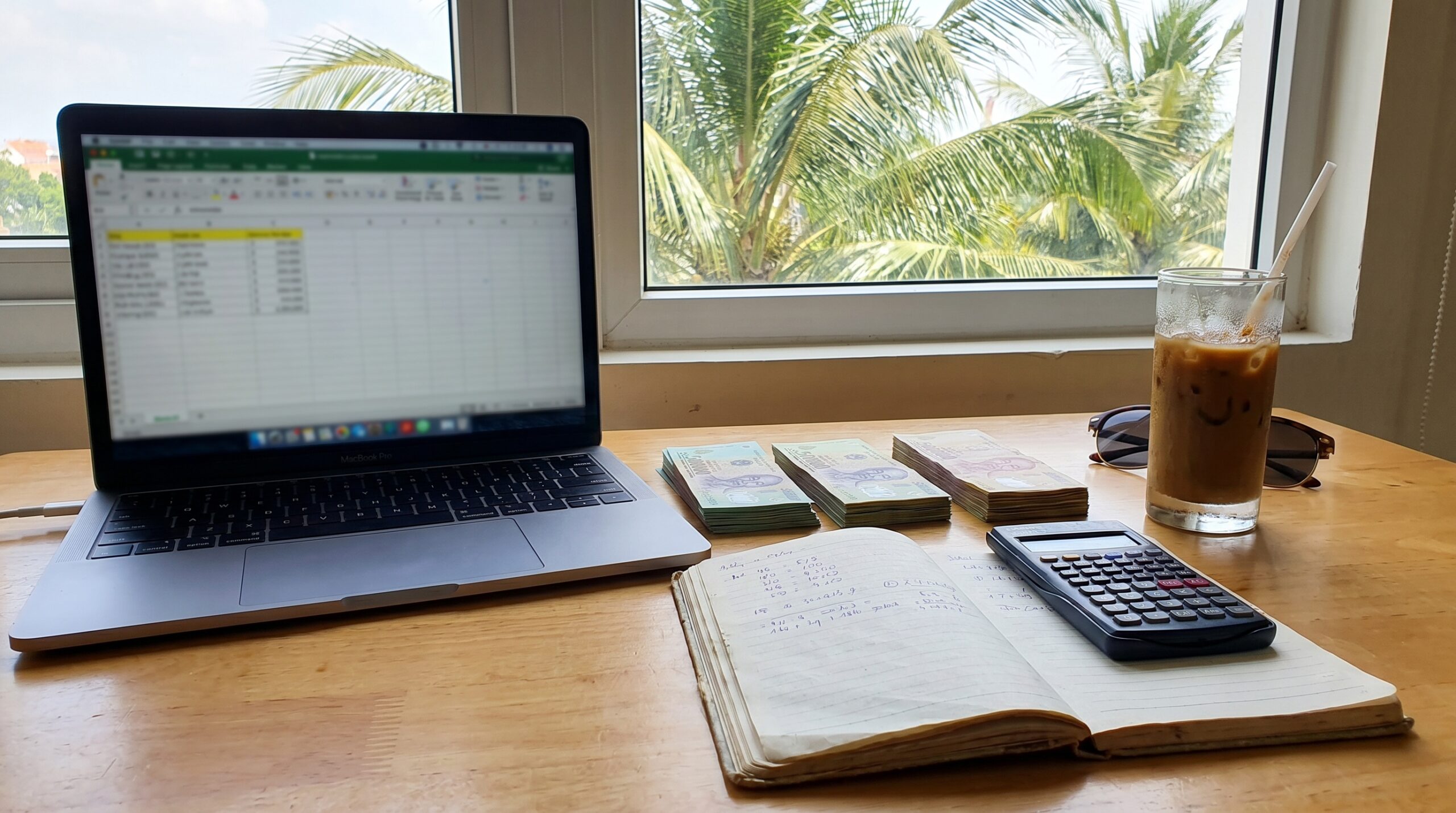
What does a month in Vietnam actually cost in 2026? Real answer: $800–1,200 for a comfortable solo month, $1,400–2,000 for a couple living well, and under $650 if you run backpacker discipline. That covers rent, food, transport, data, fun — everything but flights and insurance. Here is the honest line-by-line, whether you base in one place or run the four-base slow route.
Want every number on one page? See our Phu Quoc Price Index — 70+ real prices, kept current.
New to the idea of staying longer? Start with our complete Vietnam long-stay guide.
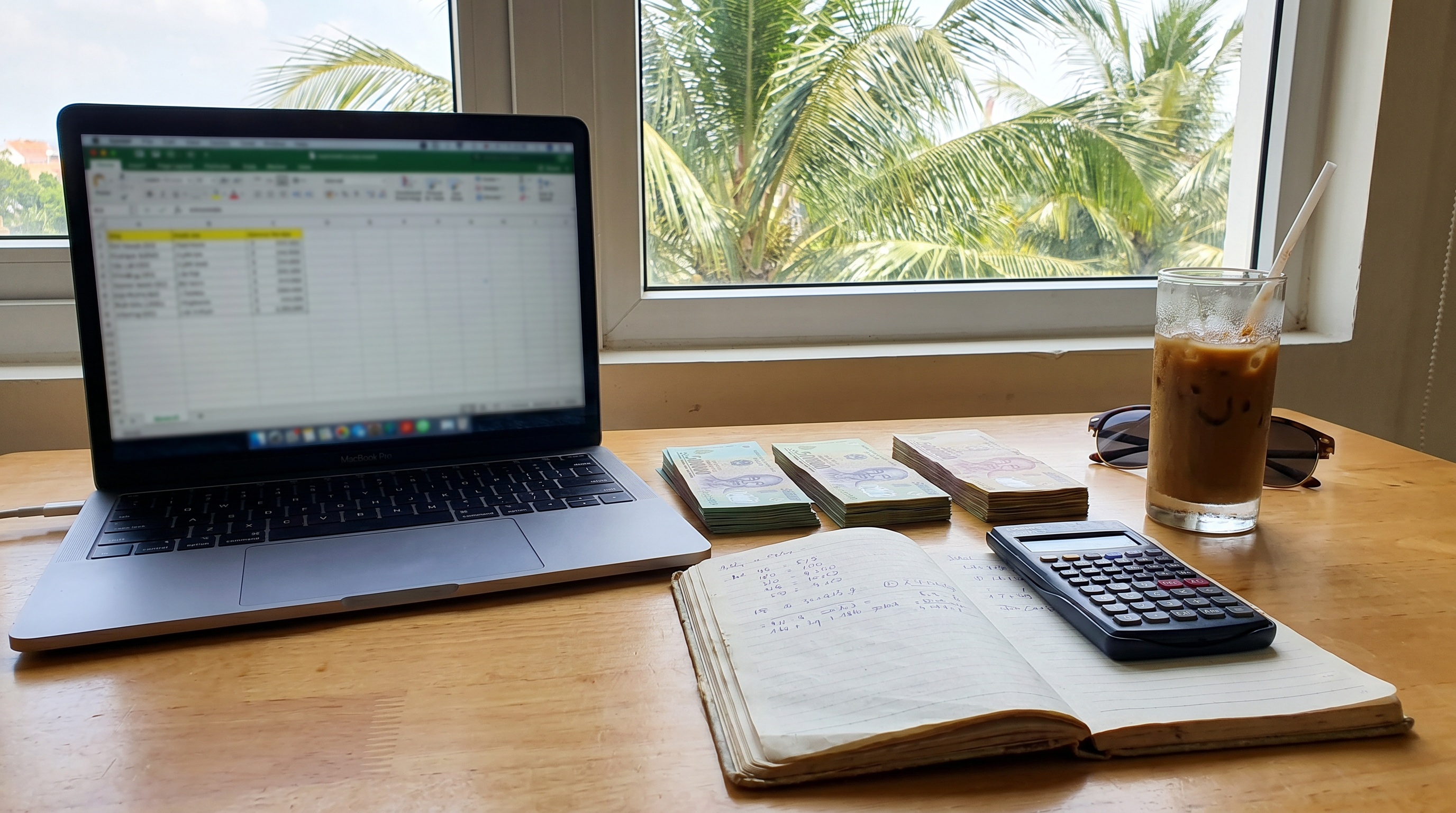
The Big Line: Accommodation ($200–700)
- Guesthouse monthly deals: $200–350 nationwide — private room, cleaning, zero setup.
- Studios: $250–450 in Phu Quoc and most cities (how to find them); Hanoi/Saigon central districts trend $50–100 higher, Da Nang similar or lower.
- Modern 1BR with pool/gym: $400–700 anywhere tourists go.
- Moving-around months: weekly rates run ~25% over monthly ones — budget $400–550 for rooms on the four-base route.
Food ($200–400)
- Local mode: $6–10/day eats magnificently — phở breakfasts ($1.50), cơm lunches ($2), street dinners ($3–5). Monthly: ~$250.
- Mixed mode: local days + café habits + weekly Western dinners: $300–400.
- Cooking: markets are cheap but eating out is so cheap that kitchens mostly brew coffee. Budget groceries only if you genuinely cook.
Everything Else (The Small Lines)
- Scooter rental + fuel: $70–100/month (or Grab-only for less if you stay urban)
- Data/SIM: $10–20 — local Viettel monthly plans are generous (eSIM to land, local SIM to stay)
- Coffee & cafés: $40–80 — the line that defines your lifestyle here (it is worth every dong)
- Laundry: $10–15 (about $1/kg, next-day)
- Fun (tours, massages, nights out): $80–150 realistic; the beauty is that the best things — beaches, sunsets, wandering — are free
- Visa: $25 e-visa amortized; Phu Quoc-only months ride the free 30-day exemption (rules)
- Utilities (if renting): $30–60 with daily air-con — ask the per-kWh rate before signing
Three Real Monthly Profiles
- The Disciplined Backpacker — ~$600: $220 guesthouse, $250 street food, Grab only, free beaches, two splurges. Entirely doable, slightly monastic.
- The Comfortable Solo — ~$1,000: $350 studio, $300 mixed food, scooter, café office, weekly massage, one boat day. The sweet spot most long-stayers land on.
- The Couple Living Well — ~$1,700 total: $550 modern 1BR, $500 food including date nights, scooter + Grabs, activities weekly. Per-person cheaper than solo — the couple discount is real.
Vietnam vs the Alternatives (Same Comfort Level)
That $1,000 solo month buys roughly: $1,500–1,800 in Chiang Mai or Canggu these days, $2,500+ in Lisbon, $4,000+ in any US beach town. Vietnam remains Southeast Asia’s best cost-to-quality ratio for long stays — especially with the low-season discount stacked on top.
Where People Blow the Budget
- Booking-site rents for months instead of switching to local rates after week one (30–40% overpay).
- Western breakfast habits — the $8 smoothie bowl every morning is a $200/month line item.
- Tourist-rate electricity in rentals — ask the kWh rate, always.
- Daily beach clubs when the sand is free 50 meters away.
- ATM dynamic conversion — always decline, always withdraw big at bank-owned machines (money mechanics).
How Do You Actually Pay for Everything Month to Month?
Mostly cash and local bank transfers. Rent is almost always paid in cash, in dong, directly to the landlord. Daily life runs on small notes and, increasingly, Vietnamese QR payments — while your foreign card mostly stays in the drawer, coming out for supermarkets and the odd hotel.
The rhythm that works for most long-stayers: withdraw a large amount every week or two, keep a modest float at home for rent day, and carry a day’s spending money when you go out. Vietnam’s QR-transfer culture is remarkable — even street vendors display a code — but joining it properly requires a local bank account, which short-stay visitors generally cannot open. Without one, you are a cash economy of one, and that is fine.
For moving money in, a multi-currency service such as Wise or Revolut paired with a fee-friendly home card is the standard setup we see. Whatever you use, decline dynamic currency conversion every single time; it is the quietest recurring overcharge in the country.
One habit worth building early: track spending in dong, not your home currency. Converting every bowl of noodles in your head keeps you mentally on vacation; thinking in local prices is how you notice, by week two, which cafés and vendors are quietly charging you the visitor rate.
The First Week Always Costs More
Every monthly budget we have ever compared shows the same shape: week one runs hot, then costs settle. For a photographed baseline of what a Hanoi supermarket basket and a Grab ride cost this month, see our September 2026 Hanoi prices snapshot. You are paying tourist rates while you hunt for local ones, eating out three times a day because you have no base, and fronting deposits that come back later — or count against future rent. Budget for the hump instead of being demoralized by it.
| Setup line | What to expect |
|---|---|
| Rental deposit | Often one month up front; guesthouses frequently skip it entirely |
| Landing nights | A few nights of nightly-rate hotel while you view monthly places in person |
| Scooter deposit | Passport copy or a refundable cash deposit; never leave your actual passport |
| Household bits | Drinking-water delivery, adapters, kitchen basics — small but real |
| Pre-base transport | Extra Grab rides while everything is still unfamiliar |
Our rule of thumb: expect the first week to cost roughly double a settled week, and treat anything better as a win. The flip side is that a second month in the same place is meaningfully cheaper than the first — the setup lines vanish and your prices are already local.
Stretching Past One Month
If the month goes the way months in Vietnam tend to go, you will want another. Two things to plan before day 30 rather than on it. First, paperwork: options depend on your entry type, and our visa extension guide walks through what is realistic and what is agent folklore. Second, geography: staying put compounds your savings, but Vietnam is long and the seasons move — many long-stayers rotate bases with the weather instead. Our where-to-base comparison covers how the main candidates differ for a working month.
Either way, the financial logic stays the same: the longer you stay in one place, the further the same money goes. Month two is when Vietnam stops being a trip and starts being a life — at the same price as week one of a European holiday.
FAQ
Can I really live on $800/month?
Solo, one base, local-mode eating, guesthouse room: yes, comfortably — thousands do. Add a nicer room and a social life and $1,000–1,200 is the honest number.
Is Phu Quoc more expensive than the mainland for a month?
Marginally — figure 10–15% over Da Nang for equivalent living, offset by the free 30-day visa and the beach outside your door (island month guide).
What about health insurance?
Not in these numbers — nomad policies run $40–80/month and you should have one. Local clinic visits are cheap; real emergencies are what the policy is for.
Cash or card economy?
Cash-first outside big-city chains. Plan on ATM withdrawals; cards cover supermarkets, hotels and the occasional splurge dinner.
Bottom Line
One thousand dollars, one month, one of the best-eating, best-looking, easiest-living countries on earth — with beaches, mountains and cities included in the price. Budget honestly, dodge the five overspends, and Vietnam gives you a standard of living your home rent could never buy. See you at the phin.
Get our free Phu Quoc Trip Kit — the pre-departure checklist, a 5-day plan and our honest booking picks. No spam; at most one email a month.
By subscribing you agree to our privacy policy. Unsubscribe anytime.