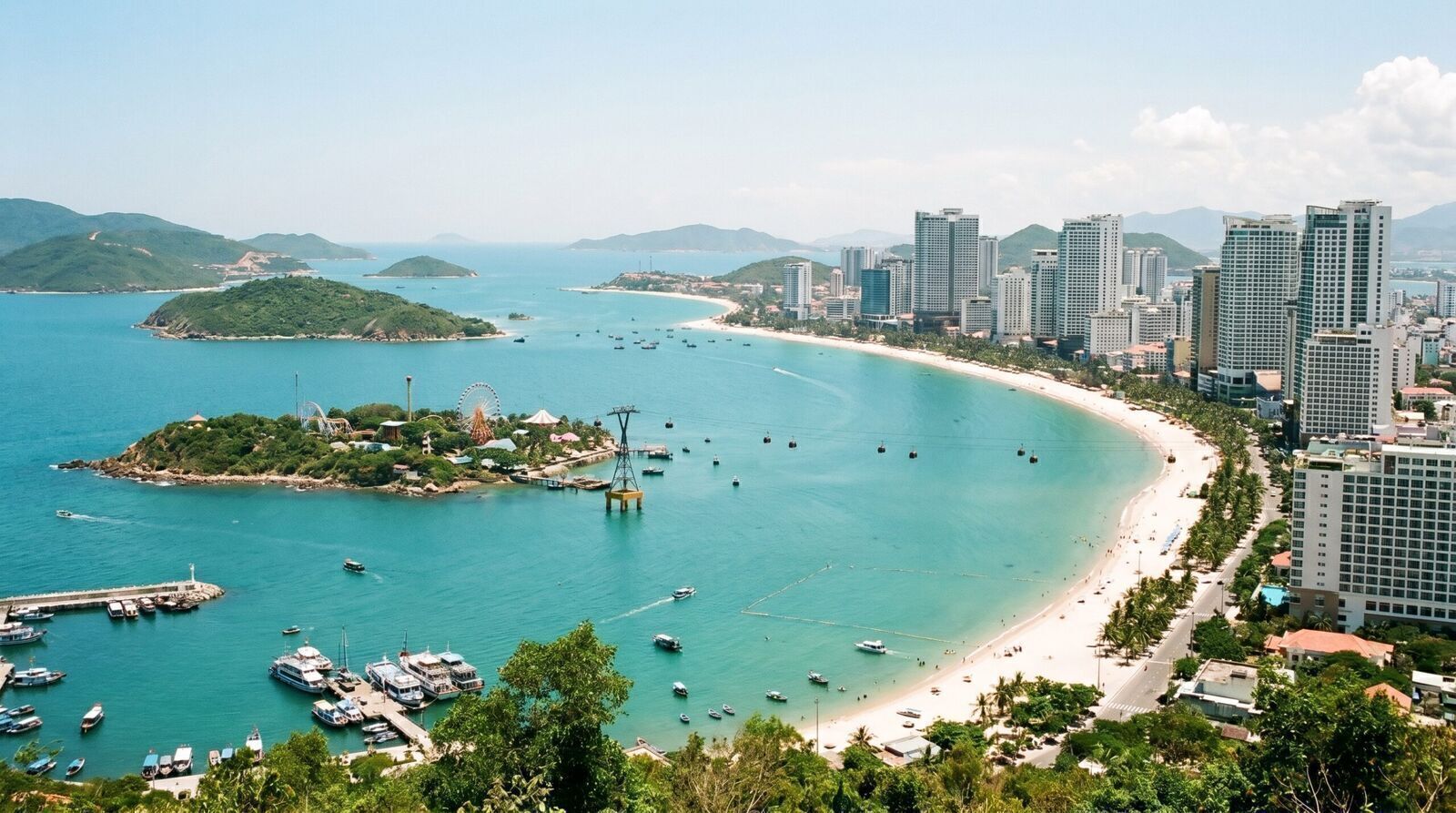
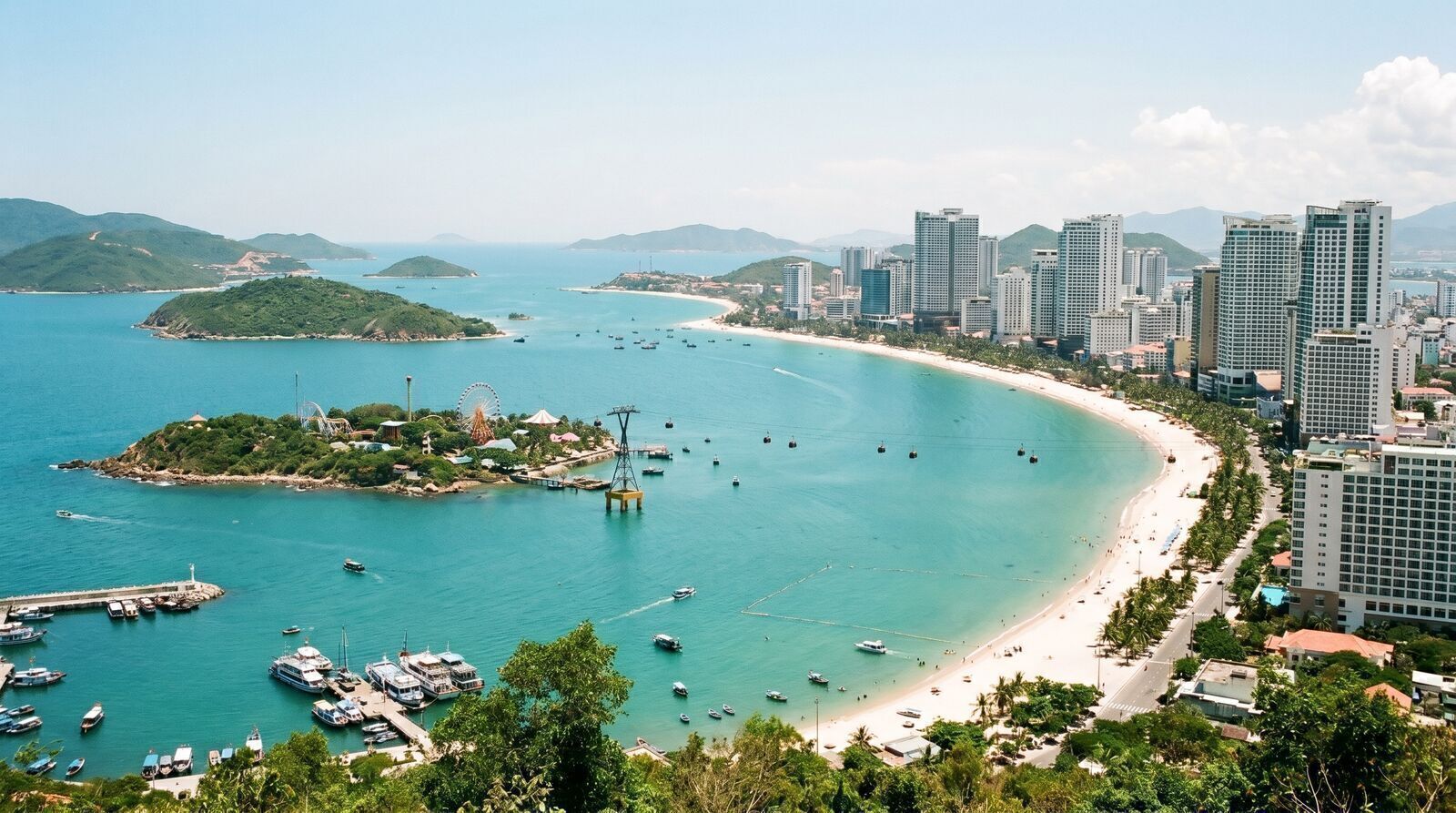
Nha Trang is Vietnam’s biggest, brashest beach city: a six-kilometer urban bay backed by high-rises, island-hopping boats fanning across turquoise water, seafood streets that run past midnight — and a reputation problem among Western travelers who dismiss it as “too built-up.” The honest verdict: as a city-beach hybrid it beats its reputation, especially for divers, families and anyone who likes their beach with an actual pulse.
What Nha Trang Actually Does Well
nn
- The bay: genuinely beautiful — 19 islands scatter the horizon, and the main city beach is wide, clean-kept and swimmable most of the dry season.
- Vietnam’s dive capital: the country’s best-established scuba scene (Hon Mun marine area) — cheap Open Water courses, easy warm-water fun dives. Snorkelers get the better end of Vietnam here too (a real upgrade over Phu Quoc’s honest-but-modest reefs).
- Island-hopping variety: from budget party boats to quiet Hon Mun snorkel charters — plus VinWonders’ island mega-park across the bay (cable car ride included) for families.
- Food with city depth: bún cá (fish-cake noodle soup — the local religion), nem nướng (grilled pork rolls you assemble), seafood barbecues, and a proper café scene.
- Mud baths & hot springs: the Thap Ba mud-soak is silly, social and weirdly great after a dive day.
The Honest Downsides
- It is a city, loudly: traffic, towers, karaoke — serenity-seekers should aim at island coves instead.
- Tourism skews group-package: some strips feel built for bus tourism; the fix is basing in the An Vien/south end or the northern Tran Phu stretches and eating where menus are Vietnamese-first.
- Rainy-season timing is unusual: Nha Trang’s wet months are September–December (later than most of Vietnam) — a January–August window plays best, near-opposite of Phu Quoc peak (the island calendar).
The Slow 3 Days
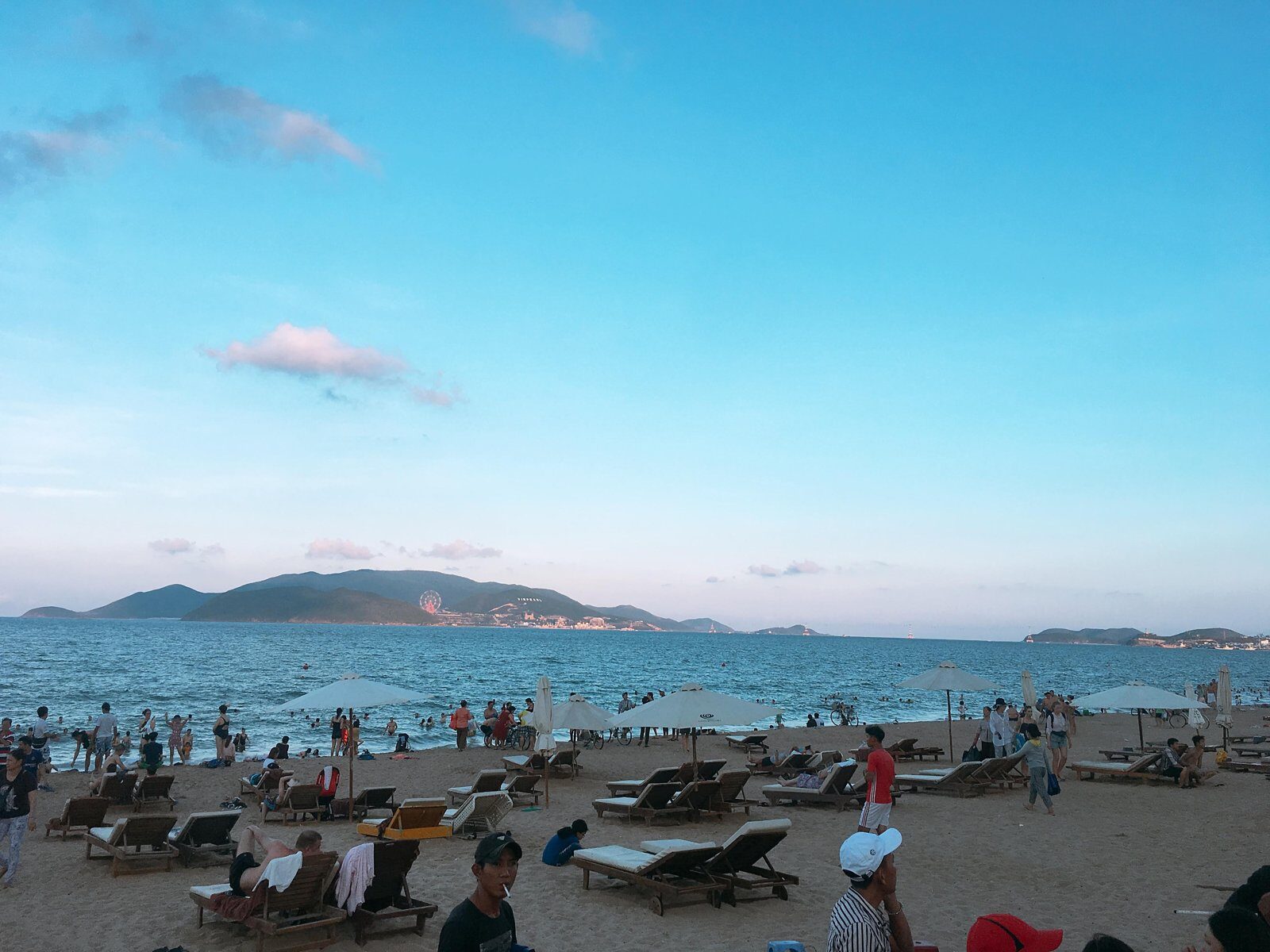
- City-beach rhythm: dawn swim with the locals (the 5–7 AM beach culture here is a show), Po Nagar Cham towers mid-morning, bún cá lunch, mud bath afternoon, seafood-street dinner.
- On the water: Hon Mun snorkel/dive boat morning (pick small-group operators over party barges), quiet afternoon at Bai Dai beach south of the airport road, sunset at a beach bar.
- Pick your finale: scuba course day two of two · VinWonders island day with kids · or a scooter run up the coastal road to Doc Let’s white sand — then the night market and a last nem nướng feast.
Logistics
- Getting there: Cam Ranh airport (45 min south) with wide domestic + regional connections; the coastal railway threads north to Hue/Hanoi and south toward Saigon; Da Lat is a spectacular 3.5-hour pass road inland (pair them).
- Stay: beachfront high-rise value is real — sea-view 4-stars $40–80 (check dates); boutique quiet lives at the bay’s edges.
- Budget: city prices with beach-town spikes — comfortably $40–60/day mid-range.
Which Part of Nha Trang Should You Stay In?
For most slow travelers: the quieter southern end of the beachfront, an easy ride from the center but out of the karaoke blast radius. Families do well mid-beach near the parks, divers cluster centrally near the shops, and anyone allergic to towers should look north toward Hon Chong. Base placement decides more of your Nha Trang experience than your hotel’s star count does.
The city reads differently block by block, so it’s worth choosing deliberately rather than grabbing the cheapest sea view on the map.
| Area | Feels like | Best for |
|---|---|---|
| Southern beachfront (An Vien end) | Calmer, greener, still on the sand | Couples, longer stays, light sleepers |
| Central strip | Loud, convenient, everything walkable | Divers, first-timers, short visits |
| Northern Tran Phu / Hon Chong | Local, low-rise, student cafés | Slow travelers, food hunters |
| Bai Dai (airport road) | Resort strip, isolated from town | Pure resort weeks, one-stop honeymoons |
Our rule of thumb: if you plan to eat in town every night, stay where you can walk home from dinner. If the resort is the point, accept the Bai Dai isolation happily and plan one or two town excursions instead of nightly ones.
What Should You Skip in Nha Trang?
- The cheapest party boats, if snorkeling is your goal. They optimize for music and drinking games, and the “snorkel stop” is often twenty rushed minutes at a crowded mooring. Pay a little more for a small-group boat that leads with the reef, not the playlist.
- Swimming on red-flag days. In the September–December wet window the bay can build real surf and undertow. Locals stay out for a reason; the flags aren’t decoration.
- Restaurants with picture menus and street touts. Two streets back from the beachfront, the same seafood runs noticeably cheaper and tastes like someone’s actual cooking.
- Over-scheduling. Trying to stack a dive course, VinWonders, and a Doc Let run into three days turns a beach city into a checklist. Pick two anchors and let the dawn swims fill the rest.
Fitting Nha Trang Into a Longer Route
Nha Trang earns a specific job on a longer Vietnam trip: the mid-route reset. After the intensity of the north or a string of overnight buses, a city with a six-kilometer beach, good coffee, and every practical service is exactly what a tired traveler needs — laundry done, gear replaced, body back in the sea.
The coastal railway is the slow-travel way in and out; the stretch along this coast rides right beside the water in places, and arriving by train sets the tempo better than any flight. If you’re plotting a bigger loop, our where-to-base guide covers how Nha Trang compares as a longer stop, and the wider slow travel playbook is built around exactly this kind of stay-longer-move-less routing.
We keep coming back to the same verdict: two or three nights as a pass-through feels touristy, while five or six with a northern-end base and a dawn-swim habit feels like borrowing a Vietnamese city’s beach life. If your schedule allows the longer version, take it.
FAQ
Nha Trang or Phu Quoc?
City-beach energy, diving and variety → Nha Trang. Island calm, resort value and visa-free ease → Phu Quoc. Their weather calendars conveniently offset.
Is it too touristy?
The center can feel that way; two streets back and at dawn on the sand, it is emphatically a Vietnamese city living its beach life. Base placement decides your experience.
Is diving here actually good?
Best in Vietnam and priced kindly ($60–80 fun-dive days, ~$350 Open Water) — set against regional heavyweights it is training-grounds pleasant, not Coral Triangle spectacular.
Family friendly?
Very: calm dry-season sea, the island theme park, mud baths, aquarium boats. The island still edges it for toddler-calm water.
Bottom Line
Take Nha Trang as what it is — Vietnam’s beach metropolis — and it rewards you: dawn swims, dive boats, mud baths, midnight seafood, all at city convenience. Three days, south-end base, small-boat operators, January–August window. The postcard beaches live elsewhere; the beach life is right here.
Some links in this guide are affiliate links: if you book through them we may earn a small commission at no extra cost to you. It helps keep our guides honest and free.
Get our free Phu Quoc Trip Kit — the pre-departure checklist, a 5-day plan and our honest booking picks. No spam; at most one email a month.
By subscribing you agree to our privacy policy. Unsubscribe anytime.