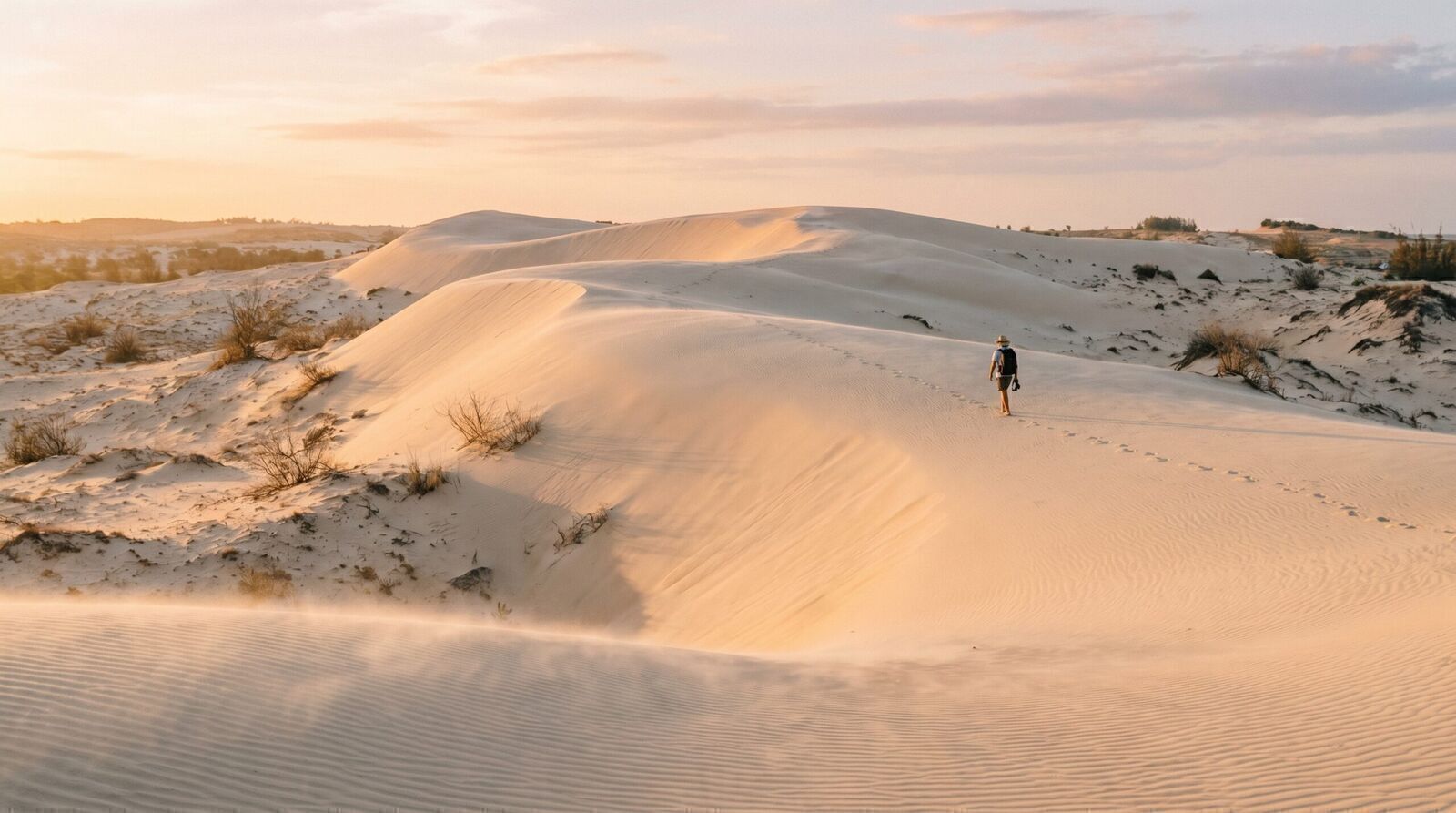
Mui Ne is Vietnam’s strangest landscape: Sahara-style sand dunes meeting the sea, a fishing-boat harbor painted every color, and a 20-kilometer resort strip that boomed for Russian tourism, cooled, and is now quietly reinventing itself as Vietnam’s kitesurfing capital. Two days here, timed to the dunes at dawn, deliver photos nothing else in the country can — as long as you come with the right expectations.
The Two Reasons to Come
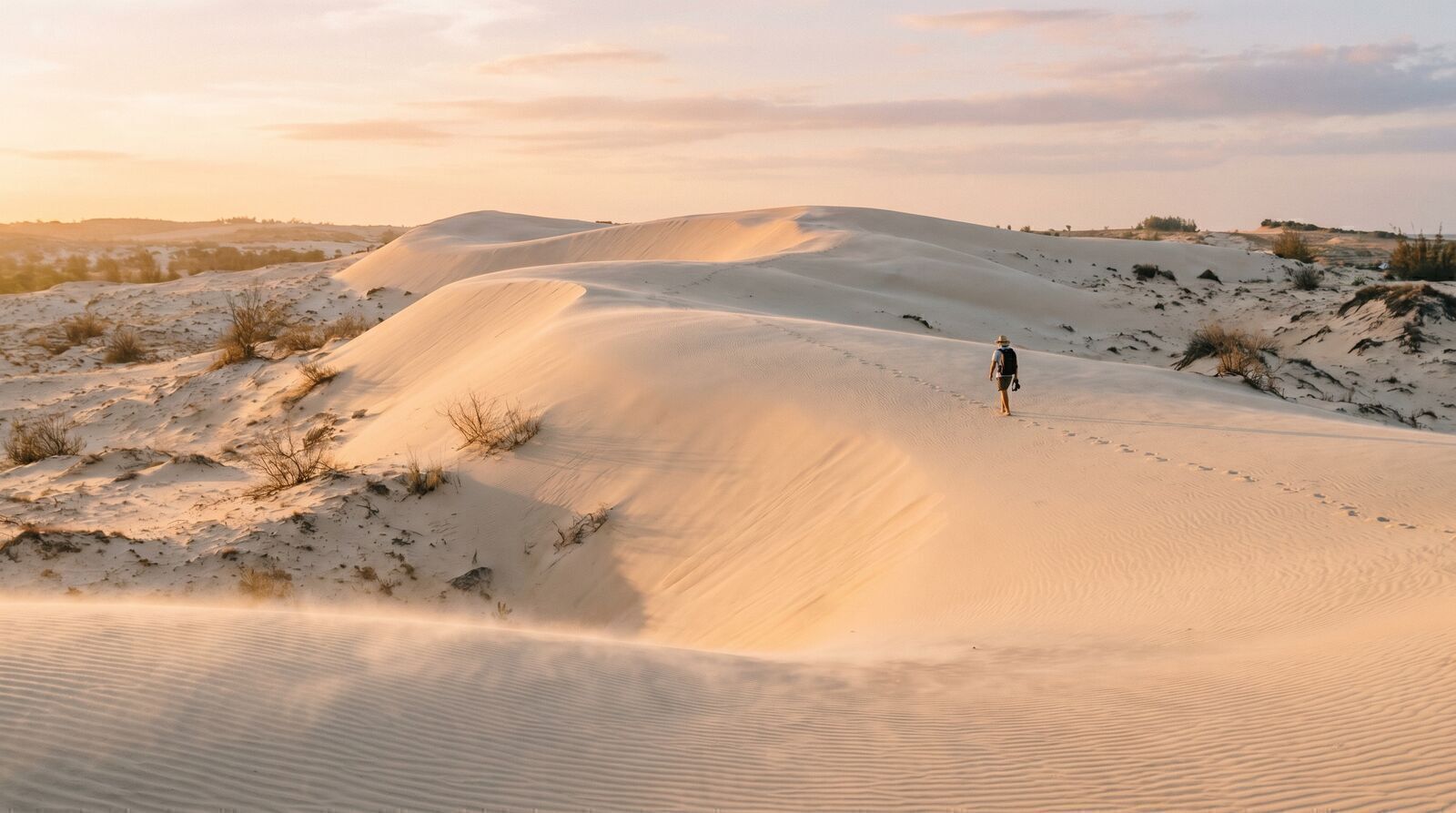
- The dunes: the White Dunes (25 min northeast) are the spectacle — sculpted ridges at sunrise, lotus lake at the edge; the Red Dunes (closer, smaller) work for sunset and kids sledding on plastic sheets. The standard sunrise jeep tour (~$15–25, 4:30 AM pickup) hits both plus the Fairy Stream — a barefoot wade up a shallow red-canyon brook that is far more charming than it sounds.
- The wind: November–March blows steady side-onshore, making Mui Ne Southeast Asia’s most consistent kitesurfing classroom — schools line the strip, ~$50–60/hour lessons, week-long zero-to-riding packages.
The Honest Expectations
- The town beach is not the postcard: erosion and seawalls have eaten stretches of sand; the swimmable, sandy sections front specific resorts (check recent photos when booking). Come for dunes, wind and seafood — treat great swimming beaches as a different trip.
- The strip is long and low-energy: a resort road, not a town. Nightlife is a handful of beach bars; the vibe is sleepy — which suits the 4:30 AM dune alarm fine.
- Tour touts and jeep add-ons are the local hustle — agree total price and stops before boarding, standard Vietnam rules (the price-confirmation habit).
The Perfect 48 Hours
- Day 1: arrive from Saigon (4.5–5h bus/limousine or the delightfully slow train to Phan Thiet), afternoon pool, walk the fishing harbor viewpoint at golden hour — hundreds of round basket boats and painted trawlers, the strip’s best free sight. Seafood dinner at the boards-on-the-street places: point, weigh, grill.
- Day 2: 4:30 AM jeep — White Dunes sunrise → Red Dunes → Fairy Stream → harbor — back by 9 for breakfast. Pool recovery, kitesurf taster lesson in the afternoon wind (Nov–Mar), sunset beer, done.
Logistics
- Stay: mid-strip puts everything in reach — genuinely good 3–4 star pool resorts run $30–70 (compare dates); kitesurfers cluster at the schools around Ham Tien.
- Season: Nov–March = wind + dry skies (prime); April–October = quieter, hotter, still dune-worthy at dawn.
- Route logic: the classic southern triangle is Saigon → Mui Ne (dunes) → Da Lat (cool hills, a spectacular 4-hour mountain road apart) → back or onward up the coast.
Is One Night Enough for Mui Ne?
One night works, but only if you engineer it: arrive by mid-afternoon, walk the harbor at golden hour, take the 4:30 AM jeep to the dunes, and leave around midday. You see everything that matters — you just do it slightly sleep-deprived and with zero weather insurance.
The case for the second night is simple: the dunes are a dawn-only show, and dawn is a lottery. A hazy or gray sunrise on your single morning means you rode four-plus hours from Saigon for a beige photo. Night two buys you a re-roll, plus an afternoon of pool and wind-watching that makes the stop feel like travel instead of logistics. We lean two nights almost every time — the same protect-the-slack instinct behind our whole slow-travel approach to Vietnam.
If your route is tight, treat Mui Ne as a hinge between Saigon and Da Lat rather than a detour, and the one-night version stops feeling wasteful.
Getting There Without Driving Yourself
No airport means everyone arrives overland, and the options sort themselves by comfort and departure time rather than price — all of them are cheap by Western standards.
| Option | What to expect |
|---|---|
| Limousine van | Our usual pick: reclining seats, hotel-area drop-off, frequent departures from Saigon. |
| Sleeper bus | Cheapest; lie-flat bunks, mixed driving styles. Fine for the unfussy. |
| Train to Phan Thiet | The scenic, unhurried route; finish with a short taxi ride to the strip. |
| Private car | Door to door on your schedule; worth splitting between three or four people. |
Book morning departures when you can: arriving by mid-afternoon preserves the harbor-at-dusk evening that makes even a short stop feel complete. If you are still sketching the bigger route, our notes on where to base yourself in Vietnam put Mui Ne in context — it is a stopover on almost every good southern loop, never the base itself.
What to Pack for the Dune Morning
The 4:30 AM jeep run has its own micro-packing list, and most of it is about wind and sand rather than heat.
- A light layer. Pre-dawn air on the back of an open jeep is genuinely cool; you will shed it by 7 AM.
- Sunglasses and a buff or scarf. The same wind that draws the kitesurfers sandblasts the ridgelines — eyes and camera lenses need defending.
- Footwear you can shed fast. Sand walking is best barefoot, and the Fairy Stream is a wade; strapped sandals beat sneakers all morning.
- Small bills. Sled rentals, quad-bike upsells, and coffee at the lotus lake are all cash-and-negotiation affairs — carrying exact-ish change ends conversations quickly.
- A pocket for your phone that closes. Fine white sand finds every open pocket; we learned this the expensive way once and now preach it.
Skip the tripod unless you are serious — the ridgelines move with the wind, handheld light is generous soon after sunrise, and you will want hands free for the climb. And eat something before the pickup if your hotel allows it: breakfast happens after the tour, and negotiating sled prices on an empty stomach at 5 AM tests anyone’s patience.
FAQ
Is Mui Ne worth it if I am not kitesurfing?
For the dunes-at-dawn photos and the harbor, yes — as a 1–2 night stop, not a beach week. Beach-first travelers should aim at the island instead.
White Dunes or Red Dunes?
White for the wow (go at sunrise), Red for convenience and sunset sledding. The jeep combo does both — take it.
Can I skip the jeep and ride a scooter?
To the Red Dunes and Fairy Stream easily; the White Dunes run is longer but doable for confident riders — you trade convenience for freedom and save the tout games.
Is the seafood safe on the street?
Busy, turnover-heavy places with tanks: as good as coastal Vietnam gets. Same rules as everywhere — confirm the per-kg price before the grill.
Bottom Line
Mui Ne earns exactly two nights: dunes at dawn, harbor at dusk, wind in between if the season serves. Expect a photo-spectacle stopover rather than a beach paradise and it over-delivers — few places on earth put a desert, a technicolor fishing fleet and a kite-filled sky in one sunrise.
Some links in this guide are affiliate links: if you book through them we may earn a small commission at no extra cost to you. It helps keep our guides honest and free.
Get our free Phu Quoc Trip Kit — the pre-departure checklist, a 5-day plan and our honest booking picks. No spam; at most one email a month.
By subscribing you agree to our privacy policy. Unsubscribe anytime.