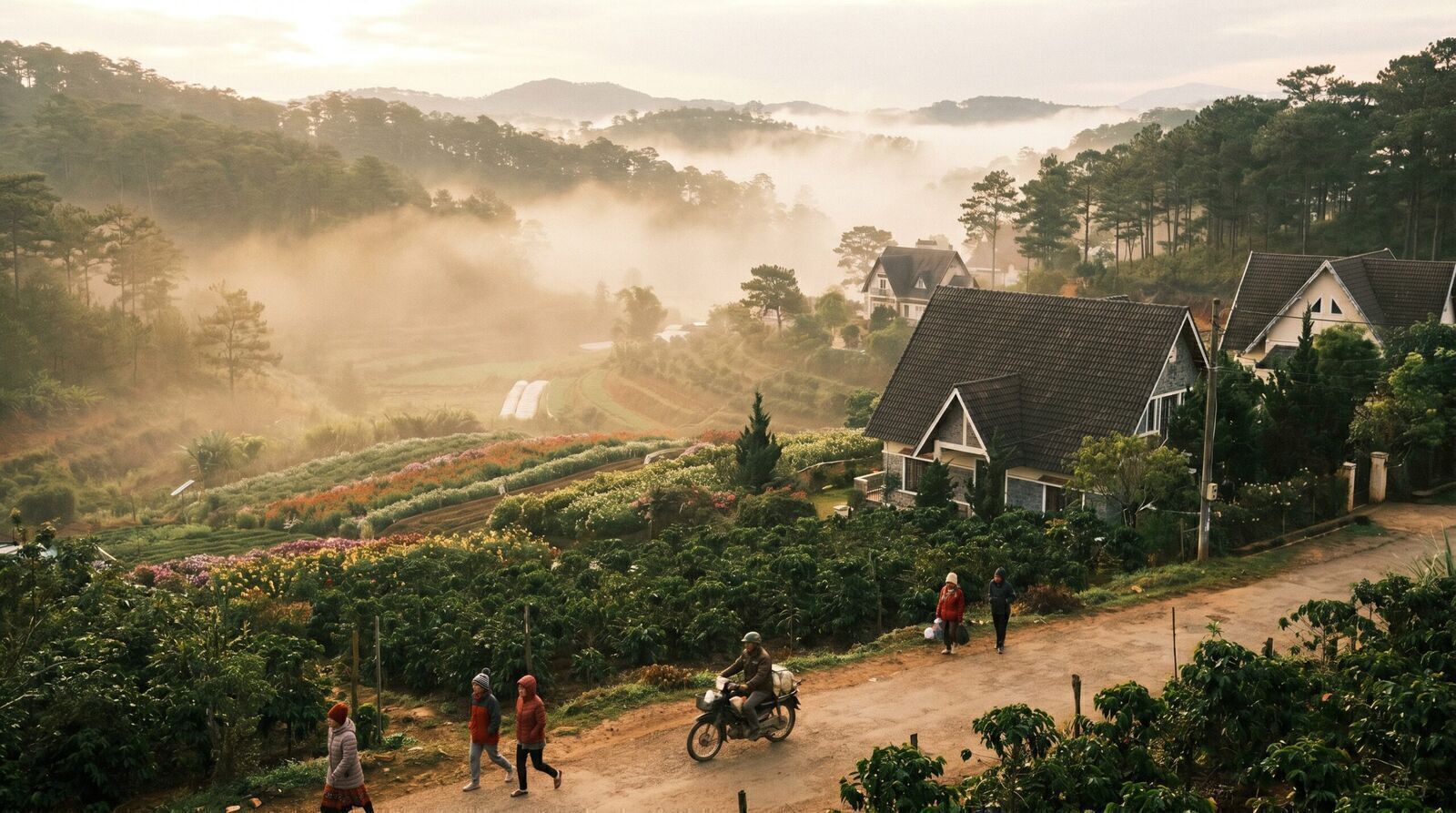
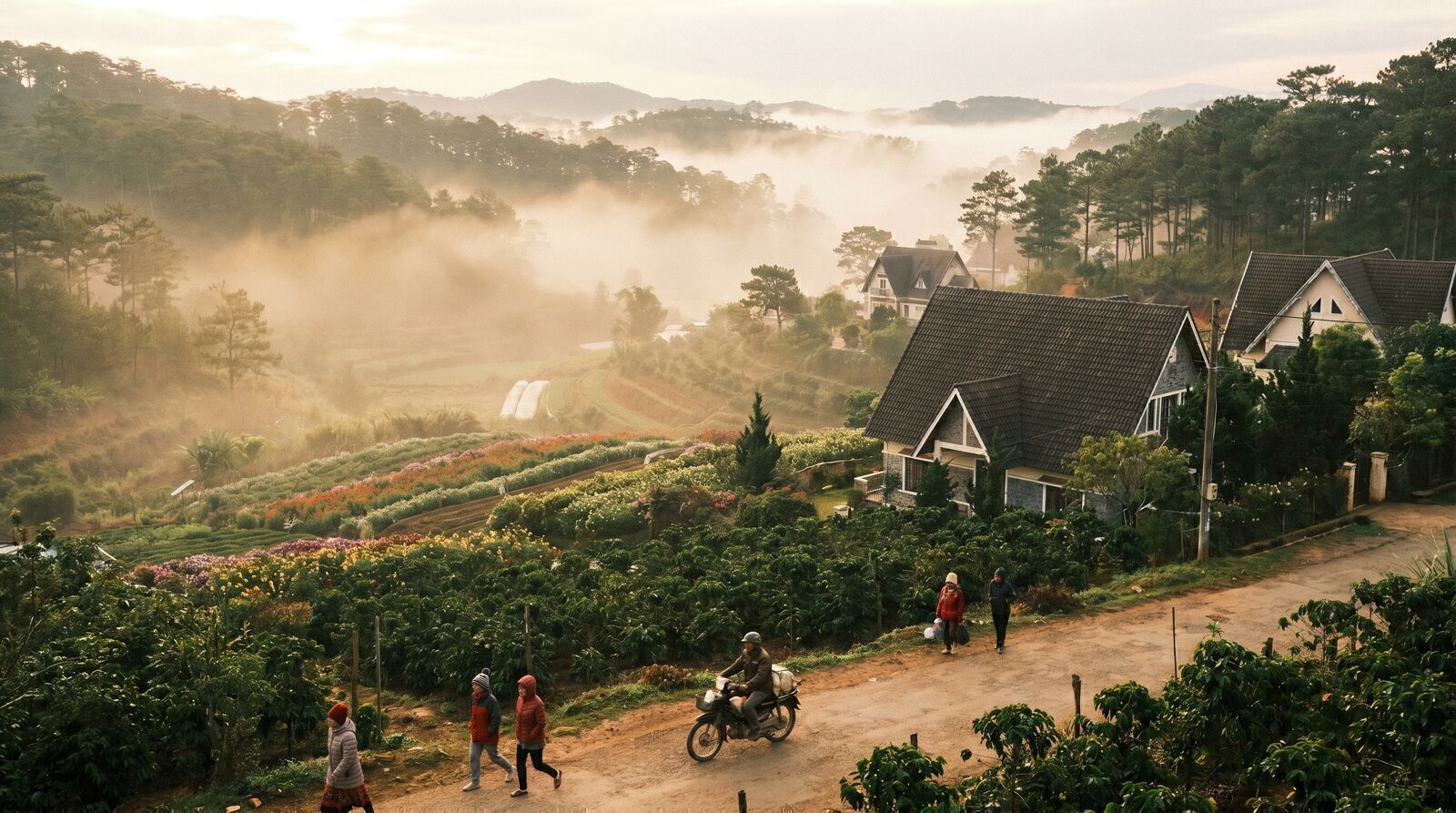
Da Lat is Vietnam with a sweater on: a 1,500-meter highland town of pine forests, coffee farms, French villas and strawberry greenhouses where the air smells like campfire and the evenings genuinely need a jacket. Vietnamese travelers adore it; Western travelers mostly skip it — and both are being rational. This is the honest guide to who Da Lat is for, and the 3–4 slow days that show its real charm.
The Honest Positioning (Read First)
Da Lat’s landscapes — pine hills, lakes, waterfalls — feel familiar if you grew up in Europe or North America; the magic here is Vietnamese culture in a cool climate, not raw scenery. That means: skip it on a short first trip (the coast and karsts are more “only in Vietnam”), but add it if you are on a longer route, love coffee culture, need a break from tropical heat, or want to see where Vietnam goes on its own honeymoon.
What Da Lat Does Brilliantly
- Coffee at the source: Vietnam’s best arabica grows on these hills. Farm cafés let you drink single-origin overlooking the actual plants — the country’s most underrated coffee experience (our coffee-ordering primer applies, plus cold-climate specialties).
- The cool-air reset: 15–24°C year-round. Mid-route, after weeks of tropical sweat, this is medicinal.
- Canyoning & adventure: Da Lat is Vietnam’s adventure-sports capital — rappelling down waterfalls with licensed outfits (choose established operators; this is the one activity worth paying properly for).
- The gardens-and-kitsch circuit: flower gardens, the Crazy House fever-dream architecture, swan boats on Xuan Huong lake, strawberry farms — enjoyably surreal, extremely Vietnamese-holiday.
- Night market grazing: bánh tráng nướng (“Vietnamese pizza” — grilled rice paper with egg and toppings), hot soy milk, grilled corn — cold-evening street food the beach towns cannot do.

The Slow 3–4 Days
- Town rhythm: lake loop walk, Crazy House, market streets, night market grazing after dark.
- Coffee & farms day: scooter or easy-rider to the farm cafés and strawberry greenhouses south of town; sunset at a hillside café.
- Adventure or waterfalls: canyoning for the brave; Datanla and the waterfall circuit (skip the most touristed elephant-adjacent spots) for the rest.
- (Day 4) — the do-little day: villa-café hopping, pine-forest walks, the train-station photo stop, jacket-weather evening phở.
Logistics
- Getting there: 50-min flight from Saigon, or the scenic 4-hour sleeper bus climb; from Nha Trang a dramatic 3.5-hour mountain pass road.
- Where to stay: villa-style guesthouses near the lake or pine-edge boutique stays — $25–60 buys real charm here (check dates).
- Season notes: dry season Nov–April is prime (December–January nights drop near 10°C — pack real layers); rainy season afternoons are misty-moody rather than ruined.
- Pairing: the classic loop is Saigon → Da Lat (cool) → Nha Trang or Mui Ne (coast) → onward — an easy add-on to the month route for week-five travelers.
What Should You Pack for Da Lat?
Layers, and more of them than you think. Da Lat sits high enough that a t-shirt noon becomes a fleece evening, and December–January nights near 10°C feel genuinely cold after weeks in the tropics. A light rain shell, one warm mid-layer, closed shoes, and something for your ears on a scooter cover almost everything.
The mistake we see constantly: travelers arrive from the coast with a bag full of swimwear and end up buying a market jacket on night one. Not a disaster — the night market sells cheap fleece — but the sizing runs small and the good stuff goes fast on cold weekends. Here is how a typical day actually feels, and what earns its place in your daypack.
| Time of day | How it feels & what to wear |
|---|---|
| Early morning | Misty and chilly — fleece or light jacket, long pants, hot coffee non-negotiable. |
| Midday | Warm in the sun, t-shirt weather — but the high-altitude UV burns quietly; bring sunscreen and a hat. |
| Rainy-season afternoons | Misty drizzle rolls in — packable rain shell beats an umbrella on two wheels. |
| Evening | Jacket weather every month; Dec–Jan nights want a real warm layer, not a hoodie over a tank top. |
Common Da Lat Mistakes
Most disappointed Da Lat reviews trace back to the same handful of errors, and all of them are avoidable.
- Treating it as a one-night pit stop. Da Lat’s charm is rhythm — morning mist, farm coffee, slow evenings. Blitz it in a day and you get traffic and a lake. This is a town built for the slow-travel approach or nothing.
- Arriving on a peak weekend. Da Lat is Saigon’s favorite escape, and weekends plus Vietnamese holidays can double crowds and room rates. Midweek, the same town feels half asleep in the best way.
- Riding the passes at dusk. The mountain roads to Nha Trang and the waterfall circuit are gorgeous but foggy, and visibility drops fast after late afternoon. Ride mornings, done by four.
- Booking canyoning by price. This is the one activity where the cheapest quote is a red flag. Pay for the established operator with proper gear and guides.
- Skipping breakfast culture. Hot soy milk, bánh căn rice cakes, and a phở that finally makes sense in the cold — mornings are Da Lat’s best meal window.
How Vietnamese Travelers Do Da Lat — and Why It’s Worth Copying
Watch domestic tourists here and you’ll notice they aren’t chasing sights; they’re performing coziness. Matching sweaters, garden photo circuits, strawberry picking, swan boats at golden hour, then plastic stools around a grill of bánh tráng nướng. It looks kitschy until you try it — then it just feels like a holiday.
Our rule of thumb: pick one “sight” per day and let the rest be café drift. Da Lat is also one of the gentlest towns in Vietnam on a budget — guesthouses, street food, and local coffee cost noticeably less than the beach circuit, which is why it slots so painlessly into a month-long Vietnam budget. Come for two nights, stay for four, leave with a jacket you didn’t plan to buy.
FAQ
Is Da Lat worth it for Western travelers?
On a 2-week first trip: usually no — spend those days on the northern mountains or the coast. On a month-plus route, as a heat break with coffee: genuinely yes.
Is it romantic or kitsch?
Both, unapologetically — swan boats and flower hedges beside genuine pine-forest serenity. Take it on its own terms.
Da Lat vs Sapa for highlands?
Sapa for trekking drama and ethnic-culture immersion; Da Lat for comfort, coffee and cool-air living. They solve different cravings.
Can I base here long-term?
A small remote-work scene exists (cheap rents, café culture, eternal spring climate) — viable for heat-averse long-stayers, though beach-lovers will drift back to the coast (base comparison).
Bottom Line
Da Lat is Vietnam’s cool-air interlude: come for the coffee farms and the sweater evenings, embrace the swan-boat kitsch, ride to a waterfall, and rejoin the tropics rested. Not a first-trip essential — but on a slow route, it is the pause that makes the coast feel new again.
Some links in this guide are affiliate links: if you book through them we may earn a small commission at no extra cost to you. It helps keep our guides honest and free.
Get our free Phu Quoc Trip Kit — the pre-departure checklist, a 5-day plan and our honest booking picks. No spam; at most one email a month.
By subscribing you agree to our privacy policy. Unsubscribe anytime.