Phu Quoc has more than 20 named beaches spread along 150km of coastline — and they are not created equal. Some deserve the postcards; some are victims of construction; and almost all of them change personality with the season. We’ve ranked the eight that matter, honestly, with the right month to visit each.
Before the list, the golden rule: west-coast beaches peak November–March; east- and south-coast beaches peak May–October. A beach that disappoints you in January might be the island’s best in July. (Full explanation in our Sao vs Khem guide.)
| Beach | Coast | Best months | Best for |
|---|---|---|---|
| Sao Beach | South-east | May–October | The postcard swim |
| Khem Beach | South | May–October | Couples, refined quiet |
| Ong Lang | West | November–March | Balanced base — our pick |
| Long Beach | West | November–March | First-timers, sunsets |
| Bai Dai | North-west | November–March | Empty-beach explorers |
| Cua Can | West | November–March | Local river-mouth feel |
| Starfish Beach | Far north | November–April | The photo trip |
| Ganh Dau | Far north | November–March | Lunch with a view |
1. Sao Beach (Bai Sao) — the icon, with an asterisk
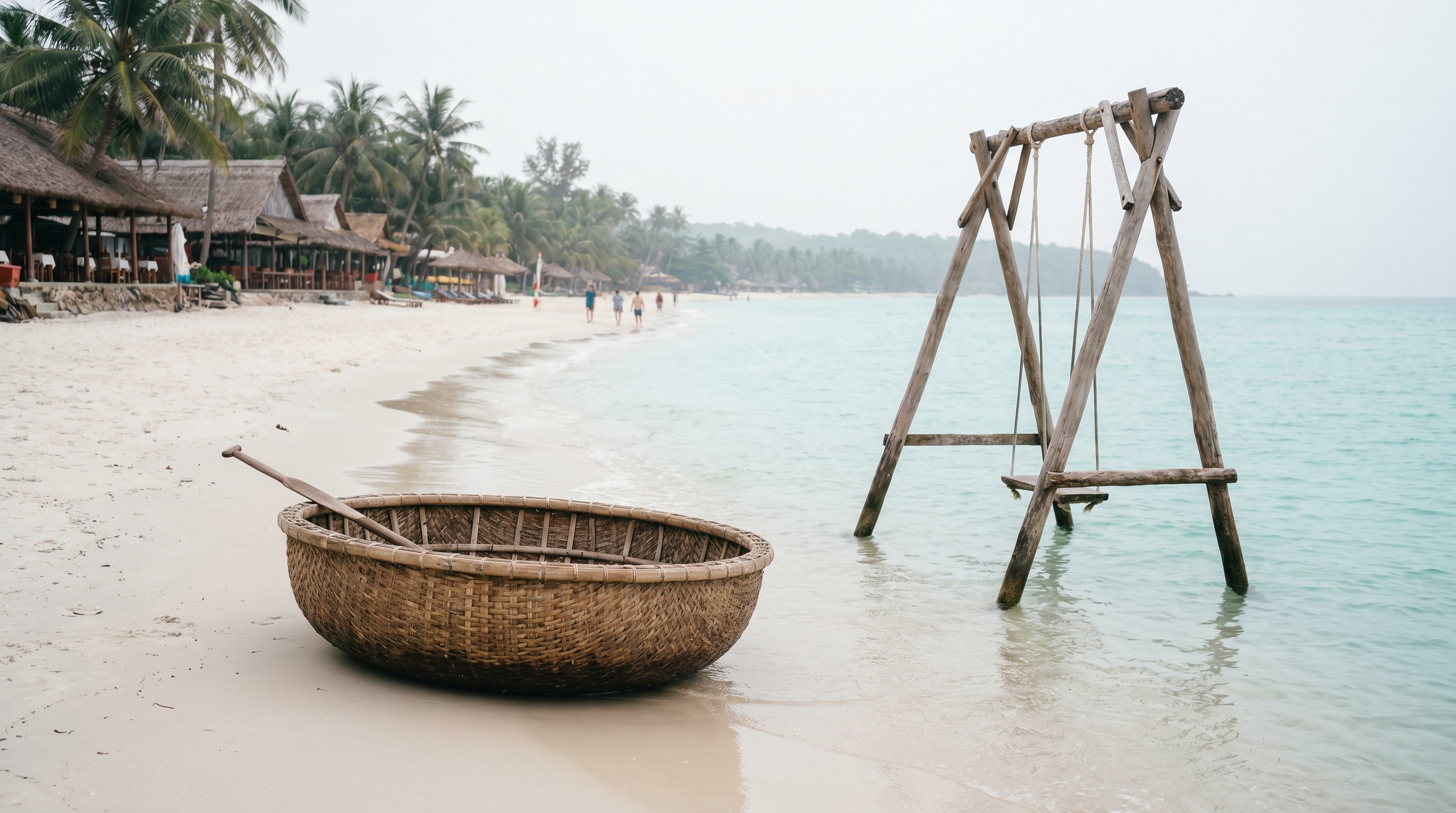
The whitest, squeakiest sand in Vietnam, shallow turquoise water, basket boats and swings. In its calm season it’s a national treasure. In northeast-monsoon months (roughly Dec–Mar) it can wear a seaweed line and drifting debris. Best months: May–October. Go before 10 AM.
2. Khem Beach (Bai Khem) — the refined twin
Creamier, quieter, flanked by the island’s most exclusive resorts but with public access preserved. Same seasonal rules as Sao, fewer crowds, fewer facilities. Best months: May–October. Best for: couples.
3. Ong Lang — the balanced favorite
Our personal pick for a base: golden sand coves, boutique resorts, calm dry-season water and front-row sunsets without Long Beach’s bustle. Rocky patches add character (and snorkeling nooks) but check your stretch if you want pure sand. Best months: November–March.
4. Long Beach (Bai Truong) — the workhorse
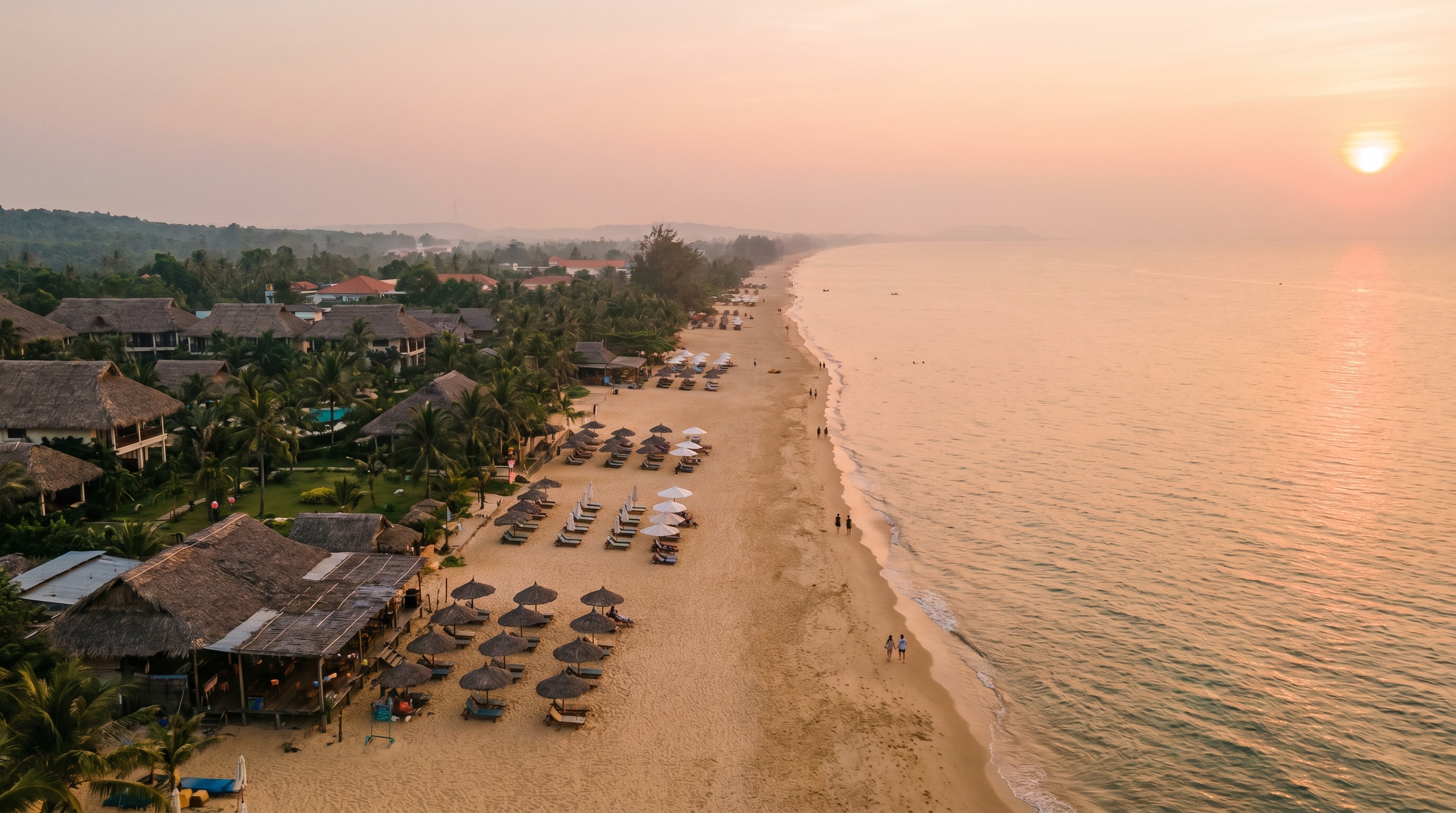
Twenty kilometers of west-facing sand with the island’s restaurants, bars and hotels attached. The northern stretches near town get busy and boaty; walk south for space. Every sunset here is a event. Best months: November–March. Best for: first-timers, sunset lovers. Details in where to stay.
5. Bai Dai — the wild north (what’s left of it)
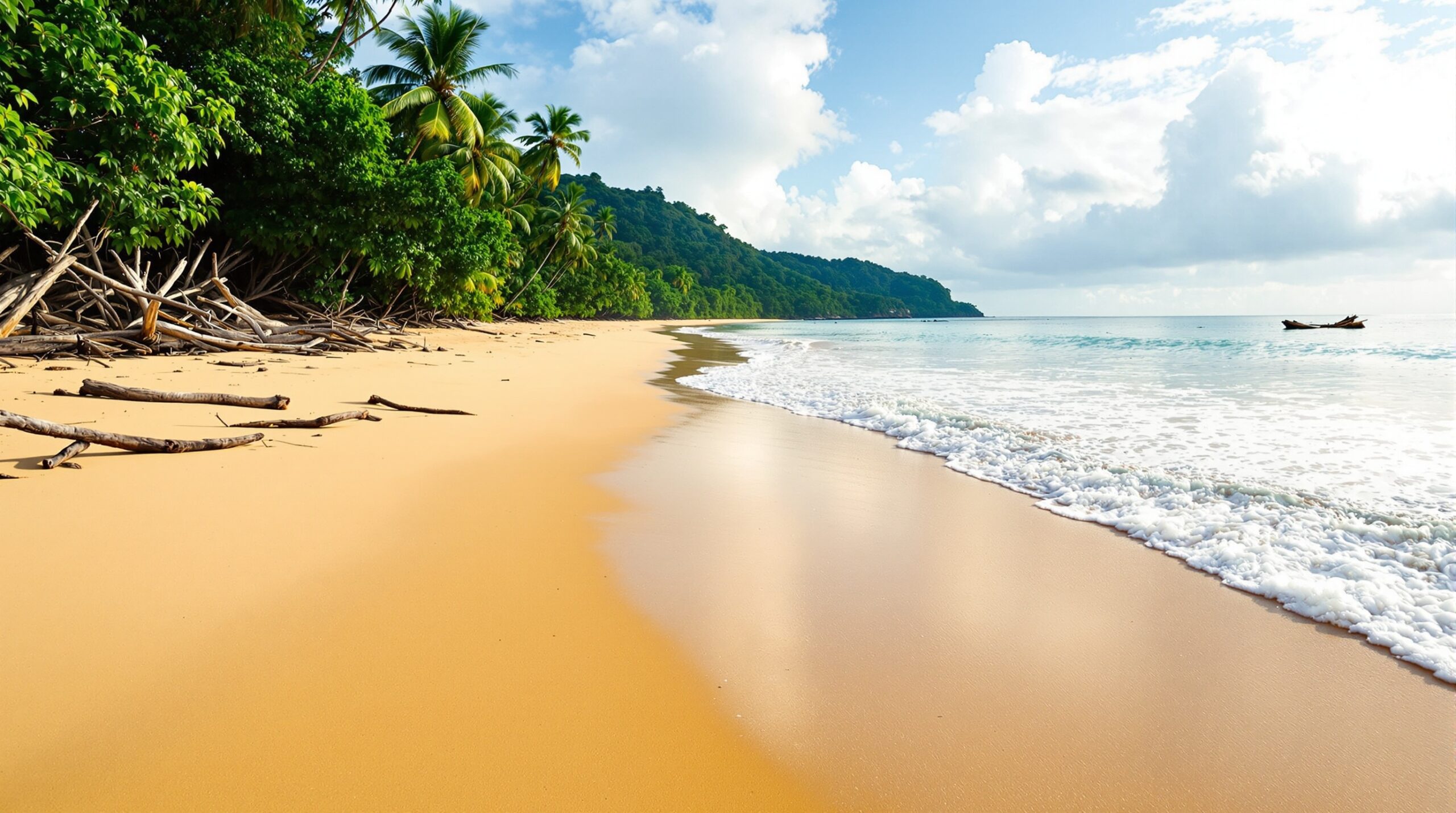
Once Phu Quoc’s famous “wild beach,” now partly claimed by the northern resort developments — but long stretches of jungle-backed, driftwood-strewn sand remain if you ride past the construction. Bring water, expect no facilities, get the island’s best empty-beach photos. Best months: November–March. Best for: scooter explorers.
6. Cua Can — the river-mouth sleeper
Where the Cua Can river meets the sea: fishing boats, sandbars, barely any development, genuinely local feel. Swimming is decent rather than spectacular; atmosphere is the point. Best months: November–March.
7. Starfish Beach (Rach Vem) — the photo op
The far-north fishing village famous for red starfish resting in glassy shallows (mostly November–April). It’s a long bumpy ride, the beach itself is modest, and the floating restaurants are touristy — but the starfish and stilt-village scenery justify one trip. Important: never lift starfish out of the water for photos — it kills them.
8. Ganh Dau — the far-north viewpoint
A curved cape beach looking across to Cambodia, paired with fishing-village seafood shacks. More lunch-stop-with-a-view than swim destination, and a natural pairing with Starfish Beach on a north-island scooter day. Best months: November–March.
The Honest Skips
- Duong Dong town beaches: harbor water, working boats — not for swimming.
- Anything actively behind construction fencing in the south: several once-nice coves are currently building sites. They’ll be back — as private resort beaches.
Cheat Sheet: Which Beach, Which Month, Which Person
- Dry season (Nov–Mar): base at Long Beach or Ong Lang; day-trip north to Bai Dai, Starfish, Ganh Dau.
- Rainy season (May–Oct): Sao and Khem are your reliable swims; west coast for moody sunsets between showers.
- Photographers: Sao (in season), Bai Dai, Starfish Beach.
- Families: Khem or resort-fronted Long Beach — calm, shallow, facilities close. Check the season first in our month-by-month guide.
Are Phu Quoc’s Beaches Free to Use — Even in Front of Resorts?
Yes. Beaches in Vietnam are public by law, and that includes every stretch of sand in front of every resort on the island. What a resort actually controls is its loungers, its pool deck, and its beach bar — not the beach itself. You are allowed on any of it.
The practical catch is access, not permission. Some southern stretches are walled off by long resort frontages, so the polite workaround is the one locals and long-stayers use everywhere: walk in along a public lane or an unfenced gap, or simply order a coffee at a beachfront cafe and treat their path as your entrance. A drink buys you a chair and shade almost anywhere; the sand and the sea were already yours.
One nuance worth knowing: security guards occasionally wave non-guests away from lounger rows, and they are within their rights — the furniture is private even when the beach is not. Lay a sarong two meters away on open sand and nobody will say a word. We have never once been asked to leave a beach itself.
Beach Mistakes We Keep Seeing (and How to Skip Them)
- Doing the wild beaches at midday. Bai Dai, Cua Can and the far north have almost no natural shade, and the sun from roughly 11 AM to 3 PM is punishing. Ride those in the morning or late afternoon and save midday for a cafe or a facility beach.
- Leaving valuables in the scooter seat at empty beaches. Theft is rare here, but an unattended bike on a deserted stretch is the one place it happens. Carry a small dry bag and keep the phone with you, even in the water.
- Swimming near river mouths right after heavy rain. Runoff at spots like Cua Can turns the water murky and occasionally murkier than that. Wait a day, or move to a cove away from the outflow.
- No water shoes on the rocky stretches. The character-adding rocks at Ong Lang hide the odd sea urchin. Cheap water shoes from any minimart solve it.
A One-Day Beach-Hopping Plan That Actually Works
If you want to sample the west and north coasts in a single dry-season day, this is the loop we run with visiting friends. It front-loads the swimming, keeps the shadeless stops out of the midday sun, and ends where the sunset is.
| Time of day | Stop | Why then |
|---|---|---|
| Early morning | Ong Lang swim | Glassy water, coves to yourself |
| Mid-morning | Cua Can photo stop | River-mouth boats in soft light |
| Lunch | Ganh Dau seafood shacks | Shade, food, the Cambodia view |
| Early afternoon | Starfish Beach | Shallows at their clearest window |
| Late afternoon | Bai Dai on the ride back | Empty sand, kinder sun |
| Sunset | Back at Ong Lang or Long Beach | Front-row west-coast finale |
In the rainy months, flip the whole plan to the sheltered side: Sao and Khem in the morning, then let the afternoon showers pass over lunch — our rainy-season guide covers how those days actually flow. And resist the urge to tick off all eight beaches in one visit; three good ones beat eight rushed ones. If you have longer on the island, the pacing in our 5-day itinerary spreads these stops across the week the slow way.
FAQ
What’s the best beach in Phu Quoc?
In its season, Sao Beach — no serious argument. Across the whole year, Ong Lang gives the most consistent quality-of-life per visit.
Are Phu Quoc’s beaches clean?
The honest answer: mostly yes in the right season, with seasonal seaweed/debris on whichever coast the monsoon is hitting, and daily raking at maintained beaches. Island-wide waste infrastructure is improving but still catching up to the tourism boom.
Do I need a car or scooter to beach-hop?
For the top four, Grab works fine. For the wild north (Bai Dai, Starfish, Ganh Dau), you want a scooter or a hired driver.
Can you swim year-round?
Yes — you just switch coasts with the season. There’s always a calm side. Water stays 27–30°C all year.
Bottom Line
Eight real beaches, two seasons, one rule: match the coast to the month. Do that and Phu Quoc delivers world-class sand twelve months a year — no matter what the January seaweed photos or the July storm clouds try to tell you.
Some links in this guide are affiliate links: if you book through them we may earn a small commission at no extra cost to you. It helps keep our guides honest and free.
Get our free Phu Quoc Trip Kit — the pre-departure checklist, a 5-day plan and our honest booking picks. No spam; at most one email a month.
By subscribing you agree to our privacy policy. Unsubscribe anytime.