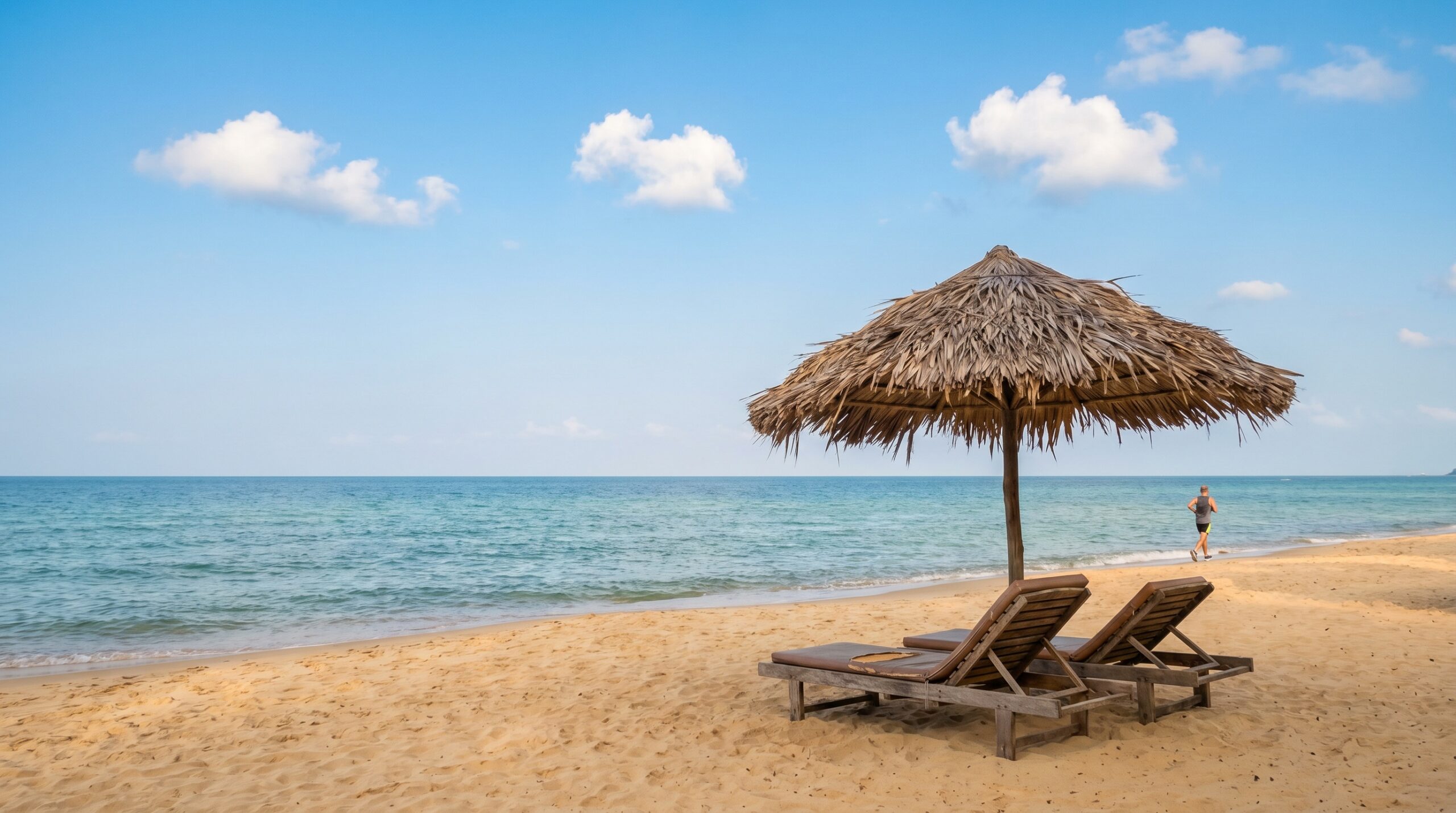
The short answer: November to March is Phu Quoc’s classic dry season — sunny, calm, and reliable — and late November to early December is the smartest slice of it: peak-season weather without peak-season prices. But Phu Quoc has a secret the brochures skip: the island has two best seasons, on opposite coasts. Get this one idea right and you can have a great trip almost any month of the year.
Planning the whole country, not just the island? Our best time to visit Vietnam guide maps all three climates, month by month.
Planning from scratch? Start with our complete Phu Quoc travel guide — the whole trip on one page.
The One Thing to Understand: Two Coasts, Two Seasons
Phu Quoc sits in the Gulf of Thailand and takes its weather from two alternating monsoons:
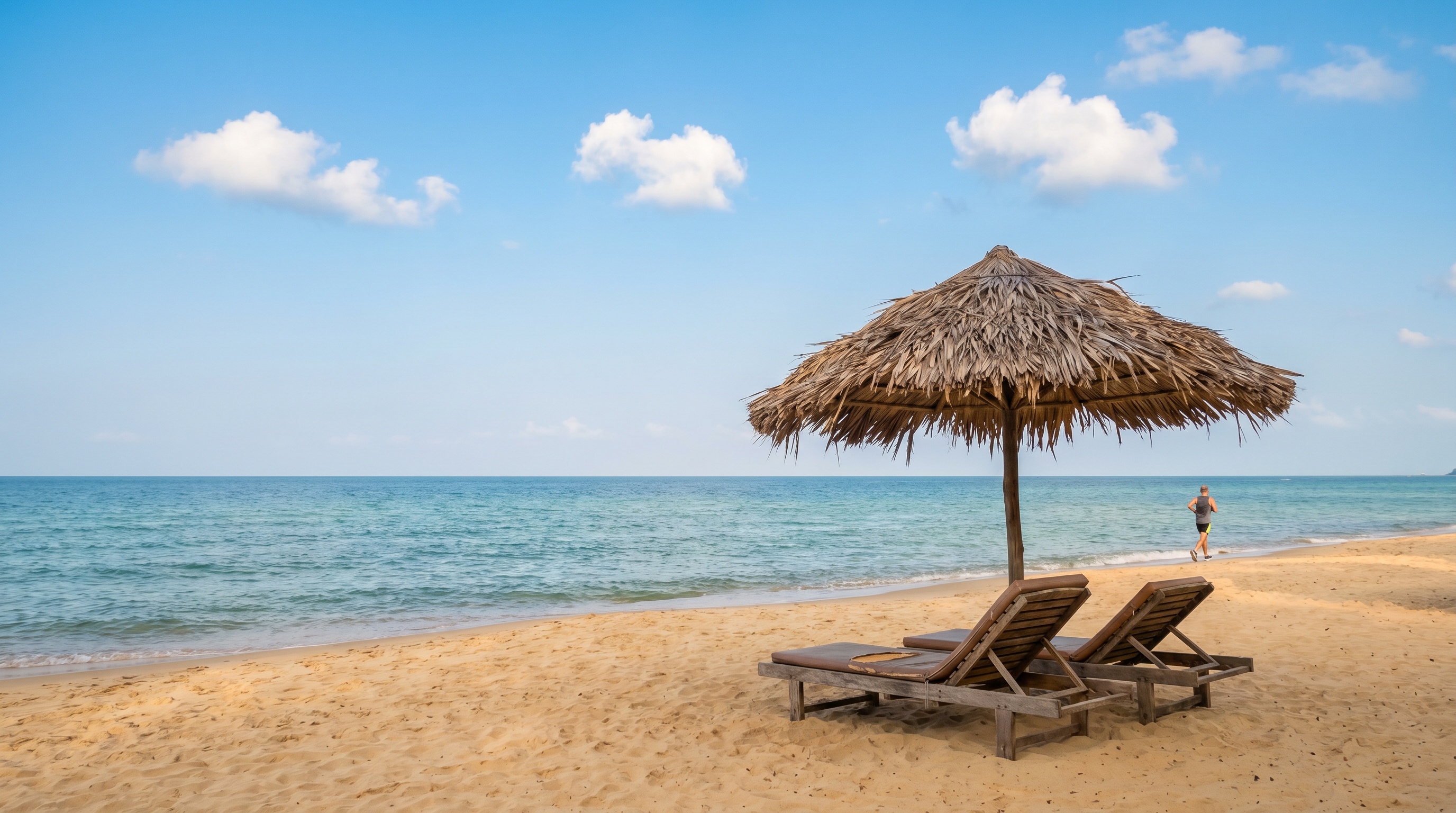
- November–March (northeast monsoon): dry, sunny, low humidity. The west coast — Long Beach, Ong Lang, the sunset strip — is calm, clear and at its absolute best. Meanwhile east/south beaches (Sao, Khem) can collect seaweed and drifting debris.
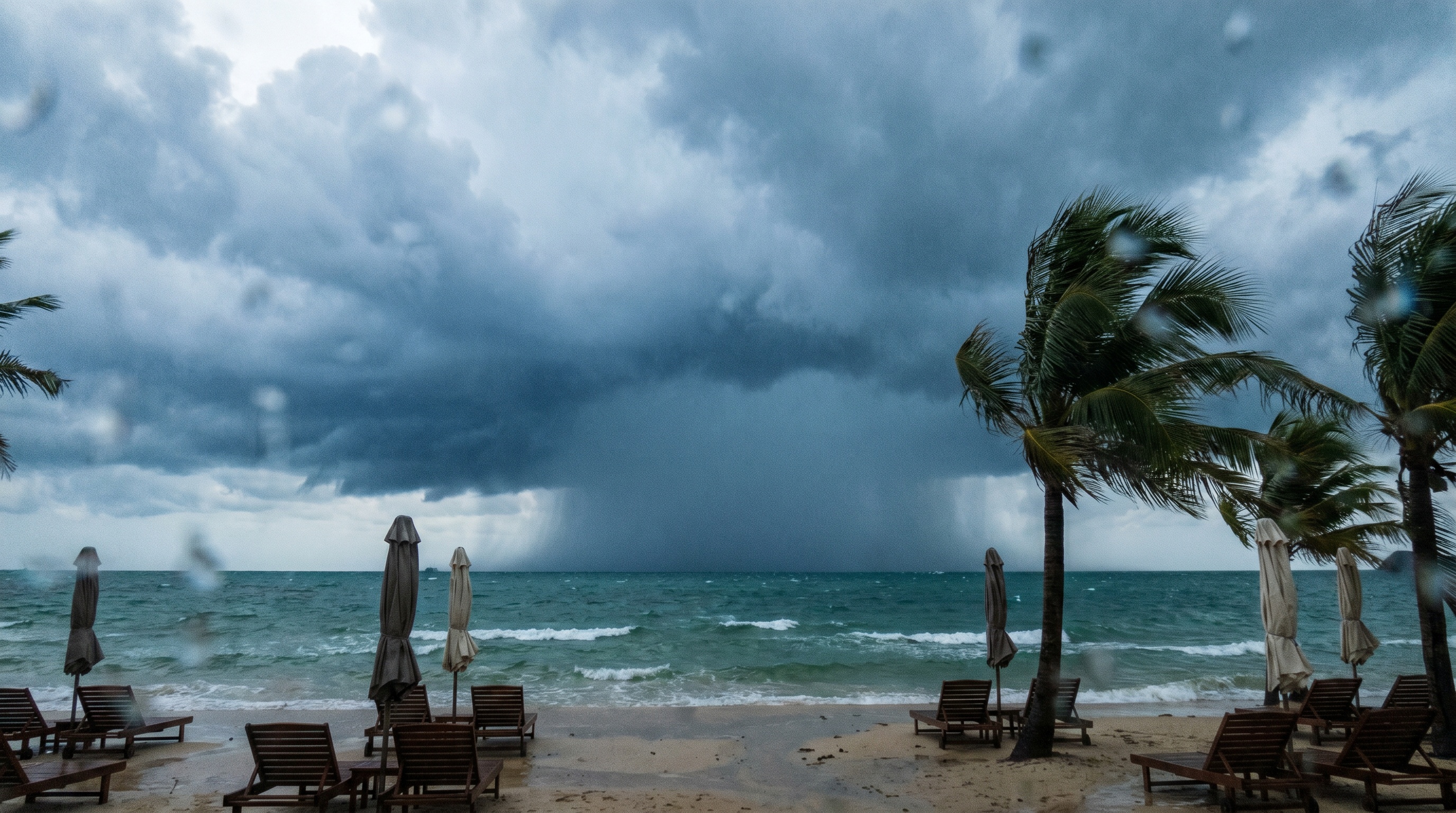
- May–October (southwest monsoon): the rainy season. The west coast gets waves and washed-up debris — but the east and south coasts are sheltered, and Sao and Khem beaches are often at their glassy, postcard-perfect best.
So “is it a good month?” is really “which beach should I base near this month?” We break down the full east-vs-west story in our Sao vs Khem beach guide.
Month by Month, Honestly
| Month | Weather | Swim coast | Prices & crowds |
|---|---|---|---|
| November | Rains taper, sea calms | West | Moderate — the value sweet spot |
| December | Superb and dry | West | High; +20–40% around Christmas |
| January | Peak dry season | West | Peak; Tet surge possible |
| February | Dry and gorgeous | West | High (busier in Tet years) |
| March | Hotter, hazier, sunny | West | Falling — good value returns |
| April | Hot, humid, mostly dry | Transition | Shoulder prices, quiet |
| May | Monsoon arrives | East (Sao/Khem) | Low — prices drop noticeably |
| June–August | Afternoon downpours | East | Low; green and uncrowded |
| September | Wettest month | East | Cheapest of the year |
| October | Rains retreat | East → West | Still low — underrated |
- November: the sweet spot begins. Rains taper off, sea calms, crowds and prices still moderate. Our favorite month on the island.
- December: superb weather; prices and crowds climb toward Christmas–New Year peak (book resorts 1–2 months ahead; rates rise 20–40%).
- January: peak season proper — dry, sunny, busy. If Tet (Vietnamese Lunar New Year, late Jan–mid Feb depending on the year) falls here, expect a surge of domestic travelers, full flights and holiday pricing.
- February: still gorgeous and dry. Tet crowds when it lands in Feb; otherwise slightly quieter than January.
- March: end of prime season — hotter, hazier, but reliably sunny. Good value returns.
- April: transition. Hot and humid, mostly dry with the odd thunderstorm. Shoulder-season prices, quieter beaches.
- May: the southwest monsoon arrives. West coast turns moody; Sao and Khem hit their calm season. Prices drop noticeably.
- June–August: real rainy season — expect a heavy downpour most days, usually an hour or two in the afternoon rather than all-day rain. Lush, green, cheap, uncrowded. Resort pools + east-coast beach days make it workable (month guides: June · July · August).
- September: statistically the wettest month. Cheapest rooms of the year. Only for flexible travelers who are happy reading by the pool through a storm.
- October: rains begin retreating; by late October the island is drying out and prices are still low. Underrated.
Best Month By Travel Style
- First-timers / honeymooners: late November or early December — peak weather, pre-peak prices.
- Families with school holidays: December–January works great; book early and expect company. The Hon Thom cable car and Aquatopia are dry-season no-brainers.
- Budget travelers: May–June or October — 40–60% off peak room rates, east-coast beaches in form, and the rain is manageable.
- Long-stayers and remote workers: shoulder months (April–May, October–November) balance cost, weather and quiet. A month here in this window is absurdly good value.
- Photographers: monsoon skies (June–September) produce the most dramatic sunsets and empty beaches you’ll ever shoot on this island.
Booking Timing That Saves Real Money
- Peak (mid-Dec–Feb): book resorts 4–8 weeks out; popular tours and the cable car sell comfortably in advance — booking activities online ahead also runs cheaper than walk-up prices.
- Shoulder/monsoon: book flights ahead but leave hotels flexible — last-minute rainy-season deals are common, and you can pick your coast based on the week’s conditions.
- Tet warning: if your dates touch Lunar New Year, book everything early and expect domestic-holiday energy: full ferries, busy attractions, festive atmosphere.
The Date-Picking Mistakes We See Most Often
After enough seasons on this island, the same planning errors keep surfacing in reader emails and beach-bar conversations. None of them ruin a trip on their own, but each one quietly costs money, sunshine, or both.
- Booking the room before checking the coast. Most people pick a hotel from photos, then discover their beach is in its off-season. Do it in reverse: month first, coast second, room last. Our where-to-stay guide is organized around exactly this logic.
- Treating “rainy season” as a verdict instead of a schedule. Travelers write off half the calendar because of a label, then pay peak rates for weather that’s only marginally better than a well-planned June week on the east coast.
- Assuming weekdays and weekends feel the same. In our experience the island runs noticeably busier on weekends, when domestic travelers arrive — if your dates are flexible by even a few days, aim your beach-heavy stretch at midweek.
- Leaving zero slack in the plan. In the monsoon months, boat trips and the cable car can pause for an afternoon storm. Build one unscheduled day into any wet-season trip so a rained-out tour becomes a rescheduled one, not a missed one.
Does It Rain All Day in Phu Quoc’s Wet Season?
Almost never. Wet-season rain here usually behaves like a scheduled event: a heavy, dramatic burst that most often lands in the afternoon and clears within an hour or two, leaving washed air and a lurid sunset behind it. All-day gray drizzle of the northern-European kind is the exception, not the pattern.
That rhythm is the key to actually enjoying a monsoon visit. Once you stop fighting the afternoon and start planning around it, a rainy-season day feels less like a compromise and more like a structure:
| Time of day | Typical wet-season conditions | What we plan |
|---|---|---|
| Early morning | Often the clearest, calmest window | Swimming, boat trips, cable car rides |
| Late morning | Warm, building humidity | Beach time, exploring by scooter or Grab |
| Mid-afternoon | The likeliest slot for a downpour | Spa, long lunch, cafe, nap — indoor hours by design |
| Evening | Frequently rinsed clean and cooler | Night market, sunset watching, dinner out |
Our rule of thumb: in the green months, anything that floats or flies happens before lunch. Ordering a multi-day trip the same way — outdoor-heavy days first, flexible days last — is how we structure our five-day itinerary, and it works even better when storms are in play.
What to Pack for Each Season
The packing list barely changes size between seasons, but a few swaps matter more than people expect.
- Dry season (roughly November–March): the sun is the hazard. Bring more sunscreen than feels reasonable, a real hat, and a light layer for breezy evenings by the water. Island shops sell sunscreen, but selection is thin and prices run high for what you get.
- Wet season (roughly May–October): skip the heavy rain jacket — in this heat it turns into a portable sauna. A compact umbrella, quick-dry sandals, and a small dry bag for your phone cover almost every situation. A packable beach towel dries faster than hotel ones ever will.
- Year-round: mosquito repellent for dusk, motion-sickness tablets if boat trips are on the menu, and footwear you can rinse — sand and sudden puddles are both part of the deal.
Whatever the month, pack for the coast you chose, not the brochure version of the island — that one decision does more for your trip than anything on this list.
FAQ
What’s the absolute best month to visit Phu Quoc?
Late November through early December: dry-season weather, calm west-coast sea, and prices that haven’t hit their Christmas peak yet.
Is Phu Quoc worth visiting in the rainy season?
Yes, with adjusted expectations: mornings are often fine, rain comes in bursts, east-coast beaches are at their best, and everything is cheaper and quieter. Skip September if weather certainty matters to you. For the bigger picture, read our honest take on Phu Quoc.
How hot does it get?
Consistently tropical: 25–33°C (77–91°F) year-round, hottest and stickiest in April–May. The sea stays swimming-warm every month.
When is the cheapest time?
September, followed by June and early October — rooms drop 40–60% versus peak. Pair a pool-focused resort with east-coast beach mornings.
Does the cable car run in rainy season?
Yes, daily — but strong afternoon storms can pause it temporarily. Ride in the morning during monsoon months.
Bottom Line
There’s no bad answer, only a wrong coast. November–March for the classic sunny trip on the west coast; May–October for cheap, green, quiet travel with the east coast in form; late November for the single smartest week of the year. Decide your style, pick your coast, and Phu Quoc shows up for you almost year-round.
Some links in this guide are affiliate links: if you book through them we may earn a small commission at no extra cost to you. It helps keep our guides honest and free.
Get our free Phu Quoc Trip Kit — the pre-departure checklist, a 5-day plan and our honest booking picks. No spam; at most one email a month.
By subscribing you agree to our privacy policy. Unsubscribe anytime.