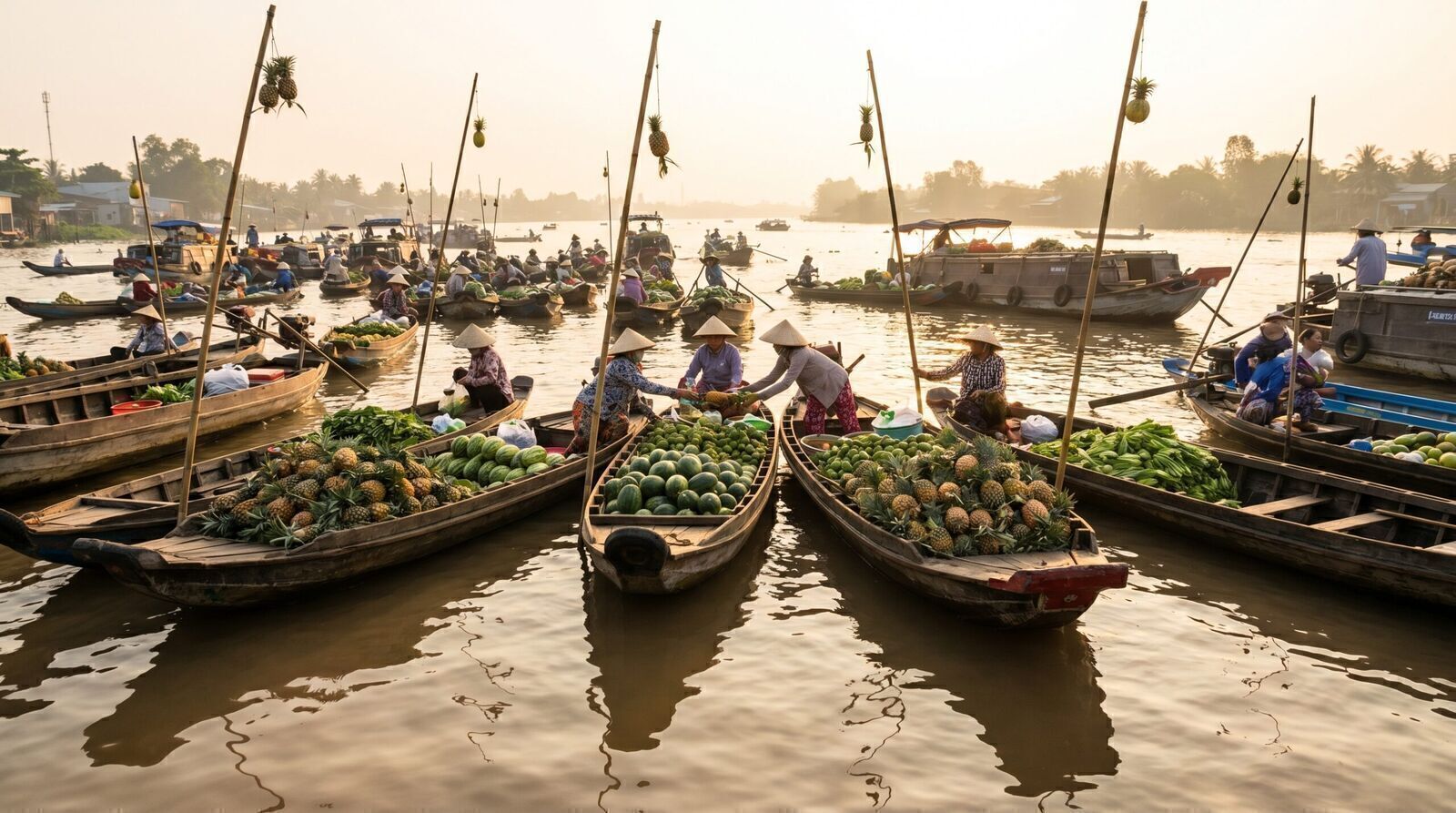
The Mekong Delta is Vietnam’s rice bowl and its slowest world: nine river mouths, orchard islands, boats as daily transport — and Can Tho, the delta’s easy-going capital, is the right base to meet it. The one rule: stay the night. The floating market peaks at dawn, and dawn belongs to people who slept in Can Tho, not to the 6 AM bus from Saigon.
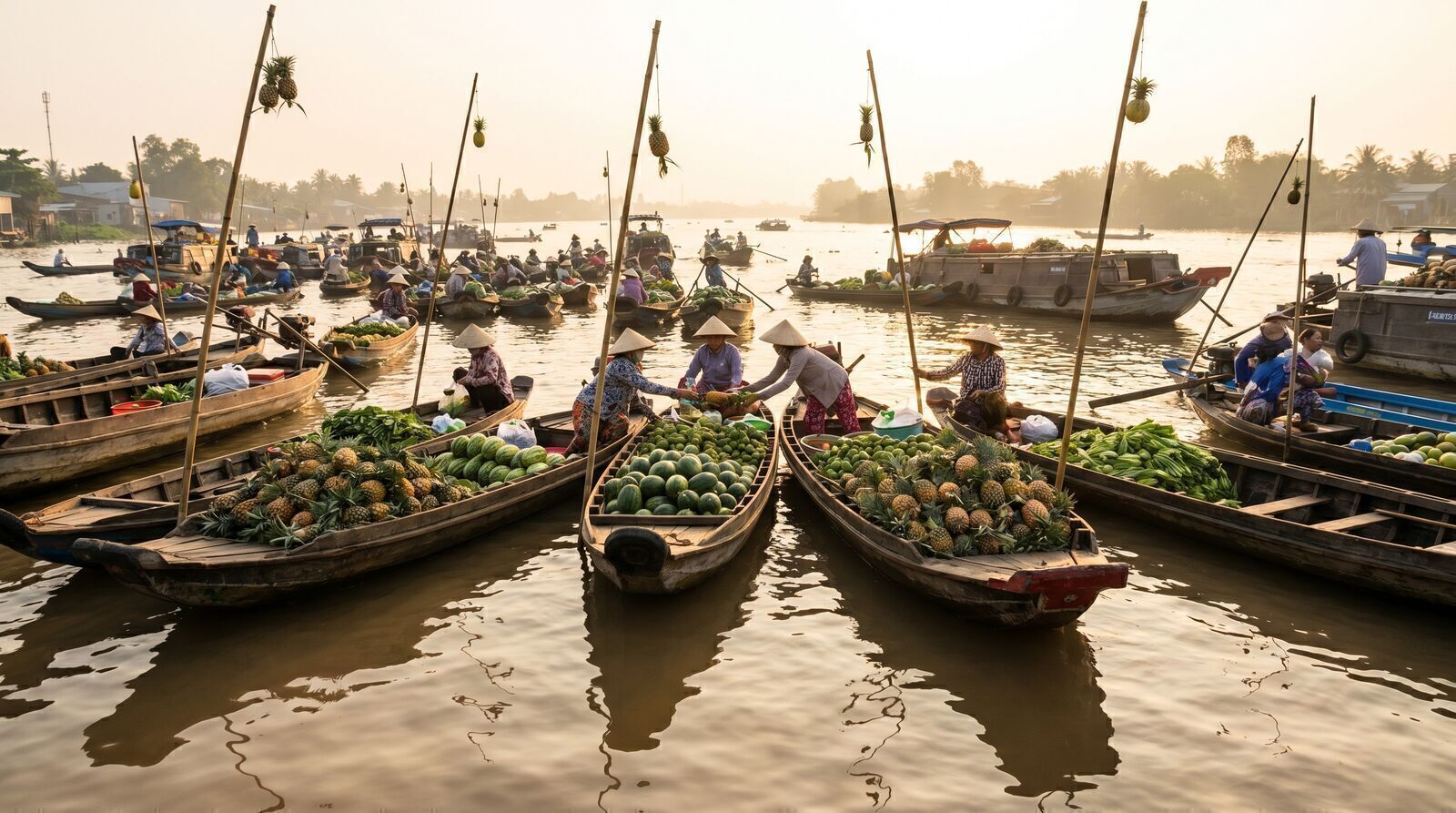
The Main Event: Cai Rang Floating Market
- What it is: the delta’s wholesale market afloat — barges hang samples on tall poles (a pole of pineapples = pineapple boat), smaller boats weave between selling coffee and hủ tiếu noodle breakfasts to traders.
- Timing is everything: real trading runs 5:30–8 AM; by 9 it is a photo of what it was. Charter a small boat from Ninh Kieu pier around 5 AM (~300–500k VND for the boat, 3 hours) or join a small-group sunrise tour.
- Do it right: breakfast ON the water — a bowl of noodle soup passed over the gunwale from a cook-boat is the delta’s signature meal. Add a stop up a side canal to a noodle-making workshop or orchard.
- Honest note: floating markets are slowly shrinking as roads improve — this is living heritage on a timer, closer to its end than its beginning. Go respectfully; buy the fruit.
Beyond the Market: the Delta Half-Days
- Canal cycling: islands across the river hide lanes through orchards and stilt hamlets — rent a bike or join a cycle tour; this is where the delta slows to a saunter.
- Orchard grazing: fruit farms let you eat rambutan, mango and pomelo under the trees for pocket change.
- Binh Thuy ancient house & the Buddhist temples: the compact heritage circuit between boat mornings.
- Night: Ninh Kieu riverfront — promenade, night market snacks, neon bridge, the town’s whole social life in half a kilometer.
The 2-Day Delta Done Slow
- Day 1: Saigon → Can Tho (3–3.5h limousine van), check in near Ninh Kieu, canal-island cycling afternoon, riverfront dinner (delta specialties: bánh xèo the delta way, grilled snakehead fish, hot pot of river greens).
- Day 2: 5 AM boat → Cai Rang sunrise + canal detour + boat breakfast → back by 9, café recovery, orchard or ancient-house stop, afternoon van back to Saigon (or deeper into the delta toward Chau Doc and the Cambodia river border for the adventurous).
Logistics
- Stay: riverside hotels by Ninh Kieu run $25–60 for solid comfort (check dates); garden homestays across the river do the rural version.
- Season: the delta is year-round friendly; flood season (Sep–Nov) actually plumps the canals and greens everything — mornings stay boat-able.
- Route logic: the natural pairing is Saigon → Can Tho overnight → back, or the delta as the gateway before flying out of Can Tho to Phu Quoc — a 45-minute hop that strings rice bowl to beach perfectly.
Private Charter, Small Group, or Big Boat?
The boat you choose at Ninh Kieu shapes the whole morning more than anything else. Big double-decker boats are cheapest per seat but move on a fixed loop, sit high above the trading, and mostly cannot slip up the narrow side canals where the delta gets quiet. Small boats — chartered or in a small group — put you at gunwale level, where the coffee sellers can actually reach you.
| Boat option | What you actually get |
|---|---|
| Private small-boat charter | Your own pace, side-canal detours, boat breakfast at will — the version we recommend |
| Small-group sunrise tour | Similar boat with a guide who translates the market’s logic; easiest to arrange the night before |
| Large tour boat | Cheapest and most comfortable seat, but you watch the market rather than sit inside it |
Whichever you pick, confirm the departure time twice — the difference between a 5 AM and a 6:30 AM start is the difference between commerce and cleanup. Slower and smaller wins here, the same logic that runs through our whole slow travel Vietnam approach.
What Should You Not Do at Cai Rang?
Don’t arrive after eight, don’t pick the biggest boat at the pier, and don’t treat working traders as props. Ask before close-up photos, buy something from the boats you point a camera at, and keep drones well away from the market. Cai Rang tolerates visitors best when visitors behave like customers.
The traders here are wholesalers moving produce, not performers — a boat that pauses mid-sale so someone can frame a shot is losing money. The fix costs almost nothing: buy the pineapple, take the coffee, and the same people who ignored your camera will start waving you closer.
Two smaller courtesies we have learned to keep: wear the life jacket your boat hands you without fuss (the wake from barges is real), and resist bargaining hard over sums that translate to pocket change. Saving fifty cents on a boat coffee is not the win it feels like at 6 AM.
Eating Can Tho Beyond the Boat Breakfast
The city rewards an evening of eating as much as a dawn on the water. Two local specialties are worth hunting down on land. Nem nướng Cái Răng — grilled pork skewers you roll yourself into rice paper with a pile of herbs and green banana — is the dish this district lends its name to, and the DIY wrapping ritual is half the pleasure. Bánh cống, a crisp fried cup of mung bean, pork and shrimp, is the delta’s great street snack, eaten dunked in fish sauce with lettuce wraps.
Around Ninh Kieu after dark, the night-market stalls fill in the rest: grilled river snails, sugarcane juice, and sweet chè desserts by the plastic-stool-full. Street eating here sits at the cheap end of the national scale — a full evening of grazing costs less than a hotel breakfast, part of why the delta features in our one-month Vietnam budget math. We keep coming back to the same pattern: boat breakfast at sunrise, long café lull, then eat the city all evening.
FAQ
Can I do the Mekong as a Saigon day trip?
The My Tho/Ben Tre day tours exist and feel like it — coconut-candy stops and canoe queues. The delta’s real texture needs the Can Tho overnight; it is the difference between seeing a market and seeing a way of life. If you only have one day, the Can Gio mangrove trip an hour from Saigon is the honest substitute.
Is Cai Rang touristy now?
Tourist boats share the water, but the trading is genuine commerce — arrive before 7 and the wholesale rhythm dominates. It is a working market that tolerates cameras, not a show.
Is the delta worth it on a 2-week trip?
If Vietnam-beyond-the-highlights matters to you, yes — one overnight. If beach time is scarce, spend it on the island and save the delta for the return trip.
Bottom Line
Sleep in Can Tho, board at five, eat noodles over the gunwale at sunrise, cycle an orchard lane after — the Mekong rewards exactly one overnight of effort with the most human morning in Vietnam. Then fly the 45 minutes to the island and watch the same river’s silt turn to white sand.
Some links in this guide are affiliate links: if you book through them we may earn a small commission at no extra cost to you. It helps keep our guides honest and free.
Get our free Phu Quoc Trip Kit — the pre-departure checklist, a 5-day plan and our honest booking picks. No spam; at most one email a month.
By subscribing you agree to our privacy policy. Unsubscribe anytime.