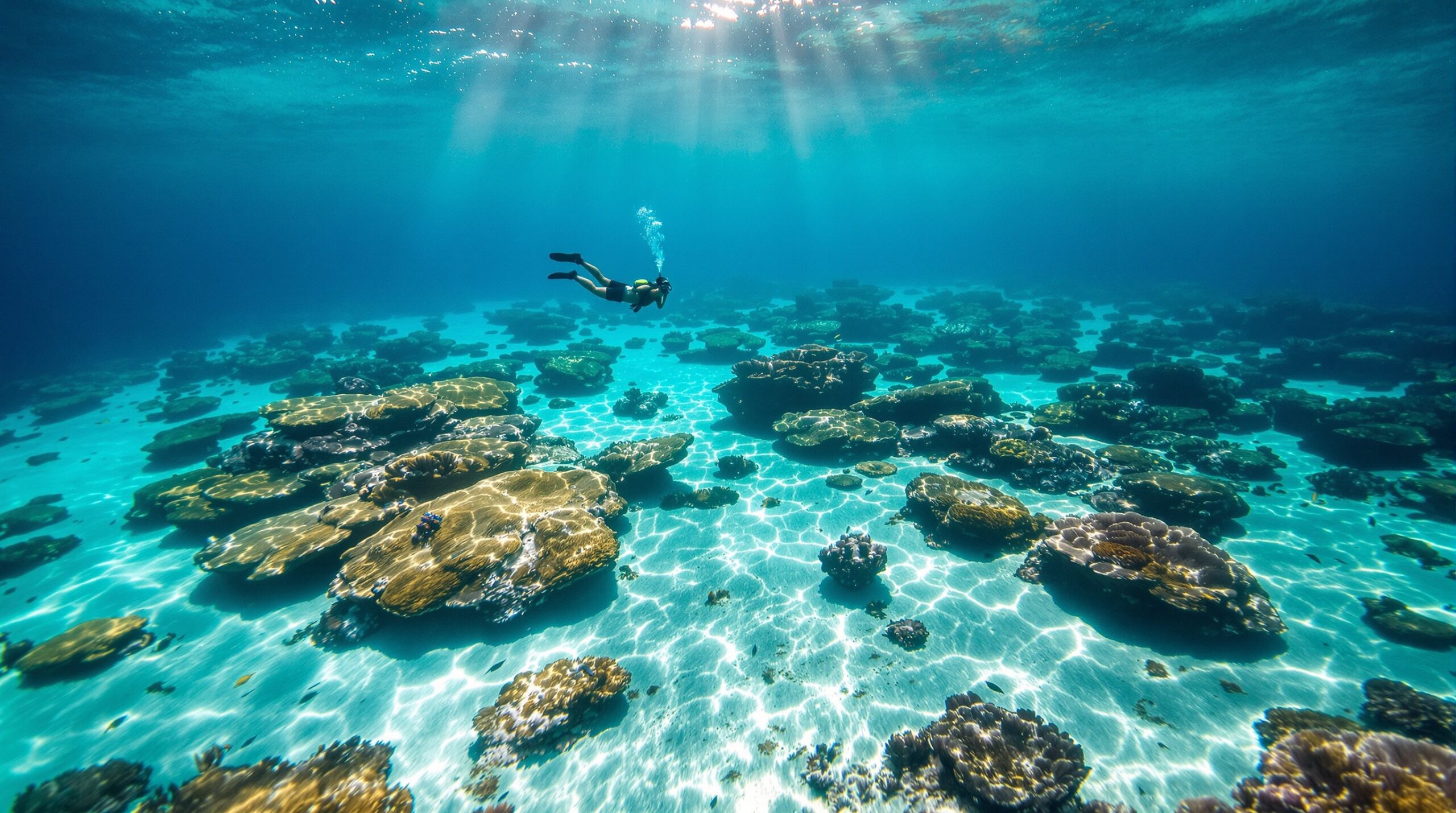
Let’s answer the question every honest guide should start with: is snorkeling in Phu Quoc actually good in 2026? The truthful answer — it’s pleasant, not spectacular. Much of the shallow coral near the busy spots has bleached or died, and fish life is thinner than a decade ago. But the boat day itself — swimming off empty islets in the An Thoi archipelago, seafood lunch on deck, turquoise water all around — remains one of the best days you can have on the island. Go with the right expectations and the right tour, and you’ll love it.
Where the Snorkeling Happens
Virtually all tours head to the An Thoi archipelago — the scatter of 15+ islets off Phu Quoc’s southern tip (the same islands the Hon Thom cable car soars over). Common stops: May Rut, Mong Tay, Gam Ghi and Buom islands. The standard formula: 2–3 snorkel/swim stops, one beach-islet stop, lunch on board or on an island.
Picking a Tour (Quality Varies Wildly)
- Group boat tours ($25–45, lunch included): the default. Fine boats, big groups in peak season. Morning departures get calmer water and emptier islets.
- Speedboat small-group tours ($50–80): fewer people, more stops, more actual water time — the upgrade that’s usually worth it for snorkel-focused travelers.
- Private charters ($150–300/boat): your itinerary, your pace. Splits well between 2–3 couples.
- Book online with recent reviews — compare current tours and prices here. Quality shifts season to season; last month’s reviews matter more than the brochure.
What You’ll Actually See
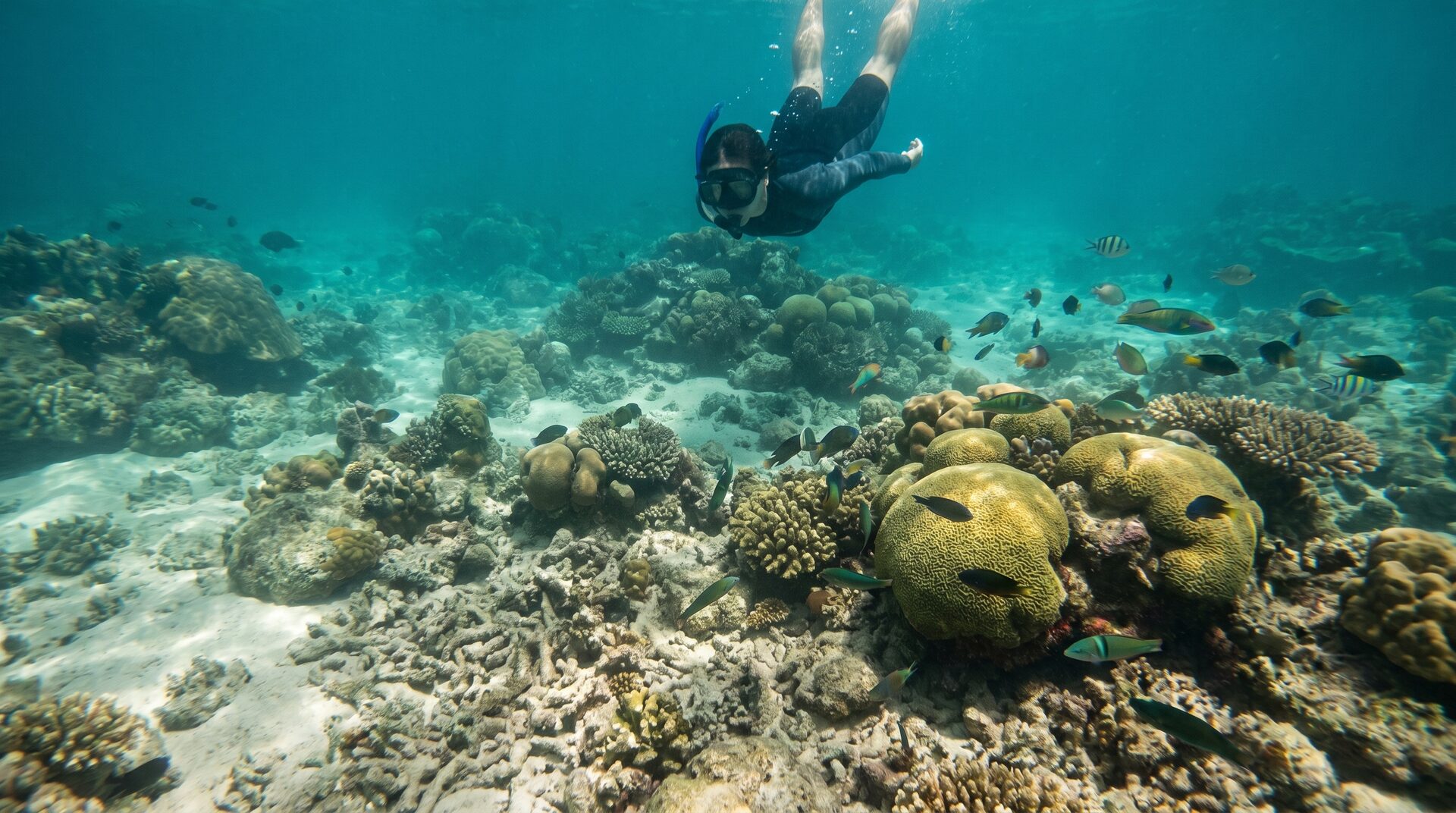
- The good: warm clear water (often 10–20m visibility in dry season), anemonefish, parrotfish, sergeant majors, the occasional ray, sea urchins (don’t step!), and photogenic shallows around the islets.
- The honest: significant bleached and broken coral, especially at the most-visited sites. If you’ve snorkeled Indonesia, the Philippines or the Red Sea, calibrate down.
- The tip: ask the crew for the sites farther out — the extra 20 minutes of boat time buys noticeably healthier reef.
Make It a Great Day Anyway
- Go in dry season (November–March) for the calmest, clearest water — monsoon months bring chop and cancellations (seasons guide).
- Morning tours beat afternoon: better light, calmer sea, fewer boats at the sites.
- Bring: reef-safe sunscreen (apply before boarding), motion-sickness tablets if unsure, a rash guard (better than re-applying sunscreen), and a dry bag.
- Skip the touch-tank behavior: no standing on coral, no collecting shells or starfish. The reef has enough problems.
- Divers: Phu Quoc has dive shops and easy shallow sites — a fine place to learn, not a destination trip for experienced divers.
What Does a Snorkeling Day Actually Look Like?
Expect a six-to-eight-hour outing: an early hotel pickup, a drive down to the southern harbor, two or three in-water stops, a beach islet, lunch on deck, and a return by mid-afternoon. Actual mask-in-the-water time totals roughly two hours — the rest is scenery, food, and easy deck time between islands.
Knowing that rhythm changes how you prepare. You are not signing up for a swim marathon; you are signing up for a boat day with swimming chapters. Eat a light breakfast (an empty stomach is worse for seasickness than a modest one), and treat the transfers as part of the experience — the ride through the archipelago is half the show.
| Part of the day | What typically happens |
|---|---|
| Early morning | Pickup from Long Beach or Ong Lang hotels, then the drive to the southern harbor |
| Mid-morning | First one or two snorkel stops — the calmest water and best light of the day |
| Midday | Lunch on board or on a beach islet, with time to swim off the sand |
| Early afternoon | Final water stop — often the farther, healthier site if you asked the crew |
| Mid-afternoon | Ride home and hotel drop-off, with time for a shower before sunset |
One logistics note: if you are staying north of Ong Lang, confirm that pickup is actually included — some operators expect you to meet the boat at the harbor, which means arranging your own ride south. Our getting-around guide covers what that trip looks like.
Common Mistakes We See on Every Boat
After enough of these trips, the same handful of avoidable errors shows up again and again. None of them ruin the day outright, but each one chips away at it.
- Taking seasickness tablets too late. They work as prevention, not cure — take them before boarding, not after the first swell hits.
- No waterproof pouch for the phone. Half the boat ends up handing phones to strangers for photos or leaving them in a damp pile. A cheap neck pouch solves both.
- A fogging mask. Foggy lenses spoil more snorkel stops than tired coral does. Ask the crew for defog — or use the old spit-and-rinse trick — before every entry, not just the first.
- Wearing rings and sunglasses into the water. The sea floor of the An Thoi islands is quietly collecting jewelry. Leave valuables in a zipped bag on board.
- Racing the group off the boat. Let the splash-and-shout crowd settle, then swim toward the edges of the drop zone. The fish relocate away from the commotion, and so should you.
- Booking the boat for your last day. A windy forecast can cancel the trip with no room to rebook. Put it early in your stay instead.
Where the Boat Day Fits in a Longer Stay
Our rule of thumb: schedule the boat day in the first half of your trip. If weather forces a cancellation, you can slide it later; if it runs, you have the rest of the stay to be pleasantly tired. It also pairs naturally with a slow beach afternoon the following day rather than another big outing. If you are working with five days or more, we slot the boat on day two or three — see how it sits alongside everything else in our five-day itinerary.
FAQ
Can I snorkel from the beach without a tour?
Mostly no — the mainland beaches are sandy-bottomed. The reef bits worth seeing need a boat (or the cable car to Hon Thom, where rental gear and roped swim zones exist).
Is it safe for weak swimmers and kids?
Yes — tours provide life jackets, stops are in calm shallow bays, and crews are used to first-timers. Kids from ~6 up generally do great.
Squid fishing night tours — worth it?
They’re fun in a low-key way: sunset, lights on the water, jigging for squid the crew fries on the spot. Manage expectations on catch size and it’s a pleasant $20-25 evening.
Snorkeling or the cable car — if I can only do one south-island thing?
Cable car for guaranteed spectacle; boat day for the in-the-water experience. With three days you fit both — see our itinerary.
Bottom Line
Book a small-group morning tour in dry season, ask for the farther sites, and treat the snorkeling as one ingredient in a gorgeous boat day rather than the headline. Phu Quoc’s underwater world is honest-good, the day on the water is genuinely great — and now you know the difference before paying.
Some links in this guide are affiliate links: if you book through them we may earn a small commission at no extra cost to you. It helps keep our guides honest and free.
Get our free Phu Quoc Trip Kit — the pre-departure checklist, a 5-day plan and our honest booking picks. No spam; at most one email a month.
By subscribing you agree to our privacy policy. Unsubscribe anytime.