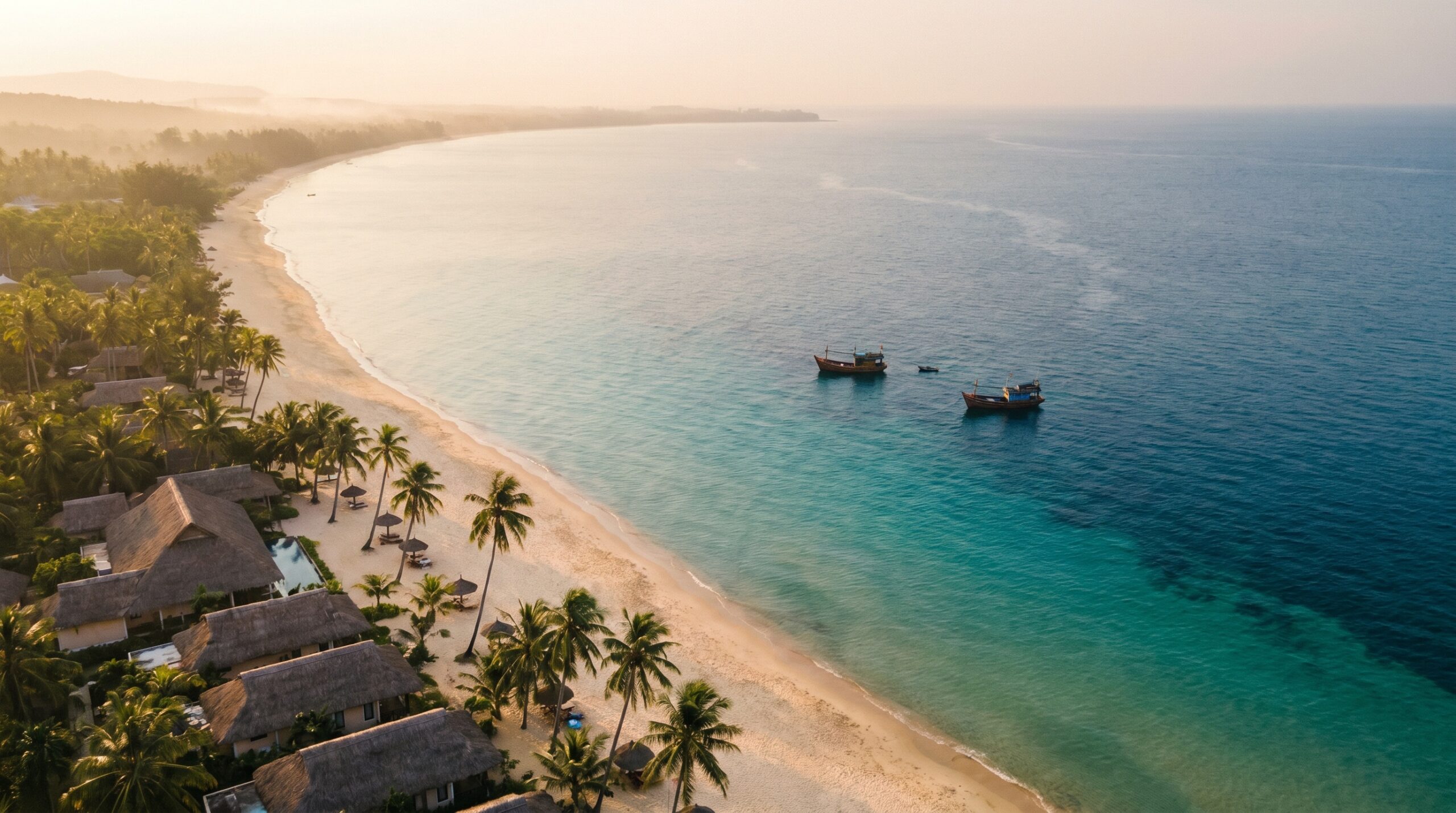
Short answer: yes, Phu Quoc is still worth visiting in 2026 — but only if you pick the right beach, the right season, and arrive with the right expectations. This island is not the untouched paradise some five-year-old blog posts still describe, and it’s not the concrete disaster some angry forum threads make it out to be either. The truth sits somewhere in between, and that’s exactly what this guide covers.
Planning from scratch? Start with our complete Phu Quoc travel guide — the whole trip on one page.
My family is from southern Vietnam, and we’ve watched Phu Quoc transform year after year — not as tourists flying in once, but as people who keep coming back. So instead of recycling the same “tropical paradise” clichés, here’s an honest, current answer to whether Vietnam’s biggest island deserves your vacation days this year.
The Quick Verdict
- Worth it if: you want warm sea, white-sand beaches, cheap incredible seafood, and resort value that Thailand and Bali struggle to match at the same price.
- Think twice if: you’re chasing untouched nature, hate construction sites, or plan to visit during the wrong months (more on the seaweed season below).
- The sweet spot: 4–5 days between November and March, staying around Ong Lang or the quieter stretches of Long Beach.
Why Phu Quoc Is Still Worth It in 2026
1. The beaches — when you choose correctly
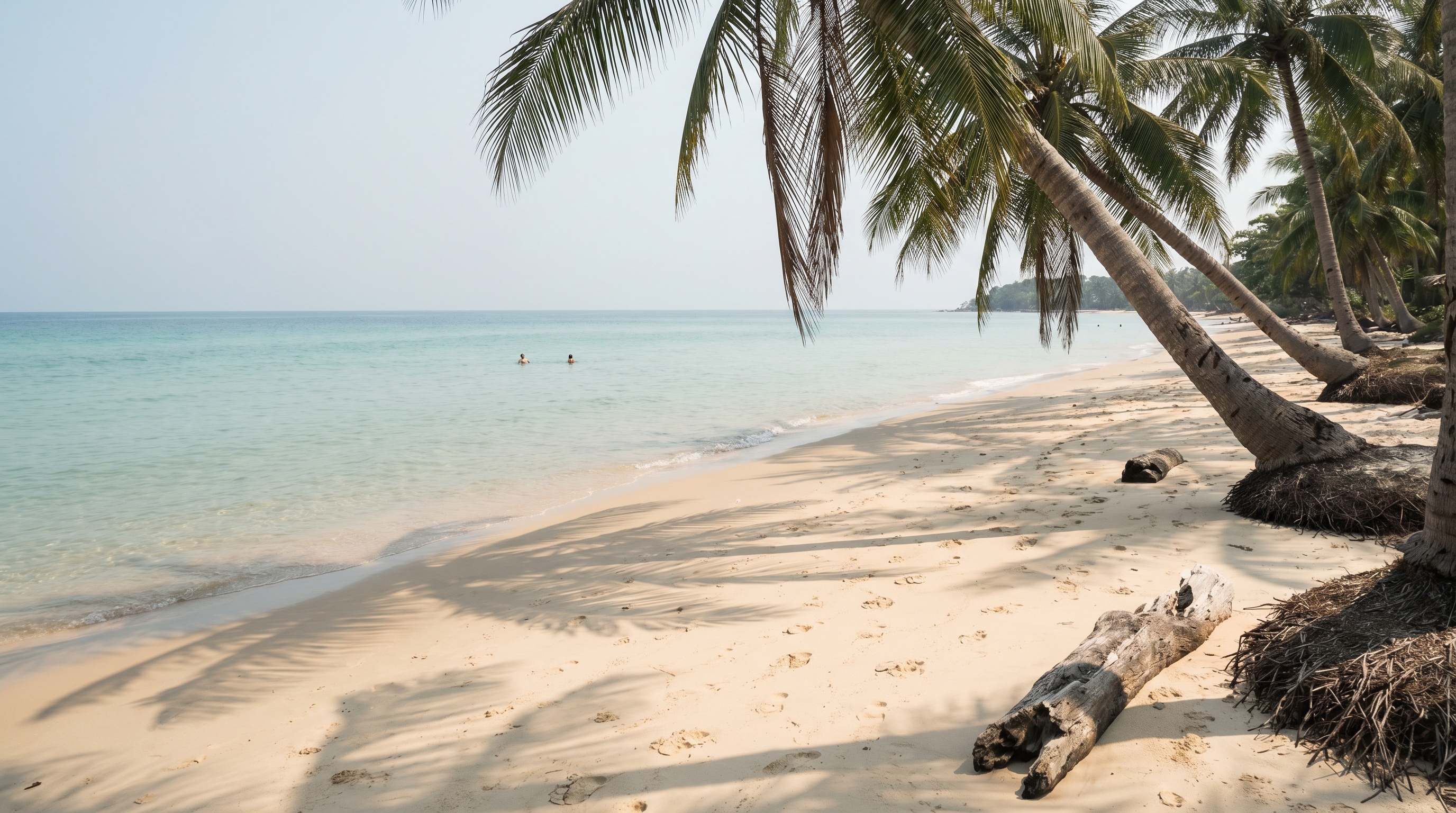
Phu Quoc’s best beaches are genuinely world-class. Sao Beach on a good day in dry season — powder-white sand that squeaks under your feet, shallow turquoise water stretching out for a hundred meters — still beats almost anything in Southeast Asia. Ong Lang and Cua Can in the northwest keep a sleepy, palm-fringed feel that the brochures promise. The key phrase is when you choose correctly: not every beach looks like the postcards year-round, and I’ll be straight with you about that in the downsides section.
2. Visa-free entry makes it the easiest tropical trip in Asia
Phu Quoc has a special status: most nationalities can fly in visa-free for up to 30 days, no paperwork, no e-visa application — a perk that applies even to travelers who would normally need a visa for mainland Vietnam (as long as you enter and leave through Phu Quoc directly). Combined with the expanding international airport, it’s become one of the lowest-friction beach destinations anywhere in Asia. There’s a reason international arrivals jumped roughly 50% year-on-year in early 2026.
3. Seafood at prices that feel like a typo
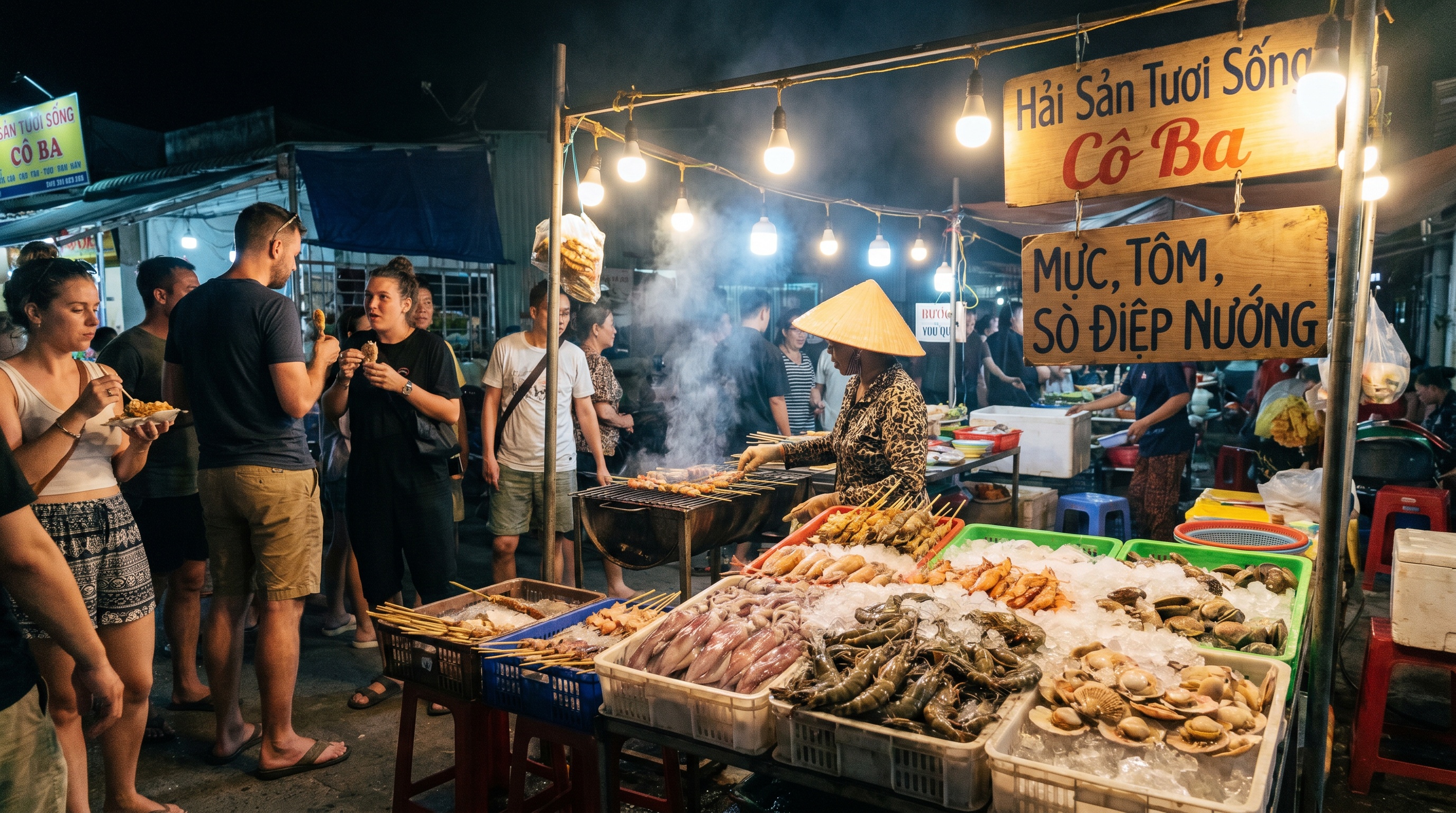
Dinner at Duong Dong’s night market: a whole grilled fish, a plate of garlic-butter prawns (full menu in our food guide), morning glory, two beers — and you’ll usually walk away having spent less than a single cocktail costs at a Maldives resort. Go where the Vietnamese families eat (the stalls with plastic stools and the loudest crowds), point at what’s swimming in the tank, and you’ll eat better than at most resort restaurants for a quarter of the price.
4. Resort value is hard to beat
This is where Phu Quoc quietly wins against Phuket and Bali: a genuinely nice 4-star beachfront resort with pool and breakfast routinely costs $60–100 a night. The same room in Phuket runs half again as much; in the Maldives, ten times. If your idea of a good trip is a pool, a beach, a massage, and a seafood dinner without watching your budget, the math strongly favors Phu Quoc.
5. Sunsets on the west coast, every single evening
Phu Quoc faces west across the Gulf of Thailand, which means the entire Long Beach–Ong Lang coastline gets front-row sunset seats every clear evening. Locals gather on the sand around 5:30pm with cold beers; it costs nothing and it never gets old. (We ranked the 7 best sunset spots.)
The Honest Downsides (What Instagram Won’t Show You)
1. Construction is everywhere
Phu Quoc’s visitor numbers grew by nearly 2,000% in under a decade, and the island is being built out to match — plus a major push ahead of hosting APEC in 2027. Cranes, half-finished hotel shells, and dusty roads are part of the landscape, especially around Duong Dong town and the big southern developments. If you stay inside a resort you’ll barely notice; if you rent a scooter and explore, you’ll see an island under heavy construction. Some travelers don’t mind. Some hate it. You should know before you book.
2. Not every beach is clean all year — the seaweed season is real
Here’s the thing most promotional content skips: in the northeast-monsoon months (roughly December through March), seaweed, water hyacinth and, frankly, plastic debris wash up on some east- and south-coast beaches — including, at times, the famous Sao and Khem beaches. In early 2026 there were stretches where visitors were reluctant to swim. The island is scaling up waste treatment (it currently handles over 200 tonnes of garbage a day), but it’s a work in progress. In dry season the west coast is generally in good shape; in wet season, adjust expectations or pick your beach day by day — hotel staff always know which beach is clean that week. Ask them.
3. The snorkeling is honestly mediocre now
The An Thoi islands off the south coast still make a fun boat day — but if you’re a serious snorkeler, temper expectations: much of the shallow coral has bleached or died, and fish life is thin compared to what it was a decade ago. Go for the boat ride, the swimming, and the island lunch, not for reef life that rivals Indonesia. It doesn’t.
4. It’s a resort island, not a culture destination
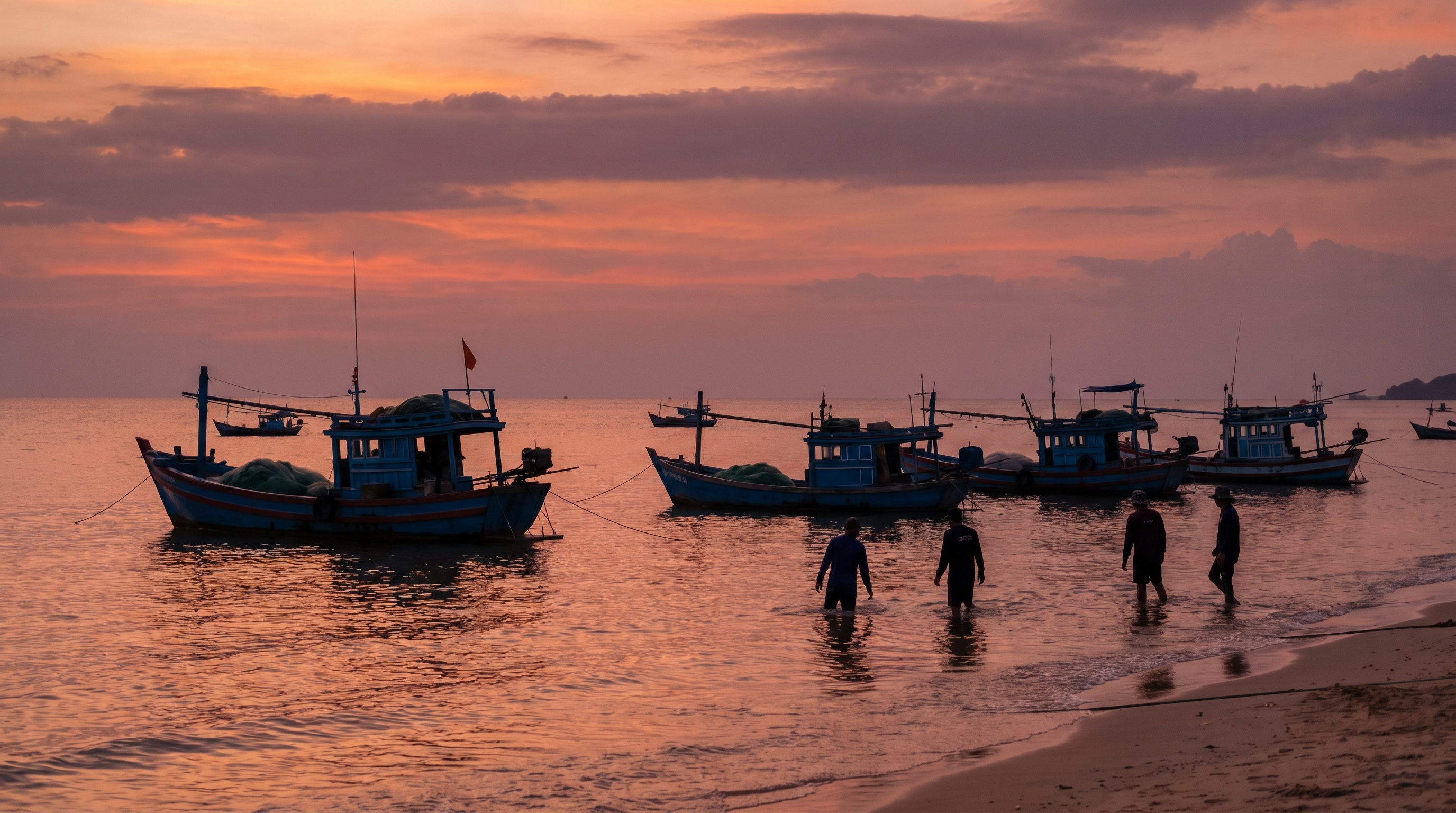
Phu Quoc has pockets of real local life — the fishing harbor at Ham Ninh, pepper farms, the fish sauce distilleries that perfume entire neighborhoods (you’ll know when you’re near one). But if you want temples, history, street culture and old-town atmosphere, that’s Hoi An or Hanoi, not here. Phu Quoc’s job is beach, seafood, sunset. Judge it on that.
Who Will Love Phu Quoc — and Who Should Skip It
You’ll love it if you are:
- A couple or family wanting an easy, affordable resort week with warm calm water
- A food traveler who measures a destination by its seafood markets
- Someone ending a busy Vietnam itinerary (Hanoi → Hoi An → Saigon) with beach recovery days
- A long-stay traveler escaping winter — a month here in dry season is absurdly good value (we cover that in our long-stay guide)
Skip it (or pick elsewhere in Vietnam) if you are:
- Chasing pristine, undeveloped nature — that ship has largely sailed here
- A serious diver or snorkeler — fly to Indonesia or the Philippines instead
- Allergic to construction and mega-resort development
- Visiting in July–September and expecting postcard beaches every day
When to Go: The Month-by-Month Reality
November to March is the answer. Dry, sunny, calm seas, clean west-coast beaches — this is the Phu Quoc of the photos. December and January are peak (book resorts ahead; prices rise 20–40%). April and October are decent shoulder months with a gamble on rain. May through September is monsoon: cheap rooms, dramatic skies, real rain most days, and the seaweed/debris issue on exposed beaches. Monsoon trips can still be great — just book a hotel with a good pool and go in with open eyes.
Where to Stay: 60-Second Version
- Long Beach (Bai Truong): the main strip — sunsets, walkable restaurants, widest hotel choice from hostels to five-stars. Best first-timer base.
- Ong Lang: quieter, greener, small boutique resorts, still great sunsets. Our personal pick for couples.
- The far north (Vinpearl area): mega-resorts, theme park and safari on your doorstep — efficient for families who want everything on campus.
- The south (Khem Beach / An Thoi): luxury resorts and the Hon Thom cable car, but also the heaviest construction. Gorgeous in parts, torn-up in others.
How Many Days Do You Need?
Four to five days hits the sweet spot: two pure beach days, one boat trip to the An Thoi islands, one day for the night market, pepper farms and fish sauce factory, plus a sunset or two with nothing planned. A week works if your goal is doing nothing beautifully (here is the five-day version). Two days feels wasteful given the flight.
Practical Tips (2026)
- Getting in: direct international flights are expanding fast, or it’s a 1-hour hop from Ho Chi Minh City. The 30-day visa-free rule applies to direct Phu Quoc arrivals.
- Connectivity: buy an eSIM before you land — coverage on the island is strong and data is cheap.
- Getting around: Grab works in the developed areas; scooter rental runs $5–8/day if you’re confident riding.
- Money: cards work at resorts, cash rules at markets and local restaurants. ATMs are plentiful in Duong Dong.
- Beach check: conditions change weekly, especially outside peak season — ask your hotel which beach is cleanest right now rather than trusting last year’s photos.
FAQ
Is Phu Quoc better than Phuket or Bali?
It’s cheaper than both for equivalent resort quality, less crowded than Phuket, and easier to enter than either (30 days visa-free). Bali wins on culture and surf; Phuket wins on nightlife and day-trip variety (see also our Phu Quoc vs Da Nang comparison); Phu Quoc wins on value, calm swimmable water, and simplicity.
Is Phu Quoc too developed now?
Parts of it, yes — the south and the town fringes are heavily built up and still building. But Ong Lang, Cua Can and the northwest still feel relaxed, and even Long Beach keeps long quiet stretches. Development is real; “ruined” is an exaggeration.
Is Phu Quoc safe?
Very. Violent crime against tourists is rare. The genuine risks are scooter accidents (wear the helmet, ride sober) and ocean swimming during monsoon swells.
Can I drink the tap water?
No — bottled or filtered water, like everywhere in Vietnam. Resorts provide it free.
Is Phu Quoc good for kids?
One of the best beach destinations in Asia for families: calm shallow water in dry season, resort kids’ clubs, VinWonders theme park and the safari for a rainy day.
The Bottom Line
Phu Quoc in 2026 is a trade: you accept construction dust and a less-than-pristine wet season, and in exchange you get some of Asia’s best-value beach holidays — real white sand, bathtub-warm sea, $10 seafood feasts, nightly sunsets, and a 30-day visa-free welcome. Come in dry season, stay on the west coast, eat where the locals eat, and you’ll understand why arrivals keep breaking records. Just don’t come expecting the empty island of 2015. That version is gone — what replaced it is still, honestly, worth your vacation.
Some links in this guide are affiliate links: if you book through them we may earn a small commission at no extra cost to you. It helps keep our guides honest and free.
Get our free Phu Quoc Trip Kit — the pre-departure checklist, a 5-day plan and our honest booking picks. No spam; at most one email a month.
By subscribing you agree to our privacy policy. Unsubscribe anytime.