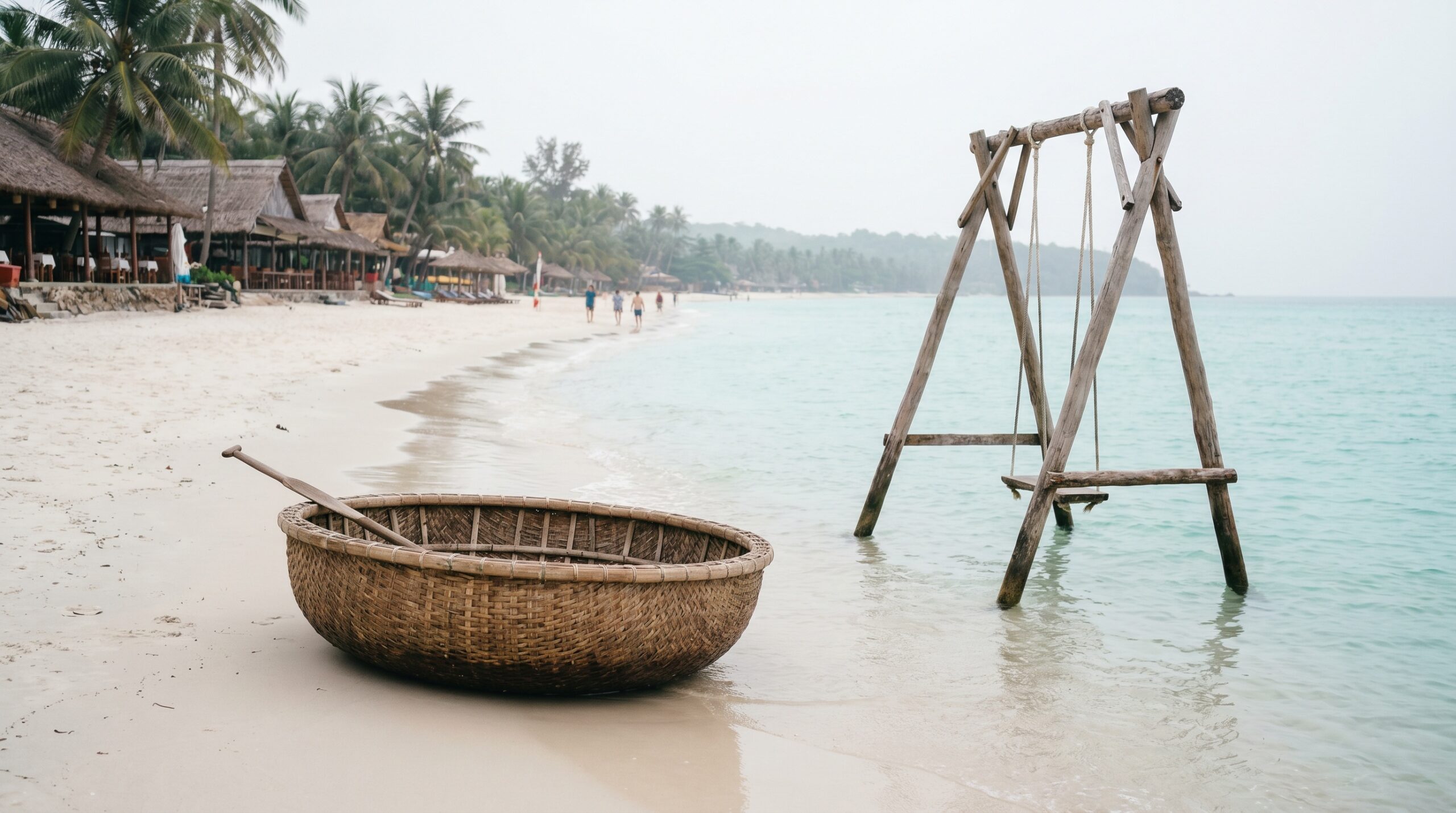
Sao Beach and Khem Beach are the two names every Phu Quoc itinerary promises will change your life — neighboring stretches of famously white sand on the island’s southern tip. But in 2026, whether they actually look like the photos depends almost entirely on which month you visit, and most guides won’t tell you that. This one will.
The quick answer: Sao Beach is the lively, free, basket-boats-and-seafood-shacks beach; Khem Beach is the quieter, creamier, resort-flanked beach. Both share the same open secret: they face east/south, which means their clean season is the opposite of the west coast’s — gorgeous roughly May through October, and prone to seaweed and drifting debris in the December–March high season. Time it right and you’ll see one of Vietnam’s best beaches. Time it wrong and you’ll wonder what the fuss was about.
The Seasonal Flip Nobody Explains
Phu Quoc’s beaches don’t have one “best season” — they have two, on opposite coasts:
- West coast (Long Beach, Ong Lang): calm and clean in the dry season (November–March); choppy with washed-up debris during the May–October southwest monsoon.
- East/south coast (Sao, Khem): sheltered from the southwest monsoon, so often at their calm, glassy best May–October — while in the northeast-monsoon months (roughly December–March) they collect seaweed, seagrass and, in bad stretches, floating rubbish.
That’s why you’ll meet January visitors calling Sao Beach “overrated and dirty” and July visitors calling it “the best beach of my life.” Both are telling the truth — about different months. Early 2026 saw exactly this: while west-coast beaches enjoyed peak-season conditions, parts of Sao and Khem spent weeks under drifting water hyacinth and debris before cleanup crews caught up.
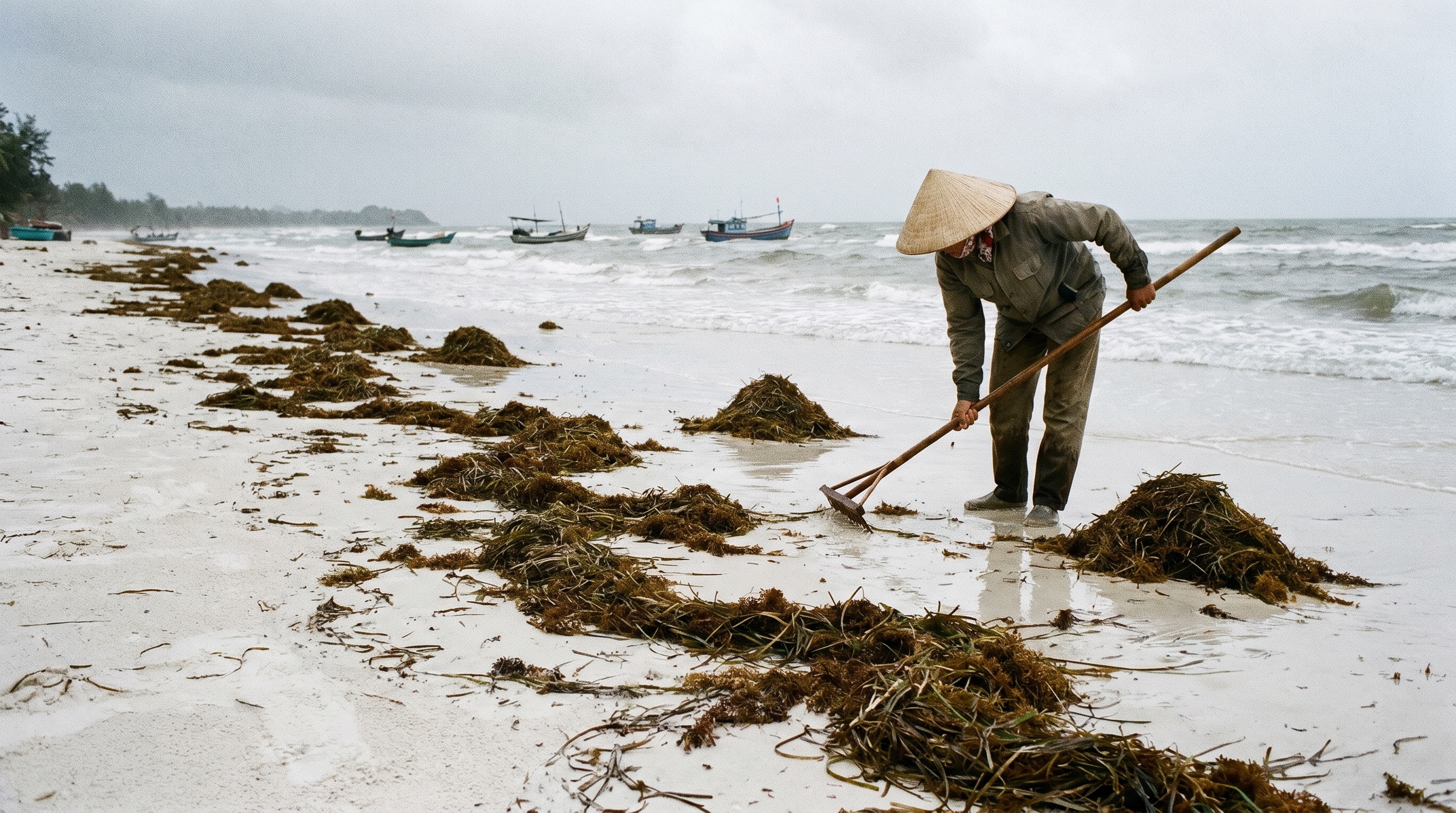
The practical rule: visiting December–March? Make Sao/Khem a flexible plan, not the centerpiece — and ask your hotel about current conditions that morning (staff always know). Visiting May–October? Go without hesitation; you’ll likely have near-perfect water.
Sao Beach: The Famous One
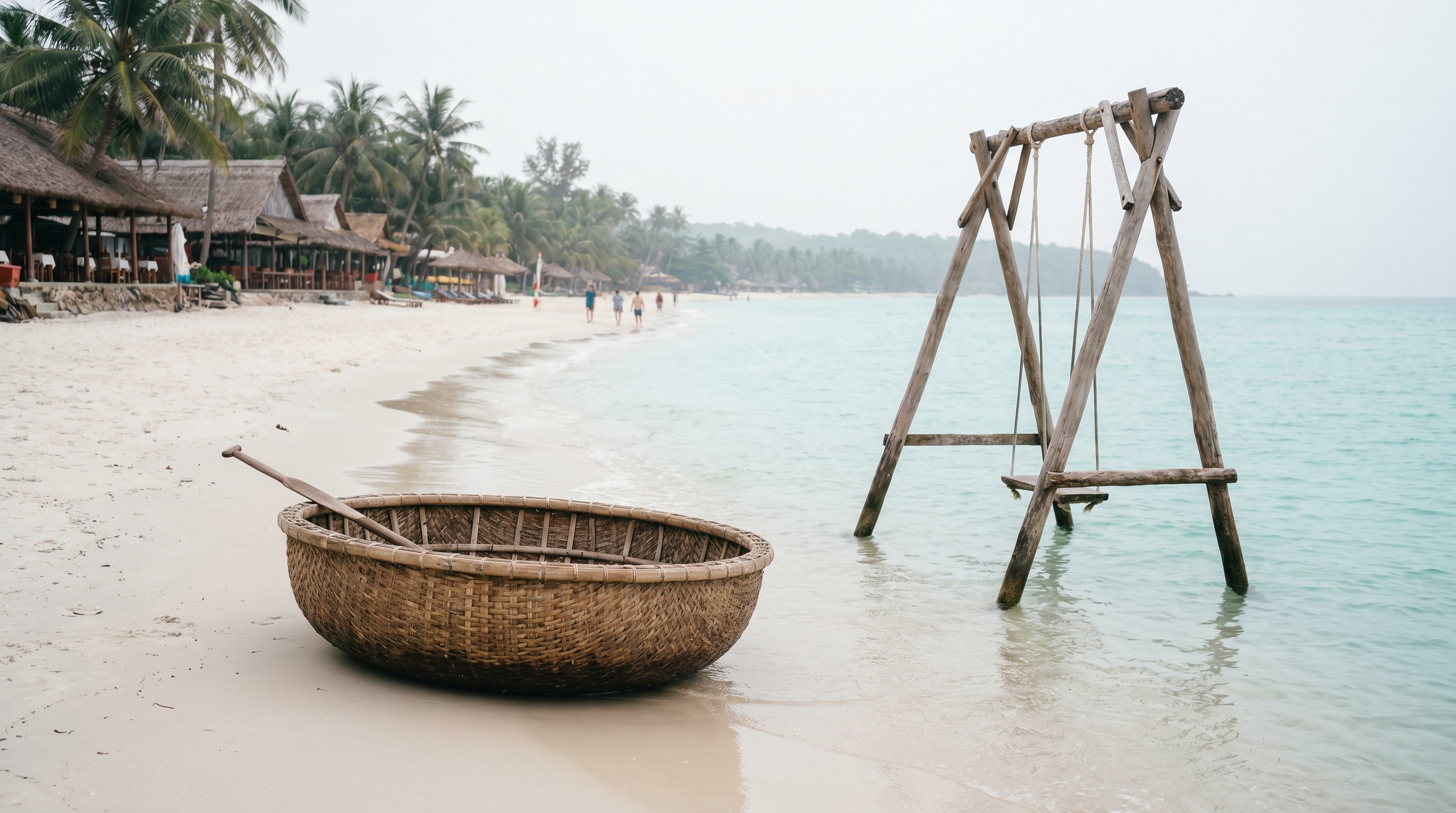
- The sand: the whitest on Phu Quoc — fine, squeaky, genuinely remarkable. This is the beach that built the island’s reputation.
- The scene: lively but not overwhelming. Beachfront seafood restaurants, loungers for rent (or free if you buy food/drinks), the famous wooden swings and photogenic basket boats.
- Cost: free entry. You’ll pay small fees for parking (10–20k VND) and loungers unless you’re a restaurant customer.
- Getting there: ~30 minutes from Duong Dong by scooter or Grab, the last stretch on a bumpy access road — normal, don’t let it worry you.
- Best time of day: before 10 AM. Tour groups arrive late morning; by 2 PM weekends feel crowded.
- Eat: grilled squid and ken beo (coconut) at the beach shacks — pricier than town but part of the day.
Khem Beach: The Quiet Luxury One
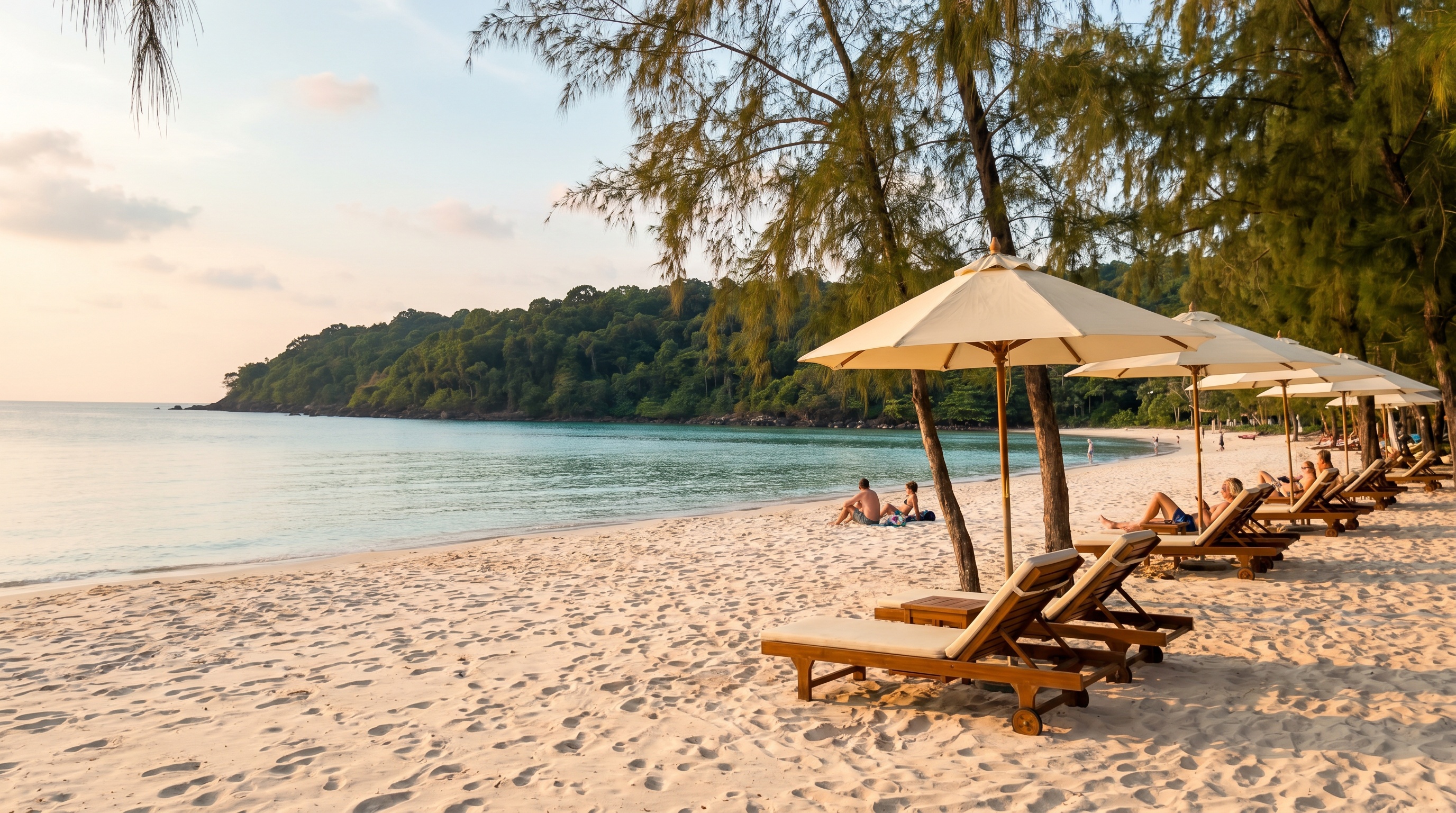
- The sand: arguably even softer than Sao — locals call it “cream beach” (Bai Khem) for a reason.
- The scene: hushed. The bay is dominated by high-end resorts (this is where Phu Quoc’s most famous luxury properties sit), but a public section remains accessible to everyone.
- Cost: free on the public stretch; resort facilities are for guests (or day visitors buying spa/dining packages).
- Getting there: just past An Thoi on the island’s southern tip — 5 minutes from the Hon Thom cable car station, which makes it a perfect pairing.
- Best for: couples, quiet swimmers, anyone allergic to vendor bustle. Bring your own water and snacks if you’re not resort-bound.
Head to Head
- Sand quality: tie — both are Phu Quoc’s best. Khem is marginally softer, Sao is whiter-bright.
- Swimming: tie in the right season — shallow, calm, bath-warm in both.
- Atmosphere: Sao = beach-day energy (food, swings, photos). Khem = serenity. Pick by personality.
- Food & facilities: Sao wins for independent travelers; Khem wins if you’re staying at a southern resort.
- Crowds: Khem wins — Sao’s fame brings vans of day-trippers by 11 AM.
- Photo ops: Sao wins (basket boats, swings) — it’s the most photographed sand in Vietnam for a reason.
Our honest pick: do both in one southern day — they’re 15 minutes apart. Sao at 8–10 AM for empty-beach photos and a swim, lunch at a Sao seafood shack, then Khem’s public stretch for a quiet afternoon — or swap Khem for the Hon Thom cable car next door and catch Sunset Town at golden hour on the way back.
Tips That Save the Day
- Check conditions the same morning (hotel staff, or Phu Quoc Facebook groups) in Dec–March — conditions genuinely change week to week in seaweed season.
- Go early. Both beaches are transformed before 10 AM: empty sand, glassy water, soft light.
- Bring cash — beach restaurants and parking attendants don’t take cards.
- Combine the south: Sao + Khem + cable car + Sunset Town = the perfect southern Phu Quoc day, and everything is within 20 minutes’ drive. First trip to the island? Start with our honest Phu Quoc overview for the full picture.
- Manage expectations in peak season: December–March visitors — the west coast (Long Beach, Ong Lang) is your reliable daily swim; treat a clean-day Sao/Khem as the bonus.
FAQ
Is Sao Beach free?
Yes — entry is free. Expect small charges for parking and loungers (waived at most restaurants if you eat there).
Can anyone visit Khem Beach, or is it resort-only?
Anyone. The resorts dominate the bay, but a public access section remains open — quiet, clean, and free.
Why did I see photos of Sao Beach covered in seaweed?
Northeast monsoon season (roughly December–March) pushes seagrass and debris onto east- and south-facing beaches. Crews rake daily, but after windy spells it accumulates faster than it’s cleared. May–October, the same beach is usually pristine.
Which is better for kids?
Both — shallow, calm, warm. Sao has food and facilities within reach; Khem has fewer crowds. Slight edge to Sao for convenience.
How much time do I need?
Half a day covers both beaches comfortably; a full southern day adds the cable car and Sunset Town.
The Verdict
Sao and Khem deserve their fame — with an asterisk the brochures leave out. They are seasonal beaches: heavenly in the months the southwest monsoon leaves them alone, hit-or-miss in the northeast-monsoon peak season. Go early, go informed, pair them with the cable car next door, and southern Phu Quoc delivers one of the best beach days in Vietnam. Just don’t judge these beaches by the wrong month — and don’t let a January seaweed line convince you the postcards lied. They didn’t. They were just taken in July.
Some links in this guide are affiliate links: if you book through them we may earn a small commission at no extra cost to you. It helps keep our guides honest and free.
Get our free Phu Quoc Trip Kit — the pre-departure checklist, a 5-day plan and our honest booking picks. No spam; at most one email a month.
By subscribing you agree to our privacy policy. Unsubscribe anytime.