
Can you actually work remotely from Phu Quoc — real work, with video calls and deadlines? Yes, comfortably: fiber internet is standard, café Wi-Fi routinely handles video meetings, 4G/5G blankets the developed coasts as backup, and the 30-day visa-free entry makes a work-month absurdly easy to set up. What Phu Quoc doesn’t have is a nomad scene — and depending on who you are, that’s either the dealbreaker or the entire point.
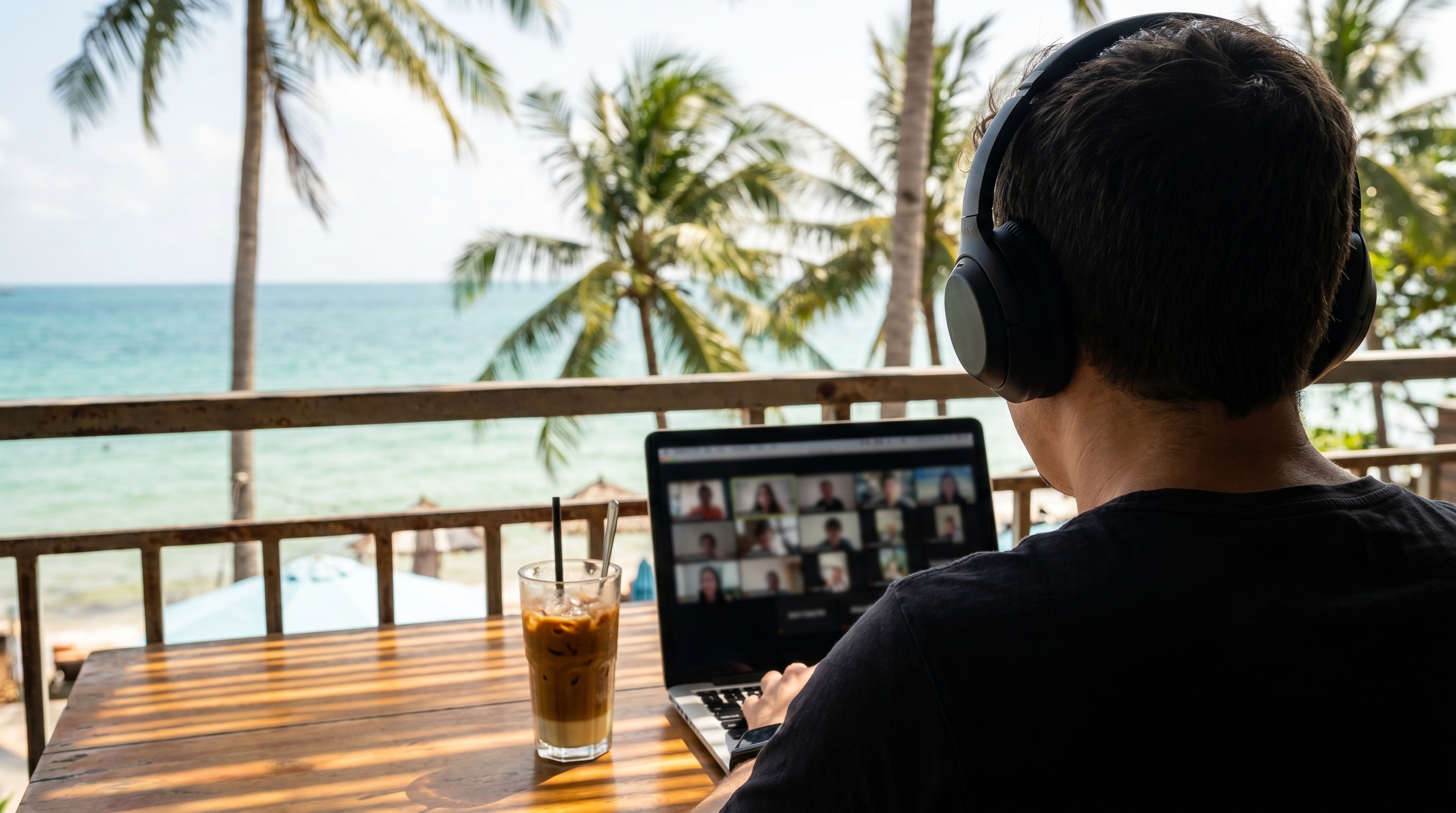
The Internet Reality (Tested Honestly)
- Fiber: standard in apartments and guesthouses island-wide — speeds comfortably handle video calls, cloud work and streaming. Always ask your rental for a speed-test screenshot before booking a month.
- Café Wi-Fi: genuinely good at the better cafés in Duong Dong and along Long Beach — Zoom-stable most of the day. Quality drops at beach shacks (they’re for coconuts, not calls).
- Mobile backup: 4G/5G is strong along the west coast — a local Viettel SIM (~$10/month for generous data) tethers you through any outage. Land with a travel eSIM, switch to Viettel for the long haul (eSIM guide).
- Power cuts: occasional and brief. A charged laptop + phone hotspot covers 99% of them.
Where to Actually Work
- The laptop cafés: Phu Quoc’s work culture is café-based — a dozen spots in Duong Dong and along the strip tolerate hours-long sessions with $1–2 coffee refills. Morning air-con seats go fast; arrive by 9.
- Coworking: minimal and changing year to year — a few hotel lobbies and small spaces rather than a Da Nang-style scene. Plan around cafés + a good home setup, not memberships.
- Your rental: the real office. Prioritize: desk-height table, window light, verified fiber, decent chair (ask — many nicer condos have them). This filter alone rules out half the cheap listings, worth it.
The Time Zone Math (GMT+7)
- Europe: dreamy — your afternoon overlaps their morning; beach mornings, calls after lunch.
- Asia-Pacific: trivial — you’re in the neighborhood.
- US East Coast: brutal — their 9 AM is your 9 PM. Doable with evening-call discipline (and morning beaches as compensation); painful with daily standups.
- US West: workable at the edges — early-morning calls (their afternoon) leave your day free.
A Realistic Work-Month Structure
- Base: Duong Dong fringes or southern Long Beach — café density + fiber + food (long-stay guide covers rentals from $250–450/month).
- Weekdays: beach or gym early, deep work 9–1, café session in the afternoon, sunset as the hard stop (it’s mandatory here).
- Weekends: the island is your reward — boat days, the cable car, north-island scooter loops.
- Budget: $900–1,200/month living well — a fraction of a Lisbon or Canggu month.
Phu Quoc vs Da Nang for Remote Work (The Honest Call)
Da Nang wins on: coworking scene, nomad community and meetups, café depth, food variety, city energy. Phu Quoc wins on: island calm, beach-every-day life, the 30-day stamp, and focus — there’s simply less to distract you. Community-driven people burn out on Phu Quoc’s quiet by week three; deep-work people call it perfect. Full comparison in Phu Quoc vs Da Nang.
What Should You Pack for a Work Month Here?
Less than you think, plus a handful of items that are genuinely annoying to buy on the island. Clothes, toiletries, and beach gear are all solved locally for pocket change; dependable work equipment is not. Our rule of thumb: pack your entire office into one daypack and let Phu Quoc supply the rest.
| Gear | Why it earns the bag space |
|---|---|
| Noise-isolating headset | Cafe calls are the default here; a decent mic matters more to your team than your sea view |
| Laptop stand, travel keyboard, mouse | A month of hunching over cafe tables is how paradise gives you a neck problem |
| Large power bank | Rides out the brief cuts without drama — paired with a phone hotspot, an outage becomes a coffee break |
| Compact power strip | Vietnam’s two-pin sockets accept most plug shapes, but rooms often have exactly one convenient outlet |
| Spare cables and chargers | Replacements exist in Duong Dong but quality is a lottery; bring doubles of anything your job depends on |
Anything more specialized — a particular webcam, a mechanical keyboard, monitor gear — should fly in with you or be ordered during a mainland stop. Island electronics shopping covers the basics and not much else.
When the Connection Drops Mid-Call: The Backup Ladder
It will happen once or twice in a work month, and it is only a crisis if you improvise. The remote workers who look unflappable here simply decided their ladder in advance:
- Hotspot already paired. Your laptop should know your phone before you need it to — the switch then takes under a minute and the call survives.
- A second location scouted. Know the reliable cafe nearest your rental that sits on different infrastructure than yours: a different building, a different line.
- Meeting hygiene. Keep agendas in shared docs and send a short recap message after important calls, so a dropped connection costs minutes, never decisions.
- Buffer the big stuff. Upload deliverables the night before the deadline. Calm beach mornings are the reward for never once having to explain island internet to a client.
Keeping a Routine When Every Day Looks Like a Vacation
The island’s real productivity risk is not bandwidth — it is drift. Week one you are disciplined, week two the sea starts negotiating, and by week three the days can blur pleasantly into nothing shipped. We anchor work-months with three fixed points: exercise at the same hour daily, one admin morning a week for invoices and bookings, and one properly planned weekend outing so wanderlust does not leak into Tuesday.
Build in social scaffolding too. With no big nomad scene, connection here takes light intentionality: a regular cafe where the staff know your order, a standing video call with people back home, a booked group tour for the week solitude tips toward isolation.
And if Phu Quoc is one candidate among several, run the month as an experiment. Track what you actually spend against our one-month cost breakdown, then weigh the alternatives in where to base yourself in Vietnam. A work-month on the ground is the only research method that never lies.
FAQ
Is the Wi-Fi good enough for daily video calls?
Yes at proper cafés and fiber rentals — verify your rental’s speed before committing a month, keep mobile tethering as backup, and you’ll rarely think about it again.
Is there a digital nomad visa for Vietnam?
No dedicated nomad visa as of mid-2026. The practical stack: 30 days visa-free on Phu Quoc, or the 90-day e-visa ($25) for longer stays and mainland travel (visa guide; staying past 90 days: visa runs explained). Working remotely for a foreign employer on tourist status is the region-wide gray-zone norm — know that’s what it is.
Are there other remote workers to meet?
A quiet, growing trickle — you’ll spot the laptops at the usual cafés — but nothing like Da Nang or Bali’s scene. Facebook groups are where island connections happen.
Rainy season work-months: yes or no?
Actually great: cheaper rentals, emptier cafés, dramatic skies out the window, and the rain mostly bursts in the afternoon. Bring indoor hobbies for the wettest weeks (month guide).
Bottom Line
Phu Quoc is a legitimately good remote-work base wearing a resort-island disguise: real fiber, workable cafés, easy entry, low costs — minus the nomad scene and minus US-East-friendly hours. If your work needs focus more than networking, a month here writes itself: deep work till mid-afternoon, sea until sunset, $1,000 all-in. The hardest part is going home.
Get our free Phu Quoc Trip Kit — the pre-departure checklist, a 5-day plan and our honest booking picks. No spam; at most one email a month.
By subscribing you agree to our privacy policy. Unsubscribe anytime.