
Vietnam’s two favorite beach destinations solve completely different problems. Phu Quoc is an island resort escape: soft water, sunsets, seafood, switch-your-brain-off. Da Nang is a beach city: surf-y sand plus real urban life, with Hoi An’s lantern streets 40 minutes away. The seasonal trick often makes the decision for you: their weather calendars are near-opposite — Phu Quoc shines November–March, Da Nang May–August. Here’s the honest head-to-head.
The Decision in 30 Seconds
- Pure beach holiday, resort pool, calm swimmable sea → Phu Quoc
- Beach + culture + city food + day trips → Da Nang
- Traveling Nov–March → Phu Quoc (its dry season; Da Nang’s rainiest months are Sep–Dec)
- Traveling May–Aug → Da Nang (its prime season; Phu Quoc is in monsoon — workable, but a gamble)
- Digital nomad month → Da Nang for scene and cafés; Phu Quoc for island quiet (see our long-stay guide)
Beaches: Different Species
Phu Quoc: calm, warm, shallow water — a bathtub sea in season. Softer scenery: palms, coves, basket boats. Multiple distinct beaches to hop between (our ranking). Winner for swimmers, families with small kids, and beach-nappers.
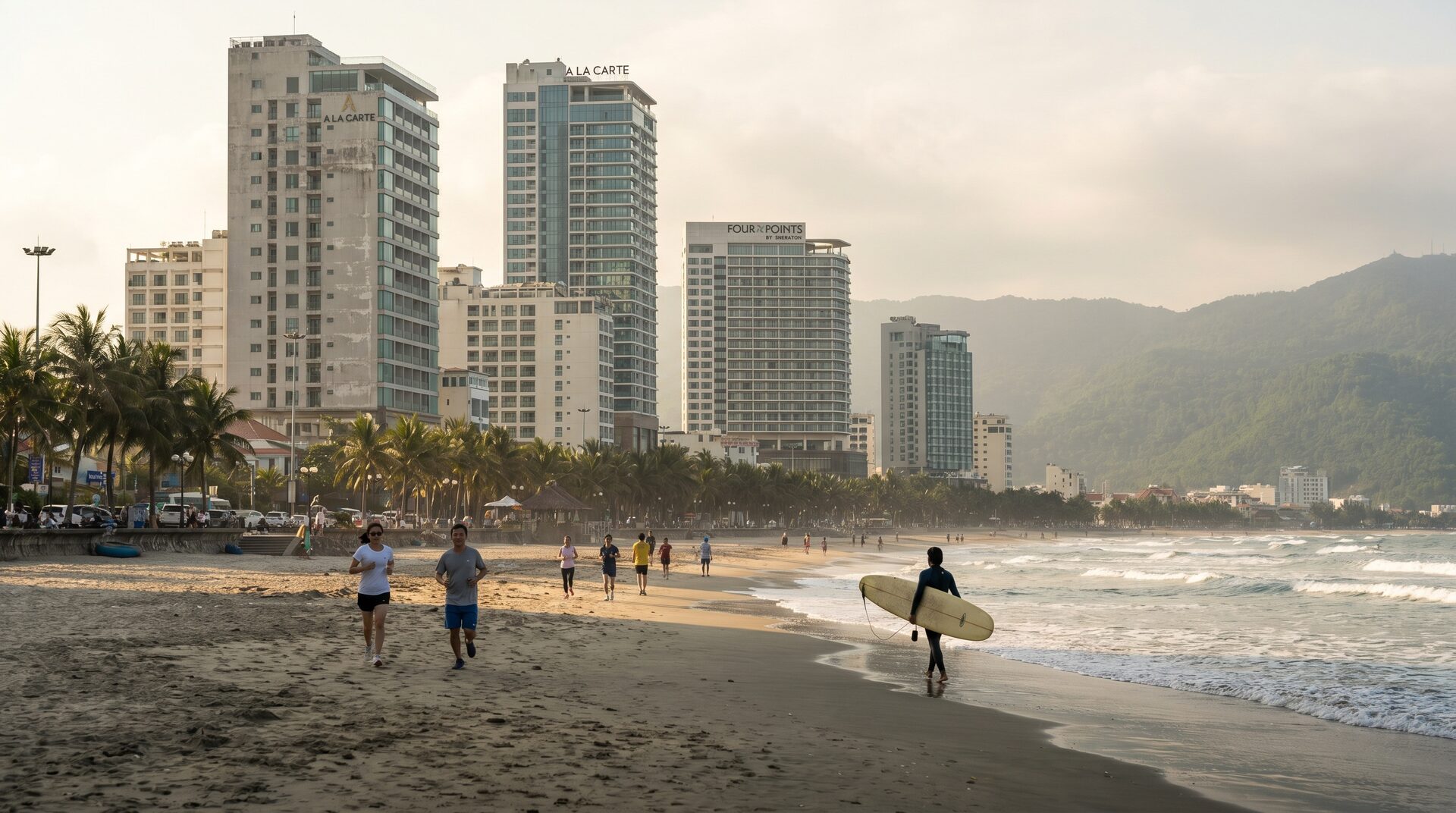
Da Nang: My Khe is one long, handsome urban beach — wide sand, actual waves (novice surf lessons are a thing), a promenade, and city towers behind. More energizing, less desert-island. Winner for surfers, runners, and people who get bored lying down. If this side is calling you, we compared every beach neighborhood in our where to stay in Da Nang guide after a week there.
Seasons: The Deciding Factor Most People Miss
The two destinations have near-opposite weather calendars:
- Phu Quoc: dry and glorious November–March; monsoon May–October (month-by-month).
- Da Nang: best roughly February–August; heavy rain and occasional typhoons September–December.
So for a Christmas–New Year trip, Phu Quoc is the obvious pick; for July, Da Nang. For February–April, both shine — lucky you.
Food
Da Nang wins on breadth: central Vietnamese cuisine (mì quảng, bánh xèo, bún chả cá) is arguably the country’s best food region, portions of city dining at every price, plus Hoi An’s food scene next door. We logged a full week of meals with real prices in our Da Nang food guide — $13 a day eats internationally.
Phu Quoc wins on seafood theater: night-market grills, crab villages, island-only dishes like bún quậy (our food guide). It’s narrower — and delicious.
Culture & Day Trips
Da Nang, decisively. Hoi An’s old town 40 minutes away (best done as an evening lantern trip), the Marble Mountains, Ba Na Hills’ Golden Bridge, My Son sanctuary, even Hue within day-trip reach. Phu Quoc’s “culture column” is thinner: fish-sauce houses, pepper farms, temples — charming, not headline. The island counters with the Hon Thom cable car, island-hopping boats and safari/theme parks.
Costs
Comparable at every tier, with nuances: Da Nang’s city competition makes mid-range hotels and food slightly cheaper; Phu Quoc’s resort deals (especially shoulder-season 4–5 stars) can be shockingly good value. Budget $40–60/day mid-range in either, before splurges. The fastest reality check is a five-minute scroll of current rates for your dates — compare Phu Quoc hotels against Da Nang hotels on Agoda and the season’s discounts jump out immediately.
Getting There & Entry
Both have international airports. One Phu Quoc exclusive: the 30-day visa-free entry for all nationalities — if visa paperwork is a factor, the island removes it. Da Nang follows normal Vietnam visa rules (easy e-visa for most).
Family, Couples, Nomads
- Small kids: Phu Quoc — calm shallow sea, resort kids’ clubs, VinWonders. Da Nang’s surf and city streets suit older kids better.
- Couples: honeymoon-mode → Phu Quoc (Ong Lang sunsets, Khem luxury). City-romance + lantern-lit Hoi An dinners → Da Nang.
- Remote workers: Da Nang has the coworking scene, meetups and café depth; Phu Quoc offers focus, quiet and the 30-day stamp. Different products.
Can You Do Both?
Easily — they’re a short domestic flight apart (note: flying Phu Quoc→Da Nang means entering the mainland, so you’ll need a regular visa/e-visa rather than the island exemption). A classic two-week split: Da Nang + Hoi An for culture and city energy, then Phu Quoc to end on do-nothing beach mode.
How Many Days Do You Need in Each?
For a satisfying first visit, plan on four to five nights in Phu Quoc and three to four in Da Nang — plus two more if you add Hoi An. Phu Quoc rewards slower stays because unwinding is the whole point; Da Nang packs its headline sights into fewer, busier days.
The reason the numbers differ is how each place spends your time. Da Nang is dense: beach in the morning, Marble Mountains after lunch, Hoi An by lantern-light — three highlights in one day is normal. Phu Quoc is diffuse: one beach, one boat trip, or one lazy loop of the island per day is the natural pace, and rushing it defeats the purpose. If you only have a long weekend, our honest advice is to pick whichever matches your travel month and skip the other entirely.
| Trip length | Our pick |
|---|---|
| 3–4 nights | One destination only — let the season decide, don’t split |
| 5–7 nights | Still one, done properly — a week fills easily in either (see our 5-day Phu Quoc itinerary) |
| 10 nights | The split becomes realistic: 5–6 Da Nang/Hoi An + 4–5 Phu Quoc |
| 2 weeks+ | Do both without rushing, culture first, island last |
Getting Around: The Everyday Difference
This is the gap nobody mentions until they land. Da Nang works like a normal city: Grab cars arrive in minutes, streets have sidewalks, and plenty of visitors never rent a scooter at all. Restaurants, the beach, and cafes cluster close enough that spontaneous plans just happen.
Phu Quoc is deceptively large — roughly the size of Singapore — and its sights are scattered along one long north–south road. Taxis exist but thin out at night, distances eat your budget, and most independent travelers end up on a scooter whether they planned to or not. Factor transport into the decision: if riding isn’t for you and hotel-shuttle life sounds limiting, that’s a quiet point for Da Nang. We’ve broken down every option in our getting around Phu Quoc guide.
Mistakes We Keep Seeing People Make
After years of watching travelers agonize over this exact choice, the same errors come up again and again:
- Choosing by photos instead of by month. Both look identical in a brochure. In the wrong season, neither looks like the brochure. Check the weather calendars above before anything else — it’s the single highest-value minute of planning.
- Booking Da Nang when they really wanted Hoi An. If lantern streets and old-town evenings are the dream, consider sleeping in Hoi An and day-tripping to Da Nang’s beach, not the reverse.
- Treating Phu Quoc as a sightseeing destination. Travelers who arrive with a packed checklist often leave underwhelmed; travelers who arrive to do very little rate it among their favorite stops.
- Splitting a single week between both. Two flights, two check-ins, and half your energy gone to logistics. One week, one destination — our rule of thumb has never let anyone down.
- Forgetting the visa wrinkle when combining them. Phu Quoc’s exemption only works island-only; the moment Da Nang enters the plan, sort the e-visa first, not at the airport.
None of these are fatal. But avoiding them is the difference between a good trip and the trip you actually pictured.
FAQ
Which is better for a first Vietnam trip?
If it’s your only stop: Da Nang shows you more of Vietnam. If it’s the beach finale after Hanoi/Saigon: Phu Quoc rests you better.
Which has better nightlife?
Da Nang — riverside bars, rooftop scenes, a real city’s options. Phu Quoc peaks at sunset bars and the night market, by design.
Which is safer?
Both are very safe. Standard scooter caution applies in both; Da Nang’s traffic is city-grade.
Is Phu Quoc or Da Nang cheaper to fly into?
Da Nang generally has more international routes and competitive fares; Phu Quoc’s route network is growing fast and often has package-deal pricing from key markets.
Bottom Line
Phu Quoc for the island reset; Da Nang for beach-plus-life. Check your travel month against the opposite monsoon calendars before anything else — the weather often makes the choice for you. And if you can spare two weeks, don’t choose. Do the split.
Some links in this guide are affiliate links: if you book through them we may earn a small commission at no extra cost to you. It helps keep our guides honest and free.
Get our free Phu Quoc Trip Kit — the pre-departure checklist, a 5-day plan and our honest booking picks. No spam; at most one email a month.
By subscribing you agree to our privacy policy. Unsubscribe anytime.