Da Nang is the easiest city in Vietnam — and travelers keep treating it as a transit stop between Hoi An and the airport. Mistake. Vietnam’s third city pairs 30km of legitimate beach with real urban life, the country’s best infrastructure, mountain temples, the Golden Bridge — and the region’s best food-per-dollar. Here is the slow guide: 4–5 days, or the base-camp version many long-stayers end up choosing.
Orient in 30 Seconds
- My Khe beach side (An Thuong area): where visitors and nomads live — cafés, guesthouses, the sand two blocks away. Base here (live rates — $25–60 buys excellent).
- City center (Han River banks): the local metropolis — markets, bridges, food streets. Visit nightly, sleep beach-side.
- Son Tra peninsula: the green mountain guarding the bay — Lady Buddha, jungle roads, wild beaches, resident monkeys.
The Slow Four-to-Five Days
- Beach rhythm day: My Khe morning swim (the surf is real but gentle in season), An Thuong café crawl, seafood dinner on the beach road, Dragon Bridge fire show if it is a weekend night (9 PM — kitsch, crowded, fun once).
- Son Tra loop: scooter or Grab up the peninsula — Lady Buddha at Linh Ung Pagoda, the banyan tree, viewpoint roads with the bay below. Afternoon: Marble Mountains’ caves and shrines (elevator up, wander down, skip midday heat).
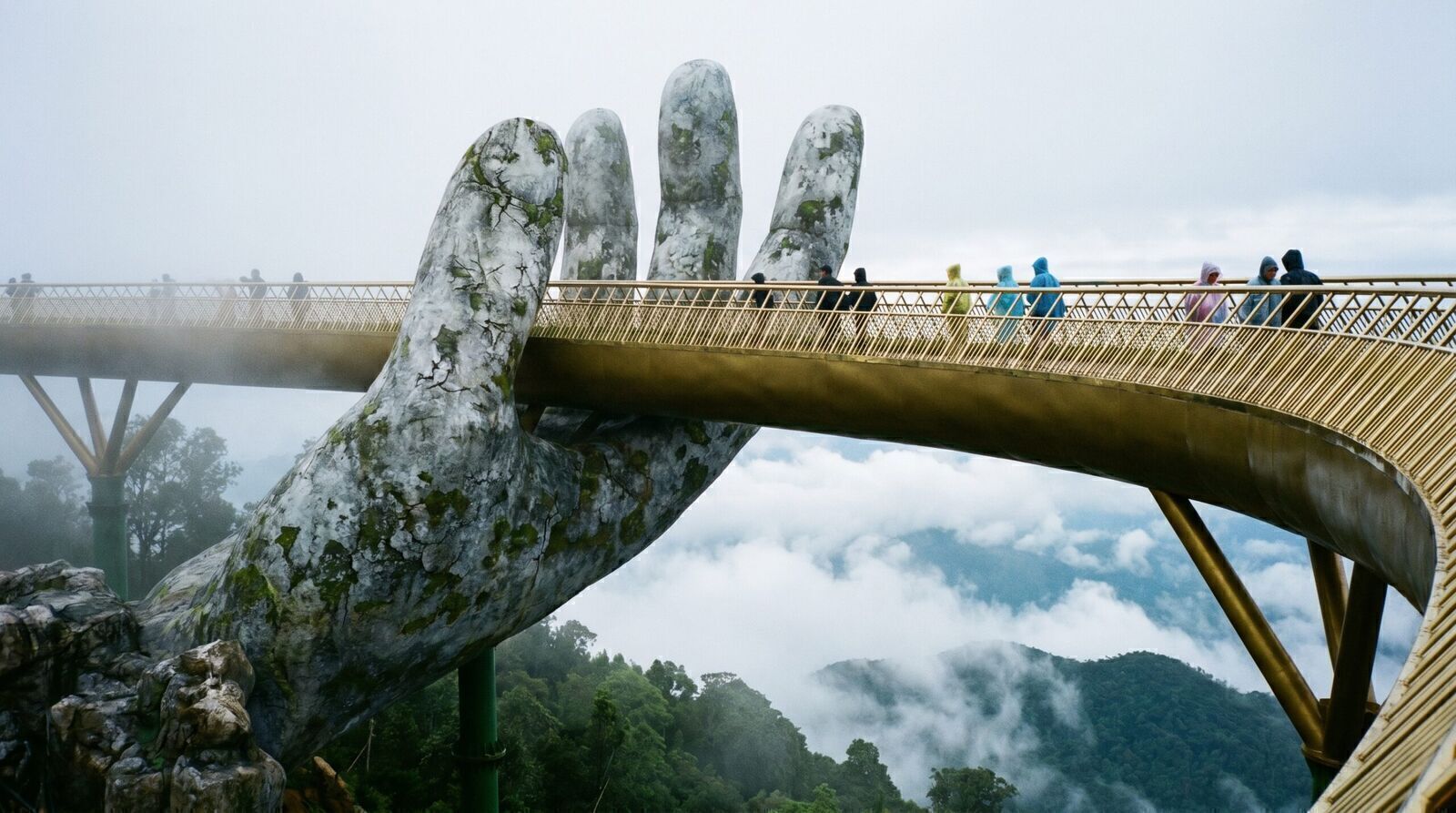
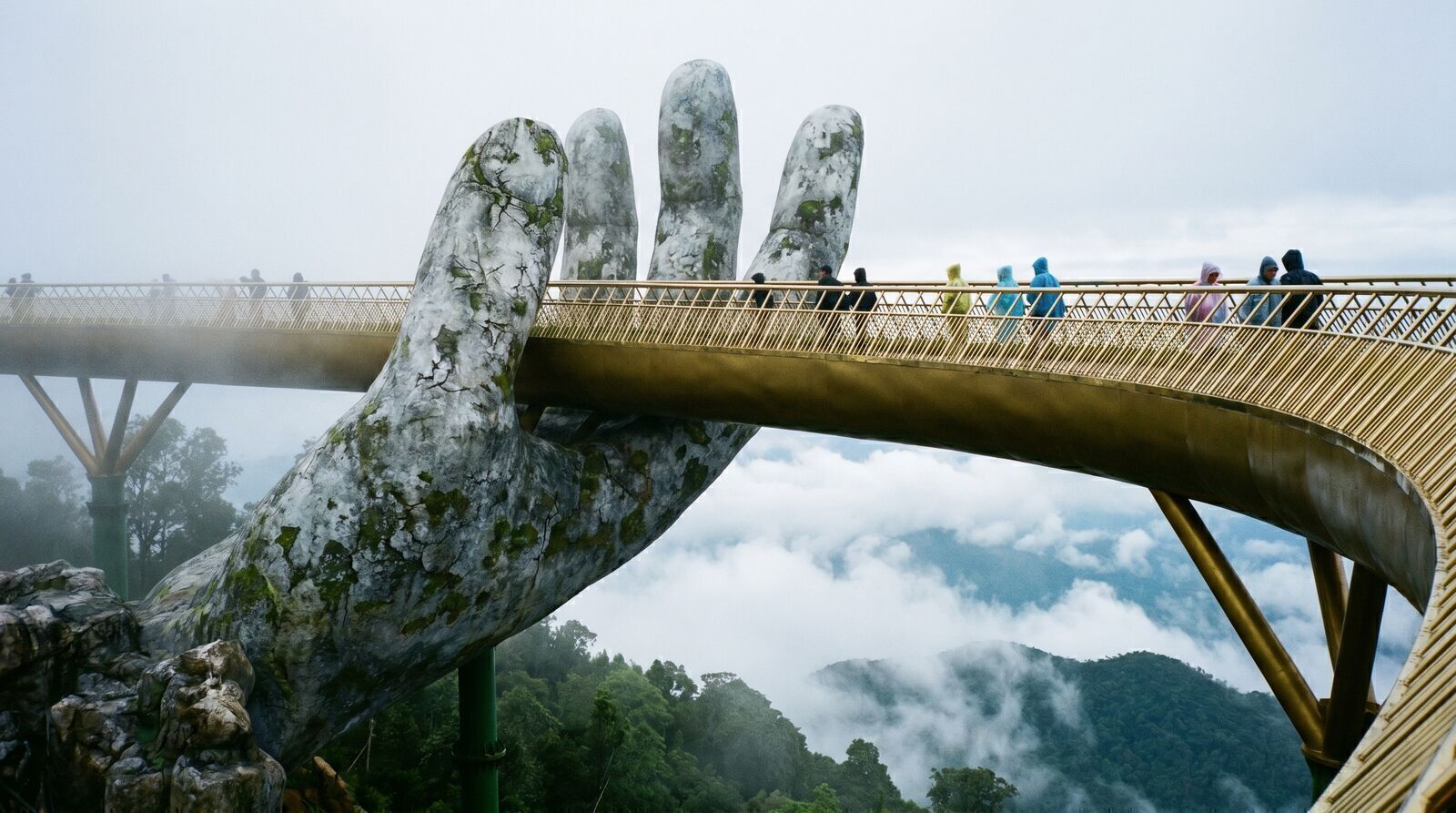
- Ba Na Hills day: the Golden Bridge + the French-village theme park in the mountains. Honest read: spectacular bridge, genuinely fun cable car (one of the longest on earth), theme-park rest. Go at opening on a weekday, do bridge + gardens + one coaster, down by mid-afternoon. ~$40 ticket; check weather — the bridge in cloud is a grey wall.
- The Hoi An day (or two): 40 minutes south — lanterns, tailors, old town evenings. It deserves its own base honestly (our Hoi An slow guide), but as a Da Nang day trip: leave 3 PM, own the evening, return late.
- The nothing-much day: beach, massage ($10–15), Han market browsing, mì quảng lunch, riverside sunset. The day that converts visitors into people googling monthly rentals.
Eat Central Vietnam (The Region Wins)
- Mì quảng — the city’s turmeric-noodle signature: broth-scarce, topping-rich, peanut-crunched. Breakfast standard.
- Bún chả cá — fish-cake noodle soup, the beach town’s daily driver.
- Bánh tráng cuốn thịt heo — pork-and-herb rice-paper rolls, the group dinner move.
- Seafood by the kilo on the beach roads — same rule as everywhere: confirm prices first.
When to Come (Different From the Island!)
Da Nang runs on the opposite calendar to Phu Quoc: prime is roughly February–August (dry, beach-perfect); September–December brings serious rain and typhoon season. If your dates are winter, the island wins; summer, Da Nang wins — the full logic is in Phu Quoc vs Da Nang.
Is My Khe Safe for Swimming?
In the February–August prime season, yes — with basic ocean sense. Swim at the flagged sections near the lifeguard towers, where locals swim at dawn and late afternoon. The surf is real, rip currents do occur, and the September–December storm months turn the sea into something to admire from a café, not enter.
The pattern worth copying is the local one: the beach fills before sunrise and again after 4 PM, and it is nearly empty — of swimmers, anyway — through the brutal midday hours. Mornings are typically the calmest water of the day. If you see red flags or an empty flagged zone in windy weather, take the hint; the currents here are stronger than the gentle-looking waves suggest.
One more note for families and weaker swimmers: the beach shelves gradually but the water gets deep sooner than a resort pool trains you to expect. Stay where your feet touch, keep inside the flags, and My Khe is one of the most pleasant urban swims in Asia.
Common Da Nang Mistakes
Da Nang is hard to get badly wrong, which is exactly why the small errors sting — they’re all so avoidable. These are the ones we see on repeat.
| The mistake | The better move |
|---|---|
| Eating only on the beach strip | Walk two or three streets inland — same dishes, local prices, better kitchens. |
| Renting a scooter with no license plan | Vietnam expects a valid motorcycle license (an IDP for most visitors); without one, insurance quietly stops covering you. Grab is excellent — use it guilt-free. |
| Cramming Hue as a day trip | The imperial city deserves a night; done as a dash it’s six hours of van for two hours of citadel. |
| Skipping the city side entirely | The Han riverbanks at night — bridges lit, families out, food streets humming — are half of what makes Da Nang a city and not a resort. |
| Carrying no cash | Cards and transfers cover more every year, but the best noodle stalls remain cash-only. Keep small bills. |
Da Nang on a Slow Budget
Here’s the quiet secret: Da Nang’s best days are nearly free. The beach costs nothing. The Son Tra loop costs a tank of gas and rewards you with the best coastal viewpoints in central Vietnam. The Dragon Bridge show, the lit riverbanks, the dawn swim scene, Han market browsing — all free. Add a mì quảng breakfast and a fresh-coffee habit and you can fill a genuinely great day for pocket change, saving the spend for the one big-ticket mountain day.
We keep coming back to Da Nang partly for this math: it delivers big-city comfort at small-town prices, which is why it anchors so many month-long Vietnam budgets. The $10–15 massage and the $250–500 monthly studios aren’t loss leaders — that’s just what things cost here.
If you’re building a longer, slower route, treat Da Nang as your reset station: laundry, dentist, good coffee, fast internet, a few beach mornings — then back out to the harder-won places. That rhythm of easy base and remote excursion is the core of how we travel Vietnam slowly, and no city supports it better.
FAQ
Da Nang or Hoi An as the base?
Da Nang for beach + city function + nomad life; Hoi An for charm and slowness. They are 40 minutes apart — many travelers split, many long-stayers choose Da Nang and visit the lanterns at will.
Is Ba Na Hills worth $40?
For the bridge, the cable car and half a day of air-conditioned mountain kitsch: yes, once, on a clear weekday. Manage expectations for the theme-park half and it lands fine.
How is Da Nang for a work-month?
Vietnam’s best: coworking scene, café depth, fiber everywhere, an actual community — the practical counterweight to island focus-mode. Rooms and studios run $250–500/month.
Airport logistics?
The airport sits absurdly close — 10–15 minutes to the beach zones. Grab everything; the city is too spread for walking-only but perfectly built for two wheels.
Bottom Line
Give Da Nang four real days: beach rhythm, Son Tra green, one mountain-bridge spectacle, one lantern evening south. In a hurry, the same beats compress into our 3-day Da Nang itinerary. It is the least mysterious city in Vietnam — and precisely because everything works, it might be the one you move to. February–August, base at An Thuong, rent the scooter. Easy has its own magic.
Some links in this guide are affiliate links: if you book through them we may earn a small commission at no extra cost to you. It helps keep our guides honest and free.
Get our free Phu Quoc Trip Kit — the pre-departure checklist, a 5-day plan and our honest booking picks. No spam; at most one email a month.
By subscribing you agree to our privacy policy. Unsubscribe anytime.