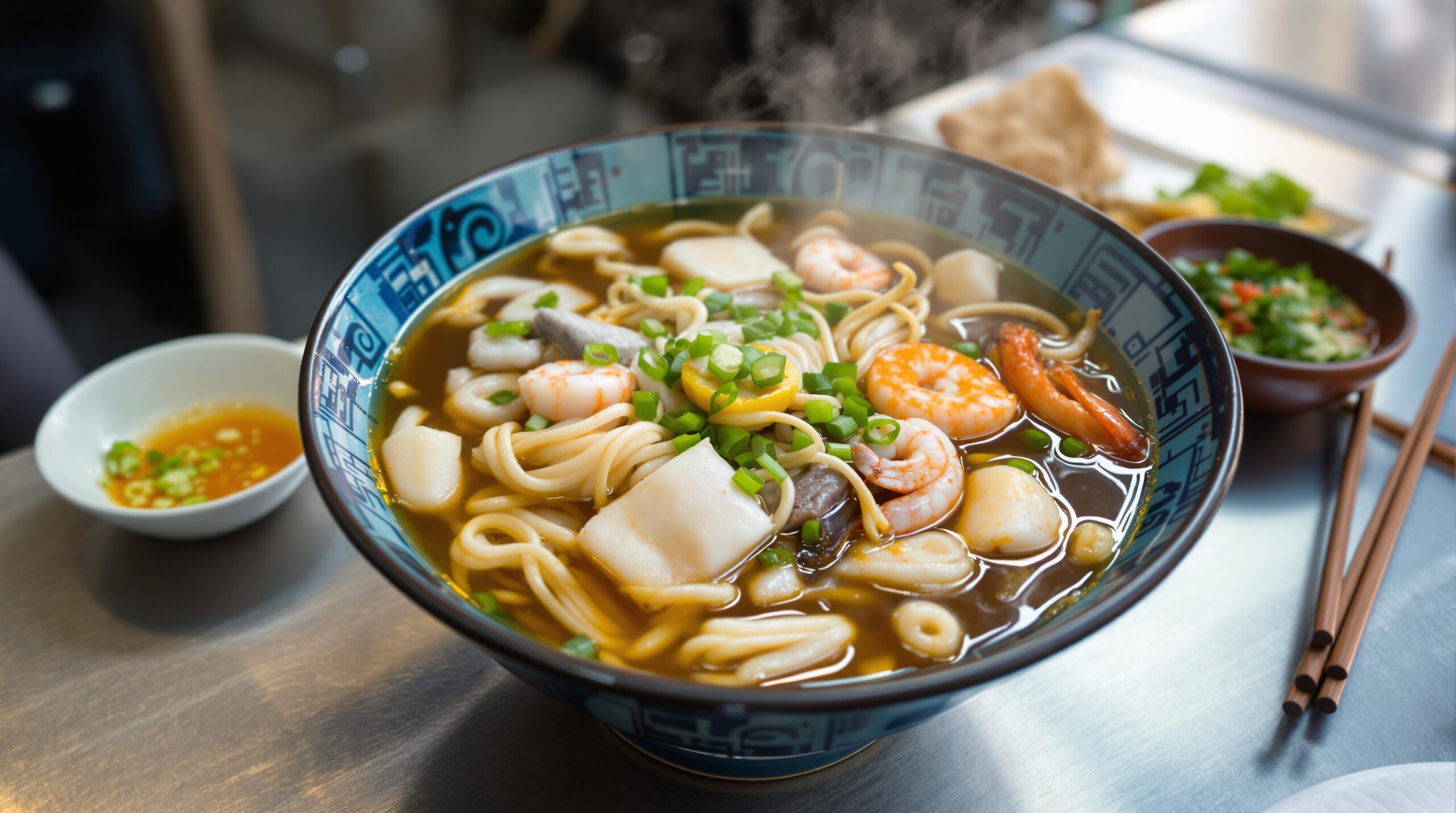
Phu Quoc’s food story is bigger than grilled seafood (though the grilled seafood is glorious). This island invented dishes that exist nowhere else in Vietnam, ferments the country’s most famous fish sauce, and grows pepper that chefs fly home. Here’s what to actually eat, where locals eat it, and what it costs in 2026.
The Island-Only Dishes (Eat These First)
1. Bún quậy — the DIY noodle ritual
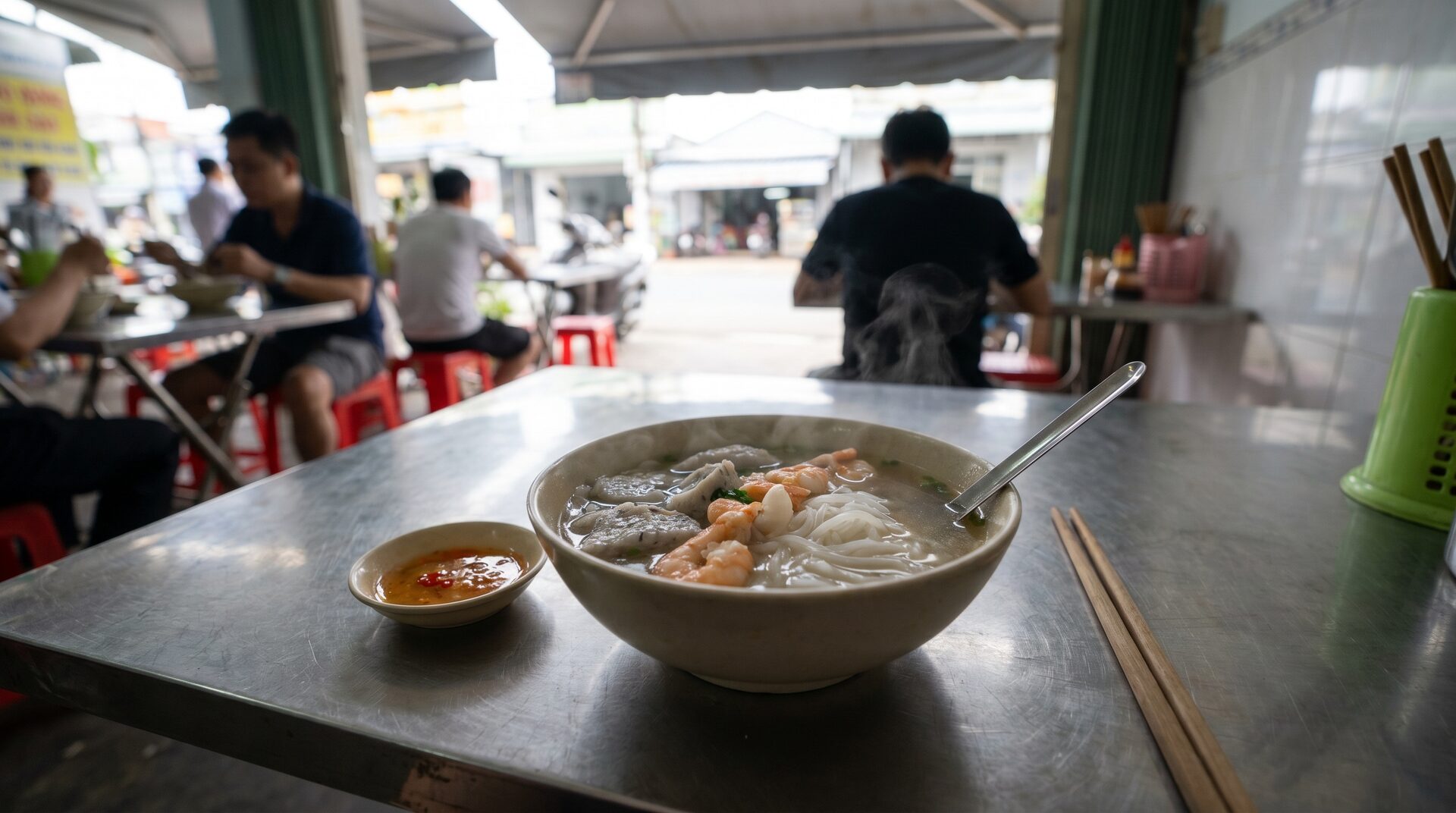
Phu Quoc’s signature bowl: rice noodles made in-house, pounded squid and shrimp paste cooked straight in the peppery broth. The ritual: you mix your own dipping sauce at the table — kumquat, salt, sugar, chili, MSG to taste — and the locals judge you kindly while you do. The famous original spot in Duong Dong is worth the queue; a bowl runs 40,000–70,000 VND. Breakfast of champions.
2. Gỏi cá trích — raw herring salad
The fisherman’s dish: fresh raw herring cured in lime, tossed with shredded coconut, onion and herbs, rolled in rice paper with lettuce, dipped in a peanut-chili sauce. Bright, crunchy, zero fishiness when fresh — and it’s only properly fresh here. 80,000–150,000 VND a platter that feeds two.
3. Ham Ninh flower crab (ghẹ Hàm Ninh)
Small, sweet crabs from the stilt-village fishing port of Ham Ninh on the east coast — steamed simply, dipped in lime-pepper salt. Ride out to the village, pick your crabs by weight (confirm the per-kg price first, as always), and eat them on a plank over the water. Sweetest crab meat in southern Vietnam.
4. Sea urchin (nhum)
Grilled with scallion oil or stirred into rice porridge. The night market does both well.
The Heritage Products
- Fish sauce (nước mắm): Phu Quoc’s anchovy fish sauce has protected-origin status (like Champagne) and 200 years of history. The barrel-house tours in Duong Dong are short, pungent and genuinely interesting; buy vacuum-sealed bottles for flying.
- Pepper: the island’s pepper farms grow some of Vietnam’s most prized peppercorns. Green pepper on seafood is a local move; a bag of red peppercorns is the best cheap souvenir on the island.
- Sim wine (rượu sim): a sweet-tart liqueur from wild rose myrtle berries. Try a glass before committing to a bottle.
Where Locals Actually Eat
- Duong Dong morning market: the breakfast hall of the island — bún quậy, bánh canh, strong phin coffee, tropical fruit for pennies. Go before 9 AM.
- The night market: yes it’s on every list, and yes it still earns it — our full stall-by-stall guide covers what to order and the price-confirmation rule.
- Ham Ninh village: for the crabs, plus the plank-restaurant atmosphere. Pair with the nearby starting point for a east-coast afternoon.
- Beach shacks at Sao and Ong Lang: grilled fish, cold coconut, sandy feet — pay the small view-premium happily.
- The rule of thumb: plastic stools + Vietnamese chatter + a grill you can see = eat there. Empty air-con dining rooms with laminated tourist menus = keep walking.
Sample Food Budget (Per Person, Per Day)
- Local mode: $8–12 — market breakfast, bún quậy or cơm lunch, night-market dinner
- Mixed mode: $15–25 — one local meal, one seafood feast, café stops
- Resort mode: $40+ — and honestly, you’re missing the good stuff
How Do You Order Seafood Without Overpaying?
Confirm three things before anything hits the grill: the price per kilo, the weight on the scale, and whether cooking is included. Do that, and Phu Quoc seafood pricing is honest. Skip it, and the bill can grow legs. A reputable stall weighs your pick in front of you, every time.
The routine is simple. Point at the tank or the ice tray, ask the per-kilo price, and watch the weighing happen. If a place will not quote a number until after the meal, thank them and keep walking — there is always another grill ten meters on. The phone calculator is the island’s universal negotiating language, and nobody is offended by it.
Two habits worth copying from locals: ask for the lime-pepper-salt dip (muối tiêu chanh) with everything, and favor whatever the boats actually brought in that day over the exotic tank showpieces. The daily catch is fresher, and it is gentler on the wallet too. When we cannot decide, we simply ask the owner what came off the boats this morning — the answer, pointed at with a grin, has never once steered us wrong.
A Slow Food Day, Hour by Hour
Eating is the best itinerary this island has, and it works better with your own wheels — our getting around Phu Quoc guide covers the options. If food is the whole point of your trip, it is also worth basing yourself in or near Duong Dong rather than out on a resort strip; our where-to-stay guide breaks down the trade-off.
| Time of day | The move |
|---|---|
| Early morning | Duong Dong market: bún quậy and a phin coffee among the fish sellers |
| Late morning | Swim it off — the eating resumes soon enough |
| Lunch | Cơm bình dân — point-and-choose rice plates wherever the plastic stools are full |
| Mid-afternoon | A fresh coconut or a sinh tố (fruit smoothie) somewhere shady |
| Sunset | Cold beer on the sand at Ong Lang, or crabs on a plank at Ham Ninh |
| Evening | Night market rounds, using the price-confirmation rule above |
We rarely manage the whole board in one day — and that is fine. Rotate through it across your stay and let one long lunch collapse an afternoon now and then.
What to Drink While You Are Here
The drinks deserve their own paragraph. Nước mía — sugarcane juice pressed to order through a hand-fed roller — is the great tropical refresher, and passion fruit juice is everywhere and reliably excellent. Fresh coconuts cost more on the beach than in town; pay the difference happily, because drinking one anywhere else misses the point.
Coffee runs on the slow phin drip here like everywhere in Vietnam: cà phê sữa đá (iced with condensed milk) is the default, and most cafes will make a coconut coffee if the afternoon calls for dessert in a cup. One local quirk worth adopting: beer over ice is completely normal on the island, keeps your glass cold in the heat, and stretches the drink to match a long seafood dinner. Join in.
FAQ
Is street food safe on Phu Quoc?
High-turnover stalls cooking to order over fierce heat are as safe as street food gets. Drink bottled water, ease into raw dishes (gỏi cá trích from busy places only), and your stomach will do fine.
What’s breakfast like?
Noodle soups, bánh mì, strong coffee with condensed milk. Skip one hotel buffet for the morning market — it’s the better story and a tenth the price.
Vegetarian options?
Present but not the island’s strength: chay (vegetarian) eateries hide near pagodas, and Vietnamese kitchens will improvise tofu-and-vegetable plates if you ask. Coastal Vietnam runs on seafood.
Is food more expensive than mainland Vietnam?
Slightly — it’s an island and a resort island at that. Local dishes still cost $2–3; only imported/Western food carries real markups.
Bottom Line
Eat the two dishes that exist only here (bún quậy, gỏi cá trích), pilgrimage to Ham Ninh for crab, do the night market properly, and carry home fish sauce and pepper instead of fridge magnets. Phu Quoc feeds you world-class for $10 a day — you just have to sit on the plastic stool. First night with a guide? Food tours run nightly.
Some links in this guide are affiliate links: if you book through them we may earn a small commission at no extra cost to you. It helps keep our guides honest and free.
Get our free Phu Quoc Trip Kit — the pre-departure checklist, a 5-day plan and our honest booking picks. No spam; at most one email a month.
By subscribing you agree to our privacy policy. Unsubscribe anytime.