Let us be honest before the bus leaves: Vung Tau is not the beach you came to Vietnam for. We have said as much in our Saigon guide — if you want clear water, the real beach is a 55-minute flight. And yet we keep recommending this day trip, because Vung Tau is not really about swimming. It is Saigon’s sea-air escape: two hours to a breezy peninsula where you climb to a giant Jesus with your shoulders covered, eat the best bánh khọt in the country at a plastic table, walk a seafront promenade built for strolling, and ride home fed and salted. Judged as a beach vacation it disappoints. Judged as a food-and-views day, it quietly earns its bus ticket.
Short version: go on a weekday, take the morning limousine van (about 2 hours), eat bánh khọt before noon, climb the Christ statue before the heat peaks, walk Front Beach at golden hour, seafood dinner, last van home. Treat the sea as scenery, not a swimming pool. Details below.
Getting There: Van, Ferry or Bus
| Option | Time | Cost (one way) | Notes |
|---|---|---|---|
| Limousine van | ~2–2.5 hr | ~120–200k VND | Hotel-area pickups, comfiest seats — our pick |
| Fast ferry | ~2 hr | ~320–400k | From the Saigon riverfront — scenic river exit, weather-dependent |
| Regular bus | ~2.5–3 hr | under 100k | Cheapest, from Mien Dong station — fine, unremarkable |
Book the morning departure — the whole day works better if you arrive hungry before eleven. Weekends are a different city: half of Saigon has the same idea, the vans sell out, and the beachfront turns into a family festival. If you can only go on a Sunday, lean into it; the people-watching becomes the attraction.
The Real Reason: Bánh Khọt
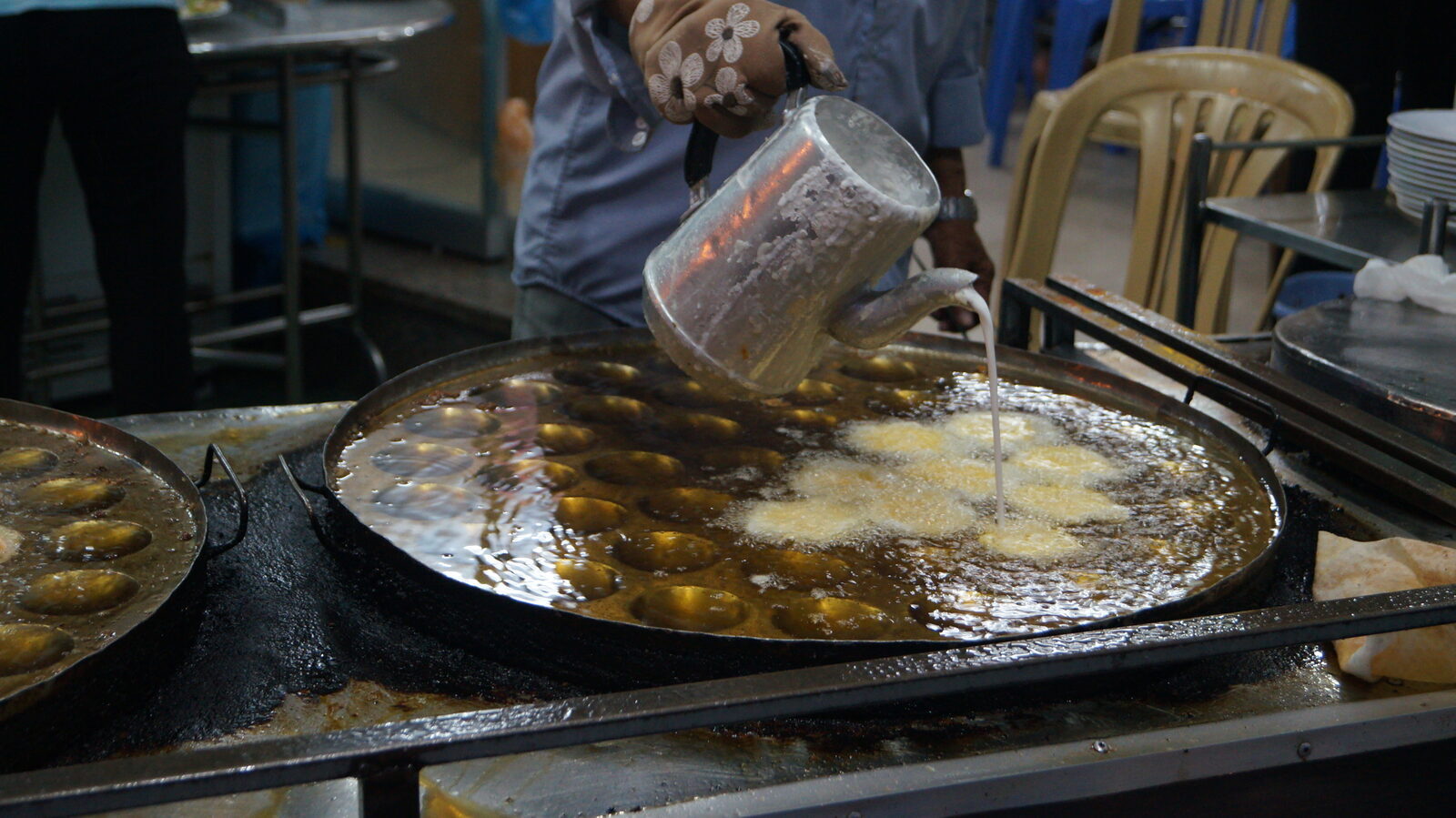
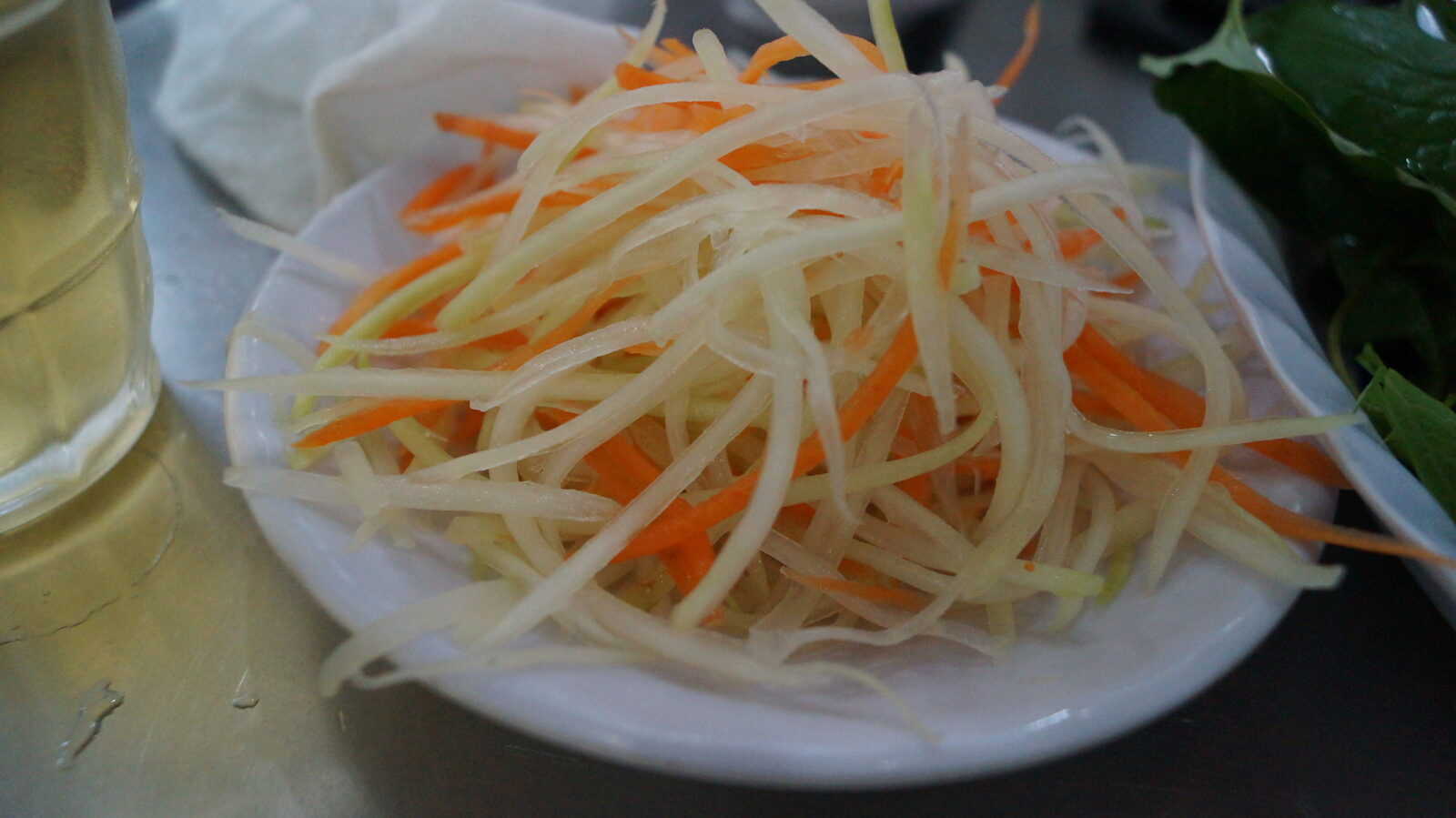
Vung Tau is the acknowledged capital of bánh khọt — crisp-bottomed turmeric rice cakes the size of a golf ball, each crowned with a shrimp, cooked to order in a dimpled cast-iron pan that hisses at the whole room. You wrap each one in mustard leaf and lettuce, add herbs and shredded green papaya, dunk it in sweet fish sauce, and repeat until the plate is gone — a plate runs roughly 60–100k. The famous names cluster around Hoàng Hoa Thám street: the celebrated Gốc Vú Sữa draws the queues, and the neighboring shops on the same strip (we ate at Bánh Khọt 14, one block over) serve substantially the same glorious plate without the wait. This dish alone justifies the trip; everything else is a bonus.
The Climb: Christ of Vung Tau and the Lighthouse
nn
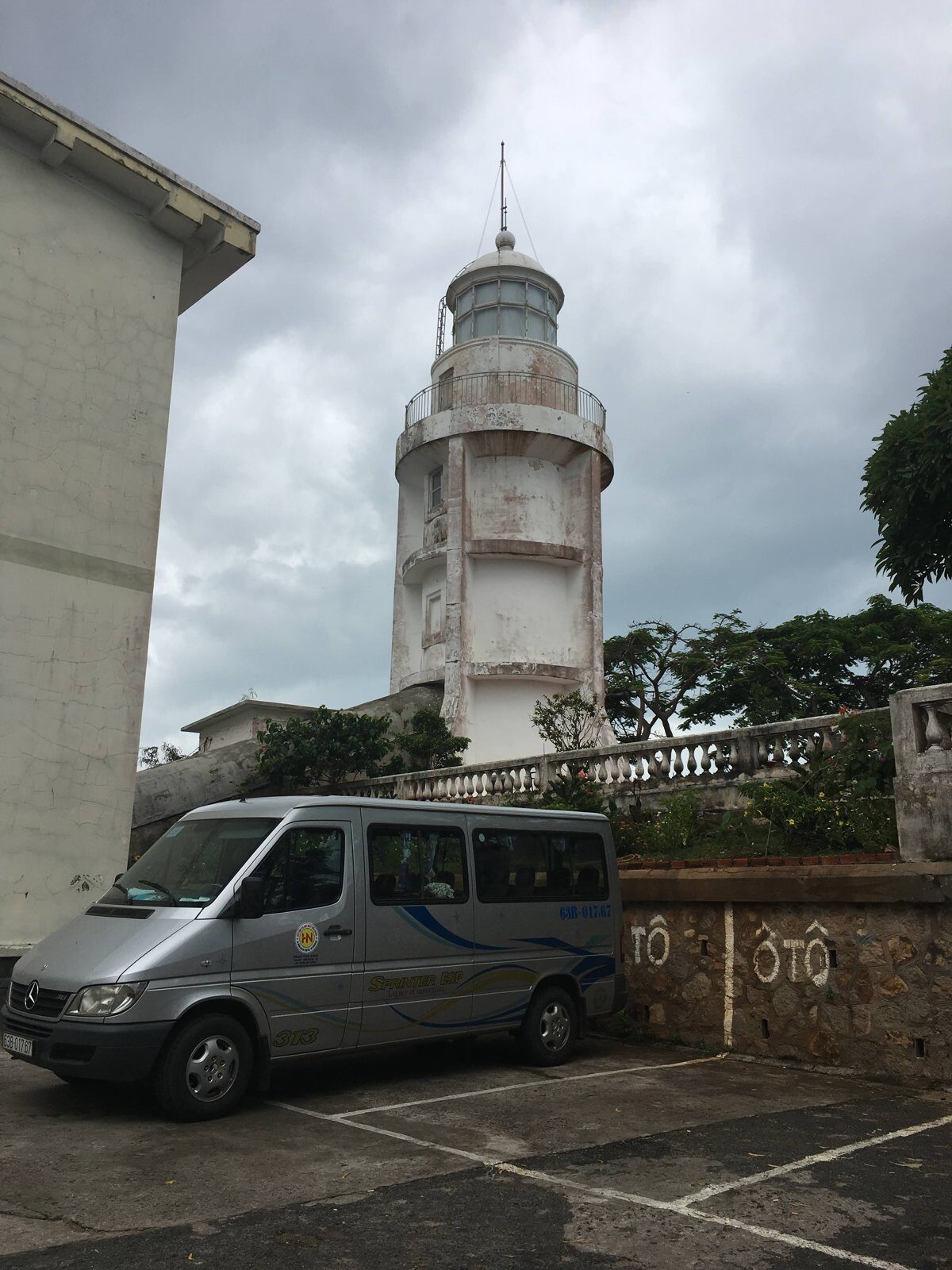
After lunch, work it off. The Christ of Vung Tau stands on Nui Nho hill at the peninsula’s tip — one of the largest Christ statues in Asia, reached by roughly 800 stone steps through frangipani shade. Entry is free; shoulders and knees must be covered (they check), and a further spiral of steps inside the statue puts you on the outstretched arms with the whole coast underneath. Go before three if you can — the stairway holds the afternoon heat. The old French lighthouse on the neighboring rise is the gentler alternative: a short motorbike-taxi ride up, white walls, and the best free panorama of both beaches.
The Beach, Honestly
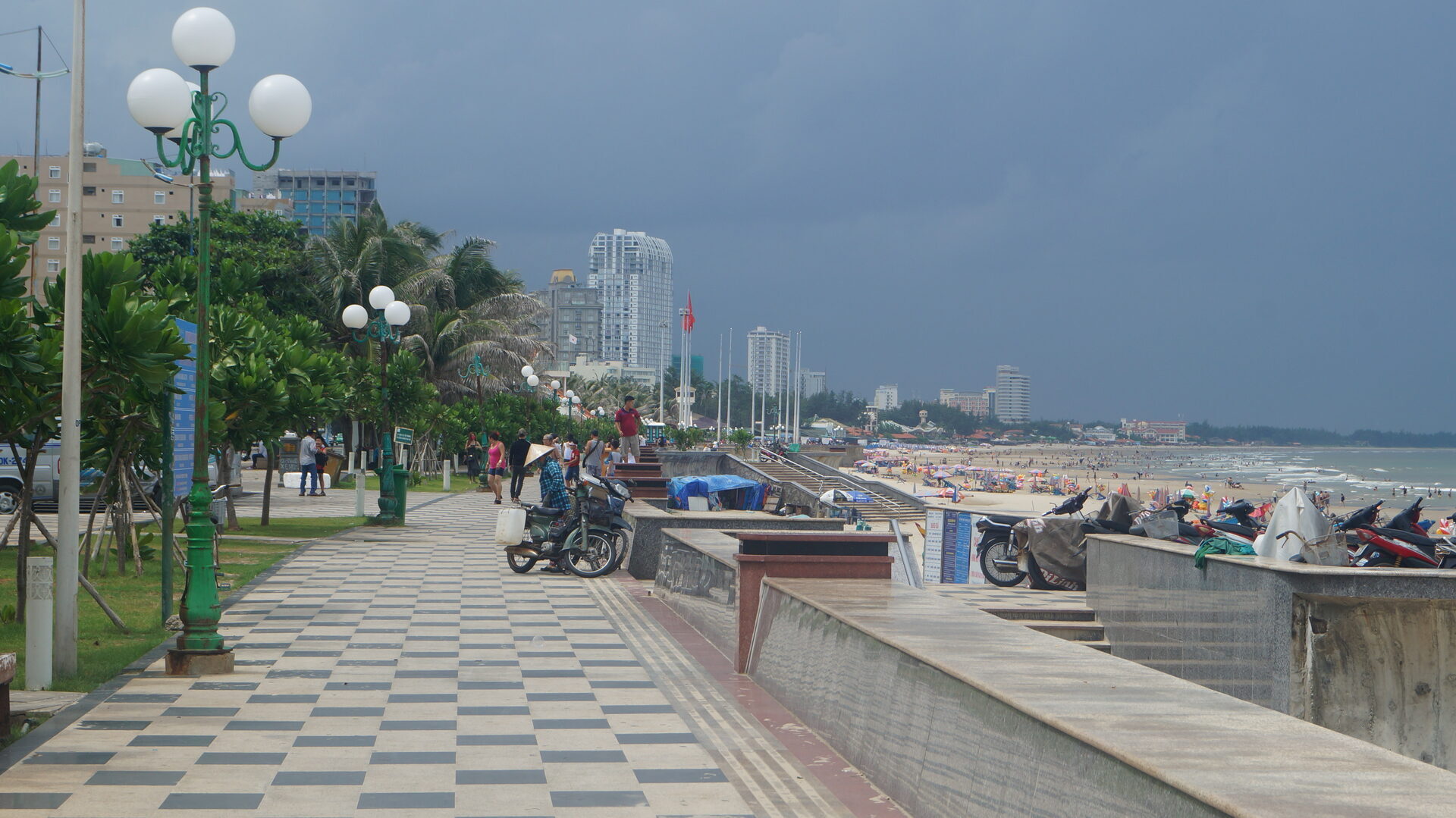
Back Beach (Bãi Sau) is the long, wide strip where the umbrellas and jet skis live; Front Beach (Bãi Trước) is the promenade — lamp posts, checkerboard pavement, old trees, the city at your shoulder. The water at both runs murky more often than blue; this is a working coast near a river delta and an offshore oil field, not an island lagoon. Locals swim happily at dawn; we suggest you walk, sip a coconut, and save your swimsuit for the islands. As sea-air antidotes to Saigon’s traffic go, the promenade at golden hour does the job completely.
The Evening: Seafood and the Harbor
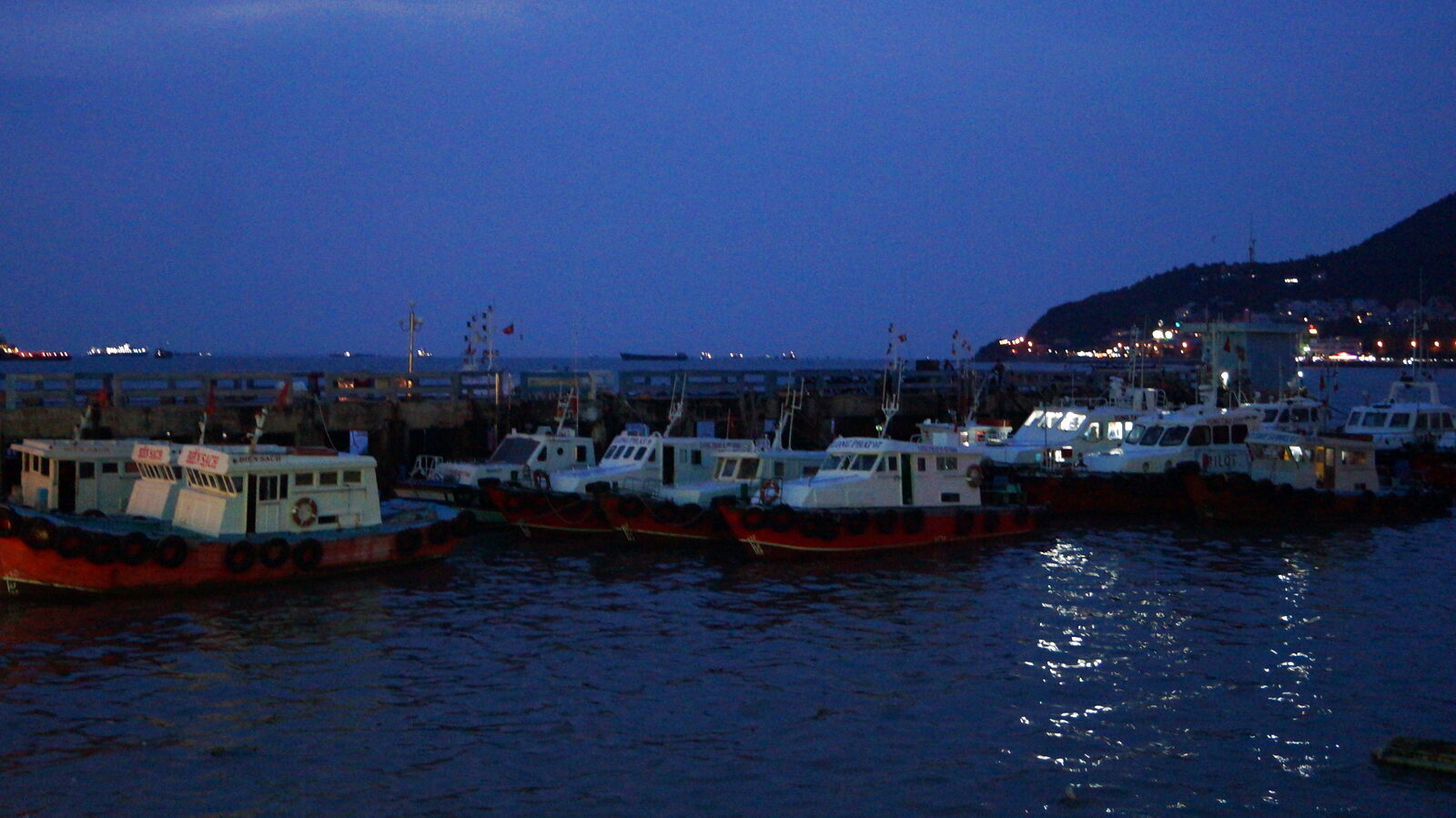
Finish at a seafood restaurant — the strip along the front fills from late afternoon with tanks of crab, snails and grouper priced by the kilo (agree the price before it goes to the kitchen, the standard Vietnam seafood rule). The harbor at dusk is quietly beautiful: red-hulled fishing boats rafted together, hill lights coming on, cargo ships strung across the horizon. Catch a 7 or 8 PM van back and you are in Saigon before the rooftop bars close — or stay the night (rooms are cheap on Agoda) and ride home with the morning coffee crowd. Tours barely exist for Vung Tau and are not needed, though Klook lists a few transport and combo options if you prefer everything booked.
How it compares to the other Saigon escape: Can Gio is nature and mangroves, Vung Tau is food and sea air — both two hours out, both honest day trips rather than destinations. Do Vung Tau on the day your stomach is in charge. Menu-level prices across the country live in the Vietnam price index, and the city you are escaping from is decoded in our Saigon food guide and 3 day itinerary.
FAQ
Is Vung Tau worth visiting from Ho Chi Minh City?
As a day trip, yes — for bánh khọt, the Christ statue climb, seafood and sea air two hours from the city. As a beach destination, honestly no: the water is usually murky and the islands do that job far better. Go with food-first expectations and it over-delivers.
How do you get from Saigon to Vung Tau?
Limousine vans run all day from the city (about 2–2.5 hours, roughly 120–200k one way) and are the comfortable default. A fast ferry from the Saigon riverfront takes about 2 hours when running, and regular buses from Mien Dong station cost under 100k. Book a morning departure and the last evening van back.
Can you swim at Vung Tau beach?
You can — locals do, especially at dawn on Back Beach, and lifeguard-flagged sections exist. But the water runs brown-green more often than blue, so manage expectations: treat swimming as a bonus, not the point of the trip.
What is bánh khọt?
Mini turmeric rice-flour cakes fried to order in a dimpled cast-iron pan, each topped with a shrimp, then wrapped in mustard leaf with herbs and green papaya and dipped in sweet fish sauce. Vung Tau is its capital, the famous shops cluster on Hoàng Hoa Thám street, and a plate costs roughly 60–100k.
Should I stay overnight or day trip?
A day covers the hits: bánh khọt, the climb, the promenade, seafood. Stay the night only if you want the dawn beach walk with the local swimmers and a second bánh khọt round — hotels are inexpensive and the town is pleasantly sleepy after the day-trippers leave.
Some links in this guide are affiliate links: if you book through them we may earn a small commission at no extra cost to you. It helps keep our guides honest and free.
Get our free Phu Quoc Trip Kit — the pre-departure checklist, a 5-day plan and our honest booking picks. No spam; at most one email a month.
By subscribing you agree to our privacy policy. Unsubscribe anytime.