January is the month Vietnam stops being one country, weather-wise, and becomes three. The south runs its most dependable beach weather of the year. The center enjoys a cool, drying spring-in-waiting. And the north does something first-time visitors never expect from Southeast Asia: actual winter — grey skies, breath-fog mornings, and locals in serious coats. None of the three is a wrong answer, but they’re different trips. Here’s the honest region-by-region picture for January, plus the one calendar date that can reshape the whole month.
This guide is part of our month-by-month series — start with the best time to visit Vietnam for the full-year map.
Short version: go south for certainty — Phu Quoc, Saigon and the Mekong are in peak form all month. The central coast is a good-value sleeper as its dry season takes hold. The north is for travelers who want atmosphere over sunshine: misty Ha Long, moody Hanoi, cold mountain air. And if your trip touches late January in a Tet year, read the holiday section twice.
The One Map That Explains January
| Region | January weather | Verdict |
|---|---|---|
| South (Saigon · Mekong · Phu Quoc) | Peak dry season — the year’s most reliable sun, calm seas, low humidity | ✅ Go — maximum certainty |
| Central coast (Da Nang · Hoi An · Hue) | Drying out and cooling — pleasant town weather, sea still cool and choppy | 🟡 Good value; towns yes, swimming marginal |
| North lowlands (Hanoi · Ninh Binh · Ha Long) | True winter — 10–17°C, grey and misty; atmospheric rather than sunny | 🟡 A mood, not a beach — pack real layers |
| Far north mountains (Sapa · Ha Giang) | Cold, occasional frost and rare snow dustings on the highest ridges | 🔻 Specialist cold-weather trips only |
The South: Certainty Season
If you need a week of sunshine you can plan around — a honeymoon, a family escape, the one beach trip of the year — January in southern Vietnam is as close to a guarantee as tropical weather offers. Phu Quoc runs calm seas, dry days and its full sunset program all month; the peak-pricing fever of Christmas–New Year breaks after the first week, leaving high-season weather at slightly saner rates. The details, including how the island behaves around the holidays, are in Phu Quoc in January and the year-round view in the best-time guide.
Saigon stays dry, bright and busy — this is prime rooftop-and-sidewalk season, covered in our Saigon guide — and the Mekong Delta is at its coolest and most comfortable for boat mornings. If you’re building a certainty-first trip, this half of the country is the anchor.
The Sleeper Pick: Da Lat and the Highlands
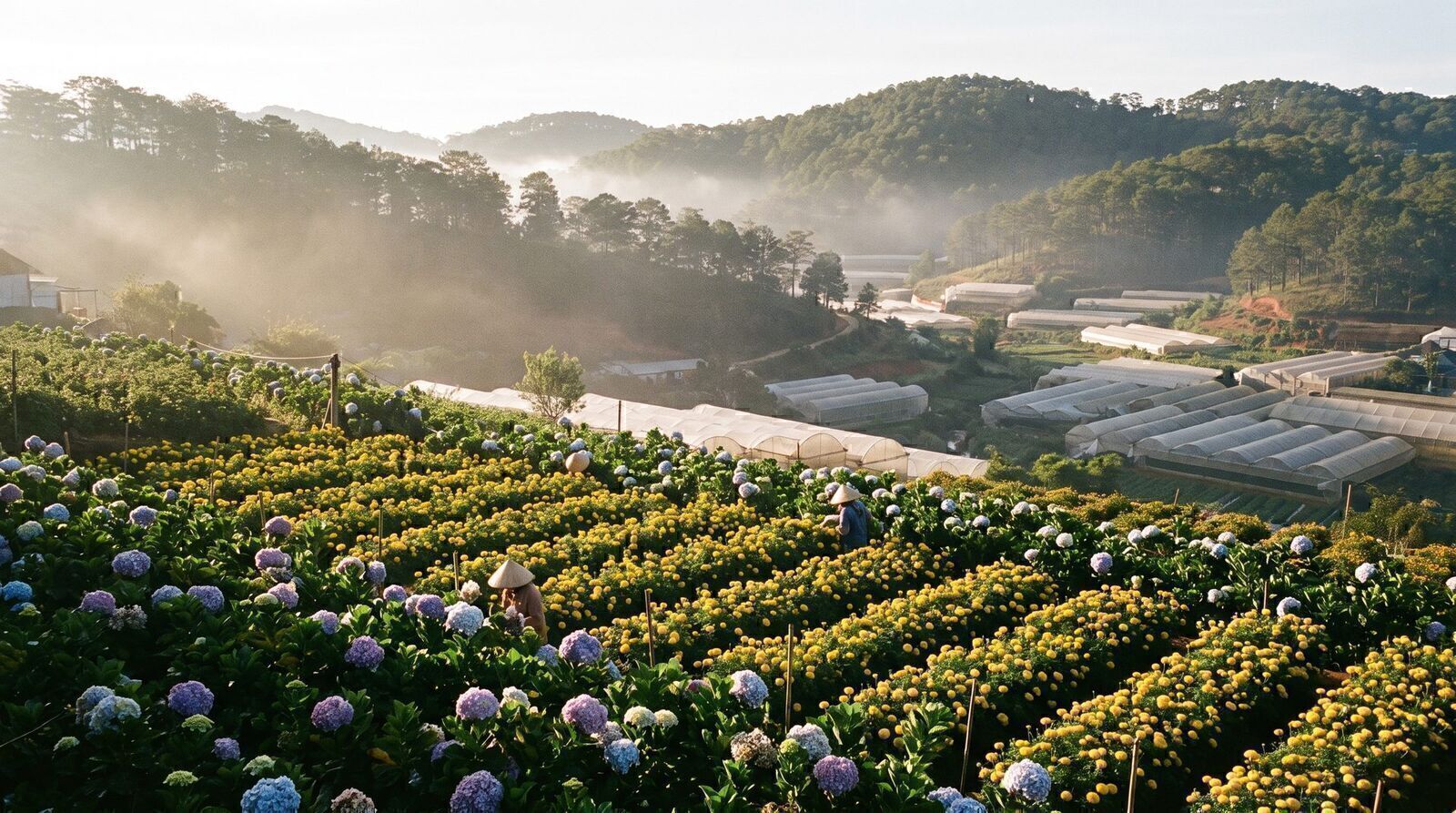
Da Lat, Vietnam’s 1,500-meter hill station, quietly has its best month in January: dry pine-forest air, crisp 10–22°C days, and the flower farms building toward their pre-Tet crescendo — the city supplies the blooms half the country buys for the holiday. It’s jacket weather with blue skies, which is exactly what the French built the town for. We wrote the honest case (including what Da Lat isn’t) in the Da Lat guide — as a two-day cool-air interlude in a southern itinerary, January is when it makes most sense.
The Central Coast: Value While It Dries
January is the central coast’s convalescent month — the flood season is over, rain days keep shrinking, and Hoi An’s old town returns to full lantern-lit form on cool, walkable evenings. What hasn’t recovered yet is the sea: it stays cool, grey-green and choppy into early spring, so beach-first travelers should still look south. But as a towns-food-and-tailors stop, the region is excellent value in January — hotel rates sit well below the February–August run, and the crowds are gentle. The rhythms are in our Hoi An and Da Nang guides; tours and cooking classes run full schedules and rarely sell out this month — comparing Hoi An activities is more about picking well than booking early in January.
The North: Winter as an Aesthetic
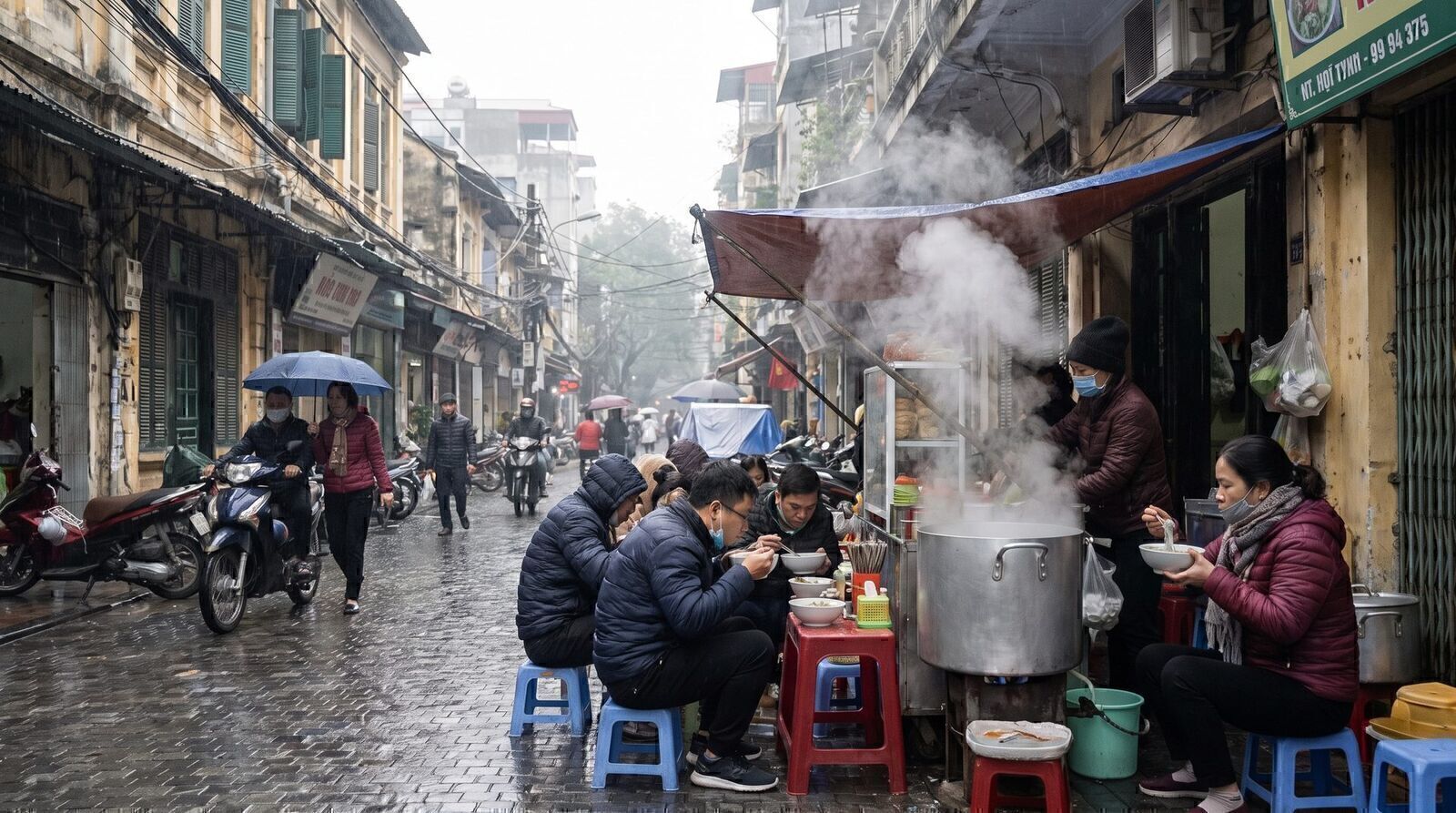
Hanoi in January is not a postcard of tropical Asia — it’s better described as Vietnam’s answer to a European winter city: 10–17°C, low grey skies, drizzle the locals call mưa phùn, and a street-food culture that peaks precisely because of it. Steam rising off a pho pot on a cold morning is one of the country’s great scenes, and the city’s cafes were made for this weather. Ha Long Bay trades clarity for atmosphere — karsts emerging from mist, which photographs hauntingly even as it hides the long views (the trade-offs are in the cruise guide). Go north in January for mood, food and museums; skip it if grey skies sink your spirits. The mountains go further still — Sapa sees frost and, every few years, a genuine snow dusting that makes national news. Beautiful, cold, and strictly for prepared hikers.
Tet: The Date That Bends January
Vietnam’s lunar new year is the country’s biggest holiday, and while the date moves each year, its gravity always pulls on late January: transport fills with millions traveling home, prices climb, and in the final pre-Tet days many businesses begin winding down. In 2027, Tet falls on February 6 (our Tet 2027 guide has what closes and when to book), which keeps January itself largely clear — expect a normal month until the final few days, when domestic flights and trains start filling. The working rules for any year: check the Tet date before you book, avoid domestic travel in the three days either side of it, and know that Tet week itself is a magical-but-closed period — festive streets, family-focused closures, limited services. If your trip brushes against it, our February guide covers the holiday in full.
A Sane 10-Day January Route
- Days 1–2: Saigon. Dry-season city days — markets, museums, rooftops.
- Days 3–4: Da Lat. Fly or drive up for pine air, flower farms and cool-weather coffee.
- Days 5–9: Phu Quoc. The certainty leg — beaches, sunsets, one boat day, zero weather anxiety.
- Day 10: Back through Saigon for a final food crawl and the flight home.
It’s an all-south route because January rewards it — three distinct climates (city heat, highland cool, island calm) without ever gambling on weather. Central-coast fans can swap Da Lat for two Hoi An days at similar value. A north-inclusive version works too, but pack for two seasons and read the winter section honestly first. Longer-stay shapes are in the where-to-base guide.
Prices and Crowds: The January Economics
January opens expensive and relaxes from there. The first week carries New Year holiday pricing — Phu Quoc beachfront and southbound flights at their annual worst — then settles into standard high-season rates: elevated but bookable, with mid-month the calmest window. The central coast and the wintry north are the month’s value plays, both well below their peak-season prices. The wildcard is Tet’s position: when it lands in late January (not 2027 — it’s February 6 that year), the final week flips into domestic-travel frenzy and the rules change. Whatever the year, the sequence is the same — book the first week early, cruise through mid-month, and check the lunar calendar before touching late January. Comparing Phu Quoc dates across January shows the post-New-Year price step-down clearly.
What to Pack for Vietnam in January
- A genuinely warm layer for the north — Hanoi’s damp 12°C outperforms its number; northern hotels often lack central heating.
- Full sun kit for the south — January UV on the islands is strong and the dry-season breeze hides it.
- One packable mid-layer regardless of route — Da Lat evenings, over-air-conditioned buses and breezy boat decks all call for it.
- Slip-on shoes — temple visits and homestay etiquette both reward easy shoes, and January is peak sightseeing weather.
- An eSIM installed before you land — holiday-season logistics live on your phone (our Vietnam eSIM setup).
FAQ
Is January a good time to visit Vietnam?
Yes — it’s one of the most reliable months, with a caveat per region. The south delivers its surest beach weather of the year, the central coast is pleasant and good value as it dries out, and the north offers atmospheric winter city-breaks rather than sunshine. Check the Tet date for late-January trips; in 2027 it falls safely in February.
Is Vietnam hot in January?
Only the southern half. Saigon and Phu Quoc run 28–32°C days with low humidity — ideal tropical weather. The central coast sits in the pleasant low-to-mid 20s. Hanoi averages 10–17°C with damp, grey spells, and the mountains drop toward freezing at night. Pack for the halves you’re visiting.
Can you swim in the sea in Vietnam in January?
In the south, absolutely — Phu Quoc’s west coast is at its calm, warm best. The central coast is marginal: air temperatures are pleasant but the sea stays cool and choppy from the winter monsoon. Northern waters (Ha Long, Cat Ba) are for looking at, not swimming in, until late spring.
Does Tet affect January travel?
Only when the lunar calendar puts it there. Tet 2027 falls on February 6, so January 2027 runs normally until the last few days, when pre-holiday domestic travel builds. In years when Tet lands in late January, the final week becomes Vietnam’s busiest travel period — book far ahead or aim earlier in the month.
Where should I go in Vietnam in January for two weeks?
The strongest two-week shape is south-plus-one: Saigon and the Mekong, a Da Lat or Hoi An interlude, then a Phu Quoc finish. It stacks three climates, none of them a gamble. Add Hanoi and a misty Ha Long cruise only if winter atmosphere appeals as much as sunshine — it’s a genuinely different, quieter kind of trip.
Some links in this guide are affiliate links: if you book through them we may earn a small commission at no extra cost to you. It helps keep our guides honest and free.
Get our free Phu Quoc Trip Kit — the pre-departure checklist, a 5-day plan and our honest booking picks. No spam; at most one email a month.
By subscribing you agree to our privacy policy. Unsubscribe anytime.