February is the month with a holiday in the middle of it. Tet — Vietnam’s lunar new year and the biggest event on its calendar — lands in early-to-mid February most years, and everything else about the month organizes itself around that fact: flights, prices, opening hours, even the flowers. The weather story is simple and good (dry south, drying center, cool north); the planning story is all about one week. Get the Tet logic right and February is one of Vietnam’s best months. Get it wrong and you spend three days wondering why everything is closed.
This guide is part of our month-by-month series — start with the best time to visit Vietnam for the full-year map.
Short version: the south and central coast are in fine dry-season form all month, the north is cold but starting its slow spring turn — and Tet 2027 falls on Saturday, February 6, which shapes the first half of the month. Travel around the holiday, not through it, unless experiencing Tet itself is the point — in which case base somewhere festive and stock the fridge.
The One Map That Explains February
| Region | February weather | Verdict |
|---|---|---|
| South (Saigon · Mekong · Phu Quoc) | Peak dry season rolls on — hot, sunny, calm seas | ✅ Go — reliability continues |
| Central coast (Da Nang · Hoi An · Hue) | Dry season settling in — sunny spells multiply, sea still cool but calming | ✅ The season quietly begins |
| North lowlands (Hanoi · Ninh Binh · Ha Long) | Cold and damp early month (mưa phùn drizzle), easing late; festival season after Tet | 🟡 Atmospheric, improving by the week |
| Far north mountains (Sapa · Ha Giang) | Cold; plum and peach blossom season paints the valleys white and pink | 🟡 Blossom-hunters’ month, with layers |
Tet 2027: The Week That Runs the Month
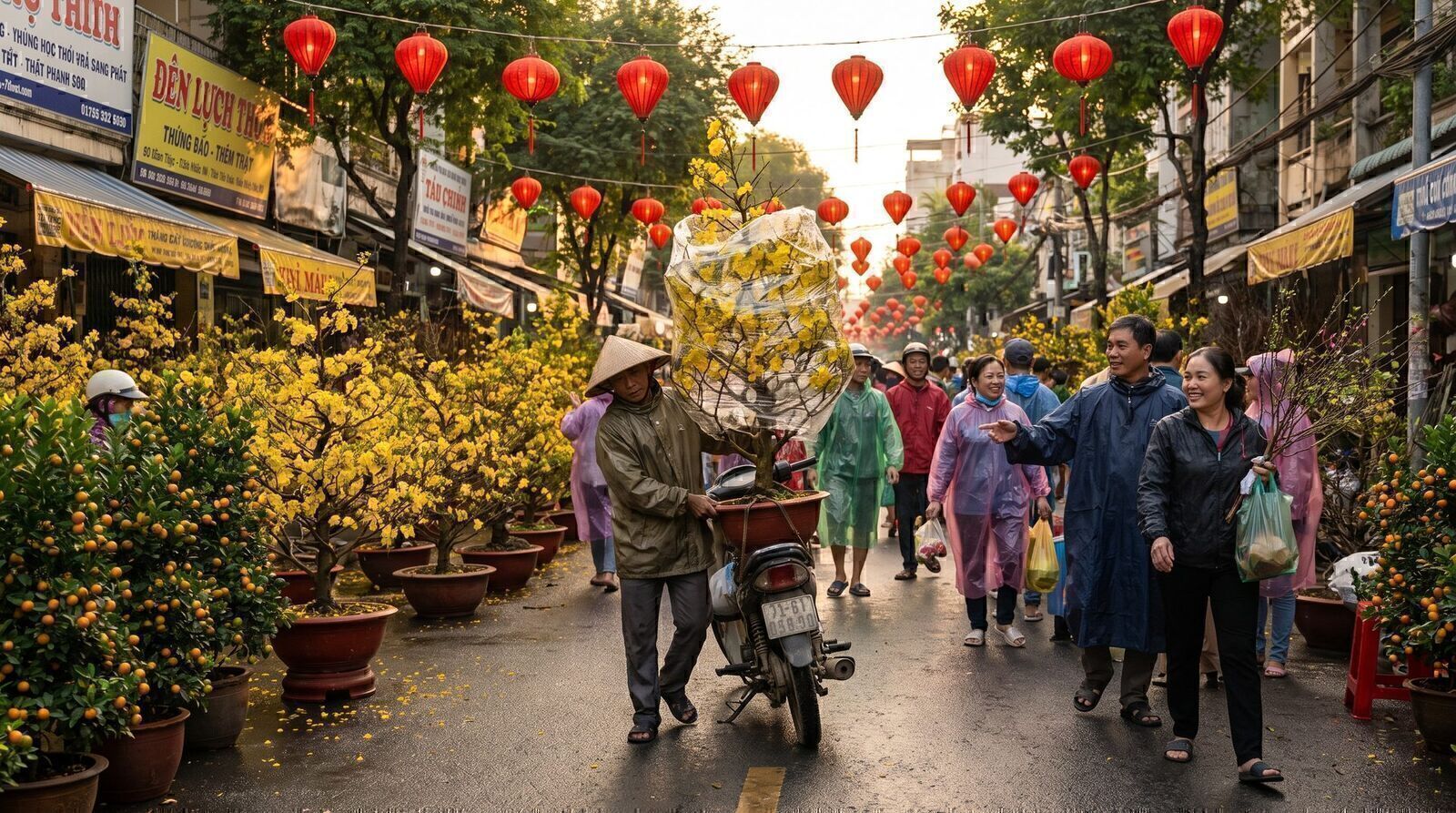
Tet is Christmas, New Year and a national family reunion rolled into one — and in 2027 it falls on Saturday, February 6, with the public holiday expected to run February 4–10 (our full Tet 2027 guide has the day-by-day closures and booking rules). Three phases matter to travelers. Before (late January to February 4): the country is at its most photogenic — flower markets everywhere, kumquat trees on motorbikes, mai and peach blossoms filling the streets — but domestic transport is in full crush as millions travel home; book any flight or train in this window well ahead. During (February 5–8): cities go quiet and festive at once; family-run restaurants and shops close for several days, major tourist services and hotels keep running, and streets fill with families in new clothes. After (February 9 onward): the reopening wave, plus the north’s great festival season — pagoda pilgrimages and village festivals run for weeks.
The strategy menu is short. Resort-based travelers barely notice Tet — Phu Quoc and beach hotels run at full (busy, pricier) service through the holiday. City-based travelers should either lean in — Saigon’s Nguyen Hue flower street and Hanoi’s lake-side celebrations are genuinely special — or schedule city days away from the closure window. The one hard rule: don’t plan domestic travel on February 4–5 or 8–9, the peak movement days on either side of the holiday.
The South: Business as Usual, Plus Flowers
Weather-wise, southern February is January’s twin — dry, hot, reliable. Phu Quoc runs its peak season at full strength, with a Tet-week domestic surge layered on top: the island is a favorite family destination for the holiday, so that week prices like Christmas and books out early (the full picture is in Phu Quoc in February). Saigon before Tet is the city at its most alive — the flower street, decorated shopfronts, gift traffic — and during Tet it exhales into something calm and strolling-paced that visitors rarely see; our Saigon guide works both modes. The Mekong is cool, dry and full of pre-holiday fruit-and-flower commerce.
The Central Coast: The Quiet Opening
February is when Da Nang and Hoi An’s long dry season quietly begins. Rain days keep shrinking, sunny stretches lengthen, and by late month the region hits its stride — warm, walkable days that run more or less unbroken into August. The sea remains the trailing indicator (swimmable for the determined from late February, properly pleasant by April), so treat this as towns-first season still. It’s also the last easy-booking window before the March–May sweet spot builds: hotel rates and crowds both sit below what’s coming. Our Hoi An slow guide and Da Nang stay guide cover the ground; comparing Da Nang dates for late February against April shows the head start plainly.
The North: Blossoms, Drizzle and Festival Season
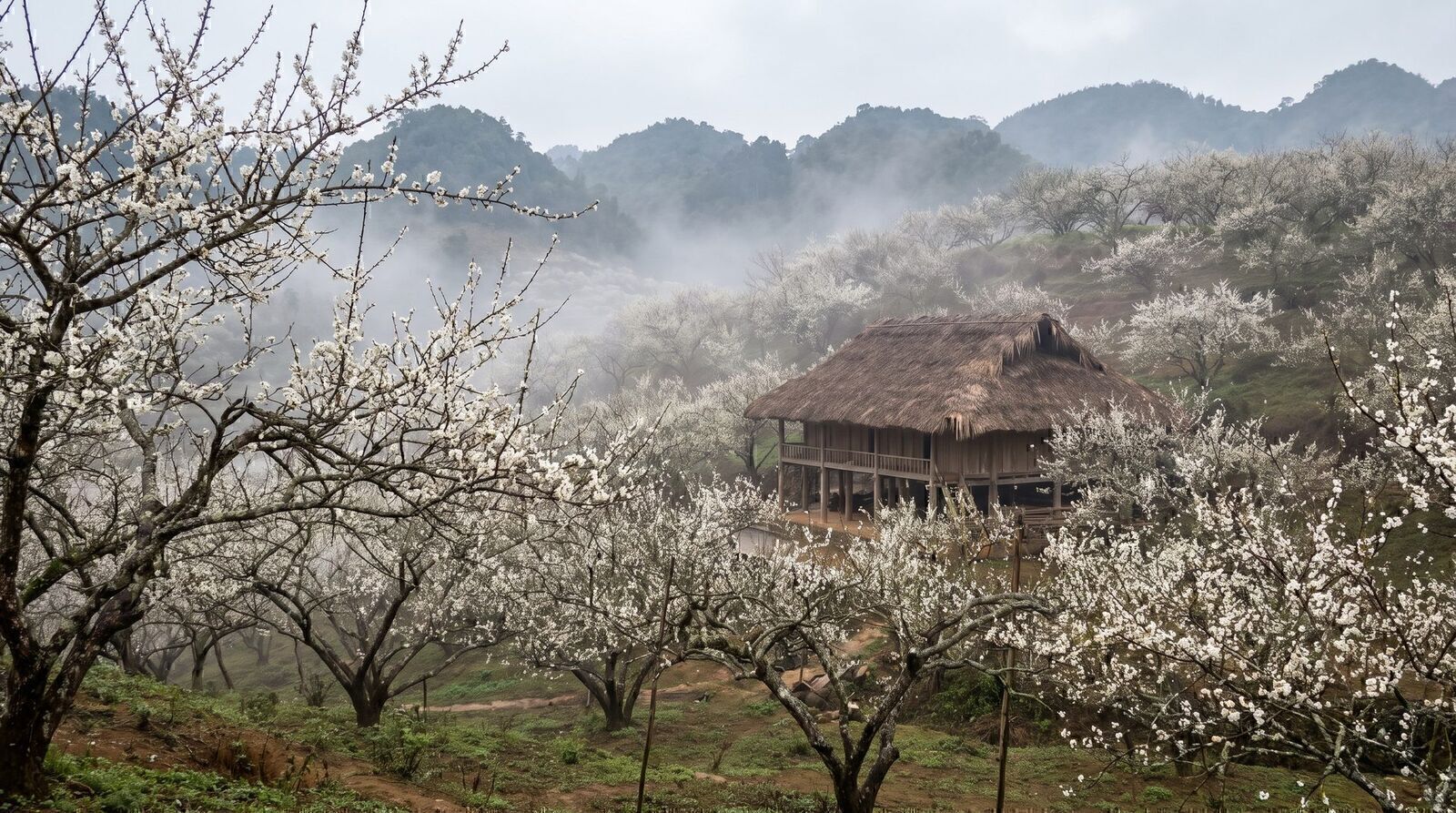
Northern February is a month of two textures. Early on, it’s the tail of winter — Hanoi in the 12–18°C range with the fine mưa phùn drizzle that locals treat as a season of its own. The compensations are real: Tet decorations against grey stone photograph beautifully, peach blossom branches ride through every street, and the food culture is at full cold-weather strength. After Tet, the north’s festival machine starts: the Perfume Pagoda pilgrimage draws boats up its misty river for weeks, and village festivals dot the calendar into spring — the most culturally dense stretch of the northern year, covered in mood by our Hanoi guide. In the mountains, February is blossom month — plum and peach orchards around Moc Chau and the high valleys turn white and pink, a sight domestic photographers chase hard and foreign itineraries mostly miss. Ha Long stays misty-atmospheric; the trade-offs from the cruise guide still apply.
A Sane 10-Day February Route (Tet-Aware)
- Days 1–3: Saigon, pre-Tet. Arrive before February 3 for the flower markets and decorated city at their peak.
- Days 4–8: Phu Quoc through the holiday. Ride out Tet at a resort — full service, busy pools, zero closure anxiety. Book this leg the moment flights open.
- Days 9–10: Back via Saigon or on to Da Nang as the country reopens — the central coast’s season is just beginning.
The inverse shape works for culture-first travelers: Hanoi for Tet itself (quiet, festive, deeply local), then the post-holiday festival season, accepting cold drizzle as the entry fee. What doesn’t work is a fast multi-stop itinerary through the holiday week — the transport crush and rolling closures will eat it. Longer-stay planners should see the where-to-base guide; February favors picking one base and letting Tet happen around you. Around the holiday, headline activities and transfers book out — lining up Saigon tours and transfers a week or two ahead is the cheap insurance.
Prices and Crowds: The February Economics
February pricing is a mountain with Tet at the summit. The holiday week itself — roughly February 3–10 in 2027 — is domestic peak: flights jammed, beach hotels at Christmas-level rates, and same-week booking a genuine gamble. Either side of it, the month is surprisingly kind: post-New-Year international crowds have thinned, the central coast hasn’t hit its spring stride, and the north is in its low season. The playbook: book Tet-week anything by December; book the rest of February casually. One quiet arbitrage — the week of February 11–17, right after reopening, combines settled weather, post-holiday calm and softened prices across all three regions; it’s arguably the single best-value week of Vietnam’s spring.
What to Pack for Vietnam in February
- Layers for a two-season country — 30°C Saigon afternoons and 13°C drizzly Hanoi mornings can share one itinerary.
- A red envelope or two (lì xì) — if you’re invited into any Tet celebration, small cash gifts for children are the custom, and the gesture lands.
- Patience for closures — a downloaded map, a stocked snack bag and flexible restaurant expectations get you through the quiet days gracefully.
- Sun kit for the southern half — the dry-season sun doesn’t take holidays off.
- An eSIM installed before you land — Tet-week logistics run entirely on your phone (our Vietnam eSIM setup).
FAQ
Is February a good time to visit Vietnam?
Yes — the south is in peak dry season, the central coast is starting its long good stretch, and the north offers blossoms and festival culture in exchange for cold drizzle. The one planning variable is Tet (February 6 in 2027): travel around the holiday week or embrace it deliberately, but don’t stumble into it.
What is closed during Tet?
Family-run restaurants, small shops and many markets close for roughly three to five days around the holiday. Hotels, resorts, major tourist attractions, and an increasing share of city restaurants stay open — tourist zones in Saigon, Hanoi and the beach destinations run at near-normal service. The gap shows most in small towns and local neighborhoods.
Should tourists avoid Vietnam during Tet?
Not avoid — plan differently. Resort-based trips barely notice the holiday. City trips gain a rare, festive calm but lose some food and shopping options for a few days. The genuine hazard is domestic transport in the two days before and after Tet, which sells out and jams. Book around those days and the holiday becomes a feature, not a bug.
Is Vietnam cold in February?
Only the north. Hanoi runs 12–18°C with damp drizzle early in the month, easing as spring approaches; the mountains are colder still, with blossom season as the reward. From Da Nang south it’s shorts weather — the central coast sits in the low-to-mid 20s and the south around 30°C with sunshine.
Where is the best weather in Vietnam in February?
Phu Quoc and the deep south for guarantees — peak dry season, calm seas, hot days. The central coast is the value pick as its dry season begins: pleasant, drying, and cheaper than the spring peak to come. Full month-by-month context is in our best-time guide.
Some links in this guide are affiliate links: if you book through them we may earn a small commission at no extra cost to you. It helps keep our guides honest and free.
Get our free Phu Quoc Trip Kit — the pre-departure checklist, a 5-day plan and our honest booking picks. No spam; at most one email a month.
By subscribing you agree to our privacy policy. Unsubscribe anytime.