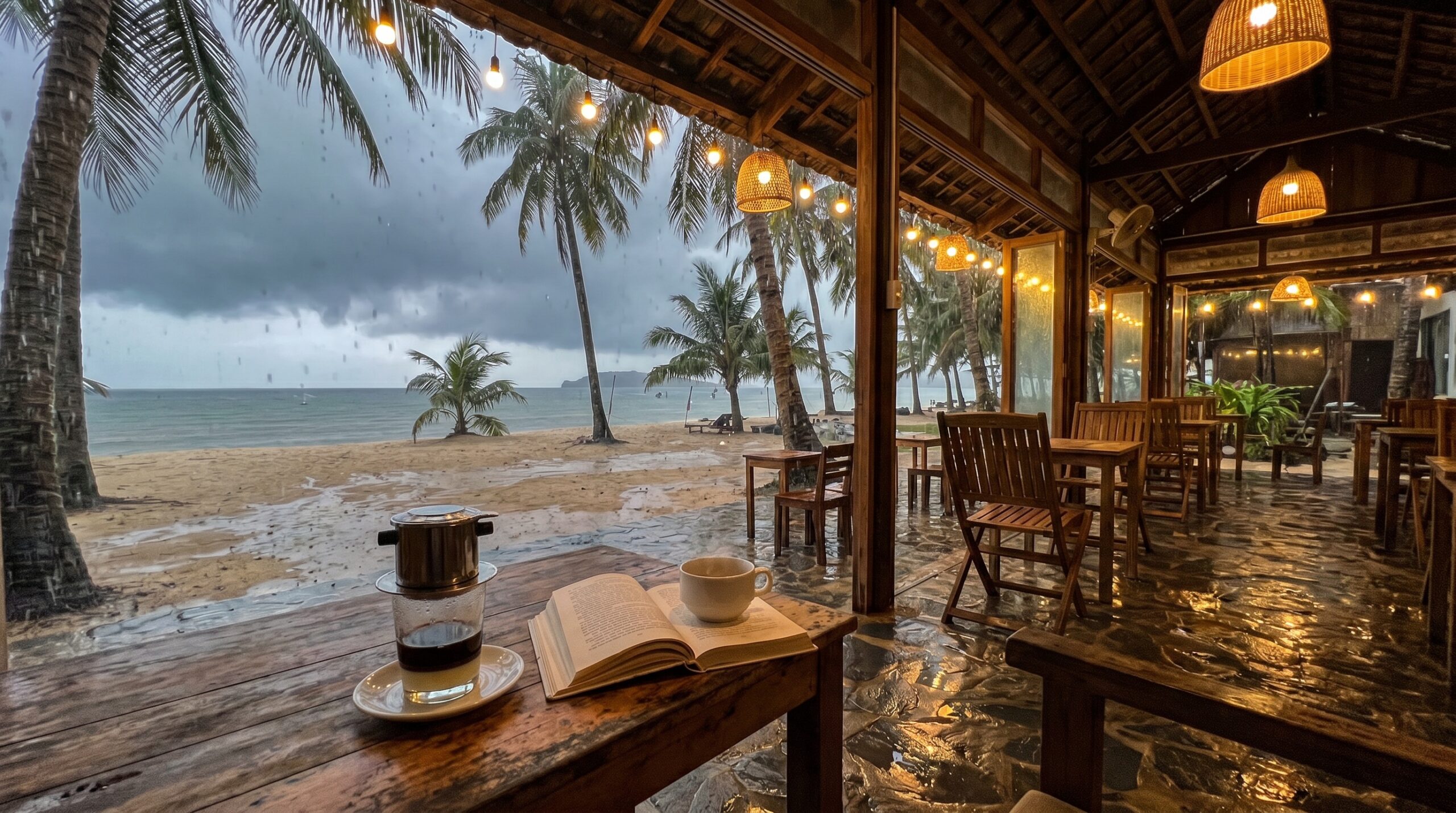
Booked Phu Quoc for July and now reading horror stories? Breathe. Rainy season (May–October) is not a washout — it’s a different island: 40–60% cheaper, nearly empty, intensely green, with rain that mostly falls in dramatic afternoon bursts rather than all-day grey. You need the right expectations, the right coast, and a plan B per day. This is that guide.
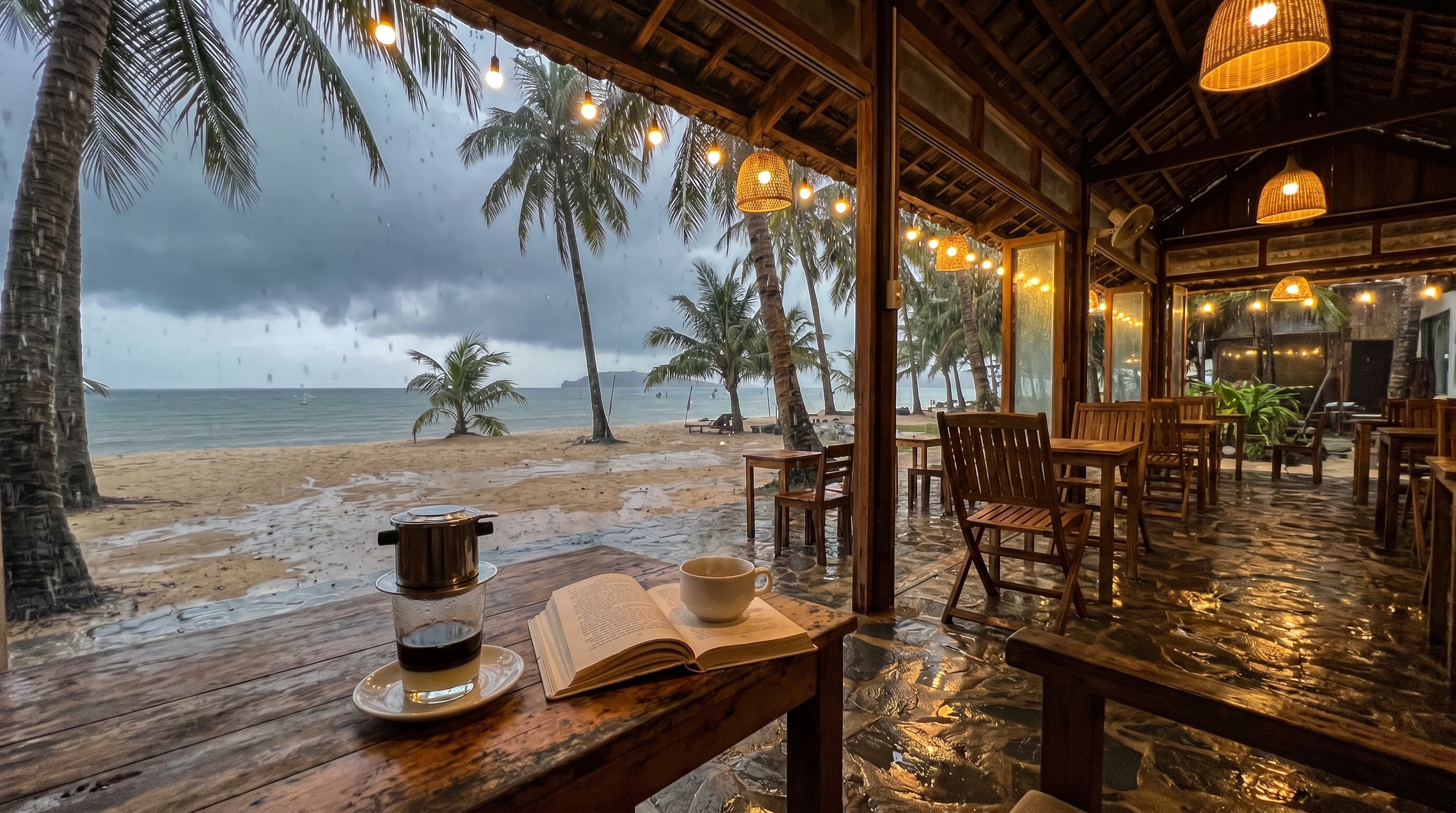
What Rainy Season Actually Looks Like
- The pattern: most days open bright, build clouds by early afternoon, dump hard for 1–3 hours, then clear into glowing evenings. All-day rain happens, but it’s the exception outside the wettest stretch.
- The wettest months: July–September, with September statistically heaviest (see also August). May–June and October are gentler gambles.
- The sea: the west coast (Long Beach) gets waves and washed-up debris; the east and south — Sao, Khem — are sheltered and often at their glassy best. This seasonal flip is the single most useful fact on this page (full explanation).
Why People Deliberately Choose Monsoon
- Prices collapse: 4-star rooms at 3-star prices, monthly rentals 20–30% off (rental guide), last-minute deals everywhere.
- Crowds vanish: attractions without queues, beaches without rows of loungers, photos without strangers.
- The island turns green: dry-season Phu Quoc is dusty; monsoon Phu Quoc is jungle-lush with the best skies of the year.
- Sunsets go cinematic: when the clouds break, monsoon light beats anything January produces (sunset spots).
The Rainy-Day Playbook
- Mornings are your beach window — swim early, especially on the east coast.
- Book a hotel with a real pool + covered areas — the afternoon downpour becomes an amenity, not a prison.
- Stack the indoor cards: VinWonders’ aquarium and indoor zones (guide), spa afternoons ($10–15/hour massages), the food quest, barrel houses and cafés.
- Keep boats and the cable car morning-flexible: storms pause both; morning slots dodge most cancellations (boat tours, cable car).
- Night market runs rain or shine — awnings up, atmosphere intact.
- Pack: a proper rain jacket beats umbrellas in wind, quick-dry sandals, dry bag for the phone, one indulgent indoor hobby (books were invented for monsoons).
Scooters in the Rain (Honest Safety Note)
First hour of rain = slickest roads (oil film lifting). Wait out the burst with a coffee, ride after — roads dry fast. Rain ponchos for riders cost $1 at every convenience store. If the sky is black, take a Grab and collect the bike later; no photo op is worth a wet-road slide.
Who Should (and Shouldn’t) Book Monsoon
- Great fit: budget travelers, long-stayers, photographers, honeymooners who like moody, families with pool-strong resorts, anyone flexible by nature.
- Bad fit: once-in-a-lifetime trips that need guaranteed sun, tight 2-day schedules, or September visits with zero tolerance for indoor days. Then aim November–March and pay the difference happily.
Should You Stay on the East Coast in Rainy Season?
Usually not, and this surprises people. The east coast has the calm monsoon sea, but it’s a strip of large resorts with little independent life around them. Most rainy-season visitors do better based near Duong Dong or Long Beach — where the food, cafés, and market are — and riding east for swim mornings.
The logic is simple: in monsoon you spend more waking hours off the beach than on it, so your base needs to be good at the non-beach hours. The west side wins those hours decisively — dozens of cafés to wait out a downpour, the market for dinner, spas and street food in walking range. An isolated east-coast resort is wonderful until the third rainy afternoon, when it starts to feel like a beautiful waiting room.
The exception: families and honeymooners who genuinely want a self-contained resort week. If the plan is pool, spa, buffet, repeat, then an east-side resort in low season is arguably the best value on the island. For everyone else, our area-by-area guide breaks down which bases keep their charm when the sky opens.
A Monsoon Day That Actually Works
After several wet-season stays, we’ve stopped fighting the weather and started scheduling around it. The pattern below isn’t a rigid itinerary — it’s the shape of a day that almost always succeeds between May and October.
| Time of day | What to schedule |
|---|---|
| Early morning | The day’s anchor: east-coast swim, boat trip, or cable car — anything weather-dependent |
| Late morning | Long café breakfast; errands and laundry drop-off while it’s dry |
| Early afternoon | Be somewhere you’re happy to stay: spa, pool with cover, aquarium, or a nap |
| Late afternoon | Skies typically clear — ride out for the washed-clean golden light |
| Evening | Night market or a long dinner; keep it walkable in case of a second burst |
One practical footnote we learned the damp way: nothing air-dries fast in monsoon humidity. Use the kilo-laundry shops with dryers rather than the balcony rail, and give swimwear a full day’s head start before a travel day.
Booking Moves That Work in Low Season
Low season shifts the power to you, so book like it. Choose free-cancellation rates and reserve only the first two or three nights — if the room disappoints or a better deal surfaces, you’re mobile. Walk-in and extension discounts get friendlier as occupancy drops, and there’s no December-style scramble to protect against.
Read recent reviews with monsoon eyes: mentions of leaks, mold smells, or “construction noise” matter far more in the wet months, and a covered balcony or a lobby you’d happily read in is worth more than a sea view you’ll rarely use. If the property photos show only sunshine, check guest photos for how it looks under grey.
Finally, think about how you arrive. Flights handle monsoon weather far better than sea crossings, which do get cancelled when the wind picks up — worth weighing when you compare routes in our getting-to-Phu-Quoc guide. Build one buffer day around any ferry leg between May and October, and the season’s drama stays on the horizon where it belongs.
FAQ
Does it rain every day in rainy season?
Most days see a burst; many still deliver 5–8 usable hours of dry weather. September is the real gamble; May–June and October play much friendlier odds.
Are things closed in low season?
The island runs year-round — attractions, markets, restaurants all open. A few beach bars scale down; that’s it.
Typhoons?
Phu Quoc sits south of Vietnam’s typhoon belt — direct hits are rare (unlike central Vietnam). Storms here mean heavy rain, not evacuation drama.
Is monsoon good for a work-month?
Honestly ideal: cheap rents, quiet cafés, rain as white noise, east-coast weekend swims. See working remotely from Phu Quoc.
Bottom Line
Monsoon Phu Quoc trades sun-certainty for space, savings and drama — a trade thousands of smart travelers take every year. Swim east, plan mornings, love the afternoon show from a café, and you’ll wonder why the internet tried to scare you off the island’s most underrated season.
Some links in this guide are affiliate links: if you book through them we may earn a small commission at no extra cost to you. It helps keep our guides honest and free.
Get our free Phu Quoc Trip Kit — the pre-departure checklist, a 5-day plan and our honest booking picks. No spam; at most one email a month.
By subscribing you agree to our privacy policy. Unsubscribe anytime.