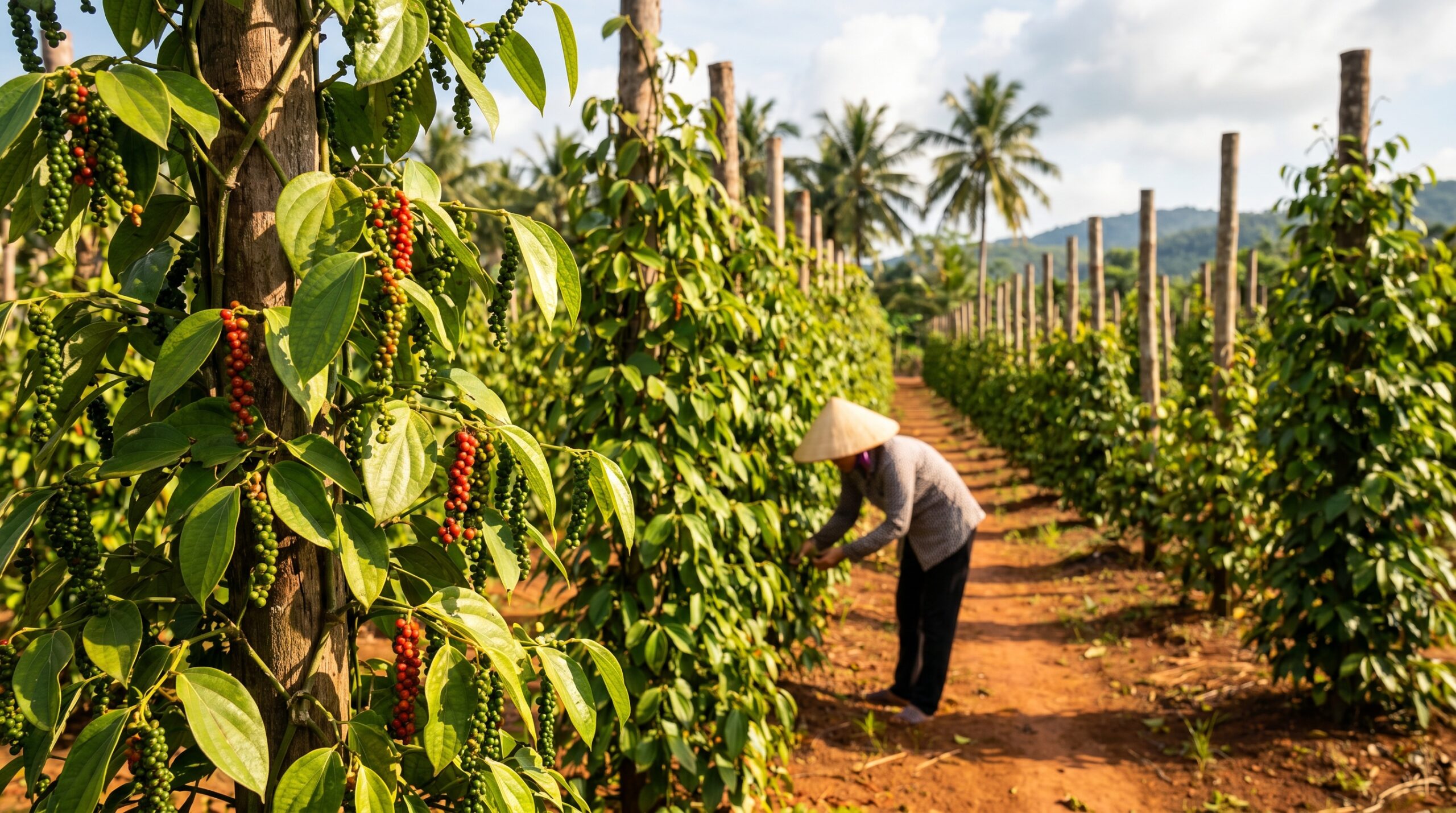
Phu Quoc’s two most famous exports aren’t beach photos — they’re peppercorns and fish sauce, and both come with visits that cost almost nothing, take an hour each, and give your trip the local texture no water park can. Here’s how to do the island’s classic “farm and factory” half-day without it feeling like a souvenir trap.
The Pepper Farms
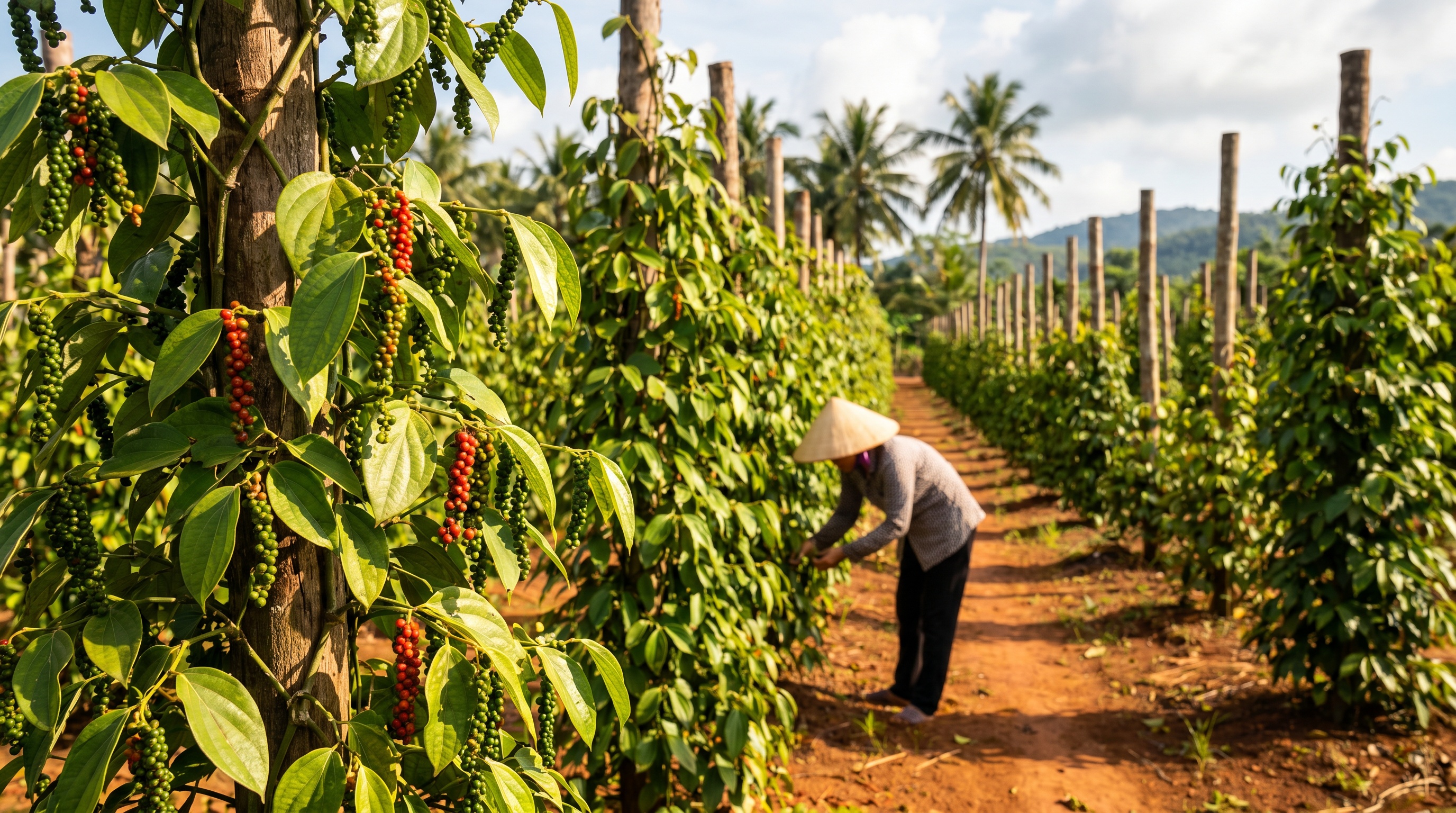
Phu Quoc pepper has been the island’s pride for over a century — intense, fruity, and sold in green, black, red and white varieties (same plant, different picking and processing). Farms cluster along the roads north of Duong Dong and around Cua Duong.
- What a visit looks like: walk the rows of vine-covered columns, learn the color differences, taste fresh green peppercorns (a tiny flavor bomb), browse the farm shop. 30–60 minutes, free entry at most farms — they earn from the shop, and the pepper is worth buying.
- What to buy: red peppercorns (the sweet, rare one) and a green-pepper salt mix. $3–8 buys serious gifts; vacuum packs travel fine.
- Kitchen bonus: ask for muối tiêu (pepper salt) recipes — the lime-pepper-salt dip that rules the island’s seafood tables (food guide).
The Fish Sauce Houses
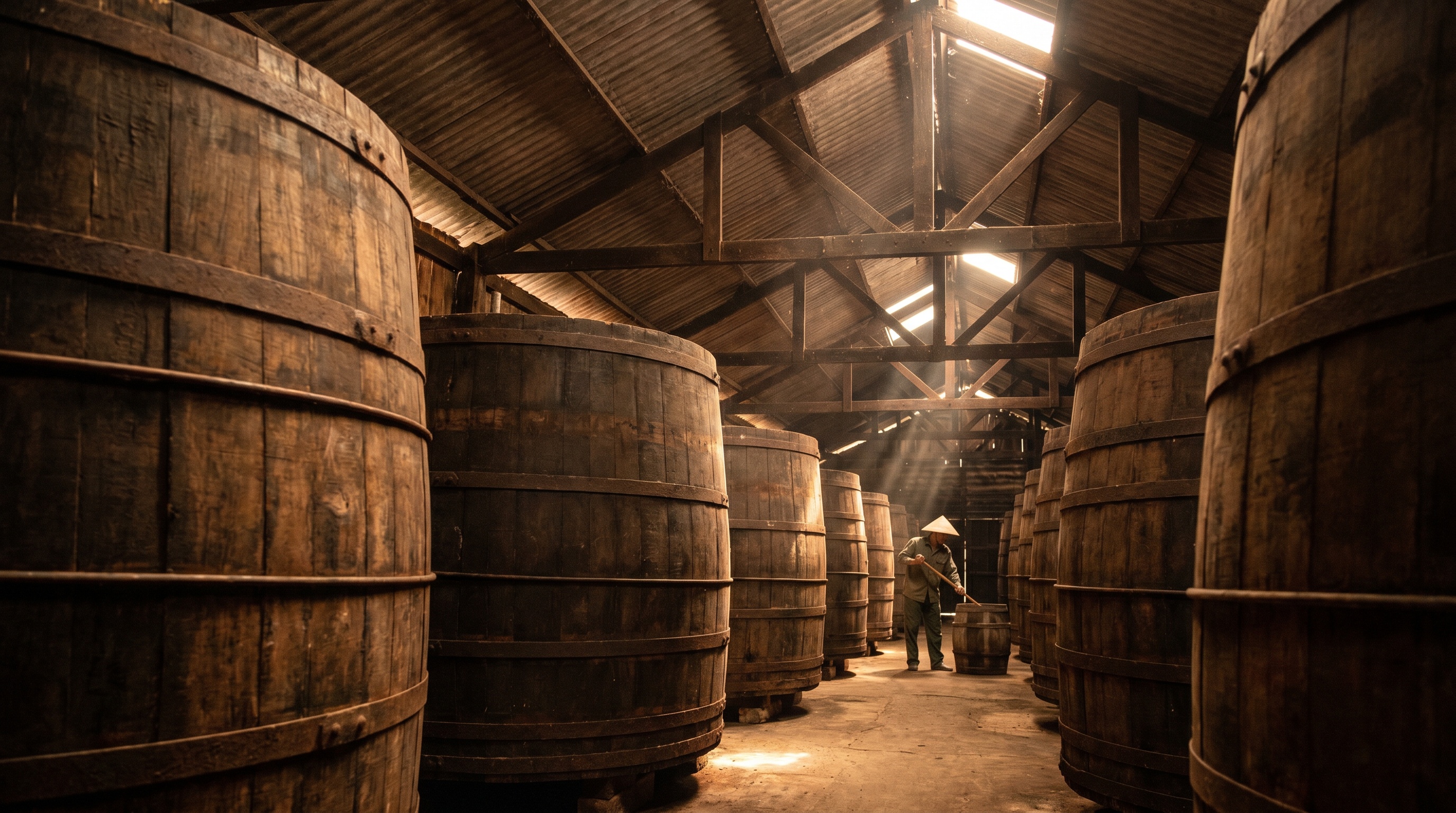
Phu Quoc nước mắm carries protected designation of origin status (like Champagne or Parmigiano) — made from black anchovies and sea salt fermented up to a year in wooden barrels the size of small rooms. Several traditional houses around Duong Dong open their barrel halls to visitors, free.
- The experience: ten minutes among cathedral-scale wooden barrels, a pungency you’ll never forget, a tasting if you’re brave, and a shop with the good stuff — look for high nitrogen ratings (35–43°N), the quality measure.
- Flying home with it: buy the vacuum-sealed, boxed bottles made for luggage — leaky fish sauce is a suitcase apocalypse. Checked bags only.
- Honest note: it smells exactly like you fear. That’s the point. Go anyway — it’s the most Phu Quoc thing on the island.
The Perfect Local Half-Day Loop
- Morning: Duong Dong market wander + bún quậy breakfast
- 10 AM: fish sauce barrel house (they’re in/near town)
- 11 AM: scooter north to a pepper farm (15–20 min), tasting + shopping
- 12:30: continue the theme — lunch at Ham Ninh with crab dipped in the very pepper-salt you just bought, or loop back for a beach afternoon
Total spent: fuel + whatever you buy. This half-day plus a night market evening is the island’s culture column, done.
Is Phu Quoc Pepper Actually Different, or Just Well Marketed?
It is genuinely different. The island’s long growing season, red soil, and hand-picking by ripeness produce peppercorns with a fruitier, more floral heat than the flat burn of supermarket pepper. Grind them side by side at home and the gap is obvious even to someone who never thinks about spices.
The practical consequence: this is one of the rare travel souvenirs that upgrades your everyday cooking rather than gathering dust. We still reach for our island stash long after the tan fades, and a small pouch makes a better gift than anything at the airport. The trick is knowing what to do with each variety once you are back in your own kitchen.
| What you bought | How to use it at home |
|---|---|
| Red peppercorns | Crack over steak, ripe fruit, or vanilla ice cream — sweet heat, use whole and sparingly. |
| Black peppercorns | Your new everyday grinder pepper; noticeably brighter in soups and marinades. |
| Green pepper salt | Mix with fresh lime juice for the island’s seafood dip; also great on grilled chicken. |
| High-degree fish sauce | Treat like finishing oil: dipping sauces, fried rice, a last-second dash — not for long boiling. |
One quiet warning: pepper sold at night-market stalls is sometimes mainland product in island packaging. Buying at the farm itself costs the same and removes the doubt. If you cook Vietnamese food at home, grab an extra bag of the green pepper salt — in our experience it disappears from the pantry twice as fast as anything else you carry back.
How Locals Visit — and the Small Courtesies That Help
These are working farms and family businesses, not staged attractions, and a little etiquette changes the reception you get. Greet whoever is around before wandering the rows, ask with a gesture before photographing anyone mid-work, and keep voices down inside the barrel halls — some houses treat the fermentation rooms almost like cellars.
- Do not haggle hard at farm shops. Prices are already modest and the visit was free; treat the purchase as the entry fee.
- Taste what is offered, buy something small even if the big bottles will not fit your luggage — a pouch of peppercorns keeps everyone happy.
- Go before lunch. Mornings are when farm families are naturally around and unhurried; mid-afternoon can feel like you are interrupting a nap, because you are.
Does This Half-Day Still Work in the Rainy Season?
Yes — arguably better than most island activities. The barrel houses are entirely under roof, pepper farm visits are short enough to slot between showers, and the roads involved are main paved routes rather than the muddy tracks that make remote beaches miserable in the wet months.
We would go further: keep this loop in your back pocket as a rainy-morning rescue plan. When a gray sky cancels your boat day, the farms and barrel halls fill the gap with something you would have skipped otherwise — the same logic that drives our whole rainy-season playbook. On a longer stay, it slots naturally into the north-loop day of a five-day itinerary, rain or shine.
FAQ
Do I need a tour?
No — both are drop-in visits by scooter or Grab. Island day-tours bundle them with beaches if you prefer zero planning.
Which pepper farm / sauce house is “the best”?
They’re pleasantly interchangeable — pick by route convenience. Established names cluster on the Cua Duong roads (pepper) and around Duong Dong (fish sauce); your hotel will point to the nearest.
Can I bring fish sauce in carry-on?
No — liquids rules plus the catastrophic-spill factor. Sealed travel packs, checked luggage, double-bagged. Or buy pepper instead and thank us.
Is it kid-friendly?
Pepper farms yes (open air, quick). Barrel houses are a 10-minute smell adventure kids either love or flee — you know your child.
Bottom Line
An hour of pepper vines, ten minutes of barrel-house funk, $10 of world-class souvenirs, and lunch that ties it together — Phu Quoc’s oldest industries make its easiest, cheapest, most genuinely local half-day. Do it on day three, when the beach needs a break.
Some links in this guide are affiliate links: if you book through them we may earn a small commission at no extra cost to you. It helps keep our guides honest and free.
Get our free Phu Quoc Trip Kit — the pre-departure checklist, a 5-day plan and our honest booking picks. No spam; at most one email a month.
By subscribing you agree to our privacy policy. Unsubscribe anytime.