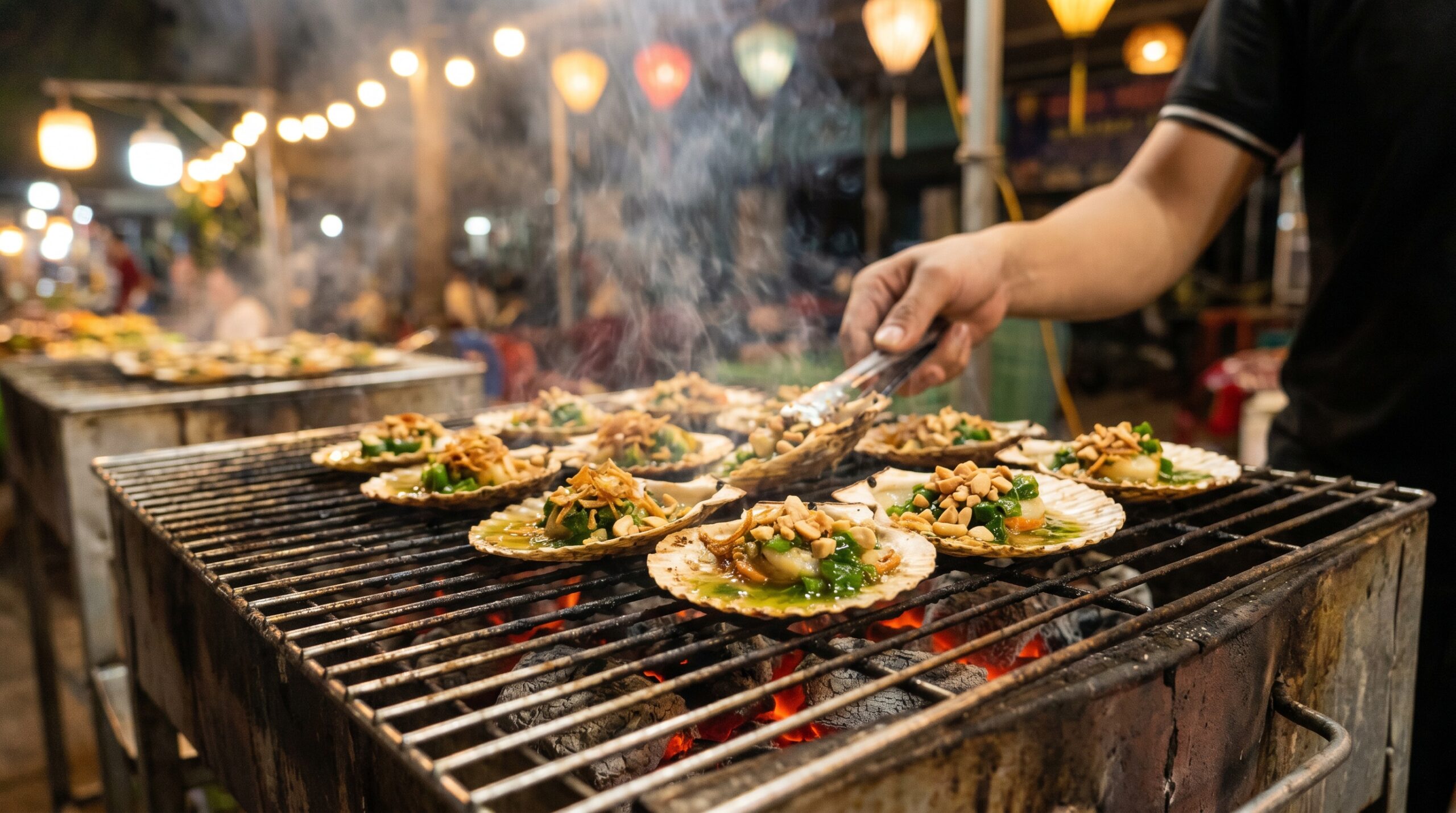
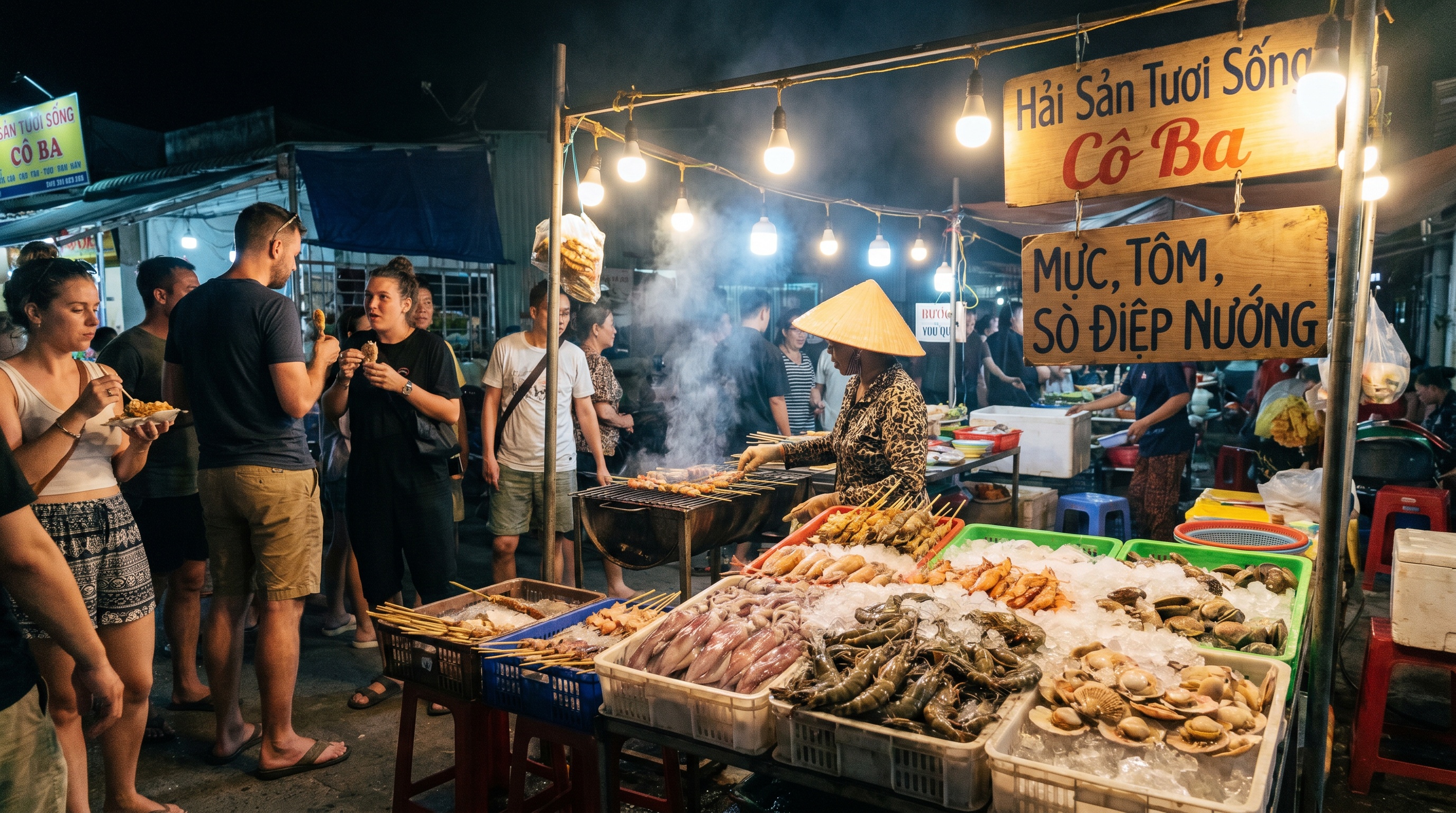
If you eat one dinner in Phu Quoc, eat it standing at the Duong Dong night market — a smoky, noisy strip where the island’s fishing fleet meets a charcoal grill. It opens around 5 PM every evening, runs until roughly 11, entry is free, and a full seafood feast costs less than a resort cocktail. Here’s what to order, what to skip, and how not to get tourist-priced.
The Essentials: What to Eat First
1. Grilled scallops with scallion oil & peanuts (điệp nướng mỡ hành)
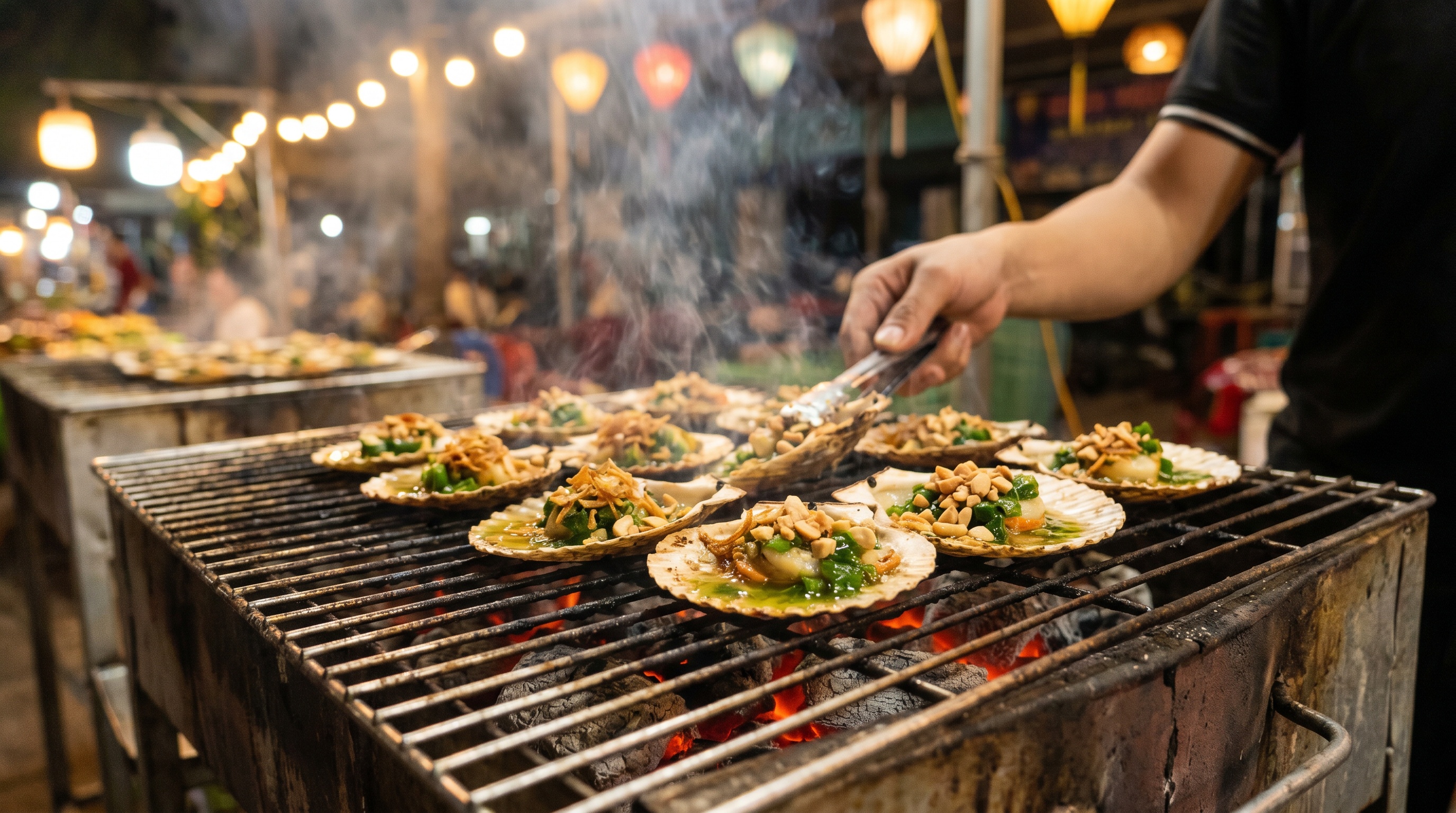
The island’s signature bite: sweet local scallops grilled in the shell under a slick of scallion oil and crushed peanuts. A tray of a dozen runs roughly 60,000–100,000 VND depending on size. If you order only one thing, it’s this.
2. Sea urchin (nhum)
Served two ways: grilled with peanuts and scallion oil, or raw-ish in a rice porridge (cháo nhum) that locals swear by. An acquired texture, an unforgettable flavor — 30,000–60,000 VND each.
3. Grilled squid & octopus
Skewered, charred, served with the market’s magic dipping sauce: muối tiêu chanh — salt, Phu Quoc pepper, and lime. Simple and perfect with a cold beer.
4. Fresh seafood by weight
The stalls with tanks and ice displays sell lobster, tiger prawns, crab, grouper and clams priced per kilogram, cooked how you like. This is the best-value seafood splurge in Vietnam — with one rule, below.
5. The sweet finish
Rolled ice cream made on a frozen steel pan (the theatrics are half the fun), chè (Vietnamese sweet soups), fresh coconut, and tropical fruit by the bag.
The One Rule That Saves You Money
Confirm the total price before anything hits the grill. For tank seafood: agree the price per kg, watch the weighing, and confirm the cooking fee (usually included or a small add-on). The overwhelming majority of vendors are honest — but “misunderstandings” happen to tourists who point vaguely and settle later. A 30-second confirmation keeps everyone smiling.
More Tips From Many, Many Visits
- Go where the Vietnamese families are. The busiest plastic stools have the freshest turnover — tourist-empty stalls are empty for a reason.
- Timing: arrive 6–7 PM for the full sizzle with easier seating; after 8 PM on peak-season weekends it’s shoulder-to-shoulder.
- Cash only at most stalls — bring 300,000–500,000 VND per person for a serious feast.
- Beyond food: stalls sell Phu Quoc’s famous products — fish sauce (vacuum-sealed for flights), peppercorns, sim wine (rượu sim, a local rosy myrtle liqueur), and pearls. The pepper and fish sauce make genuinely good gifts; for pearls, buy from established shops rather than carts.
- Walk it off: the market sits by Duong Dong’s harbor — stroll to the Dinh Cau rock temple at the river mouth afterward for the classic evening view. (Different kind of evening? The north has Grand World — manufactured, free to enter, and fun once.)
Budget Check: A Real Feast for Two
- Tray of grilled scallops — ~80,000 VND
- Grilled squid skewers — ~100,000 VND
- 500g tiger prawns, grilled — ~250,000 VND
- Two fresh coconuts + two beers — ~100,000 VND
- Rolled ice cream to finish — ~50,000 VND
Total: ~580,000 VND — about $23 for two people, stuffed. Try replicating that at a resort restaurant.
How to Order When Nothing Is in English
Plenty of stalls now have picture menus and English price cards; plenty still run on pointing, fingers, and a calculator. That second group is often where the best food is, so it pays to learn the unwritten choreography instead of retreating to the stalls with laminated tourist menus.
The system is friendlier than it looks. These vendors handle every language on earth nightly, and the whole transaction can happen without a shared word: you point, they weigh, the calculator does the talking. We order this way even when a stall has an English menu — it is simply faster.
| What you want | How to make it happen |
|---|---|
| The exact seafood you are looking at | Point at the tank or ice display, hold up fingers for quantity, and watch it weighed in front of you |
| The total, unambiguously | Ask for the calculator — every stall has one — and get the number shown before anything is cooked |
| Whatever that table is having | Point at the neighboring table’s dish and nod — universally understood, never considered rude |
| A place to sit before the food comes | Claim your plastic stools first, then order; seating belongs to the stall you buy from |
| Less heat | "No spicy" is widely understood — say it when you order, not when the plate arrives |
Is the Night Market Good for Kids?
Yes, genuinely — if you go early. In the first hour or two the market is bright, navigable, and full of things children love: rolled ice cream made with theatrical pan-scraping, grilled corn, fruit by the bag, and seafood tanks that double as a free aquarium. Later on busy nights, the crush overwhelms smaller kids.
Two parent-tested notes from our own visits. First, settle the kids at a table before the adults go browsing — one orders while one holds the fort, because carrying trays through the crowd with a toddler in tow is nobody’s idea of a holiday. Second, keep hands held in the central lane: motorbikes still ease through the crowd at walking pace, and it surprises every first-timer.
Pace Yourself: The Two-Visit Strategy
Our honest advice after many evenings here: do not try to eat the whole market in one night. On your first visit, walk the full strip end to end before ordering anything. Freshness, mood, and pricing vary stall to stall, and that ten-minute recon is the single best value move the market offers. Then order the scallops, add one splurge, and stop while you are still happy.
Then come back later in the trip, once you know your stalls and your appetite — the market is a different, easier place the second time. We keep coming back to the same two grill stalls now, and being recognized on night two has a way of improving both the portions and the smiles. It is also the gateway to island eating rather than the whole story: the noodle shops, fisherman restaurants, and morning markets in our Phu Quoc food guide are where the next layer lives. And since this is cash territory, fold the evening into your daily budget as a regular dinner rather than a splurge — even the full feast barely dents it.
FAQ
Where exactly is it?
Bach Dang street in central Duong Dong town, by the harbor — every Grab driver knows “night market.” From Long Beach it’s a 5–15 minute ride.
Is it open every night?
Yes, year-round, rain or shine (stalls have awnings; monsoon showers just add atmosphere). Roughly 5 PM to 11 PM.
Is the seafood safe to eat?
As safe as street seafood gets: high turnover, cooked over fierce charcoal in front of you. Stick to busy stalls and fully grilled items if you have a sensitive stomach; the raw sea urchin is for the adventurous.
Is it vegetarian-friendly?
Limited but workable: grilled corn, sweet potato, tofu dishes, fruit, chè and ice cream. It is, honestly, a seafood show.
Is it too touristy?
It’s popular and yes, you’ll hear five languages — but the fishing boats out back are real, locals eat here too, and the food quality holds. It earns its place on every Phu Quoc trip.
Bottom Line
Come hungry, bring cash, confirm prices, follow the smoke and the locals (first-night shortcut: a guided street-food tour). The Duong Dong night market is Phu Quoc’s best free attraction that happens to feed you — and at $23 for a two-person seafood feast, it might be the best food value in Vietnam.
Some links in this guide are affiliate links: if you book through them we may earn a small commission at no extra cost to you. It helps keep our guides honest and free.
Get our free Phu Quoc Trip Kit — the pre-departure checklist, a 5-day plan and our honest booking picks. No spam; at most one email a month.
By subscribing you agree to our privacy policy. Unsubscribe anytime.