September is the month Vietnam quietly changes gears. The southern monsoon hits its loudest note, the central coast’s long summer starts winding down, and — the part most itineraries miss — the far northern mountains turn gold as the rice harvest comes in. If August is Vietnam’s beach month, September is its mountain month, and travelers who know that get some of the best two weeks the country offers all year.
This guide is part of our month-by-month series — start with the best time to visit Vietnam for the full-year map.
Short version: September belongs to the north. Ha Giang, Sapa and the terraced valleys are at their once-a-year golden peak, Hanoi’s brutal summer starts breaking, and crowds vanish after the National Day holiday on September 2. The central coast is usually still decent early in the month but is entering typhoon season; the south — including Phu Quoc — is in its wettest weeks and priced accordingly.
The One Map That Explains September
| Region | September weather | Verdict |
|---|---|---|
| Far north mountains (Ha Giang · Sapa · Mu Cang Chai) | Rice terraces turn gold mid-September; cooler air, mostly clearing skies, occasional rain | ✅ Go — the best weeks of the year |
| North lowlands (Hanoi · Ninh Binh · Ha Long) | Heat and humidity easing through the month; typhoon watch on the coast | 🟡 Good, and improving by the week |
| Central coast (Da Nang · Hoi An · Hue) | Summer’s tail — early month often still dry and swimmable, sea and skies turn later | 🟡 Early September fine, late September flexible |
| South (Saigon · Mekong · Phu Quoc) | Statistically the wettest stretch of the year; heavy afternoon bursts, deep hotel discounts | 🔻 Budget play only |
The Golden Month: Ha Giang, Sapa and the Harvest
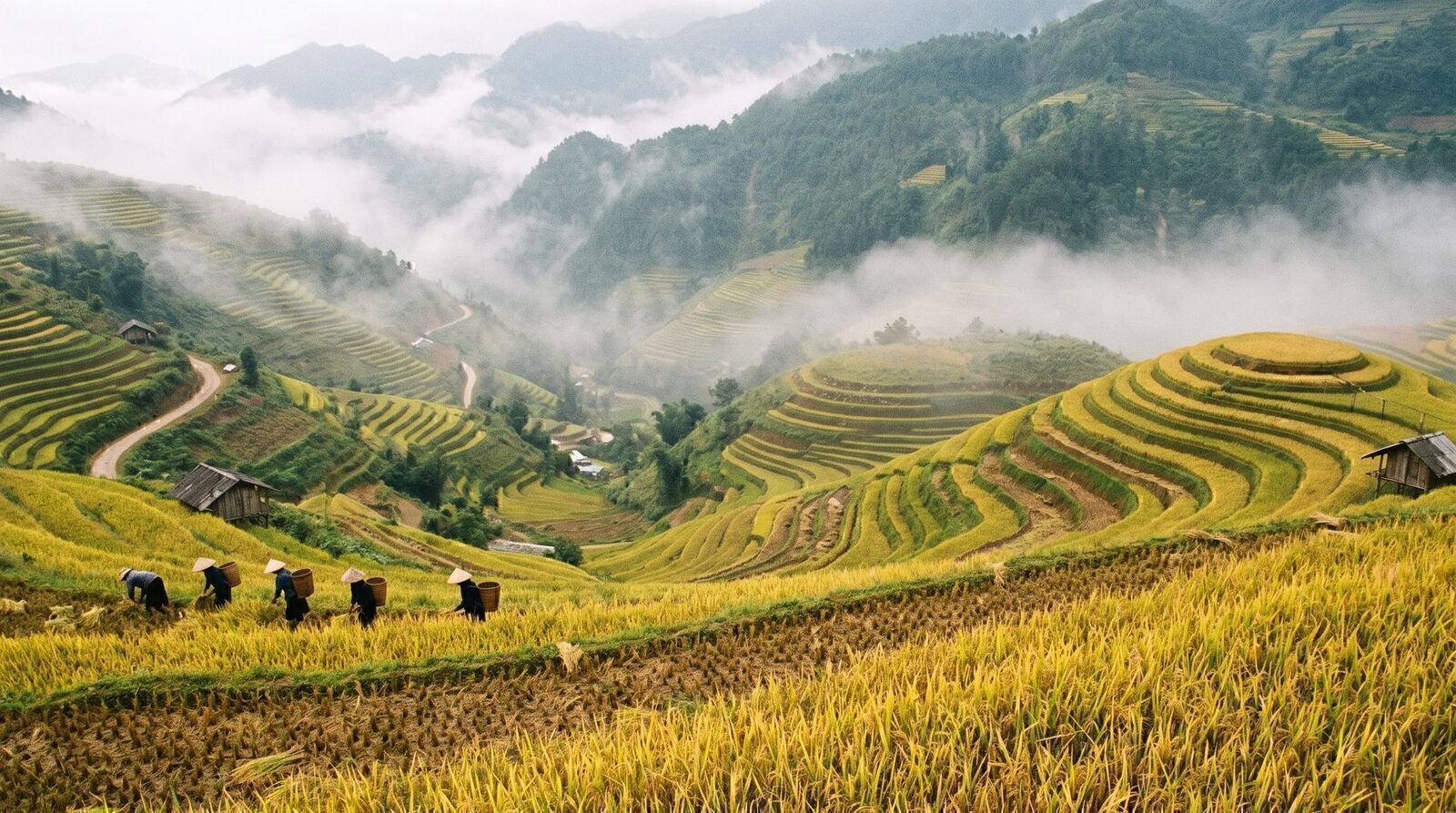
From roughly mid-September to early October, the rice terraces of Vietnam’s far north do the thing that fills photography portfolios: entire valleys shift from green to deep gold as the single annual mountain crop ripens and comes in. Mu Cang Chai’s amphitheater terraces, the valleys below Sapa, and the switchback panoramas of the Ha Giang loop all hit their visual peak in the same short window — and by mid-October it’s stubble. The riding version of that window is mapped in our Ha Giang Loop guide.
Two practical notes keep the dream trip honest. First, this is the tail of the mountain rainy season, so build a buffer day into any Ha Giang loop — a downpour that closes a pass for an afternoon is normal, not bad luck. Second, harvest timing shifts a week or two with each year’s weather; if the terraces are your main event, aim for the second half of the month rather than the first. We compared the two big mountain choices in detail in Sapa vs Ha Giang — the short answer is Sapa for easy access and infrastructure, Ha Giang for the raw, unforgettable version. Guided loop tours and treks fill up in harvest season, so it’s worth comparing Sapa treks and mountain tours a week or two out instead of gambling on walk-up availability.
September 2: The One Date to Plan Around
Vietnam’s National Day falls on September 2, and the surrounding days are the country’s last big domestic travel surge of the year. Trains, flights and mountain guesthouses fill with Vietnamese families; Hanoi’s Ba Dinh Square hosts flag ceremonies and the whole city wears red. It’s a genuinely fun time to be in the capital — but a terrible time to wing your transport.
The flip side is the gift: once the holiday ends and schools settle in, Vietnam enters one of its quietest shoulder-season lulls. From September 5 onward you get thinner crowds at every major sight, soft hotel pricing, and that rare feeling of having viewpoints to yourself — right as the mountain harvest peaks.
The North Lowlands: Hanoi Starts to Breathe
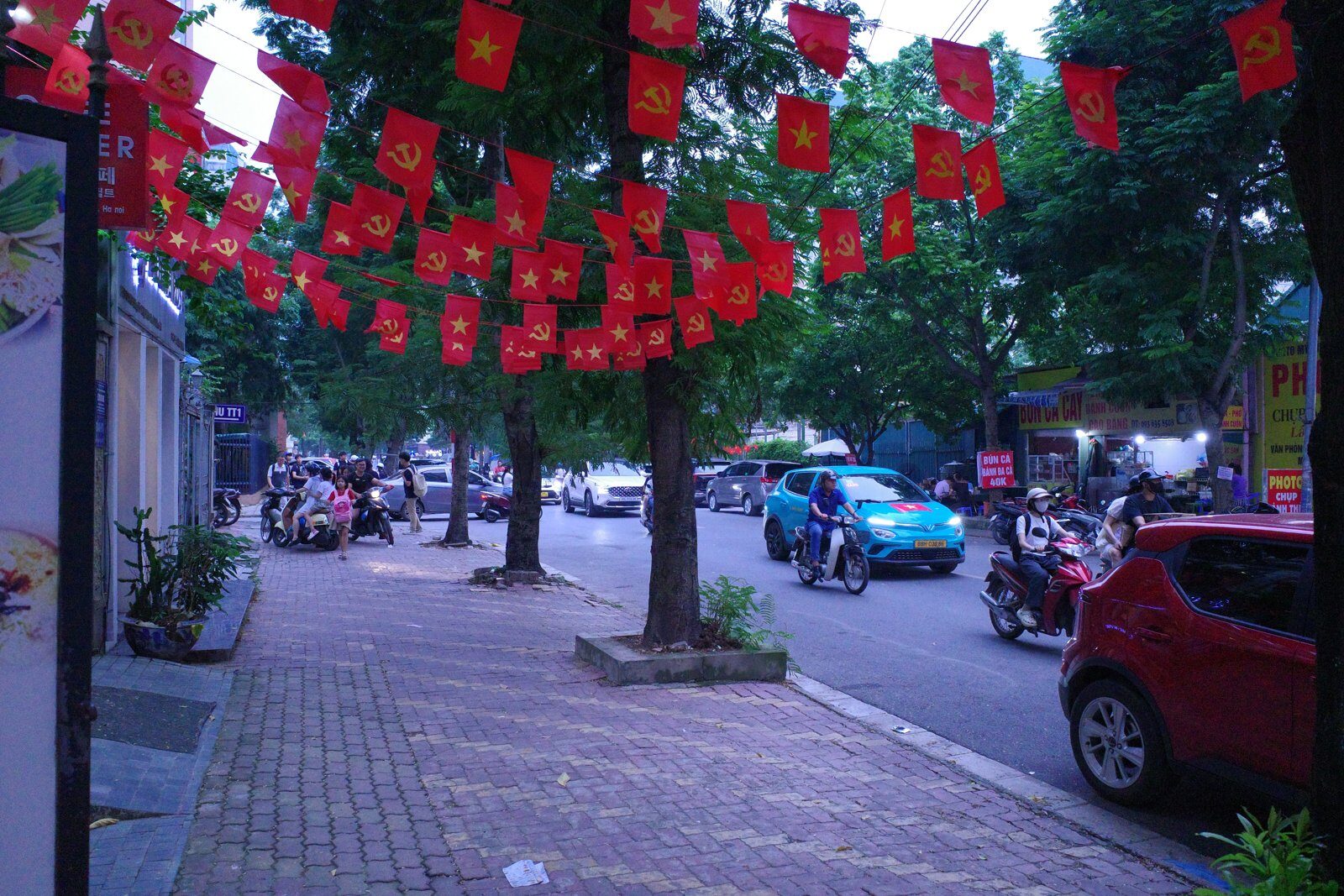
Hanoi in early September is still a summer city — hot, humid, with theatrical afternoon downpours. But the trend line matters: by the final week of the month, the edge comes off the heat and the capital starts its slide into October–November, its best-loved season. Street life stretches later, lake mornings turn pleasant, and cafe sitting stops being a sweat-management exercise. Our slow guide to Hanoi covers how to spend those days well.
Ninh Binh is a strong September pick for the same harvest reason as the mountains — the paddies around Tam Coc and Trang An are cut in this window, and the karst-and-gold combination is at its photogenic best early in the month. Ha Long Bay runs normally through September with one honest caveat: this is peak typhoon season on the Gulf of Tonkin, and cruises cancel outright when a storm approaches (with refunds — the operators are practiced at it). Book an overnight cruise with a flexible day on either side, and never as the last thing before an international flight — the same rule we gave for August, doubled.
The Central Coast: Summer’s Last Act
Da Nang and Hoi An spend September closing out their long dry season. The first half of the month usually still delivers beach days — warm sea, workable waves, sunshine between building clouds — at prices already stepping down from the August peak. By late September the odds tilt: rain days multiply, the sea roughens, and the region enters its October–November wet core, when Hoi An’s old town famously floods in bad years.
The honest guidance: an early-September central coast stop is a good bet, a late-September one needs flexibility, and a beach-certainty trip (a honeymoon where swimming is the point) should look at the calendar differently — either come before mid-September or aim for the south’s dry season from December. Context for the choice is in our Da Nang guide and Hoi An slow guide.
The South and Phu Quoc: The Deep-Discount Weeks
September is statistically the wettest month across much of southern Vietnam, and Phu Quoc wears the crown — it’s the island’s rainiest, emptiest, cheapest stretch, with four-star beachfront quietly selling at three-star prices. That’s either a warning or an invitation: we wrote the full honest case in Phu Quoc in September, and the survival mechanics in the rainy season guide. Saigon itself stays very doable — the rain comes in loud, short afternoon bursts, and the city’s cafe-and-museum density absorbs them without drama.
A Sane 10-Day September Route
- Days 1–2: Hanoi. Land, eat, adjust. If you’re here around September 2, enjoy the flags and book your onward transport before you fly in, not after.
- Days 3–6: The mountains. Ha Giang loop (with a buffer day) or a Sapa valley base — this is the harvest window and the reason your trip is in September.
- Days 7–8: Ninh Binh. Golden paddies below limestone karsts, boat caves, easy train or transfer logistics from Hanoi.
- Days 9–10: Ha Long overnight cruise if the forecast cooperates — or swap in extra Hanoi days if a storm system says otherwise.
Notice the route stays entirely north — that’s deliberate. September is the one month where the north alone justifies the flight, and stacking regions means fighting the weather map instead of riding it. If you have two extra days and the forecast is clean, an early-month hop to Da Nang and Hoi An extends the trip well; if you’re weighing settling into one base for longer, our where-to-base guide makes the slow-travel case.
Prices and Crowds: The September Economics
September is one of the year’s best value windows almost everywhere in Vietnam. The August double-peak — European holidays plus Vietnamese school break — ends abruptly, and central coast hotels step prices down 20–30% from their summer high. The south discounts hardest, with Phu Quoc at its annual floor. The exceptions run the other way: the first three days of the month price up with the National Day rush, and harvest-season Sapa and Ha Giang guesthouses are the one market where September demand rises — book mountain beds one to two weeks ahead, and Hanoi’s Old Quarter hotels stay reliable value all month (compare Hanoi stays and dates here).
What to Pack for Vietnam in September
- A folding poncho — mountain rain and city downpours both arrive with wind; umbrellas lose.
- Real shoes, not just sandals — harvest-season trails and Ha Giang viewpoints mean mud. Trainers with grip earn their bag space.
- A genuine warm layer — Sapa and the Ha Giang passes drop into the mid-teens Celsius at night, a 20-degree swing from Hanoi afternoons.
- Motion-sickness tabs — mountain switchbacks and Ha Long swells in typhoon season are a strong combination.
- An eSIM installed before you land — forecast-watching and same-day cruise decisions happen on your phone (our Vietnam eSIM setup).
FAQ
Is September a good time to visit Vietnam?
Yes — for the north, it’s one of the best months of the year. The rice harvest turns Ha Giang, Sapa and Mu Cang Chai gold from mid-September, Hanoi’s heat breaks late in the month, and crowds thin after the September 2 holiday. The central coast works with flexibility early in the month; the south is in its wettest, cheapest weeks.
Where is the best place to go in Vietnam in September?
The far northern mountains. Mid-September to early October is the annual rice harvest window, when the terraces of Mu Cang Chai, the Sapa valleys and the Ha Giang loop reach their golden peak. Ninh Binh’s paddies offer a lower-effort version of the same show, an easy day or overnight from Hanoi.
Is there a typhoon risk in Vietnam in September?
Yes — September sits in the heart of typhoon season for the Gulf of Tonkin and the central coast. Most trips feel nothing beyond a cancelled cruise day or a rerouted beach afternoon, but the planning rules are firm: keep Ha Long Bay and boat days flexible, watch forecasts from five days out, and don’t schedule weather-critical activities in your final 48 hours.
Is Vietnam cheap to visit in September?
It’s one of the cheapest good months. Central coast hotels drop 20–30% off August peaks, the south hits its annual price floor, and only three markets buck the trend: the National Day rush around September 2, and harvest-season rooms in Sapa and Ha Giang, which sell out rather than discount. Daily costs — food, coffee, transport — stay inexpensive countrywide.
Is Phu Quoc worth visiting in September?
Only as a deliberate budget play. September is the island’s wettest month, with rooms 40–60% below peak — a real bargain if you can build days around rain bursts and swim the sheltered east coast. If sunshine certainty matters, wait for November onward. Our Phu Quoc in September guide makes the full honest case.
Some links in this guide are affiliate links: if you book through them we may earn a small commission at no extra cost to you. It helps keep our guides honest and free.
Get our free Phu Quoc Trip Kit — the pre-departure checklist, a 5-day plan and our honest booking picks. No spam; at most one email a month.
By subscribing you agree to our privacy policy. Unsubscribe anytime.