June is when Vietnam goes on holiday with itself. Schools let out in early June, and for the next two months the country’s beaches, hill stations and islands fill with Vietnamese families — the central coast especially runs on domestic energy from now until late August. The weather sorts itself into the full summer pattern: sun and sea in the middle, rain rhythms south, heat and thunder north. And in the far northern mountains, June quietly stages one of Vietnam’s most beautiful and least-exported spectacles: mirror season, when ten thousand flooded rice terraces turn entire mountainsides into sky.
This guide is part of our month-by-month series — start with the best time to visit Vietnam for the full-year map.
Short version: the central coast is in full beach mode — hot, dry, busy with Vietnamese holidaymakers, and better on weekdays. The south settles into its green-season rhythm (real rain, real discounts). The north is hot, humid and stormy — a morning-schedule region. And Mu Cang Chai and Sapa’s flooded terraces are June’s insider destination.
The One Map That Explains June
| Region | June weather | Verdict |
|---|---|---|
| Central coast (Da Nang · Hoi An · Nha Trang) | Hot, dry, sunniest stretch begins — peak domestic season, lively beaches | ✅ Go — plan around weekends |
| Far north mountains (Sapa · Mu Cang Chai) | Mirror season — flooded terraces reflect the sky; warm days, mountain showers | ✅ The insider pick |
| South (Saigon · Mekong · Phu Quoc) | Green season proper — afternoon bursts, lush landscapes, deep discounts | 🟡 Budget play with a rhythm to learn |
| North lowlands (Hanoi · Ninh Binh · Ha Long) | 34°C+, humid, big thunderstorms; typhoon season warming up on the coast | 🟡 Mornings-only city; flexible boat days |
Mirror Season: June’s Best-Kept Secret
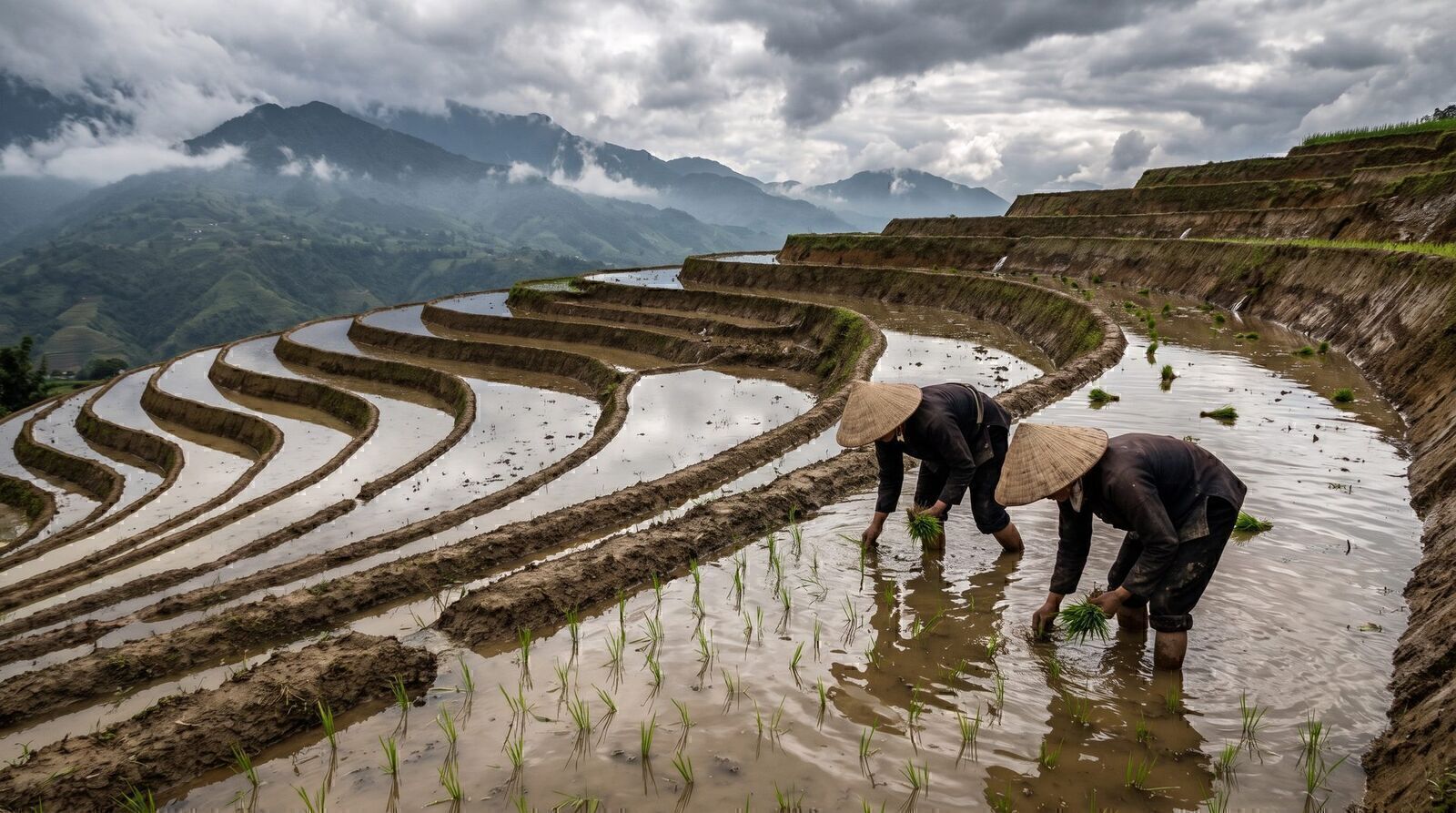
From late May through June, farmers across the far north flood their terraces for rice planting — and for a few weeks, before the seedlings green over, the mountains around Mu Cang Chai, Y Ty and Sapa become vast staircases of water, mirroring clouds, sunsets and the ridgelines above. Vietnamese photographers plan whole years around it; international itineraries almost universally miss it, because it happens in “rainy season.” The practical notes: the show runs on planting schedules (late May to late June, valley by valley), mountain showers are part of the deal, and the light shows are morning and late afternoon. Paired with warm-weather trekking and half-empty homestays, it makes the strongest case of any month for the mountains — the Sapa-versus-Ha Giang decision is in our comparison, and guided treks run readily — comparing Sapa treks in June is low-season shopping for a high-season sight.
The Central Coast: Domestic Summer Begins
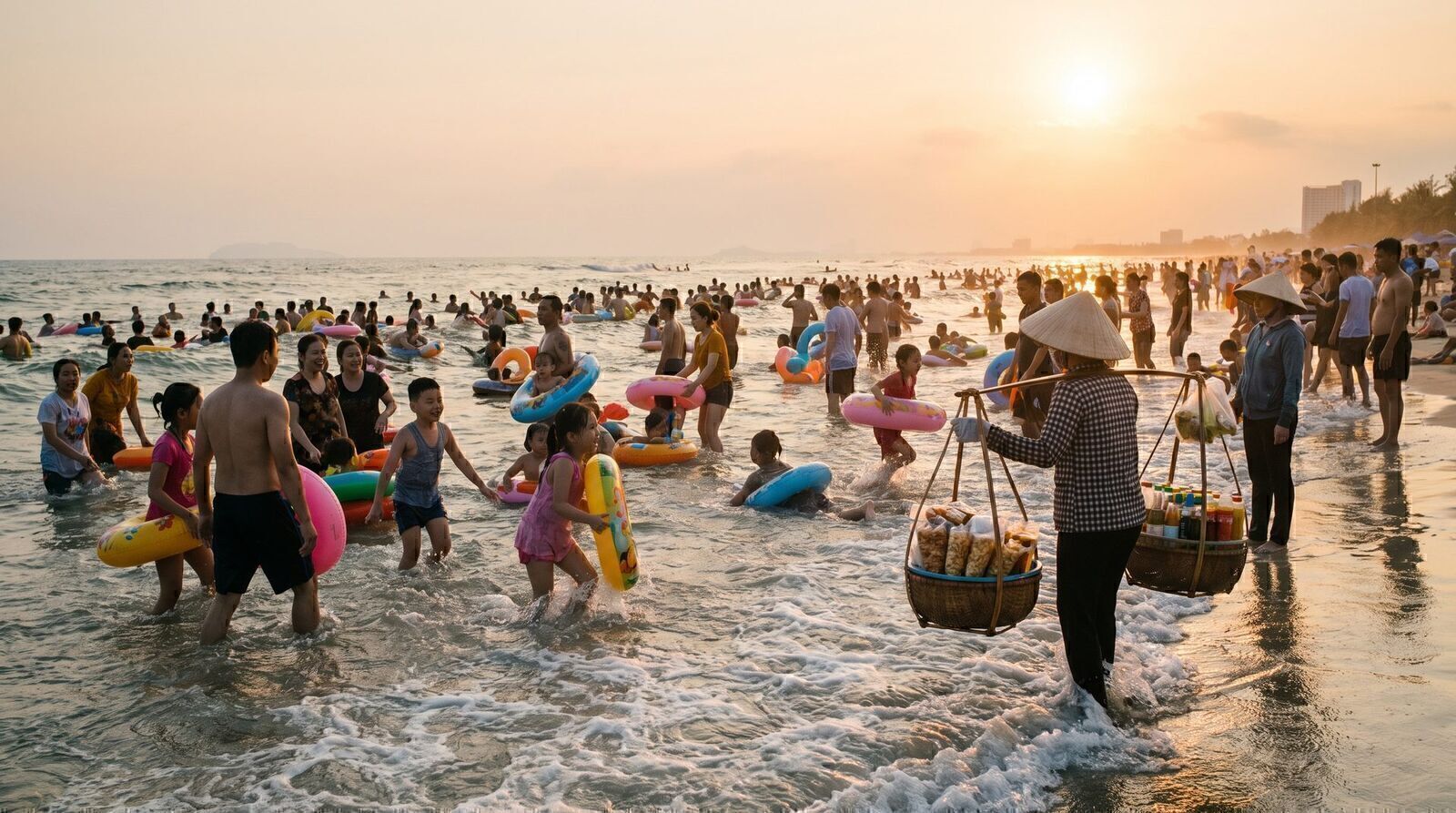
Da Nang, Hoi An and Nha Trang spend June doing what they’ll do all summer: delivering hot, reliable beach days to a largely Vietnamese crowd. The texture is worth knowing in advance — beaches are quiet at noon (locals consider midday swimming a foreigner’s eccentricity) and packed with families from 4 p.m. to dark, weekends double the volume of weekdays, and seafood restaurants hit their boisterous seasonal stride. It’s a genuinely fun atmosphere, and an easy one to plan around: swim mornings, tour middays, join the evening crowd for dinner. Rooms need more lead time than May but far less than July — comparing Da Nang dates midweek versus weekend shows the domestic rhythm in the prices themselves. Base logic is in the Da Nang stay guide; Hoi An’s evening rhythm in the slow guide.
The South: The Green Season Finds Its Groove
June is the south’s first full green-season month, and it behaves exactly as advertised: bright, steamy mornings; a theatrical downpour in the afternoon; washed, golden evenings. Phu Quoc runs 40–50% below peak pricing with the east coast swimmable and the west coast moody — the full survival playbook is in Phu Quoc in June and the rainy season guide. Saigon absorbs the rain without breaking stride, and the Mekong is at maximum lushness with the fruit season in full swing. The green season rewards a specific traveler — flexible, budget-aware, happy to trade certainty for atmosphere and empty pools — and June is its gentlest on-ramp.
The North: Summer at Full Volume
Hanoi in June is hot in a way that reorganizes your day: 34–38°C with saturating humidity, then evening thunderstorms that briefly flood streets and cool nothing. The city still works — dawn markets, museum middays, beer-street evenings — but it demands the summer schedule. Ha Long Bay enters its cheap-but-conditional months: hazy heat, good deals, and the season’s first real typhoon watch (cruises cancel with refunds; keep a buffer day — the cruise guide explains). Ninh Binh is green and dramatic between storms. Unless the mountains are the goal, June is the month to give the northern lowlands the shortest slice of the trip.
A Sane 10-Day June Route
- Days 1–2: Hanoi. Two morning-scheduled days — Old Quarter at dawn, museums at noon, street food at night.
- Days 3–6: The mountains. Sapa or Mu Cang Chai for mirror season — the trip’s reason to be in June.
- Days 7–10: Fly to Da Nang. Close on the central coast — beach mornings, Hoi An lantern evenings, one Hue or Ba Na day.
It’s a north-plus-center shape that treats the south as next trip’s material — or as a budget swap: replace the mountain leg with a green-season Phu Quoc week and the same ten days cost noticeably less. What doesn’t work in June is the everything-route: the heat tax on long travel days is real, and the south’s rhythm rewards settling in rather than passing through. Longer-stay shapes live in the where-to-base guide and the slow travel pillar.
Prices and Crowds: The June Economics
June runs two markets at once. Domestic-facing destinations — the central beaches, Da Lat, Sapa town on weekends — price up for Vietnamese school holidays, with weekends the pinch point and midweek the discount. International-facing stock moves the other way: the south’s resorts discount hard into the green season, northern hotels soften in the heat, and long-haul flight prices sit below the July–August surge. The play is to arbitrage the two: beach weekdays, mountain weekdays, and green-season islands price like a shoulder season inside a summer. Book central-coast weekends and anything around late-June school-holiday peaks ahead; book everything else with a few days’ notice and enjoy the slack.
What to Pack for Vietnam in June
- The summer uniform — quick-dry everything, two swimsuits (one’s always wet), and sandals that grip on rain-slick tile.
- A folding poncho, always — south and north both run on afternoon downpours now.
- Mosquito repellent that means it — the green season is breeding season; dusk in the delta and the mountains both bite.
- A dry bag for phone and passport — boat days, storm bursts and beach afternoons all threaten the same pocket.
- An eSIM installed before you land — weather radar and cruise-day calls run on data (our Vietnam eSIM setup).
FAQ
Is June a good time to visit Vietnam?
Yes, with the right shape. The central coast is in full beach form (busy with Vietnamese holidaymakers, best midweek), the far-north terraces hit their once-a-year mirror season, and the south offers deep green-season value. It’s a month for picking two regions deliberately rather than sweeping the country.
What is mirror season in Vietnam?
The few weeks from late May through June when northern rice terraces are flooded for planting and reflect the sky like stacked mirrors — most dramatically around Mu Cang Chai, Y Ty and the Sapa valleys. It’s the green season’s opening act and one of Vietnam’s most photogenic windows, largely missed by international itineraries.
Is June rainy in Vietnam?
Regionally. The south runs its afternoon-burst rhythm (rarely all-day rain), the north mixes heat with heavy thunderstorms, and the central coast stays mostly dry and sunny — it’s the driest place in the country in June. Mountain areas see regular showers that fill the terraces on schedule.
Are Vietnamese beaches crowded in June?
Domestically, yes — school holidays begin in early June and central-coast beaches fill with Vietnamese families, especially from late afternoon and on weekends. Mornings stay quiet, midweek is markedly calmer, and the atmosphere is festive rather than oppressive. Foreign-crowd peaks come later, in July and August.
Is June cheap in Vietnam?
Half of it is. Green-season Phu Quoc and southern resorts run 40–50% below peak, northern city hotels soften in the heat, and flights undercut July–August. The central beaches and domestic favorites price up for school holidays — midweek stays claw most of that back.
Some links in this guide are affiliate links: if you book through them we may earn a small commission at no extra cost to you. It helps keep our guides honest and free.
Get our free Phu Quoc Trip Kit — the pre-departure checklist, a 5-day plan and our honest booking picks. No spam; at most one email a month.
By subscribing you agree to our privacy policy. Unsubscribe anytime.