July is Vietnam’s high summer — the month the central coast earns its keep, the green season earns its name, and every kind of traveler seems to arrive at once. Vietnamese families are deep into school holidays, the European summer wave lands in force, and the country’s weather map settles into its most predictable summer shape: brilliant and hot in the middle, rhythmically rainy at both ends. It’s a month of strong opinions — some travelers call July Vietnam at its best, others at its busiest — and both are describing the same central-coast beach at 5 p.m. on a Saturday.
This guide is part of our month-by-month series — start with the best time to visit Vietnam for the full-year map.
Short version: Da Nang, Hoi An and the central beaches are in their sunniest, hottest, most crowded stretch — glorious with a plan, sweaty without one. The south runs mature green-season rhythms at deep discounts. The north is hot, wet and stormy — its two rainiest months are underway — and the mountain terraces have turned to their deep-green season. Book beach rooms earlier than any other summer month.
The One Map That Explains July
| Region | July weather | Verdict |
|---|---|---|
| Central coast (Da Nang · Hoi An · Quy Nhon · Nha Trang) | Peak sunshine, 33–37°C, calm sea — and peak combined domestic + international crowds | ✅ Go — with bookings made early |
| South (Saigon · Mekong · Phu Quoc) | Full green season — afternoon bursts, lush delta, resorts at 40–60% off | 🟡 The budget play, rhythm required |
| North lowlands (Hanoi · Ninh Binh · Ha Long) | Hot, humid, one of the two wettest months; typhoon season active on the coast | 🟡 Mornings-only, boat days flexible |
| Far north mountains (Sapa · Ha Giang) | Deep-green terraces, warm days, regular rain and occasional landslides on passes | 🟡 Lush and quiet, buffer days required |
The Central Coast: High Season, Fully Loaded

July on the central coast is the payoff month: 30+ days of beach weather, a bathtub-warm sea, and the long dry stretch that makes Da Nang Southeast Asia’s most underrated summer city. It’s also the month everything peaks at once — Vietnamese school-holiday travel, European and Korean summer arrivals, weekend wedding season — so the difference between a great July trip and a frazzled one is almost entirely logistical. The working rules: book beach-quarter rooms 3–6 weeks out (the good mid-range stock goes first — our stay guide maps which quarters to fight for), swim mornings, do air-conditioned or mountain things at midday, and give Hoi An its evenings (the lantern-hour run works best after 4 p.m. year-round, never more so than July). Big-ticket days — Ba Na Hills, My Son sunrise, Cham Islands snorkeling — sell out summer weekends; booking Ba Na Hills tickets a few days ahead beats both the gate line and the sold-out sign.
The South: Green Season, Fluent by Now
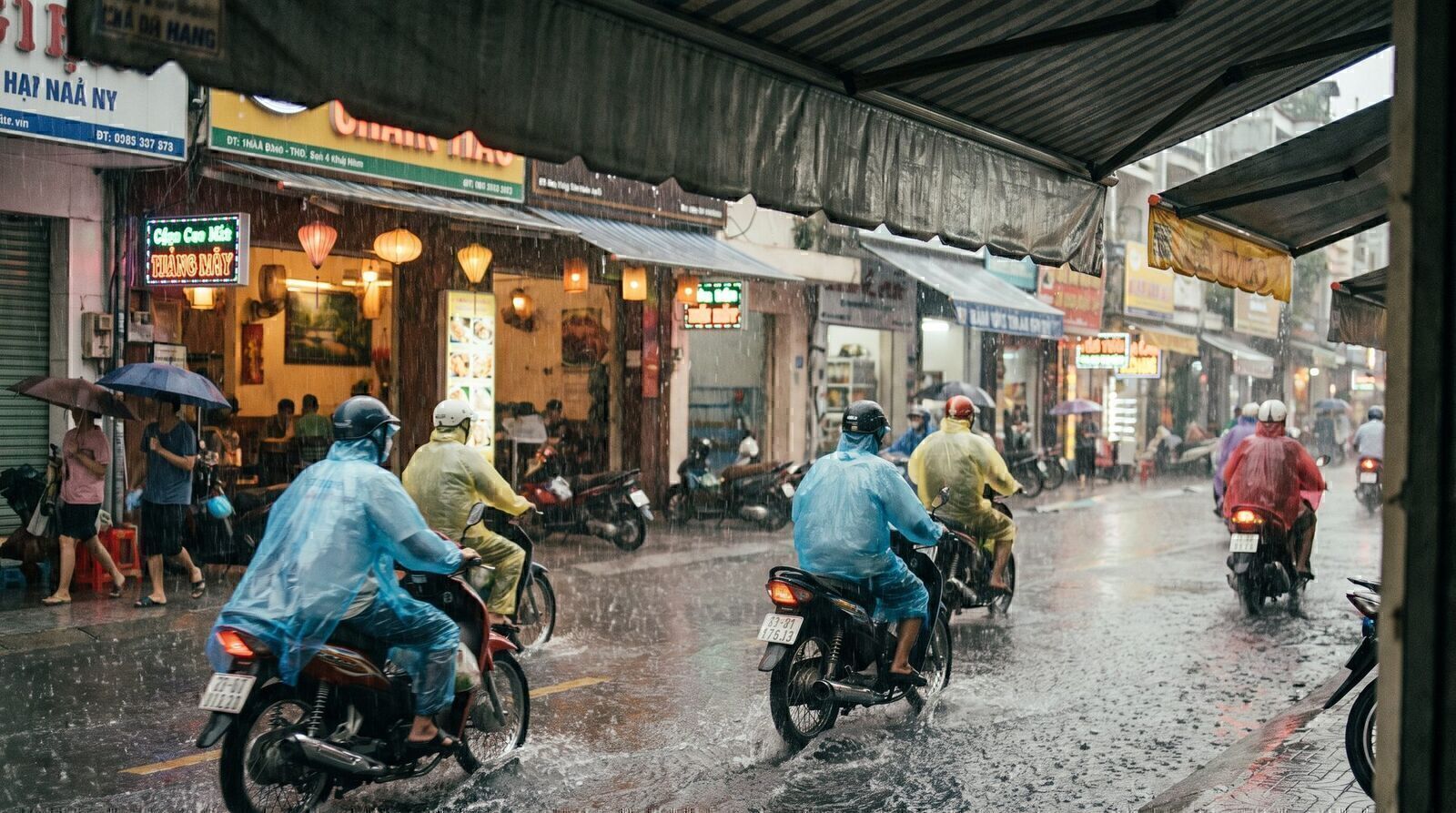
By July the southern rain rhythm is a settled habit: bright mornings, the 2-to-5 downpour window, luminous evenings. Phu Quoc runs the contrarian play we detailed in Phu Quoc in July — resort rooms at 40–60% off, the sheltered east coast doing the swimming, storm skies doing the photography — and Saigon simply gets on with life between bursts. The Mekong is at its most generous: fruit season rolling, paddies electric green, boat mornings cool and full. None of this is beach-certainty travel; all of it is Vietnam at half price with better light.
The North: The Wet Peak
July and August are the northern lowlands’ rainiest months, and July adds the summer’s full heat to the mix — Hanoi runs 33–38°C between thunderstorms, and the city’s famous energy migrates to dawn and dark. Ha Long Bay stays cheap and conditional: cruises run most days, typhoon systems cancel a few of them outright (refunds are standard practice), and the reliable advice remains — keep a buffer day, never book the bay against an international flight, and check the cruise guide for boat-picking. The mountains are July’s quiet consolation: the terraces have greened into velvet, trails are warm, homestays are half-empty, and the trade-off is rain that occasionally closes a pass — the same buffer-day logic as ever, weighed in Sapa vs Ha Giang.
A Sane 10-Day July Route
- Days 1–2: Saigon. Land south, learn the rain rhythm, eat between bursts.
- Days 3–5: Phu Quoc. The green-season steal — east-coast swims, pool afternoons, storm-light sunsets.
- Days 6–10: Fly to Da Nang. The sunshine leg — beach mornings, Hoi An evenings, one mountain or island day booked ahead.
South-then-center runs the odds in your favor: the gamble leg first at half price, the certainty leg second at full sun. The north keeps for autumn — or swaps in for the island leg if mirror-season photos from June left unfinished business in the mountains. Longer-stay shapes are in the where-to-base guide; July’s answer is a Da Nang base with the scooter and the sunscreen budget to match.
Prices and Crowds: The July Economics
July is the summer’s price ceiling on the central coast — the only month that outdoes it is August’s first half — with beach hotels 20–40% above shoulder rates and weekend availability genuinely scarce. Everywhere else discounts: the south is at its green-season floor, northern city hotels soften in the heat and rain, and mountain homestays run at their yearly quiet. Flights are the quiet budget-killer — long-haul fares into the July–August window climb steeply, so the cheap half of a July trip is everything after landing. The arbitrage summary: expensive coast, cheap edges, book the middle early and the edges whenever.
What to Pack for Vietnam in July
- Serious sun management — the central coast’s UV and heat index both peak; hats, SPF 50, electrolytes.
- The poncho, permanently pocketed — two of your three likely regions run on downpours.
- Reservations for the sunshine leg — July’s real packing list is bookings: beach rooms, weekend activities, domestic flights.
- A second swimsuit and a dry bag — the daily swim-storm-swim cycle is hard on gear.
- An eSIM installed before you land — storm radar south, booking apps center, cruise calls north (our Vietnam eSIM setup).
FAQ
Is July a good time to visit Vietnam?
Yes — it’s the heart of the central coast’s long sunny season, with Da Nang, Hoi An and Nha Trang at their beach-weather best. The trade-offs are peak summer crowds and prices on that same coast, green-season rain in the south, and the north’s wettest weeks. Trips that book the coast early and pace around the heat do very well.
Where is the best weather in Vietnam in July?
The central third of the country, without contest — Da Nang through Nha Trang runs its sunniest, driest stretch while both ends of the country take their summer rain. Within the region, mornings are the golden hours: sea calm, heat manageable, crowds still at breakfast.
Is July rainy season in Vietnam?
For two-thirds of it. The south runs afternoon-burst rain (rarely all-day), and the north is in its wettest pair of months with real thunderstorms and coastal typhoon risk. The central coast is the exception — July sits in the middle of its dry season. Regional choice matters more in July than almost any other month.
How crowded is Vietnam in July?
The central beaches are at their annual maximum — Vietnamese school holidays and international summer arrivals overlap through late August. Weekends and evenings concentrate the crowds; mornings and midweek dilute them. The south and mountains run counter-cyclically quiet, which is half their July appeal.
Is Phu Quoc worth visiting in July?
As a deliberate value play, yes. Resorts run 40–60% below peak, the east coast stays swimmable, and the rain arrives in scheduled afternoon bursts rather than washouts. Beach-certainty travelers should aim November–April instead; flexible budgets get one of Asia’s cheapest four-star weeks. The honest details are in Phu Quoc in July.
Some links in this guide are affiliate links: if you book through them we may earn a small commission at no extra cost to you. It helps keep our guides honest and free.
Get our free Phu Quoc Trip Kit — the pre-departure checklist, a 5-day plan and our honest booking picks. No spam; at most one email a month.
By subscribing you agree to our privacy policy. Unsubscribe anytime.