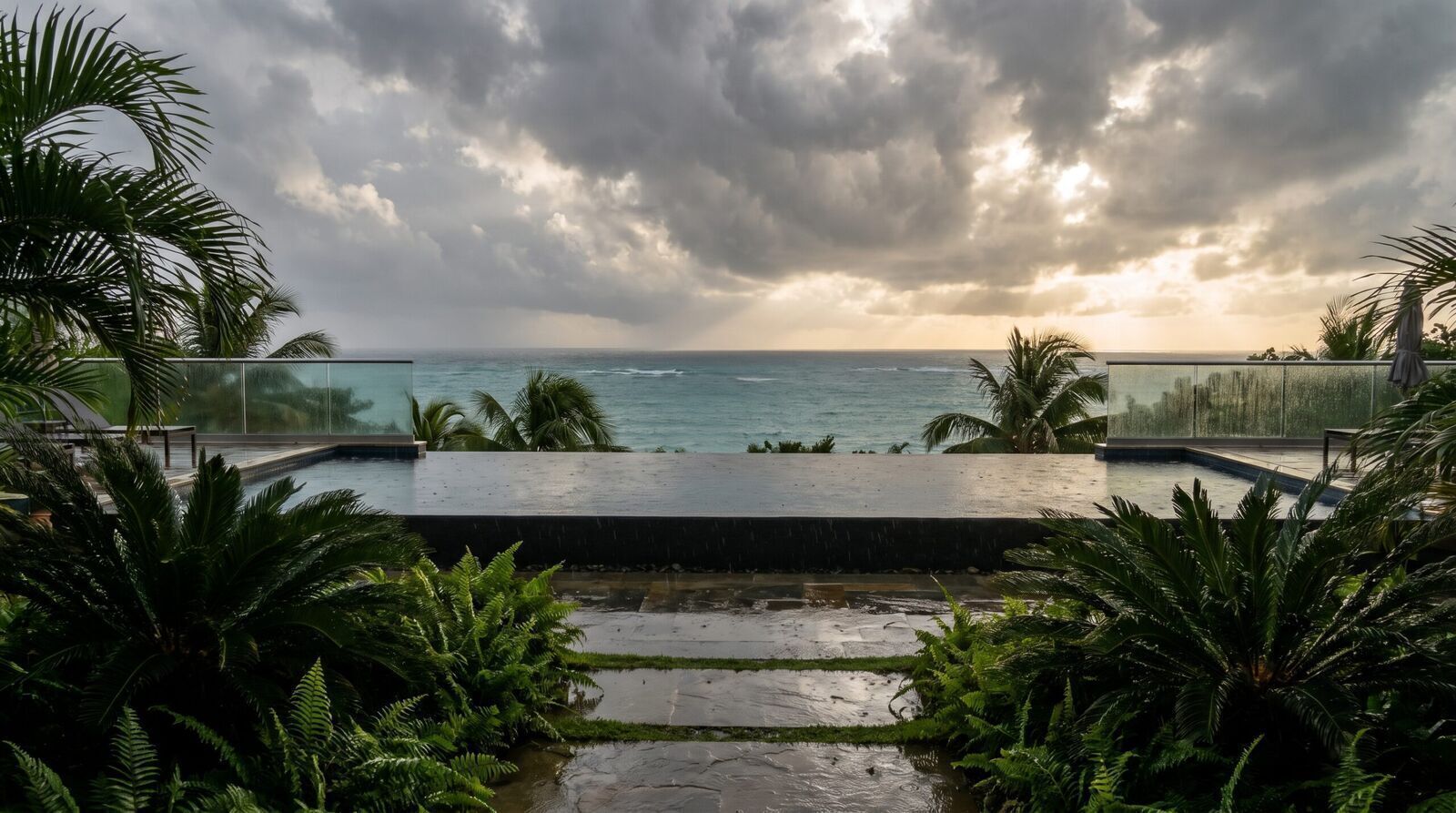
August is deep green season on Phu Quoc: the island at its most lush, its emptiest midweek, and close to its cheapest — paid for with the year’s second-heaviest rain and a west coast that’s fully off duty. It’s a genuinely good month for a specific kind of traveler and a genuinely wrong one for another. One honest test decides which you are: if a rained-out afternoon reading by a pool sounds like a holiday, August works; if it sounds like a refund claim, aim for the dry season.
Comparing months? The full year is mapped in our best time to visit guide.
August in Numbers
| What | August reality |
|---|---|
| Weather | Peak southwest monsoon — 27–31°C, humid, frequent heavy showers, big brooding skies |
| Rain pattern | Afternoon bursts most days + a higher chance of 2–3 day wet spells than July |
| Sea (west coast) | Rough — swimming days are the exception, sunset walks still deliver |
| Sao / Khem (southeast) | Still the swim coast — calm more often than not, best in the mornings |
| Prices | Near the yearly floor — flagship five-stars at their most negotiable |
| Crowds | Domestic summer wave fades through the month as Vietnamese schools resume; late August is properly quiet |
What August Actually Feels Like
The island turns saturated green — pepper farms glowing, the northern forest steaming after rain, waterfalls (a dry-season joke) actually running. Storm light makes the dramatic photography month: black clouds over a silver sea, then an hour of impossibly clean post-rain air. Resorts run at low occupancy, staff have time to chat, and the whole place moves at the pace this island was probably meant to move at.
The honest costs: laundry never quite dries, scooter plans need rain discipline (getting around), and the west coast sea — the postcard one — is on strike until roughly October.
Playing August Well
- Book a resort you’d be happy to be “stuck” in: serious pool, covered dining, spa. In August the resort IS half the trip — and at these rates you can afford a tier up. Compare on Agoda; midweek rates dip lowest.
- Mornings are for the sea, afternoons are for shelter: the same monsoon rhythm as July, tilted slightly wetter.
- Keep boat plans flexible: snorkeling trips run on most days via sheltered southern routes, but August cancellations are real — never book a boat for your final morning, and prefer free-cancellation e-tickets.
- Ferry travelers, note: rough-strait cancellations peak in these months — if your route includes the Ha Tien or Rach Gia ferry, build buffer or fly.
- Eat indoors like a local: rainy evenings at bún quậy counters beat soggy beach bars.
August vs July vs September
The three monsoon-heart months, honestly ranked: July edges the weather odds and carries the fun domestic-summer buzz. August is a touch wetter and, by its final weeks, noticeably emptier — the introvert’s pick. September is the wettest and cheapest of all — the pure deal-hunter’s month. Prices barely differ between them; pick by temperament, not by spreadsheet.
Who August Suits
- Resort recharge trips: couples or solo travelers who want five-star quiet at three-star prices and don’t need a schedule.
- Long-stayers: the negotiating month — monthly rentals and long-stay resort deals hit their soft point before pre-season firming.
- Photographers and rain romantics — the light is the year’s most dramatic.
- Skip it if: it’s your one big beach holiday of the year, or you’re chasing the west-coast postcard — that’s a November–March product.
What Should You Pack for Phu Quoc in August?
Pack for warm rain, not bad weather: quick-dry clothes, a packable rain shell, waterproof sandals, and a dry bag for your phone. Mornings are still swim weather, so bring the same sun kit you would in the dry season — plus a second swimsuit so one is always dry.
The mistake is packing defensively, as if August were cold. It isn’t — rain here is warm, brief and almost pleasant to walk through. What matters is how fast your things recover afterward.
| Bring | Why it earns the space |
|---|---|
| Quick-dry shirts and shorts | Cotton stays damp for days; synthetics reset overnight on a balcony rail |
| Packable rain shell | Better than the plastic ponchos sold everywhere, especially on a scooter |
| Small dry bag | Phone, cash and passport survive a surprise downpour or a boat splash |
| Waterproof sandals | Streets puddle for an hour after each burst; leather shoes never forgive it |
| Mosquito repellent | Post-rain evenings are the buggy ones, especially inland and near the forest |
| A loaded e-reader | The storm-hour companion — this is the month the pool bar was built for |
Leave the jeans and the hair tools at home, and don’t bother with an umbrella — the wind that comes with the heavy bursts turns them inside out anyway.
A Realistic August Day, Hour by Hour
August rewards a front-loaded day. Wake early to the cleanest air of the trip — post-rain mornings here feel freshly rinsed — and head for the southeast coast while the sea is at its calmest. Swim, breakfast at a beach shack, and be moving again before the sky starts building.
By early afternoon the clouds usually announce themselves well in advance. That’s the cue for the indoor half: a long lunch, a massage, a nap, or a coffee stretched across the storm hour. When the burst passes, the west coast puts on its moodiest show — silver light, empty sand, big surf you watch rather than enter. Walk it, then eat somewhere with a roof.
Basing near Duong Dong makes these wet evenings easy — food and cafes within a short hop instead of a resort-restaurant hostage situation. Our where-to-stay guide covers which areas keep their pulse in low season.
How We Read the Sky Here
Our rule of thumb after many wet-season stays: the morning sky decides the day. Clear at breakfast usually means a good five or six hours before anything serious; grey and heavy from first light is your signal to plan indoors and treat any sunshine as a bonus.
A weather-radar app beats any forecast summary — watch the cells move rather than trusting a rain icon that covers the whole day. And ask reception; staff who watch this sky every day will tell you honestly whether the boats are likely to go. If you’re working from a longer plan like our 5-day itinerary, treat the days as a deck of cards in August — keep the order loose and deal the outdoor ones when the sky allows.
FAQ
Is August a good time to visit Phu Quoc?
For flexible, resort-happy, budget-aware travelers — yes, quietly excellent. For once-a-year beach holidays with fixed expectations — no; pay for the dry season instead.
How much does it rain in August?
Most days see rain, usually as a heavy afternoon burst; expect a couple of longer wet spells across the month. Full mornings of sun remain the norm rather than the exception.
Are there typhoons in Phu Quoc in August?
Phu Quoc sits south of Vietnam’s main typhoon track, so direct hits are rare — the island gets storm fringes as heavy rain and rough seas rather than destructive winds. Watch forecasts for boat days, not for safety panic.
Is anything closed in August?
The island runs normally — parks, cable car, night market, restaurants all open. A few small beach bars on the west coast go dormant until the sea returns.
Bottom Line
August is the connoisseur’s low season: lushest island, emptiest weeks, floor-level rates — bought with real rain and a one-coast swim map. Book the good resort, swim the southeast mornings, let the afternoons storm past a covered café table, and you’ll leave wondering why anyone pays triple for January. The full wet-season playbook: the rainy season guide.
Some links in this guide are affiliate links: if you book through them we may earn a small commission at no extra cost to you. It helps keep our guides honest and free.
Get our free Phu Quoc Trip Kit — the pre-departure checklist, a 5-day plan and our honest booking picks. No spam; at most one email a month.
By subscribing you agree to our privacy policy. Unsubscribe anytime.