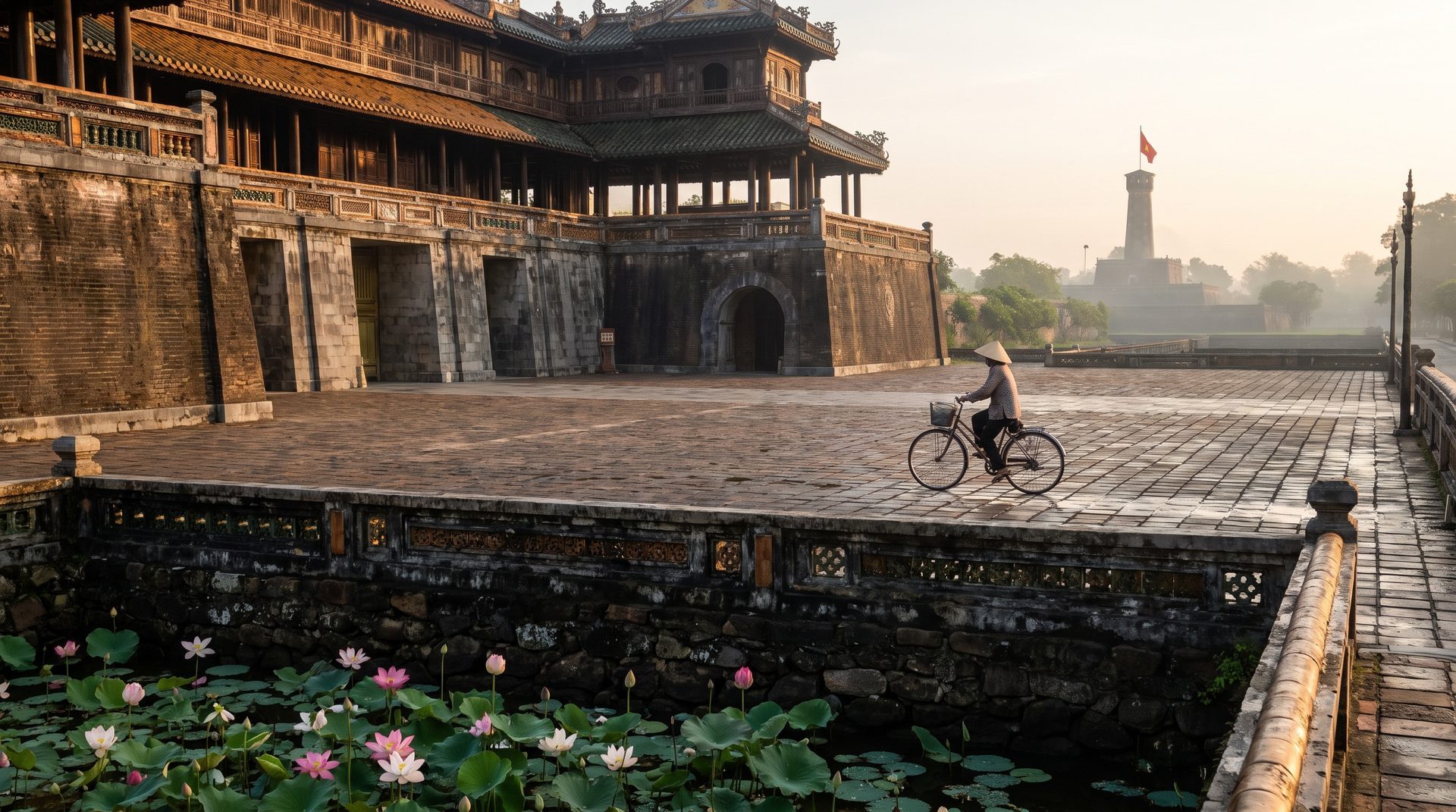
Hue is the most misjudged stop on the Vietnam trail. It gets budgeted half a day — a citadel sprint between Hoi An and the next bus — and then quietly becomes the place travelers say they wish they had stayed. The fix is not more sights; it is more hours at the right times. The citadel belongs to dawn, the tombs to a slow afternoon of exactly two, the evenings to a river city that goes to bed early on purpose. This is the two-day version: the imperial day, the city-under-the-monuments day, and the honest pacing that makes both work.
Short version: day one is the empire — citadel at seven, bún bò for lunch, two tombs (not four), Thien Mu pagoda at golden hour. Day two is the living city — ramparts with the morning exercisers, cơm hến for breakfast, salt coffee, Dong Ba market, and the Hai Van Pass out. The day-by-day table, the pick-two tomb rule and the costs are below.
The Two Days at a Glance
| Day | Morning | Afternoon | Evening |
|---|---|---|---|
| 1 | Citadel at 7 a.m., bún bò lunch | Two tombs by Grab loop | Thien Mu at golden hour, riverside beer |
| 2 | Ramparts at dawn, cơm hến, salt coffee | Dong Ba market, royal bites tray, waterpark or cooking class | Hai Van Pass onward — or one more quiet night |
Day 1 — The Imperial Day
Be at the citadel gate for the seven oclock opening (~200,000 VND): the first two hours beat both the heat and the tour groups, and the Forbidden Purple City ruins are at their most affecting with nobody in them. Give it three hours, then eat the city’s masterpiece where it was invented — bún bò Huế, spicier and lemongrass-deeper than any version that left town; any packed local shop is the right shop.
The afternoon is the tombs, governed by one rule: pick two. They blur after three, and each of the big three is a complete argument on its own — Khai Dinh the baroque concrete fever dream (small, intense, all staircase), Tu Duc the lake-and-pine poem (the romantic one), Minh Mang the imperial symmetry at scale (the quiet one). A Grab car loop covers two comfortably for $15–20. Finish at Thien Mu Pagoda on the river at golden hour, then let the evening be what Hue evenings are: a riverside beer, the lit citadel walls, an early night without guilt — our full Hue guide explains why the quiet is the point.
Day 2 — The City Under the Monuments
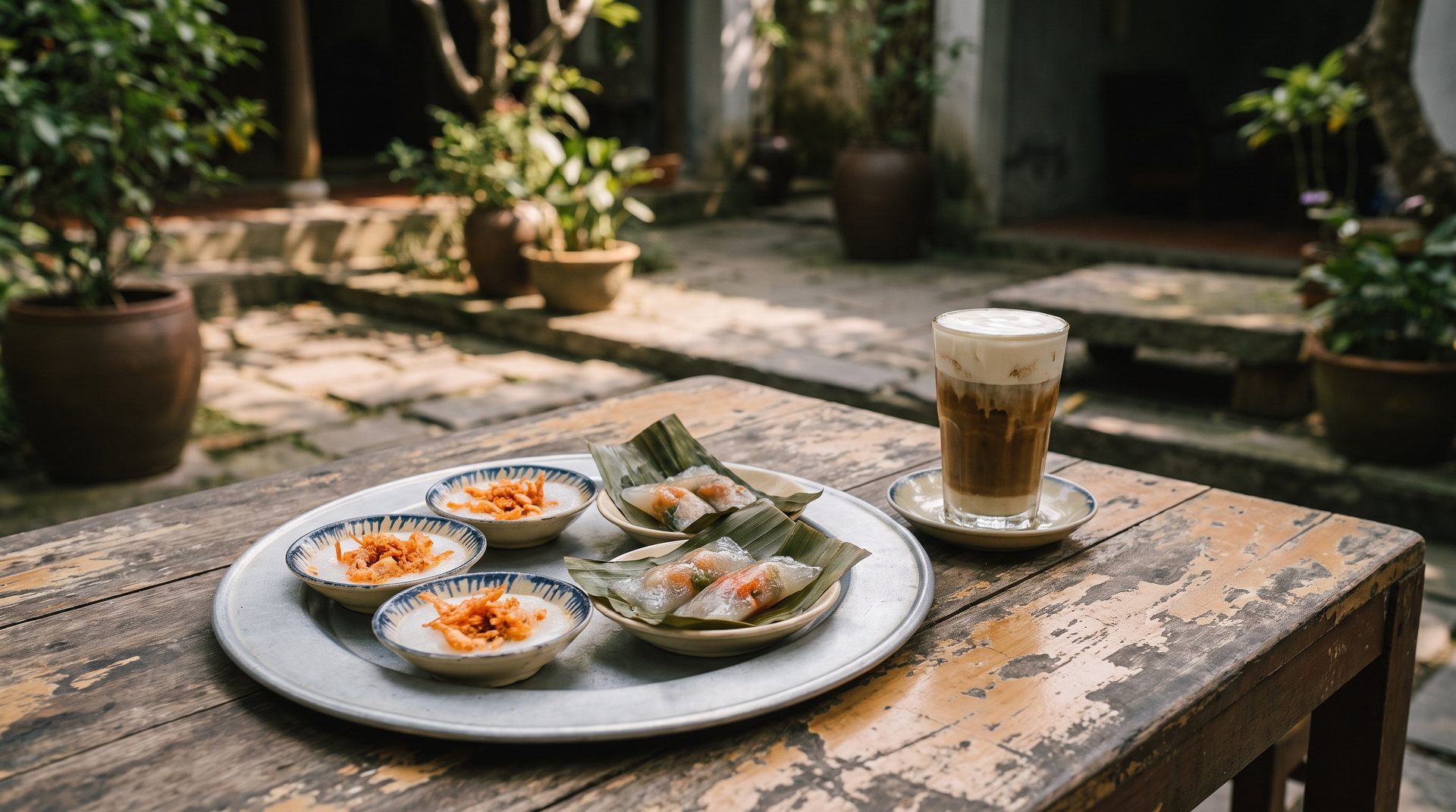
Start where the locals start: on the citadel ramparts at dawn, where the city stretches and strolls before the heat — you get the flag tower and the morning light with no ticket and no groups. Breakfast is cơm hến, the river-clam rice the palace never claimed, for less than your coffee — and the coffee should be cà phê muối, salt coffee, invented in this city and still better here than anywhere it spread. Mid-morning, wander Dong Ba market for the real commercial city, then graze a royal bites tray — bánh bèo, bánh nậm, bánh lọc — the steamed morsels built to amuse palace palates.
The afternoon is a choice by temperament: the semi-official abandoned waterpark at Thuy Tien lake (atmospheric, odd, memorable), a garden-house cooking class, or nothing at all with a book by the Perfume River. Then the exit is half the reason to come: the Hai Van Pass south to Da Nang and Hoi An — by car, classic motorbike crossing, or the coastal train hugging the cliffs (sit on the sea side). Heading north instead, Phong Nha’s caves are four hours up the coast.
What Two Days Costs
| Style | Per person, 2 days | What that looks like |
|---|---|---|
| Backpacker | $60–100 | Guesthouse, street food, citadel + two tombs, Grab bikes |
| Mid-range | $120–220 | Riverside 4-star at 3-star prices, restaurant meals, car loop, cooking class |
| Comfortable | $250–400 | The best river hotels, private guide and driver, royal dinner |
Hue hotels are Vietnam’s quiet bargain — riverside four-stars run $35–70 — and comparing Hue stays on Agoda shows how far the money stretches here versus the coast. If you prefer the logistics handled, the Hue day tours on Klook cover the tomb loops and Hai Van transfers — useful for the loop, unnecessary for the citadel.
Timing note: Hue is the country’s rain capital from October to December, when the moat mists over and an umbrella becomes a personality trait — atmospheric, but pack for it and build slack. February to August plays far kinder, with May the sweet spot of heat, light and thin crowds. The wider seasonal logic is in our when-to-visit guide, and where the two Hue days slot into a week or two on the coast is mapped in the one-week center route and the two-week itinerary.
Where to Sleep, Briefly
The river splits the decision neatly. The hotel side (south bank) holds the walking street, the restaurants and the riverside four-stars — the practical default, and where those $35–70 bargains live. The citadel side is quieter and more local, with garden guesthouses that put the ramparts outside your morning door; choose it if day two’s dawn walk is the part of this plan that made you nod. Either way, book a river-view room if the price gap is small — the Perfume River at first light is a sight the itinerary gets for free, and Hue is one of the few cities in Vietnam where the view costs almost nothing extra.
FAQ
Is 2 days enough for Hue?
Yes — two days covers the citadel properly, two tombs, the pagoda and the living-city morning without rushing, which is the complete list worth doing. One day works as a highlight reel; three suits history obsessives and the rain-season slack it sometimes needs. Two is the honest sweet spot.
Which tombs should I visit in Hue?
Two of these three: Khai Dinh for spectacle, Tu Duc for romance, Minh Mang for scale and quiet. Any pairing works; all three in one afternoon is a march that flattens them. The Grab-car loop for two runs $15–20 and beats the big-bus circuit in every way except price.
Can I do Hue as a day trip from Da Nang?
You can — citadel, one tomb, bún bò lunch, back over the pass by dinner — and it beats skipping Hue entirely. But the city’s best hours are dawn on the ramparts and the quiet evening river, and both belong to people who slept there. The overnight is the upgrade that costs one hotel night.
How do I get from Hue to Hoi An?
Over the Hai Van Pass, and make it the scenic version: a private car with viewpoint stops (about 2.5 hours), the classic motorbike crossing for confident riders, or the coastal train to Da Nang with the sea out the window. Hoi An is another 45 minutes past Da Nang by Grab.
What food is Hue famous for?
Bún bò Huế first and always — eaten in its birthplace it is a different dish. Then the royal bites (bánh bèo, nậm, lọc), cơm hến river-clam rice, bánh khoái pancakes, chè sweet soups and salt coffee. Hue is arguably Vietnam’s deepest food city per square kilometer; arrive hungry.
Some links in this guide are affiliate links: if you book through them we may earn a small commission at no extra cost to you. It helps keep our guides honest and free.
Get our free Phu Quoc Trip Kit — the pre-departure checklist, a 5-day plan and our honest booking picks. No spam; at most one email a month.
By subscribing you agree to our privacy policy. Unsubscribe anytime.