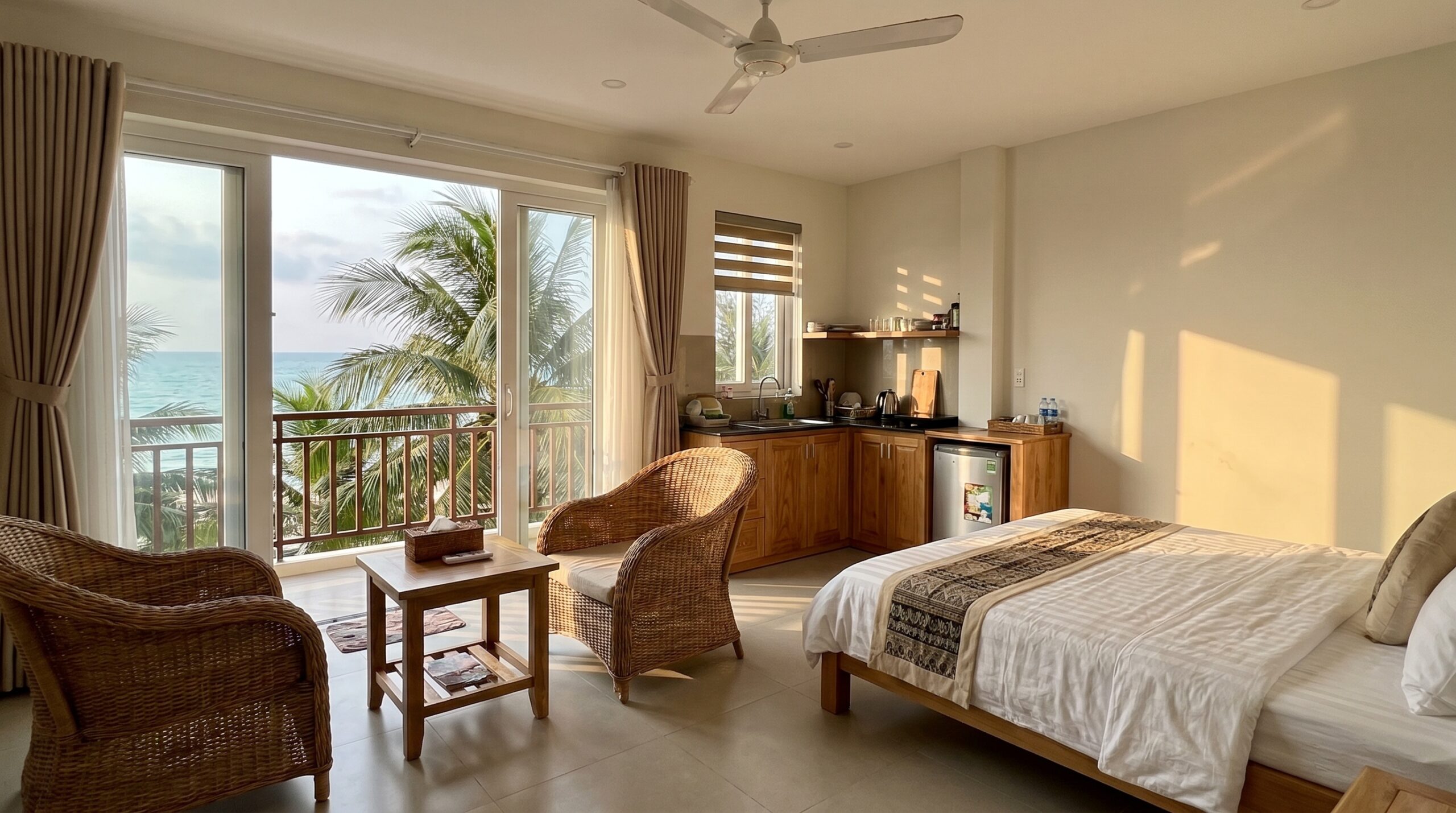
Finding a monthly rental on Phu Quoc is easier — and cheaper — than most people expect: guesthouse rooms from $200/month, studios $250–450, modern one-bedrooms with pool and gym $400–700. What’s tricky is knowing where the real listings live (not the big booking sites), what a fair price looks like, and which questions save you from a month of regret. This is the practical playbook.
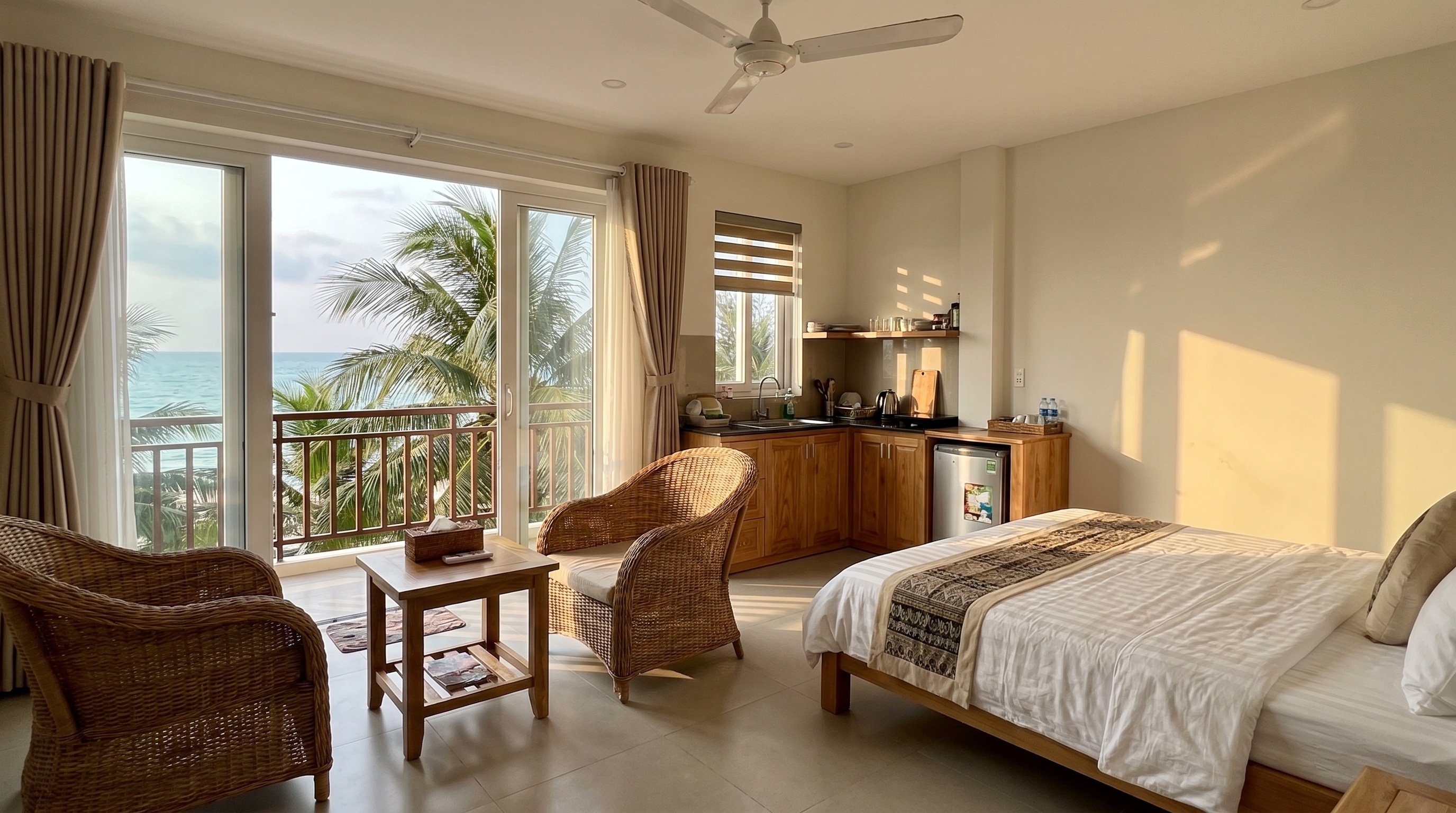
What Monthly Rentals Cost (2026 Ballparks)
- Guesthouse room, monthly deal: $200–350 — private bath, cleaning included, zero setup. The easy button.
- Studio apartment: $250–450 — kitchenette, your own space, usually furnished.
- Modern 1BR in a condo building (pool/gym): $400–700 — the comfort tier most remote workers pick.
- Houses & villas: from ~$800 — great value split between friends.
- On top: electricity ($30–60 with daily aircon — ask the per-kWh rate!), water (cheap), sometimes cleaning/wifi fees. Most places want a 1-month deposit.
Where the Real Listings Are
- Facebook groups — the actual marketplace: search “Phu Quoc rentals / housing / expats” and post what you need (budget, area, dates). Owners and agents reply within hours. Agent fees are typically paid by landlords, not you — confirm anyway.
- Booking apps’ monthly discounts — many hosts quietly discount 30–50% for 28+ day stays; message and negotiate further. Best for your first month while you scout in person.
- Walk and ask — the classic Vietnam method: pick your neighborhood, walk it, look for “cho thuê” (for rent) signs, ask café owners. In-person prices routinely beat everything online.
- Your guesthouse owner — tell them you want a month; they have a cousin with a place. This is genuinely how half the island rents.
Pick Your Neighborhood First
- Duong Dong & fringes: cheapest, most practical — markets, gyms, laundry, food. Beach is a 10–15 min ride. Best for immersion and budgets.
- Southern Long Beach: the balance — condo buildings with pools, walkable dinners, beach access. Most remote-worker friendly (work guide).
- Ong Lang: garden bungalows and quiet — pay a little more for a lot of peace; scooter required.
- Full area logic in where to stay and the month-in-Phu-Quoc guide.
The Viewing Checklist (10 Minutes That Save Your Month)
- Run a speed test on the actual Wi-Fi — not the listing’s claim. Video-call workers: do a test call.
- Ask the electricity rate per kWh — some landlords charge tourist rates (3–4k VND/kWh); fair is closer to the utility rate. With daily aircon this is a $30+/month difference.
- Check the aircon + water pressure + hot water — the three comfort makers.
- Look for a real table and chair if you work — most “studios” assume you live at cafés.
- Ask about deposit terms and notice period — 1 month deposit, straightforward return is normal; get it in writing (a Zalo message counts as writing here).
- Visit at night once if you can — karaoke neighbors and construction sites announce themselves after dark.
Negotiation Reality
Polite negotiation is expected: 10–15% off asking is common for a 1-month stay, more for 2–3 months, paid monthly. Rainy season (May–Oct) is a renter’s market — the same studio can run 20–30% cheaper than in January. Peak season (Dec–Feb) flips the power: book ahead or pay up.
What Does "Fully Furnished" Actually Mean Here?
Less than the listing photos imply. On Phu Quoc, "fully furnished" reliably covers a bed, a wardrobe, aircon, and a fridge. Everything beyond that — kitchen gear, decent pillows, a chair you can sit in for hours, a drying rack — varies unit to unit, so we treat the phrase as an invitation to ask questions, not a promise.
The good news is that gaps are cheap to fill. Duong Dong’s markets and household shops sell pans, kettles, fans, and bedding for a few dollars apiece, and many landlords will add a missing item if you ask before committing — a friendly "I’ll take it if you add a proper table" works more often than you’d expect. If the kitchenette runs on a gas burner, confirm who pays for bottle refills and who you call when it sputters out on a Sunday.
One quiet upgrade worth making on day one: buy your own pillow and a decent towel. Rental linens skew thin, and a good month is built on small comforts.
Budgeting Beyond the Rent
Rent is only the anchor. The recurring extras below shape your real cost of living, and every one of them gets cheaper when you set it up like a resident rather than a tourist. For the full monthly picture, see our one-month Vietnam cost breakdown.
| Monthly extra | What to expect |
|---|---|
| Scooter rental | Roughly $50–70/month for a reliable automatic; monthly rates beat stacking weekly ones, and most neighborhoods assume you have wheels |
| Laundry | Drop-off shops charge by the kilo — expect a small weekly bill for washed, dried, and folded next-day |
| Drinking water | Big refill jugs delivered to your door for pocket change; nobody staying a month buys small bottles |
| SIM and data | Roughly $10/month on a local plan covers heavy daily use, maps, and hotspot backup |
| Gym | Local gyms sell monthly passes for a fraction of Western prices; condo gyms are free but often basic |
The scooter is the line item to take seriously: distances look short on the map and are not, and a month of ride-hailing quietly costs more than a rental. Our getting-around guide covers the rental ropes and what to check before riding off.
Common Mistakes We Keep Seeing
- Prepaying two or three months for a discount before sleeping there a single night. The discount is real; so is being stuck. Pay monthly until the place has passed the karaoke test.
- Chasing the cheapest room far from everything, then paying the savings back in petrol, time, and skipped dinners. A slightly dearer place near food usually wins the month.
- Ignoring which way the balcony faces. In the rainy months, west-facing rooms take the brunt of the squalls, and a flooded balcony is a lost room.
- Assuming the pool and gym in the photos are open. Condo amenities close for maintenance for weeks at a stretch — ask what is actually running this month, not what exists.
- Treating the deposit handover casually. Photograph every scratch and stain on move-in day and send the photos over Zalo. That two-minute habit turns the move-out conversation into a formality.
None of this should make renting here sound risky — it is a friendly, low-stakes market where a little diligence goes an unusually long way. That is exactly why we keep recommending the month-long stay to anyone who will listen.
FAQ
Can I rent with just a passport?
Yes — passport + deposit is the standard package. Your landlord handles the required guest registration with local police (ask to confirm they do).
Airbnb-style or local rental — which is better value?
First month: booking platform with monthly discount (safety, reviews, easy exit). Staying longer: switch to a local rental found on the ground — typically 20–40% cheaper for the same unit.
Are short 2-week rentals possible?
Monthly pricing usually starts at 28+ days; for two weeks, negotiate a weekly rate at guesthouses instead — still far below nightly rates.
What about scams?
Rare but real: never send big deposits sight-unseen from abroad. View first (or video-tour with a local contact), pay deposit on key handover, keep the Zalo trail.
Bottom Line
Book one flexible week online, spend two afternoons walking neighborhoods and messaging Facebook groups, view three places with the checklist, negotiate politely — and you’ll land a $350 studio that books online for $700. The island rewards feet on the ground. Your month in Phu Quoc starts with this one skill.
Some links in this guide are affiliate links: if you book through them we may earn a small commission at no extra cost to you. It helps keep our guides honest and free.
Get our free Phu Quoc Trip Kit — the pre-departure checklist, a 5-day plan and our honest booking picks. No spam; at most one email a month.
By subscribing you agree to our privacy policy. Unsubscribe anytime.