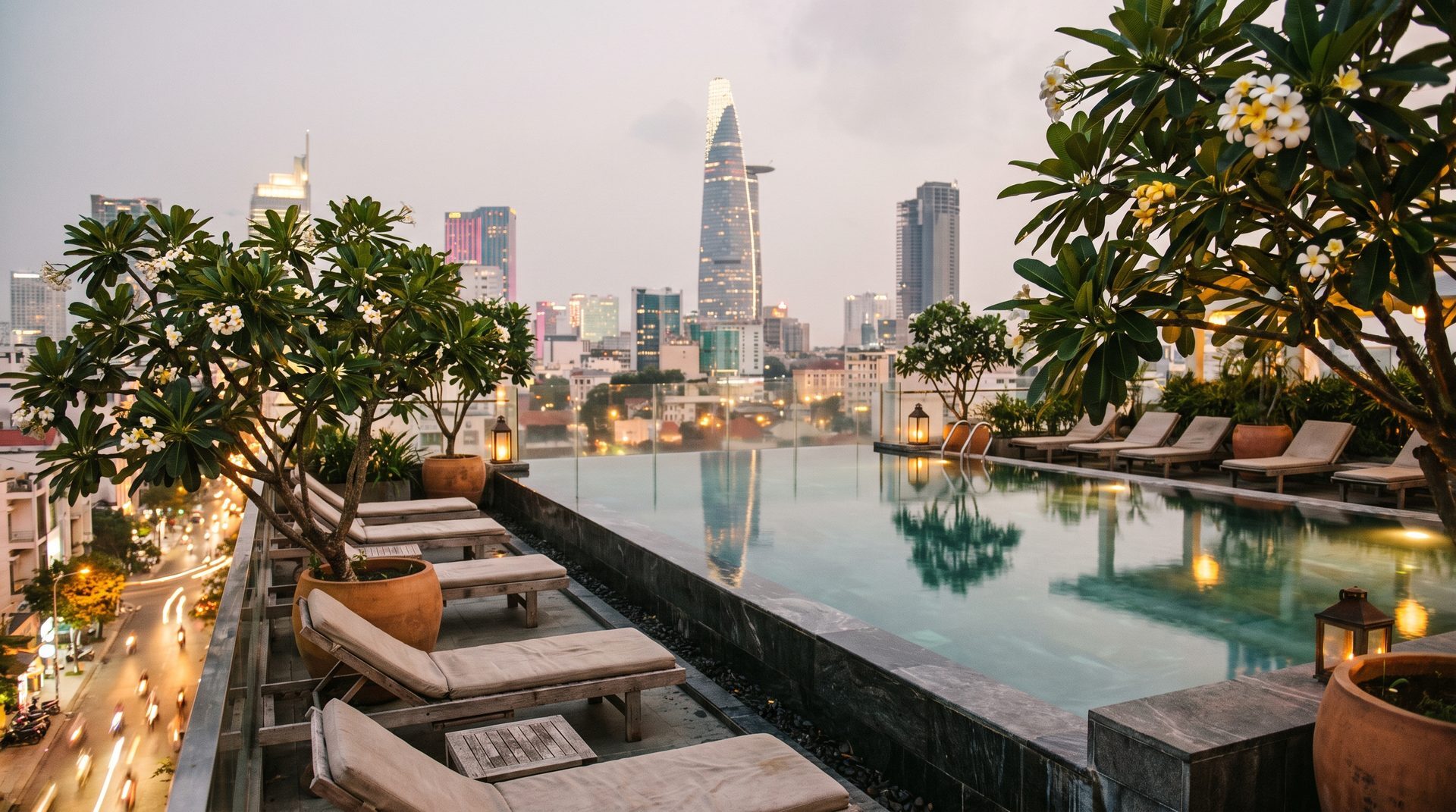
Where you stay in Saigon decides how loud your holiday is. Book District 1 and you live at the center of the machine — museums, rooftops and the river within walking distance, and eight lanes of motorbikes providing the soundtrack. Book District 3 and you get the same city two notches quieter, with French-era villas and the best cafe alleys in Vietnam outside your door. Book Thao Dien and you are barely in Saigon at all — leafy streets, international kitchens, and since the metro opened, a straight ride back into the action. None of these is wrong; they are three different volumes of the same city, and this guide is the honest sorting of them.
Short version: first visit on two or three nights — District 1, on the quieter blocks toward the river, high floor. Cafe people and second visits — District 3, the connoisseur pick. Week-plus stays and remote workers — Thao Dien. The backpacker strip is the one zone to understand before you book, not after. The comparison table, each zone in detail and the booking tactics are below.
The Four Zones at a Glance
| Zone | Typical price | Best for | The catch |
|---|---|---|---|
| District 1 | $25–90 | First visits, walkable sights | Traffic noise — the high-floor rule applies |
| District 3 | $20–60 | Cafe alleys, local food, calmer nights | A Grab ride to the riverside sights |
| Thao Dien (District 2) | $30–110 | Long stays, families, remote work | 20 minutes out — you commute to the city |
| Pham Ngu Lao / Bui Vien | $10–35 | Backpacker budgets, nightlife at the door | Party noise until 2 a.m., no exceptions |
District 1 — The Center of the Machine
For a first visit of two or three nights, District 1 remains the honest default: the War Remnants Museum, the palace, Book Street, the rooftops and the river all sit within a fifteen-minute radius, and the food density is absurd in the best way. The district has two temperaments — the Ben Thanh side puts street food and market noise outside your door; the blocks toward Dong Khoi and the river trade that buzz for wider pavements and calmer evenings at slightly higher prices. Either way, one rule matters more than the neighborhood: book a high floor, away from the street. Saigon noise is vertical — the difference between a third-floor room over an intersection and an eighth-floor room over a courtyard is the difference between earplugs and sleep.
District 3 — The Connoisseur Pick
Ten minutes northwest, District 3 is the version of Saigon we keep choosing ourselves: French-era villas under old trees, the pink Tan Dinh church, food streets that never made it into English guidebooks, and the city’s densest concentration of hidden apartment cafes — the staircase-climbing kind our coffee guide is devoted to. Hotels here are smaller and cheaper than District 1’s, nights are genuinely quieter, and the trade is a $1–2 Grab to the riverside sights, which in this city is barely a trade at all. If your Saigon is more alleys than museums, base here and let District 1 be the place you visit.
Thao Dien — The Long-Stay Island
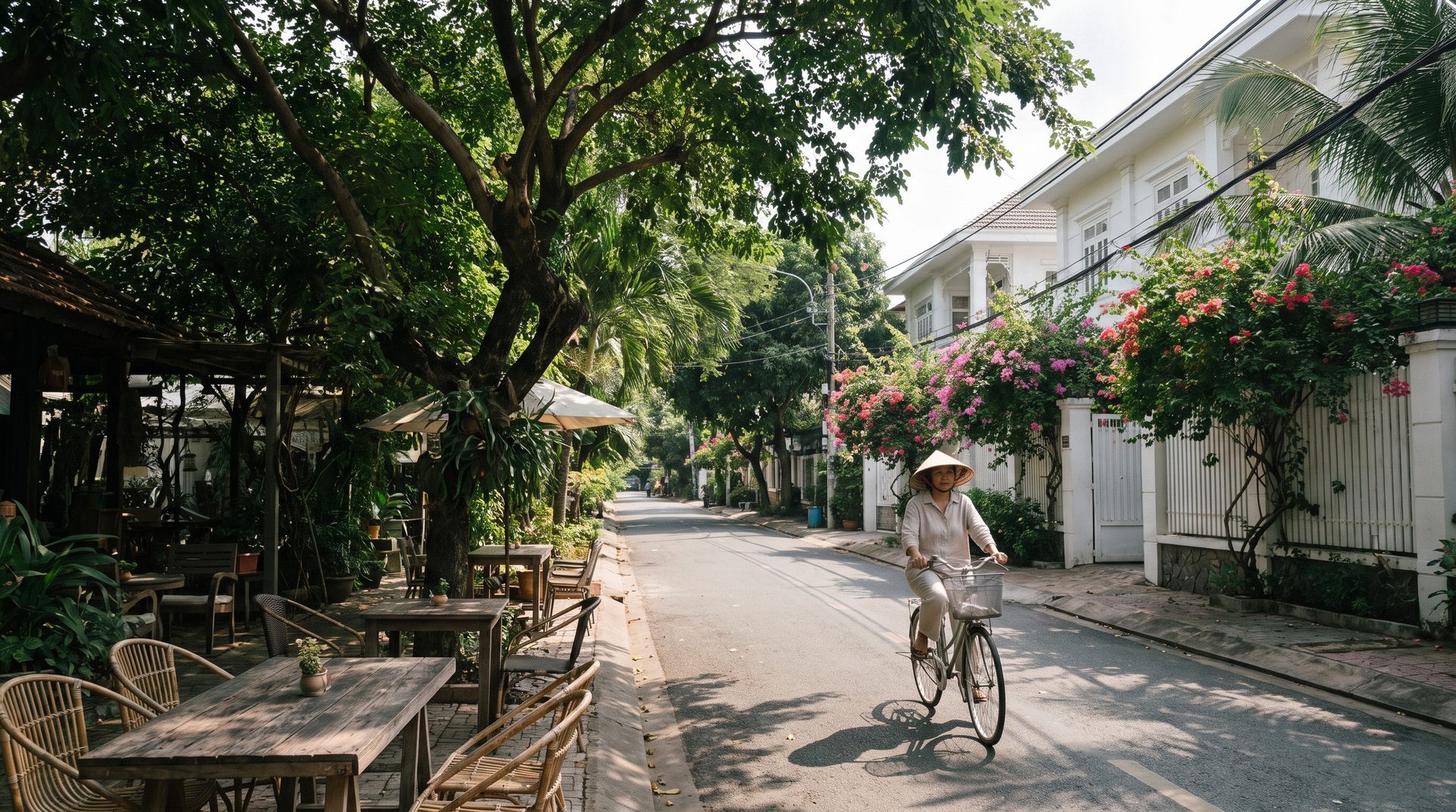
Across the river in District 2, Thao Dien is where Saigon’s expats built themselves a garden suburb: tree-lined streets, international restaurants and delis, serviced apartments, gyms and coworking cafes that understand a laptop morning. For stays past a week — and especially for families — it solves problems the center cannot, and it anchors the city’s case in our long-stay base comparison. Two honest notes: the neighborhood floods ankle-deep on some streets at heavy-rain high tides (locals treat it as weather, not crisis), and it genuinely is apart from the city — which is either the point or the problem. The metro changed the math: Line 1 now runs from An Phu station straight into Ben Thanh in about fifteen minutes, turning what was a traffic-hostage commute into a predictable ride.
Pham Ngu Lao and Bui Vien — Know What You Are Booking
The backpacker quarter west of Ben Thanh holds the city’s cheapest beds, its most international common rooms, and Bui Vien — a street that becomes a wall of competing sound systems every night of the week until around 2 a.m. Stay here if that is the holiday: $10–35 buys a clean bed at the center of it, and the morning bánh mì carts forgive everything. But booking Bui Vien for the location while planning museum mornings is the neighborhood’s classic mistake — the quieter Pham Ngu Lao edges two blocks back are the workable compromise, and District 3 at $25 is the better answer for almost everyone asking the question.
Booking Tactics That Actually Matter
Saigon is Vietnam’s deepest hotel market and it prices accordingly: supply is huge, $25–55 buys a genuinely good boutique room, and outside Tet there is no season that truly sells out. That changes the strategy — instead of booking early, book precisely: filter for floor level and recent reviews mentioning noise, check the map for rooftop-bar neighbors (Saigon’s other vertical noise source), and treat the week of Tet as the one date that needs real notice, both for prices and because half the city closes. Comparing Saigon stays on Agoda puts all four zones on one map, which makes the geography do the sorting for you. Then match the nights to our 3 day Saigon itinerary — or the slower week in the full guide — and the trip plans itself.
Three mistakes we keep watching people make: booking a low floor over a District 1 intersection because the hotel photos never show the traffic; choosing Thao Dien for a two-night first visit and spending it in transit; and dismissing District 3 because no landmark list mentions it — it is the district the landmark lists are written from. If Saigon is one leg of a longer route, the one-week south itinerary shows how the base fits the region, and our stay guides for Hanoi, Hoi An and Da Nang sort the rest of the country the same way.
FAQ
Which district is best to stay in Ho Chi Minh City?
District 1 for a first visit of two or three nights — the sights, rooftops and food are all walkable. District 3 for return visits, cafe lovers and anyone who wants the same city 30 percent quieter and cheaper. Thao Dien for stays past a week. The honest tiebreaker is your tolerance for noise: it drops in exactly that order.
Is District 1 safe at night?
For walking around, yes — the center stays busy and well-lit late. The one real risk is phone snatching by motorbike, which targets phones held loosely at the curb, not people. Keep the phone in a front pocket near roads, use it facing away from traffic, and the risk drops to nearly zero. Violent crime against tourists is genuinely rare.
Should I stay near Bui Vien?
Only if the nightlife is the reason you came — then it is exactly right, and cheap. For everyone else the street-noise trade is brutal: sound systems until around 2 a.m., seven nights a week. The Pham Ngu Lao blocks two streets back are the compromise; District 3 at similar prices is the better sleep.
How many nights do you need in Saigon?
Three nights covers the city well — the District 1 day, the alleys-and-Cholon day and a Mekong or Cu Chi day trip, as mapped in our itinerary. Two works without the day trip. Past five, move across the river to Thao Dien and let the city become a routine you dip into.
Are hotels cheap in Saigon?
Very — it is the best big-city hotel value in Vietnam, running slightly cheaper than Hanoi. $25–55 buys a boutique double with breakfast, $60–100 a four-star with a rooftop pool, and the luxury tier costs half its Bangkok equivalent. The only expensive week is Tet; menu-level prices for everything else are in our Vietnam price index.
Some links in this guide are affiliate links: if you book through them we may earn a small commission at no extra cost to you. It helps keep our guides honest and free.
Get our free Phu Quoc Trip Kit — the pre-departure checklist, a 5-day plan and our honest booking picks. No spam; at most one email a month.
By subscribing you agree to our privacy policy. Unsubscribe anytime.