Vietnam is the world’s second-largest coffee producer, and the only country we know where the coffee menu is a bigger culture shock than the traffic. Condensed milk instead of fresh, robusta instead of arabica, salt and egg and coconut where you expected syrup — and prices that run from fifty cents on a plastic stool to Seoul-level at the beachfront chains. This is the field guide we wish we’d had: what each drink actually is, what it should cost, and how to order like you’ve done it before. Prices below are what we actually paid this June, receipts kept.
Short version: start with a cà phê sữa đá (iced coffee with condensed milk) — it’s the national default and the best introduction to robusta’s punch. Then work outward: bạc xỉu if you want it sweeter and milkier, muối (salt cream) for the current national obsession, egg coffee in Hanoi, coconut coffee anywhere hot. Street stalls run 15,000–25,000 dong; the fashionable chains 45,000–75,000. Both are correct.
The Menu, Decoded
| Order this… | You get… | Street / chain price* |
|---|---|---|
| Cà phê sữa đá | Strong robusta over ice with condensed milk — the national drink | 15–25k / 39–59k |
| Cà phê đen (đá/nóng) | Black, iced or hot — robusta with no safety net | 12–20k / 35–55k |
| Bạc xỉu | Mostly milk, a little coffee — the gentle gateway | 20–30k / 45–65k |
| Cà phê muối | Salted cream over coffee — Hue-born, now everywhere and deservedly so | 25–35k / 49–69k |
| Cà phê trứng | Egg-yolk custard over hot coffee — Hanoi’s liquid tiramisu | 35–50k (cafes) |
| Cà phê cốt dừa | Coconut-cream slush with coffee — the tropical one | 35–45k / 55–75k |
| Americano / latte | The arabica espresso drinks you know — chains and specialty only | 45–75k |
*1,000 dong ≈ US$0.04. “Street” = plastic-stool cafes and hole-in-the-walls; “chain” = Katinat, Highlands, Phuc Long, The Coffee House and the specialty crowd.
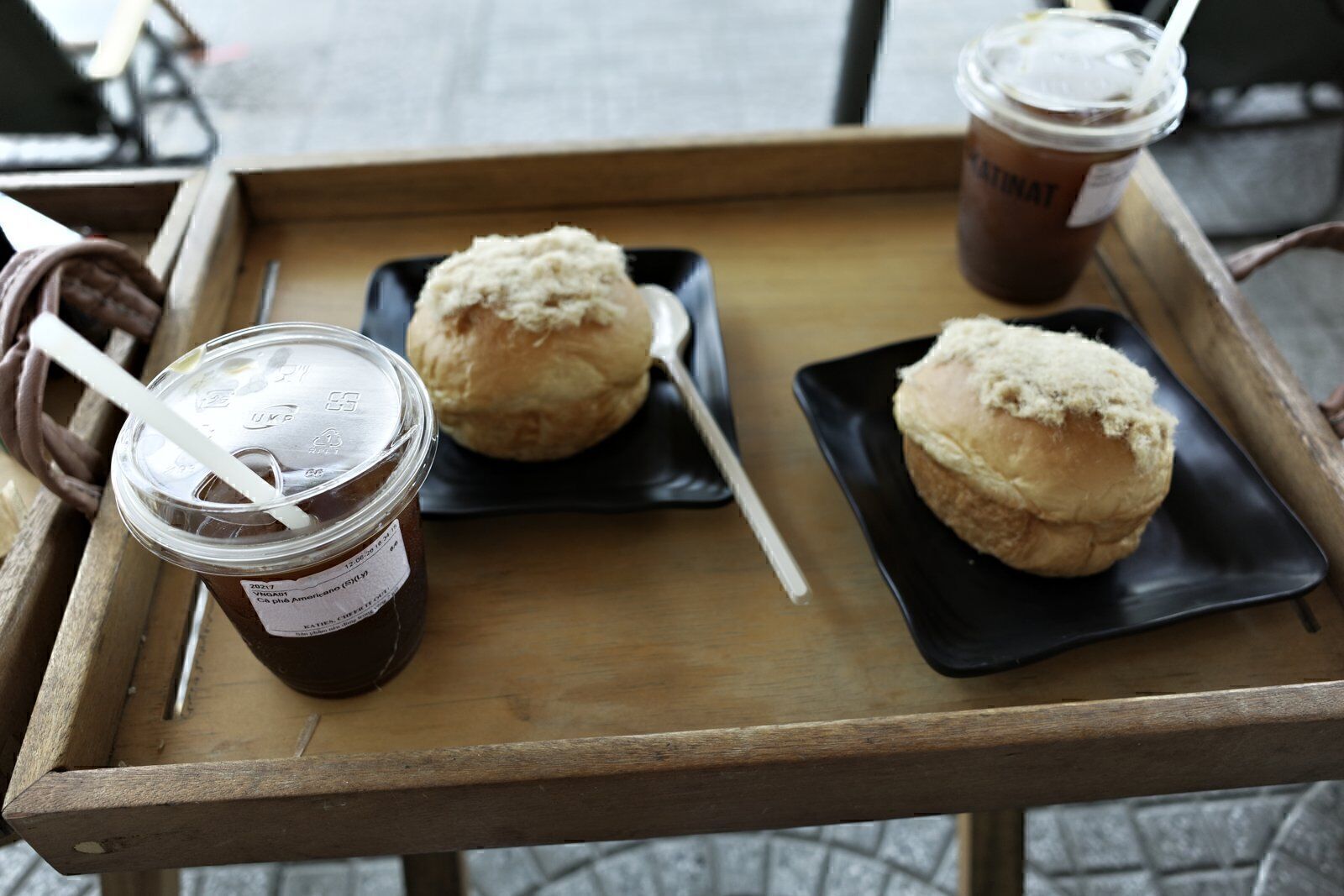
Robusta: Why It Hits Different
Vietnamese coffee culture is built on robusta — the tougher, earthier, twice-as-caffeinated cousin of the arabica the West drinks. Brewed through the little metal phin filter that drips at its own pace, it lands dark, thick and almost chocolatey-bitter, which is exactly why condensed milk (a French-colonial workaround for scarce fresh milk) became its permanent partner. Two practical notes: the caffeine is real — a street sữa đá at 4 p.m. can cancel your night’s sleep — and the phin is slow on purpose. The wait is the ritual. If a cafe hands you a still-dripping phin over a glass of ice, you’ve been given the full experience: let it finish, stir hard, pour over the ice, feel superior to everyone with a paper cup.
Street Stall vs. Chain vs. Specialty
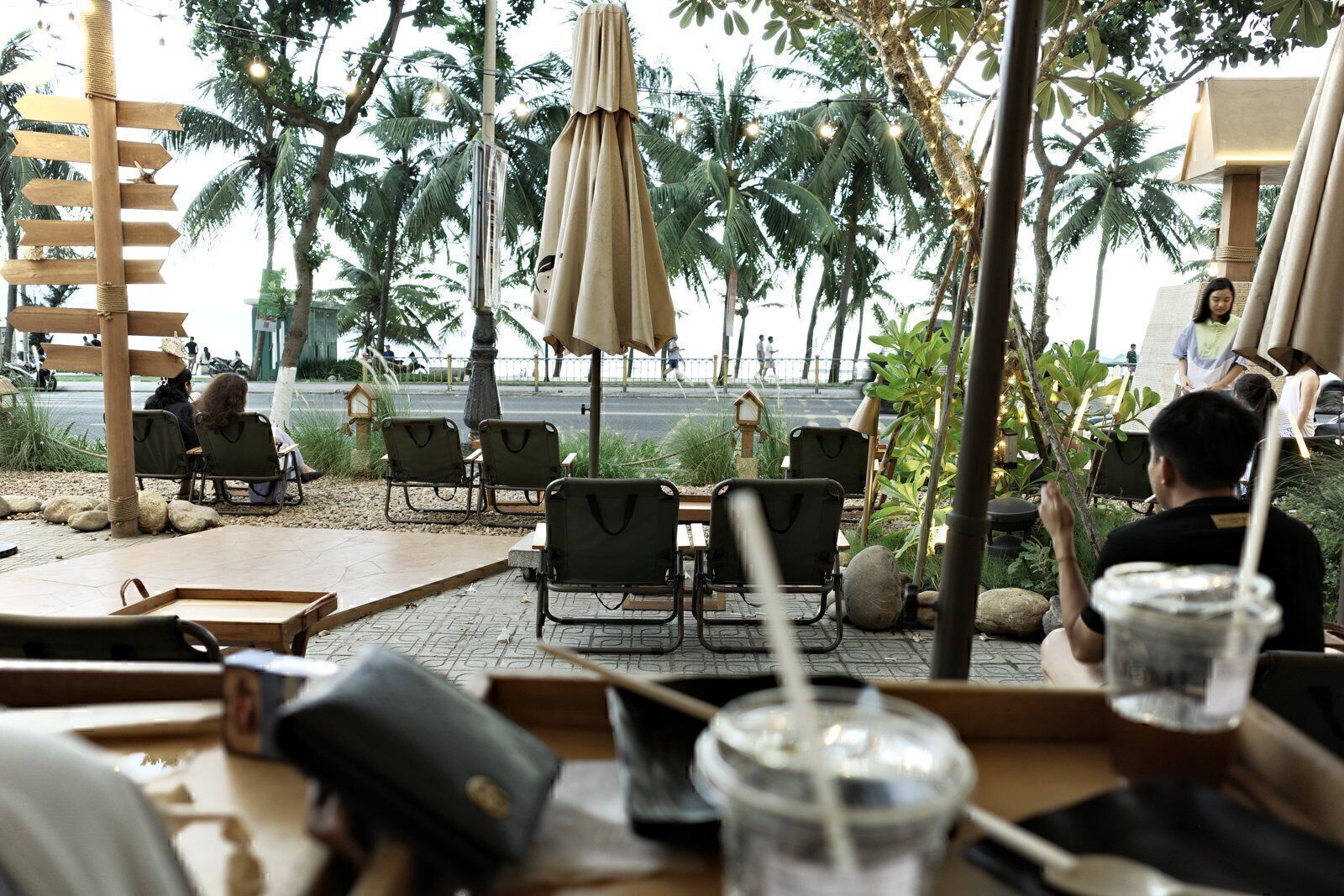
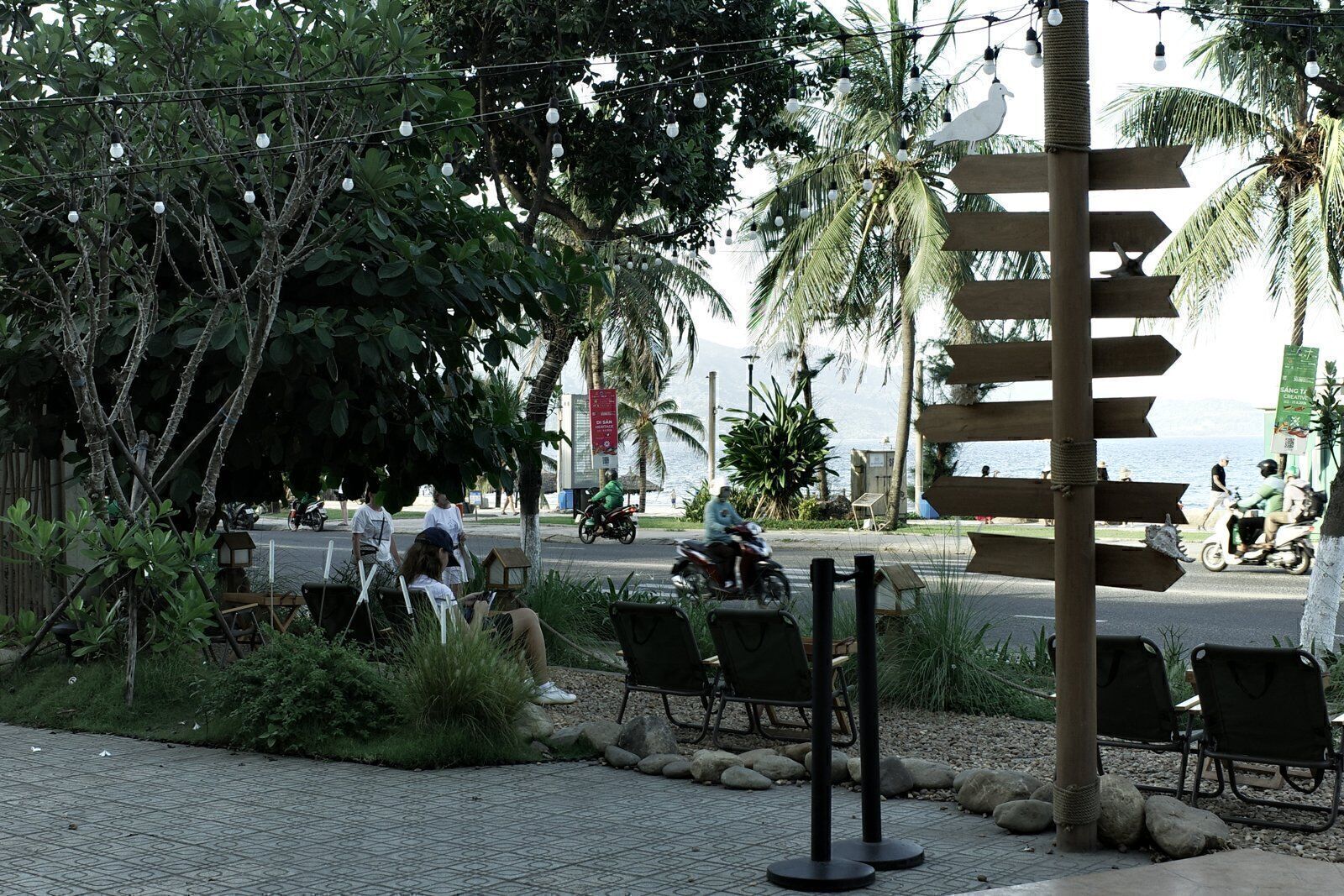
The three tiers coexist happily, and a good trip samples all of them. Street cafes — plastic stools, metal tables, a matriarch with a battery of phins — are the soul of it: the cheapest, strongest cup and the best people-watching in Asia, covered in our Hanoi and Saigon guides. The chains (Katinat, Highlands, Phuc Long, The Coffee House) are modern Vietnam’s living rooms — air-conditioning, wifi, beachfront terraces like the one above, and drinks engineered for the 20-something market; they’re also where you’ll pay triple street price and consider it fair. Specialty — single-origin arabica from Da Lat, pour-overs, baristas with opinions — has bloomed in every city and is the only tier where “Vietnamese coffee is just bitter” gets properly refuted. A remote-work note: the chains and specialty tier double as the country’s unofficial coworking network, mapped further in our remote-work guide.
How to Order Without the Menu Panic
- “Cà phê sữa đá” (kah-feh soo-ah dah) gets you the classic anywhere in the country. Point at the words on this page if pronunciation fails; nobody minds.
- Sweetness is adjustable — “ít ngọt” (less sweet) is a real order at chains, and street vendors will ease the condensed milk if you gesture “a little.”
- Takeaway is universal — every tier does it, plastic stools included, though the glass-and-stool version is the point.
- Cash at street stalls, anything at chains — the usual split, detailed in our money guide.
- Hours favor the early — street coffee culture peaks 6–9 a.m.; the chains run to 10 p.m. and fill with students by evening.
The Regional Specials Worth Chasing
Egg coffee (Hanoi): whipped egg-yolk custard floated on hot robusta — invented at Giảng Cafe in the 1940s when milk was scarce, and still best in the capital’s hidden-staircase cafes. Dessert impersonating a drink. Salt coffee (Hue): the newest classic — a salted-cream cap that makes the robusta taste rounder and almost caramel; born in Hue, now on every chain menu in the country. Coconut coffee (everywhere hot): blended coconut cream and ice with coffee poured through — effectively a milkshake, zero apologies, correct at 2 p.m. on a Phu Quoc afternoon. Da Lat arabica: the highlands grow Vietnam’s specialty-grade beans; if you see “Cầu Đất” or “Da Lat single origin” on a menu, that’s the local answer to your home espresso — context in the Da Lat guide.
FAQ
What is Vietnamese coffee?
Typically robusta beans brewed through a small metal phin filter and served with sweetened condensed milk, hot or over ice. It’s stronger, earthier and more bitter than Western arabica coffee — which is why the condensed milk isn’t optional decoration but the drink’s structural partner.
How much does coffee cost in Vietnam?
From roughly 15,000–25,000 dong (US$0.60–1) at street stalls to 45,000–75,000 dong (US$1.80–3) at fashionable chains and specialty cafes, based on what we paid across Da Nang and Hoi An in June 2026. Tourist-zone and hotel cafes price above both tiers.
Is Vietnamese coffee very strong?
Yes — robusta carries roughly double arabica’s caffeine, and phin brewing concentrates it further. A single cà phê sữa đá equals a strong double espresso in effect. Order bạc xỉu (mostly milk) for a gentler dose, and think twice about late-afternoon refills before a travel day.
What is egg coffee and is it safe?
Cà phê trứng is egg yolk whipped with sugar and condensed milk into a warm custard served over hot coffee — a Hanoi invention that tastes like liquid tiramisu. The yolk is cooked by whipping over heat at any reputable cafe; it’s been served daily since the 1940s. Order it hot, eat it with the spoon provided.
What coffee should I bring home from Vietnam?
A phin filter (a dollar or two at any market) plus ground robusta from a roaster rather than a souvenir stall — or Da Lat arabica if your taste runs Western. Skip the famous-brand gift boxes at airport prices; a local supermarket sells the same national brands for a third of it.
Some links in this guide are affiliate links: if you book through them we may earn a small commission at no extra cost to you. It helps keep our guides honest and free.
Get our free Phu Quoc Trip Kit — the pre-departure checklist, a 5-day plan and our honest booking picks. No spam; at most one email a month.
By subscribing you agree to our privacy policy. Unsubscribe anytime.