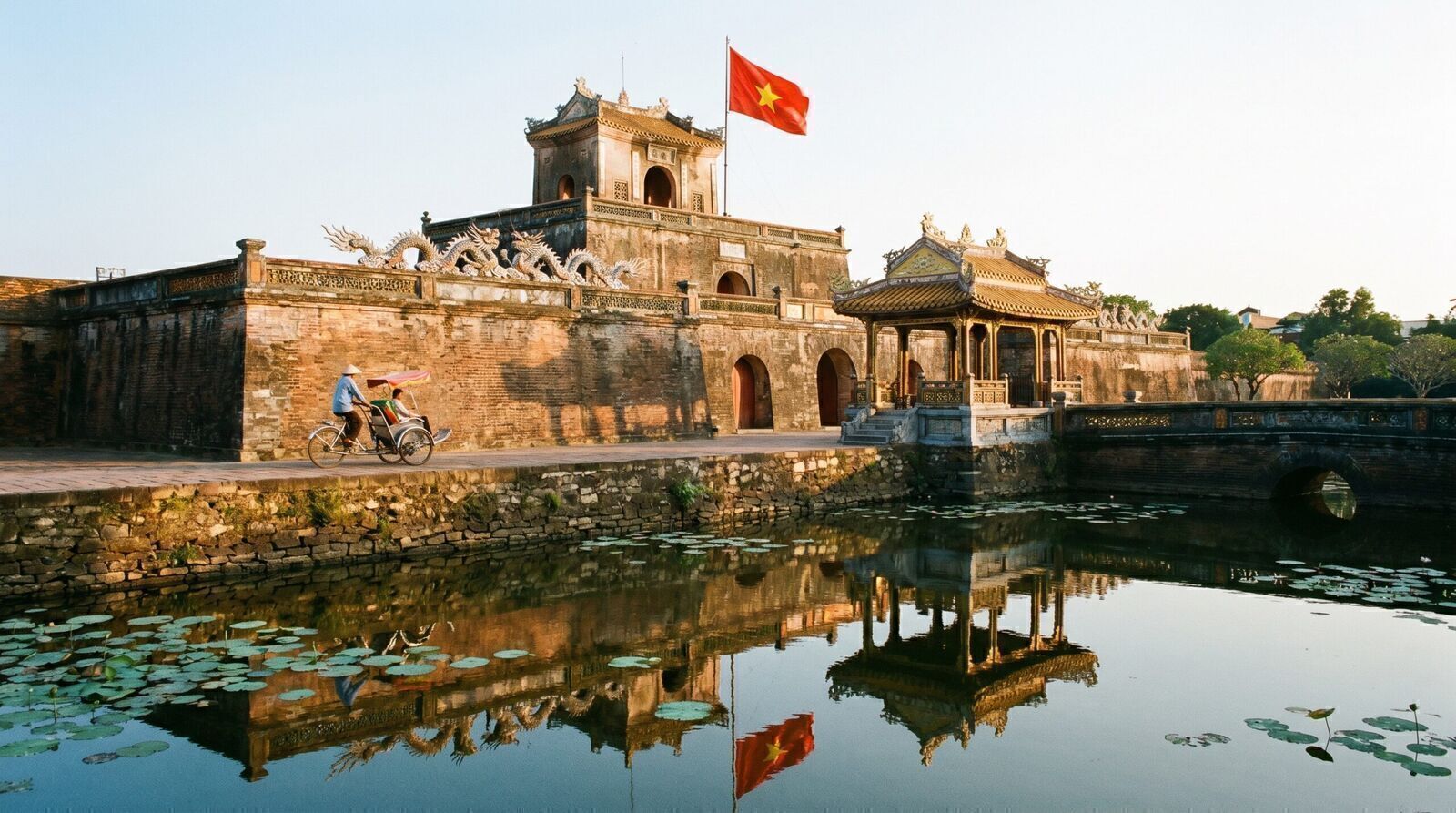
Hue is where Vietnam keeps its imperial memory: a walled citadel city on the Perfume River, emperor tombs scattered through pine hills, royal recipes that shrank palace banquets into street food. Squeezed between Hanoi and Hoi An on every route, it usually gets half a day and a rushed citadel walk. Give it one full day minimum — ideally an overnight — and Hue quietly becomes many travelers favorite stop.
The Essential Hue (One Full Day)
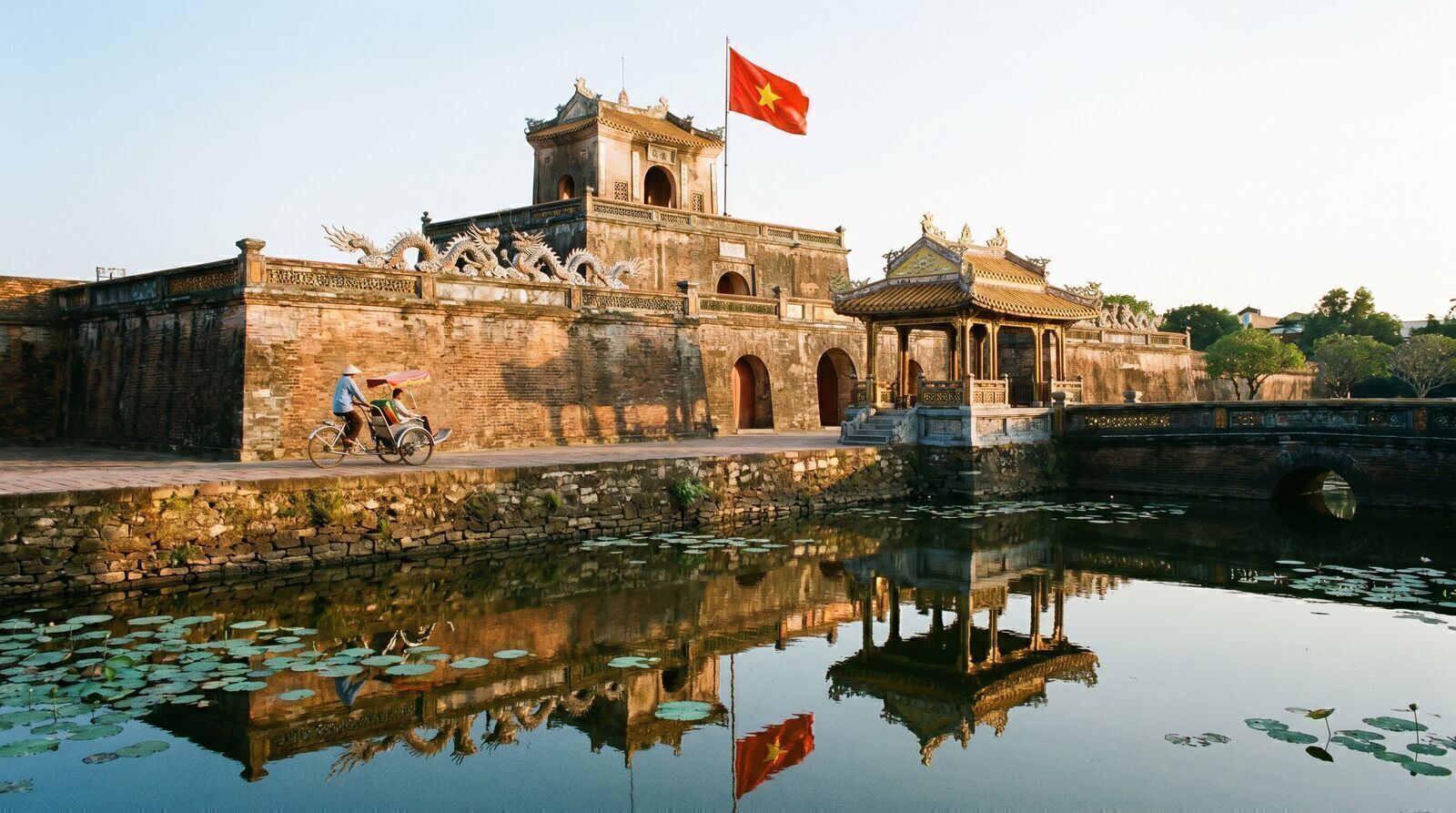
- Imperial Citadel — morning (2.5–3 hours): enter at opening (7 AM beats heat and groups), drift through the Forbidden Purple City ruins, the restored theaters and the long ceramic-mosaic corridors. War scars and restoration coexist here — the emptier corners are the most affecting. Ticket ~200k VND.
- Royal lunch: bún bò Huế in its birthplace — spicier, beefier, lemongrass-deeper than anywhere else serves it. Any packed local shop qualifies as a pilgrimage.
- Tombs — afternoon (pick two): Khai Dinh (baroque-concrete fever dream, small and intense), Tu Duc (lake-and-pine poetry, the romantic one), Minh Mang (imperial symmetry at scale, quietest). A Grab car loop or scooter covers two comfortably; three is a march.
- Perfume River sunset: Thien Mu Pagoda at golden hour (the seven-story icon), then a riverside beer or the walking-street bustle back in town.
If You Stay the Night (Do)
- Evening: the citadel walls lit up, royal-court dinner shows if kitsch amuses you, or just the night market energy along the river.
- Morning two: the abandoned-waterpark curiosity (Thuy Tien lake — semi-official, atmospheric), a cooking class in a garden house, or an early Dong Ba market wander for the real city.
- Rooms: Hue hotels are Vietnam’s quiet bargain — riverside 4-stars at 3-star prices ($35–70; check dates).
Eat Like a (Frugal) Emperor
- Bún bò Huế — the reason your breakfast has a beef shank in it. Non-negotiable.
- Bánh khoái — Hue’s crackling stuffed pancake, cousin to bánh xèo.
- The royal bites: bánh bèo, bánh nậm, bánh lọc — steamed rice-flour morsels invented to amuse palates in the palace; order the mixed tray and graze.
- Chè Huế — the imperial city does sweet soups in dozens of colors; the corn-and-coconut ones convert skeptics.
Getting There & Slotting It In
- From Da Nang/Hoi An: the Hai Van Pass route is half the point — 2.5 hours by car or the classic motorbike crossing, ocean cliffs the whole way. Train version: the coastal line hugging the cliffs (book a right-side window heading north). More on the train-versus-car choice in our guide to getting around Vietnam.
- From Hanoi: 1-hour flight or the overnight sleeper train south.
- Route logic: Hanoi → Hue → (Hai Van Pass) → Da Nang/Hoi An strings central Vietnam perfectly — the natural upgrade to the month route for anyone with spare days.
Honest Notes
- Weather warning: Hue is Vietnam’s rain capital — October–December can be biblical (2m+ annual rainfall concentrates here). Feb–August plays far kinder.
- Pace yourself on tombs: they blur after three. Two chosen well beats four endured.
- The citadel at midday is a heat sentence — bookend the day around it.
Common First-Timer Mistakes in Hue
Most Hue disappointments trace back to the same few planning errors — and we made half of them ourselves before learning better. All of them are cheap to avoid.
- Racing every tomb on a group day tour. The big-bus circuits sprint through four tombs with a fixed lunch stop, and everything blurs into gray stone. Pick your two, go independently, and linger.
- Dressing for the beach. The citadel, pagodas, and tomb temples are active places of respect — shoulders and knees covered gets you in everywhere without a rented sarong or a turned-away moment.
- Saying yes to the first dragon-boat offer. The riverfront touts are persistent and the quoted “tour” often shrinks once you’re aboard. If a river cruise appeals, agree on the exact route and total price first, or book through your hotel.
- Carrying only large bills. Parking attendants, water sellers, and snack stalls around the tombs deal in small notes. Break a big bill at a convenience store before heading out.
- Expecting Hoi An’s evening buzz. Hue winds down earlier and quieter. Treat that as the point, not a flaw — this is exactly the pace slow travel in Vietnam rewards.
What If It Rains While You’re in Hue?
Don’t cancel, and don’t hide in the hotel. Hue in drizzle is arguably Hue at its most atmospheric — mist on the moat, empty tomb courtyards, coffee that tastes earned. Pack a poncho (any corner shop sells one for pocket change), adjust the running order, and keep the day.
Our wet-day playbook, in rough order of how hard it’s raining:
| Sky situation | What we do |
|---|---|
| Light drizzle | Tombs anyway — Tu Duc’s lake in mist beats it in sunshine, and you’ll have the pines nearly to yourself |
| Steady rain | The Royal Antiquities Museum beside the citadel, then a long, unhurried noodle lunch |
| Genuine downpour | Cafe-hop the citadel side, book a cheap massage, write postcards — Hue does rainy-afternoon idleness beautifully |
| Sudden clearing | Straight to the citadel — post-rain light on the wet stone is the best photography window of the day |
One caveat: in the October–December soak, flooding can occasionally close riverside streets for a day. Build one flexible buffer day into the itinerary if you’re visiting then, or simply come in the kinder months.
How Locals Actually Do Hue
Watch the city instead of the monuments for half a day and a different Hue appears. Locals climb onto the citadel walls at dawn to stretch and stroll before the heat — join them and you get the ramparts, the flag tower, and the morning light without a single tour group.
Then there’s the food the royal-cuisine lists skip. Cơm hến — rice with tiny river clams, chili, peanuts, and crackling — is the workers’ breakfast the palace never claimed, sold from humble stalls for less than your morning coffee. And speaking of coffee: cà phê muối, salt coffee, was born in Hue, and the creamy-salty original still tastes better here than the copies that have spread nationwide. We keep coming back to it every visit.
If you’re weighing longer stays, Hue works better as a two-night pause than a base — our where-to-base guide explains what makes a good anchor city, and why Hue’s charm is precisely that it isn’t one.
FAQ
Day trip from Da Nang — enough?
It covers citadel + one tomb + lunch and feels like a highlight reel. Worth doing if that is the only option; the overnight is where Hue happens. Our 2 day Hue itinerary maps it hour by hour.
Hue or one more Hoi An day?
Different foods entirely: Hoi An charms, Hue feeds and haunts. History-lovers should not skip Hue; beach-mode travelers can, guiltlessly.
Is everything walkable?
The citadel side and hotel side connect by bridge walks; tombs need wheels (Grab loop ~$15–20 for an afternoon).
Bottom Line
Citadel at dawn, bún bò for lunch, two tombs, pagoda at sunset, sleep by the river — Hue in one honest day, doubled in value by staying the night. Cross the Hai Van Pass onward and you have strung together central Vietnam the way it deserves. Heading north instead? Phong Nha’s caves are four hours up the coast and the route’s most underrated stop. The emperors chose this valley for a reason; give it more than a lunch stop.
Some links in this guide are affiliate links: if you book through them we may earn a small commission at no extra cost to you. It helps keep our guides honest and free.
Get our free Phu Quoc Trip Kit — the pre-departure checklist, a 5-day plan and our honest booking picks. No spam; at most one email a month.
By subscribing you agree to our privacy policy. Unsubscribe anytime.