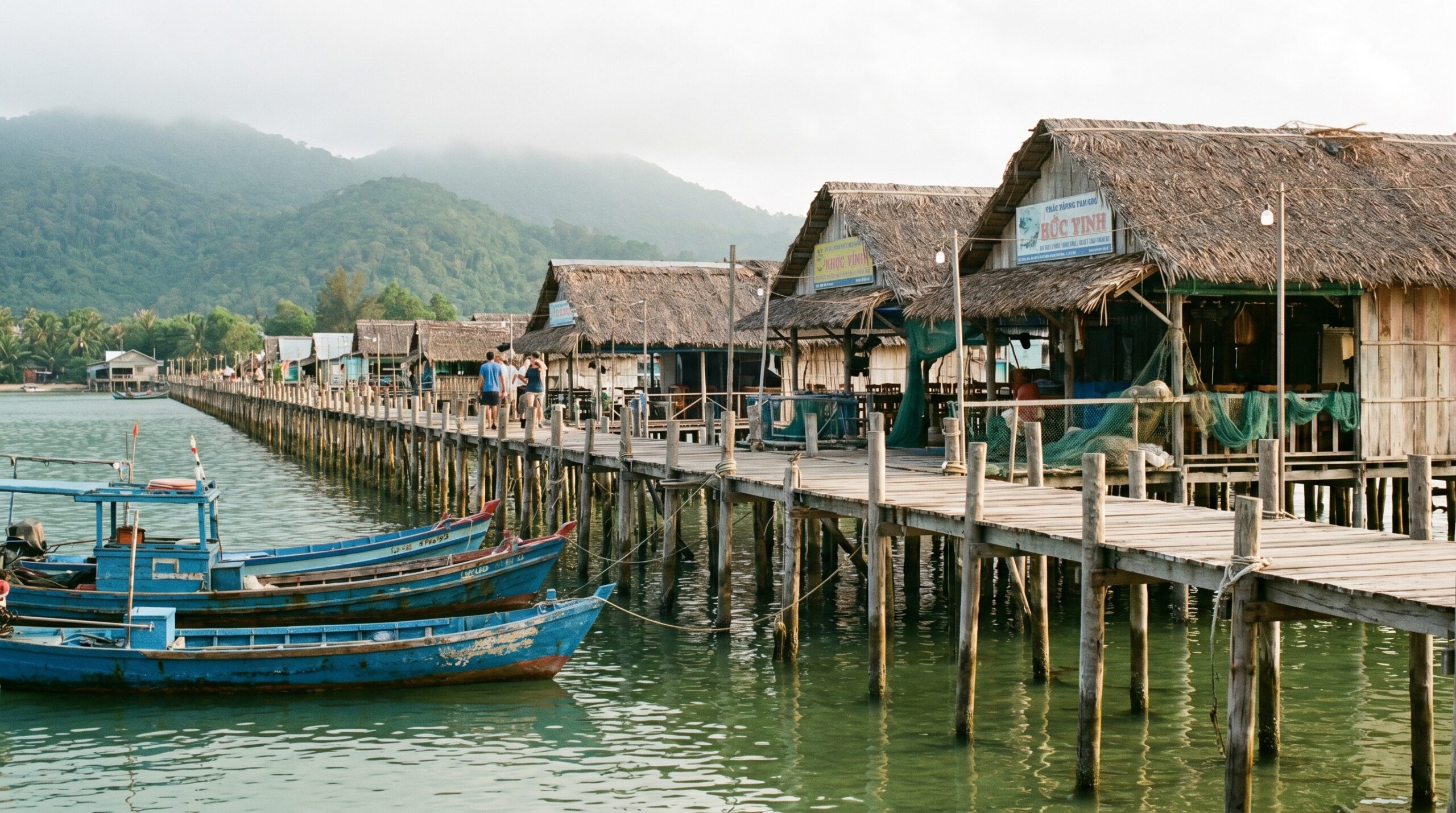
Ham Ninh is the Phu Quoc that existed before the resorts: a working fishing village on the island’s calm east coast where wooden piers stretch over jade-shallow water, boats unload at dawn, and plank-floor restaurants serve the sweetest crab in southern Vietnam meters from where it was caught. It’s 20 minutes from Duong Dong, costs nothing to visit, and pairs a real seafood lunch with the most local half-day on the island.
Why Ham Ninh Is Worth Your Half-Day
- The flower crab (ghẹ Hàm Ninh): small, sweet-fleshed crabs that made this village famous across Vietnam. Steamed simply, dipped in muối tiêu chanh (salt-pepper-lime). This is the dish — everything else is a bonus. (More island-only food in our food guide.)
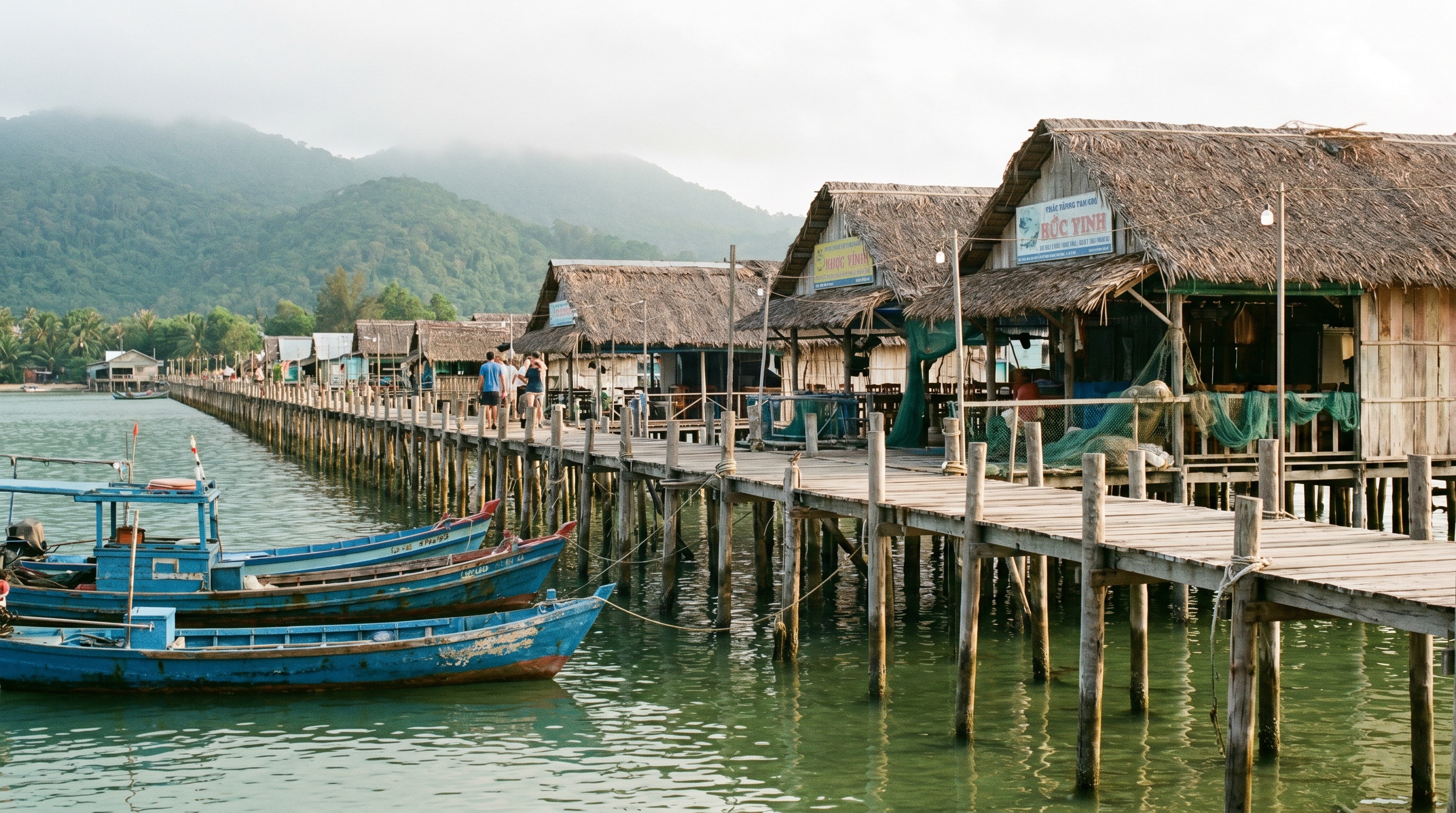
- The setting: restaurants on stilts over the water, fishing fleet bobbing alongside, mountains behind — the east coast’s calm, glassy character at its best.
- The realness: this is a working village, not a built attraction. Mornings smell like fish and diesel and function like commerce. That’s the charm.
How to Do It Right
- Go hungry, go early-ish: late morning arrival → watch the pier activity → crab lunch at noon before day-trip groups roll in.
- Pick a busy stilt restaurant — locals lunching = fresh turnover. Tanks and baskets out front are the menu.
- Confirm the per-kg price before cooking — crab runs by weight and season; agreeing first keeps it friendly (the golden rule everywhere on the island — see our budget guide).
- Order the supporting cast: mantis shrimp if they have it, grilled squid, morning glory, rice. A crab feast for two lands around 400–700k VND depending on season and appetite.
- Walk the pier after lunch — the long wooden jetty gives the postcard view back toward the village and mountains.
Getting There & Pairing It
- From Duong Dong/Long Beach: 20–30 minutes by scooter or Grab across the island’s waist. Easy roads.
- Classic pairing #1 (south): Ham Ninh lunch → continue south to Sao Beach for the afternoon.
- Classic pairing #2 (calm day): Ham Ninh + a slow east-coast wander in monsoon season, when this sheltered side of the island is at its best.
- Sunrise option: Ham Ninh faces east — the island’s best sunrise spot, if your holiday self ever sees 5:45 AM.
What a Crab Lunch Actually Costs (2026)
| Item | Typical price |
|---|---|
| Flower crab (ghẹ), per kg | 350,000–700,000 VND by size and season |
| Mantis shrimp (tôm tít), per kg | 400,000–600,000 VND |
| Grilled squid, per plate | 120,000–180,000 VND |
| Morning glory, rice, drinks for two | 80,000–120,000 VND |
| Realistic feast for two | 500,000–800,000 VND (~$20–32) |
| Cooking fee if you buy your own seafood | 50,000–100,000 VND per dish |
That last line is the local move most visitors never learn: you can buy crab or shrimp straight from the baskets on the pier, carry it to a stilt restaurant, and pay a small phí chế biến (cooking fee) to have it steamed and dressed. It is not always cheaper than ordering from the tank — but it is more fun, and the price of the raw seafood is agreed in the open.
Know Before You Go
- It’s not a beach stop — the shore is working harbor, not swimming sand. Come for lunch and atmosphere.
- Souvenir stalls at the village entrance sell pearls, dried seafood and pepper — fine for browsing; buy pearls only from established shops.
- Crab seasonality: available year-round, fattest and cheapest roughly after the rainy season. If a vendor says crab is small today, believe them and order the mantis shrimp.
- Cash only at most stilt restaurants.
A Morning at the Pier
If you want Ham Ninh at its best, come between 7 and 9 AM. The night boats are back, and the pier turns into a small open-air exchange: baskets of crabs sorted by size, mantis shrimp flicking in shallow tubs, restaurant owners picking their day’s stock while the mountains behind the village still hold the early light. Nobody performs for visitors — this is the day’s actual commerce, and standing quietly at the edge of it is the closest thing Phu Quoc has to time travel.
One practical note: the famous jade-glass water here is tide-dependent. At low tide the boats sit on exposed flats and the pier view turns to mud — check a tide table (any weather app shows it) and aim for mid-to-high tide if the postcard photo matters to you. Sunrise plus high tide is the jackpot combination.
Is Ham Ninh Worth Visiting If You Don’t Eat Seafood?
Honestly — only as a short stop, not a destination. The crab is the main event, and without it Ham Ninh is roughly a forty-minute wander: pier, boats, mountains, photos, done. Bolt it onto a Sao Beach day or come for sunrise rather than making a dedicated trip out of it.
That said, non-seafood eaters traveling with seafood eaters are not stuck watching. Most stilt restaurants happily cook morning glory, tofu, fried rice, egg dishes and noodles, and a plate of garlic-fried greens over that jade water is nobody’s hardship. The village also works fine as a pure atmosphere stop on a rainy-season day — the east coast stays calm and gray-green when the west side is churning, which is exactly when we send people this direction (more on that seasonal flip in our rainy-season guide).
Ordering Like a Local: A Five-Phrase Cheat Sheet
Nobody at Ham Ninh expects you to speak Vietnamese — pointing at a basket gets you 90 percent of the way. But a few words change the tone of the whole exchange, and the difference between tourist pricing and friendly pricing often starts with the greeting. These five carry the entire lunch:
| Say this | What it does |
|---|---|
| Bao nhiêu một ký? | “How much per kilo?” — opens the price talk the right way |
| Hấp | Steamed — the classic prep for flower crab |
| Nướng | Grilled — what you want for squid and shrimp |
| Không cay | “Not spicy” — useful for the dipping sauces |
| Tính tiền | “The bill, please” — said with a smile, ends lunch well |
Pronunciation does not need to be pretty. Effort registers, and vendors here deal with gestures all day — a phrase plus a point plus a smile is a complete sentence. We still butcher the tones after years of practice, and it has never once cost us a good lunch.
Watch the Scale, Not Just the Price
Agreeing the per-kilo rate is step one; the weigh-in is step two, and it deserves the same attention. Ask for the crabs to be weighed in front of you — every honest vendor does this without blinking, and most will offer before you ask.
Two small things to check while the scale settles. First, the string: live crabs are sold tied, and thick, water-soaked bindings can add real weight, so it is normal and polite to ask for lighter string or a quick trim before weighing. Second, the crabs themselves: pick the lively ones, and for the same size prefer the heavier crab — that density is meat, not luck. Our rule of thumb after many lunches here: a vendor who volunteers the scale and handles the string question cheerfully is a vendor you can stop negotiating with.
None of this is combat. Ham Ninh runs on repeat customers and most sellers are straight with you; the checks above just keep the rare exception honest. Once the crabs hit the steamer, your job is done — find a table over the water and slot the rest of the day around it (the south-island sequencing in our 3-day itinerary shows where this lunch fits best).
FAQ
Is Ham Ninh touristy now?
Middling — day-trip groups pass through for lunch, but the village still works its boats and the atmosphere holds, especially before noon and after 3 PM.
How expensive is the crab?
By weight and market rate — typically 400–700k VND/kg depending on size and season. A generous lunch for two with sides: ~$20–30. Cheaper than resort seafood, better than most of it.
Can I combine it with Starfish Beach?
They’re on opposite ends of the island — doable on a full scooter day, but rushed. Better: Ham Ninh + Sao Beach (south pairing), Starfish + Ganh Dau (north loop — our Starfish guide).
Bottom Line
Twenty minutes from the resort strip, Phu Quoc still smells like fish sauce and wood smoke and serves crab straight off the boat. Go before noon, sit on the stilts, confirm the price, crack the shells slowly. It’s the island’s most honest lunch — and one of its best.
Get our free Phu Quoc Trip Kit — the pre-departure checklist, a 5-day plan and our honest booking picks. No spam; at most one email a month.
By subscribing you agree to our privacy policy. Unsubscribe anytime.