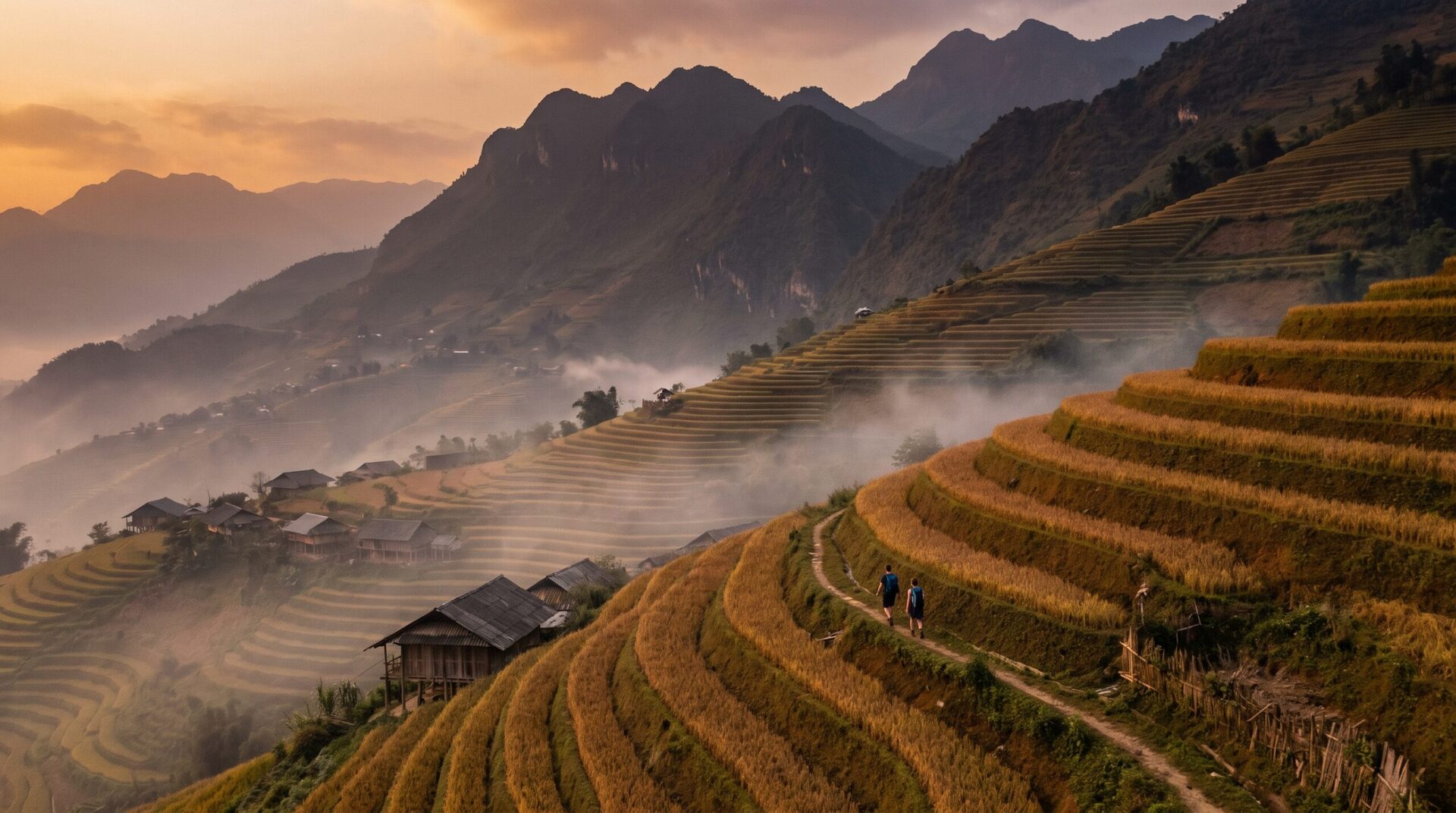
Sapa is the most famous mountain town in Vietnam and the most misunderstood stop on the northern circuit. The photos promise rice terraces pouring down a valley wall; the bus drops you in a construction zone with karaoke bars and a fake Eiffel tower. Both are real. The honest answer: Sapa town is a gate, not a destination — walk through it as fast as you can, sleep in the Muong Hoa valley, and the terraces from the photos are exactly where they promised to be. This guide covers the trek that is worth booking, the Fansipan cable car math, where to actually sleep, and the calendar that decides whether you meet green terraces, golden ones, or brown stubble.
Short version: come for two nights minimum, book a 2-day/1-night valley trek with a local H’mong or Dao guide (~$35–60 all-in), ride the Fansipan cable car only on a clear morning, and time the trip for late September if golden terraces are the point. Details below.
The Sapa Contradiction
Sapa was a French hill station, then a backpacker secret, and is now a boom town growing faster than its own streets can carry — hotel towers going up mid-block, jackhammers as morning birdsong, a lake-front strip that could be any resort town in Asia. None of this is a reason to skip it. It is a reason to treat the town as infrastructure: arrive, load up on cash and coffee, and get down into the Muong Hoa valley, where the terraces stack a thousand meters of hillside and the villages — Lao Chai, Ta Van, Y Linh Ho — still run on farming first and tourism second. The distance between the karaoke strip and a rice paddy is about twenty minutes on foot. Almost everyone who says they hated Sapa never made the walk; almost everyone who loved it slept in the valley.
Getting There from Hanoi
| Option | Time | Cost | The honest note |
|---|---|---|---|
| Limousine van | 5–6 hours | $15–20 | Fastest door-to-door; book the daytime run and watch the climb |
| Sleeper bus | ~6 hours | $12–18 | Cheapest; the overnight arrives before dawn — plan a soft first morning |
| Night train + shuttle | 8h to Lao Cai + 1h van | $30–45 berth | The romantic option — a proper sleep, then a mountain shuttle at sunrise |
The van is the default and it is fine. The sleeper train to Lao Cai is slower and costs more, and it is still the version we would pick for a first visit: you board in Hanoi at night, sleep horizontally, and wake up at the foot of the mountains instead of stumbling off a bus at 4 a.m. Whichever way you come, do not try Sapa as a day trip — eleven hours of transit for three hours of valley is the worst trade in northern Vietnam.
The Trek Is the Product
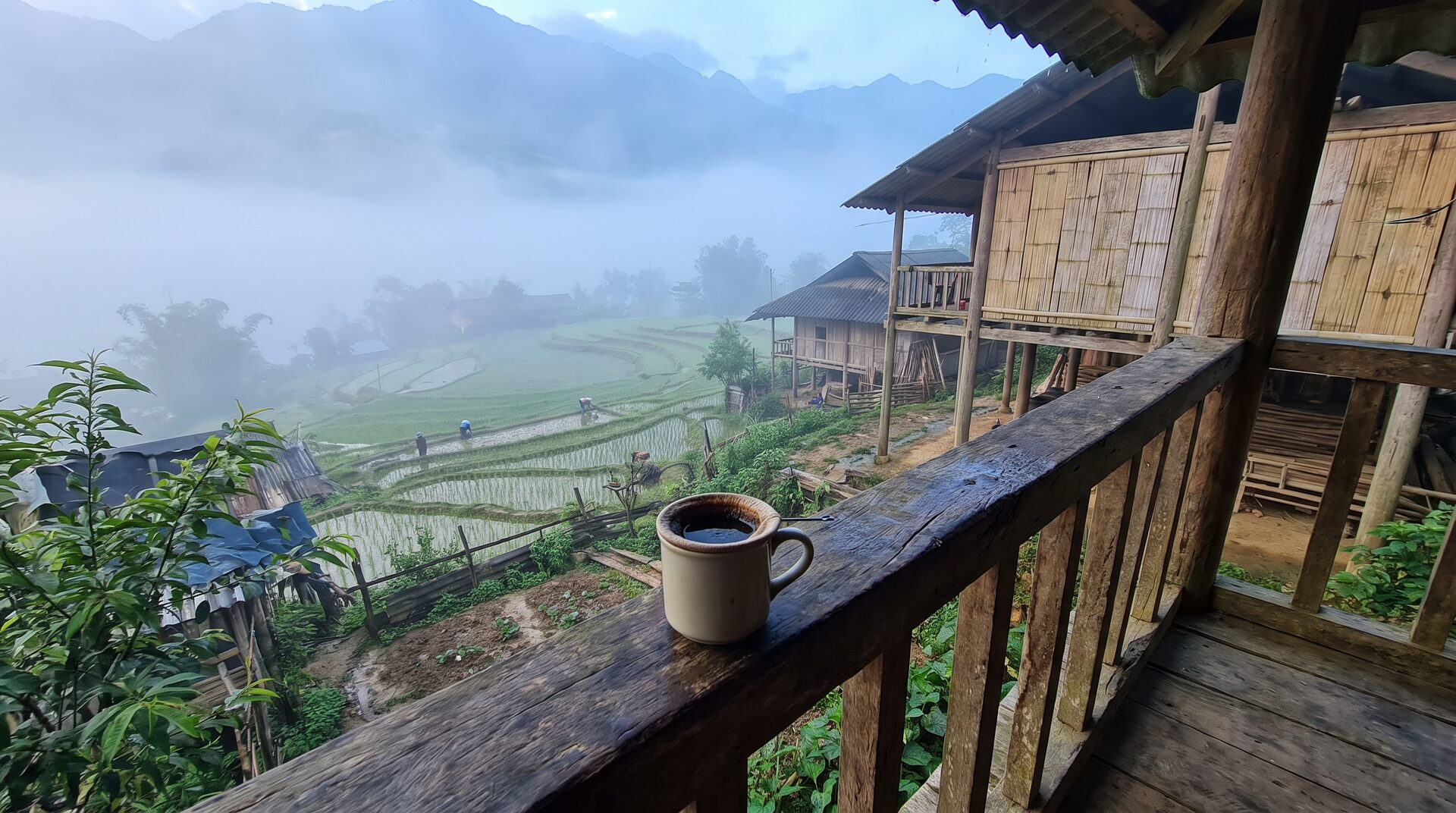
The classic is a 2-day/1-night trek down the Muong Hoa valley — Lao Chai to Ta Van, sleeping at a village homestay — with a guide from a local H’mong or Dao family. Expect $35–60 all-in including the night, dinner and breakfast; expect farm-path walking rather than mountaineering; and expect the descents to turn slick after rain, which is when your guide’s hand stops being a courtesy. Shoes with real tread matter more than fitness. If the classic route sounds busy (it can be), ask for the Y Linh Ho side trails — same valley, same terraces, a fraction of the foot traffic. Book from Hanoi or on the ground in Sapa; comparing Sapa treks on Klook shows the standard formats and prices before you commit.
Two honest notes. First, the handicraft selling on the trails is persistent and friendly in roughly equal measure; buy something small from your guide’s family early and the rest of it softens noticeably. Second, the trek is a real income line for valley households — this is one of the places in Vietnam where the tourist dollar lands closest to the people in the photos, which is a better reason to book local than any hashtag.
Fansipan: the Cable Car Math
Fansipan is Indochina’s highest peak at 3,143 meters, and the cable car turned a two-day climb into a fifteen-minute ride above a sea of clouds. In 2026 the round trip runs 850,000 dong on weekdays and 900,000 on Saturdays (about $33–35), plus 200,000 for the Muong Hoa mountain train from town if you skip the taxi, plus a funicular near the summit that saves the final 600 steps — the full combo lands around 1.3 million dong. Worth it on one condition: go in the morning, on a day the summit is actually visible. Clouds eat the mountain most afternoons, ticket counters close early afternoon anyway, and paying $35 to stand inside fog is Sapa’s most common self-inflicted wound. Check the peak from town at breakfast — if you can see it, go now; if not, the terraces do not care about weather nearly as much.
Where to Stay: Town or Valley
Split the difference by nights. Town makes sense for the bookend nights — hot showers, luggage storage, breakfast before the bus — and has everything from $15 guesthouses to spa hotels with terrace views. Ta Van and the valley homestays are the reason you came: stilt houses and small family lodges from $10–25, rice paddies at the porch rail, and mornings where the fog lifts off the terraces while your coffee is still hot. The move that works: valley first for the trek nights, then one town night before the ride back. Comparing Sapa stays on Agoda covers both — filter by Ta Van if the valley is the point.
When to Go
| When | What the terraces are doing |
|---|---|
| Mar–May | Planting season — terraces flooded into mirrors of sky; clear trekking weather |
| Jun–Aug | Greenest of the year; hard afternoon rain, mud as a trail feature |
| Late Sep | The golden jackpot — harvest turns the whole valley amber for about two weeks |
| Oct–Nov | Terraces cut and browning; crisp air, quiet trails, big views |
| Dec–Feb | Cold, brown-dry, occasionally frosty — empty trails, pack real layers |
The terraces run the calendar: flooded mirrors in the green mirror season, gold in the last two weeks of September, stubble by November. Winter is real up here — frost happens, and once every few years the news fills with photos of snow on Fansipan — so nobody sweating through Saigon in week one believes the packing list. Believe the packing list. For how Sapa slots into the national weather picture, the month-by-month calendar has the full board.
Three Mistakes That Ruin Sapa
Day-tripping it — covered above, still the most common regret; the overnight homestay is the entire product. Judging it from the bus station — the town is loud and unfinished, and it is also twenty minutes from some of the most beautiful farmland in Asia; the people who leave disappointed are almost always the ones who never left the pavement. Saving Fansipan for the last afternoon — afternoons are when the clouds win; the cable car is a morning decision made over breakfast with your eyes on the peak.
Where Sapa fits in a bigger route: it pairs naturally with three days in Hanoi as the mountain leg of a one-week northern trip, or swaps into the two-week route if terraces outrank beaches for you. If you are torn between here and the motorbike epic further east, our Sapa vs Ha Giang comparison settles it in five minutes — and the two combine well in one week, trek first, loop second. Sort the eSIM in Hanoi; a Viettel-based plan holds signal in the valley better than the town’s construction schedule holds quiet.
See Sapa Treks & Prices on Klook →
FAQ
Is Sapa worth visiting?
Yes — if you sleep in the valley and treat the town as a gate. The Muong Hoa terraces and village homestays are among the best experiences in northern Vietnam. Travelers who only see the town center, which is loud and mid-construction, tend to leave underwhelmed.
How many days do you need in Sapa?
Two nights is the working minimum: arrive, trek with an overnight in Ta Van or Lao Chai, return. Three nights adds Fansipan on a clear morning without rushing. A day trip from Hanoi is eleven hours of transit for three hours of valley — skip that version.
Sapa or Ha Giang — which one?
Sapa for trekking, homestays and easy access; Ha Giang for the 3–4 day motorbike loop with the best road scenery in Southeast Asia. Walkers and families pick Sapa, riders pick Ha Giang, and a week in the north fits both — the full comparison is here.
Does it snow in Sapa?
Occasionally. Frost is normal on December–February nights, and snow falls on Fansipan and sometimes the town itself every few winters — enough to make national news each time. Winter trekking is beautiful and empty; pack genuine layers, and expect fog to hide some views.
Can you trek Sapa without a guide?
The main valley paths are walkable solo, and plenty of people do the Lao Chai–Ta Van stretch unguided. A local guide earns their fee anyway: they route around the crowds, translate the villages instead of just walking past them, and steady you on descents that turn to grease after rain. At $15–25 a day it is the best money in Sapa.
Some links in this guide are affiliate links: if you book through them we may earn a small commission at no extra cost to you. It helps keep our guides honest and free.
Get our free Phu Quoc Trip Kit — the pre-departure checklist, a 5-day plan and our honest booking picks. No spam; at most one email a month.
By subscribing you agree to our privacy policy. Unsubscribe anytime.