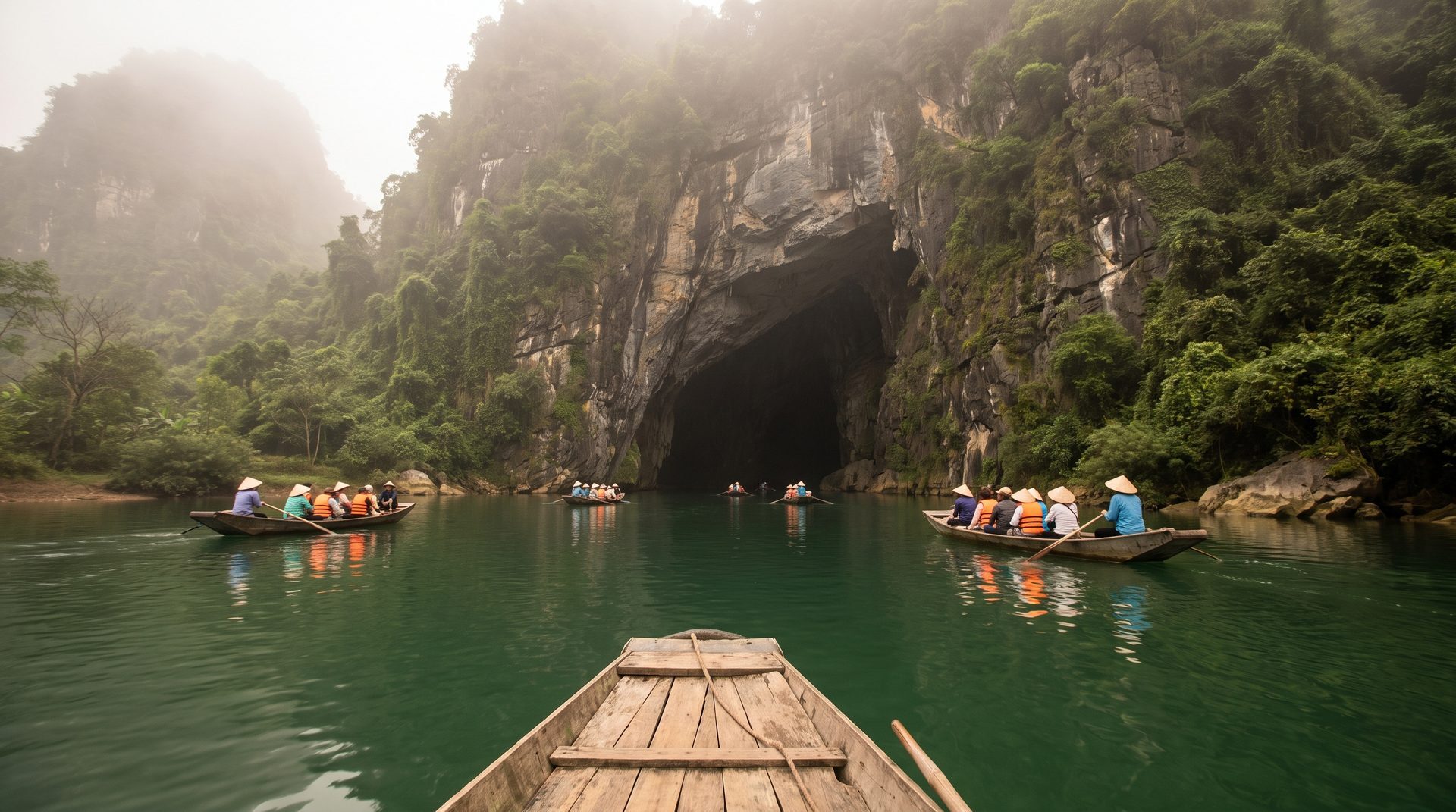
Phong Nha is the biggest thing most Vietnam itineraries skip. Under the jungle karst of Phong Nha-Ke Bang National Park — UNESCO-listed since 2003 — lies the greatest concentration of giant caves on Earth, including the largest one we know of. Above ground it is a river valley of buffalo, peanut fields and farmstays that feels like Ninh Binh did fifteen years ago. And because it sits four hours north of Hue, between the two halves of the classic route, most travelers fly right over it. This guide is the case for stopping, and the honest sorting of the caves — from the $10 boat ride to the $3,000 expedition.
Short version: give Phong Nha two nights. Do one show cave (Paradise or the Phong Nha boat cave), one adventure (the Dark Cave or a Tu Lan trek), and one lazy half-day cycling the Bong Lai valley. Son Doong — the world’s largest cave — is real, spectacular and $3,000 with a year-long waitlist; the honest alternatives that deliver most of the awe for a tenth of the price are below.
The Caves, Sorted
| Cave | What it is | Cost | Booking |
|---|---|---|---|
| Phong Nha Cave | Boat glides into the cave mouth on the river | ~150k VND + shared boat | Walk up, at the town dock |
| Paradise Cave | Boardwalk through a cathedral-sized chamber | ~250k VND | Walk up |
| Dark Cave (Hang Toi) | Zipline, headlamp mud bath, kayak — the fun one | ~450k VND | Walk up / any hostel |
| Hang En | 2-day trek, camp inside one of the world’s largest caverns | $300+ | Licensed operator, weeks ahead |
| Son Doong | The largest cave on Earth — 4-day expedition | ~$3,000 | One operator, ~a year ahead |
The Two Show Caves — and Which One
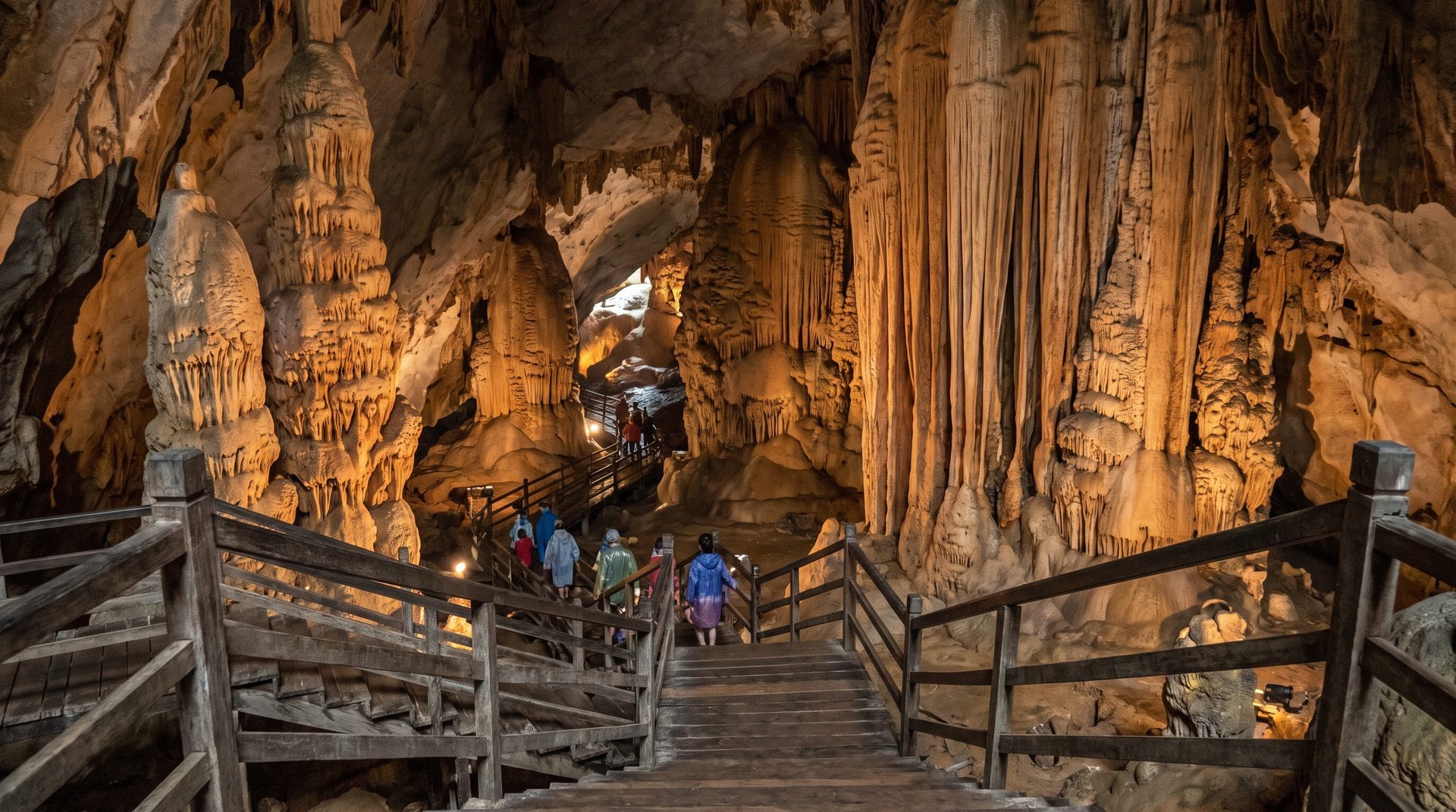
The classic pairing question has a clean answer. Phong Nha Cave is about the arrival: a wooden boat swings off the Son River and glides straight through the cave mouth, engine cut, into a kilometer of river-carved dark — the experience is the entrance. Paradise Cave is about the interior: a dry cavern so large the boardwalk descends into it like a staircase into a stadium, stalagmites the size of buildings, lit well and walked at your own pace. If you only take one, Paradise wins on jaw-drop; if the river theater appeals more than scale, take the boat. Doing both in one day is possible and slightly numbing — caves, like temples, compound their diminishing returns fast.
Son Doong, Honestly
Yes, the world’s largest cave is here, and yes, you can go — for around $3,000, on a four-day expedition run by a single licensed operator, capped at roughly a thousand visitors a year and typically booked out about a year ahead, with departures running January to August. It is by every account a life-list trip, and it is also not what most Phong Nha visitors should plan around. The honest alternatives: Hang En, the cavern Son Doong expeditions camp near en route, offers the same jungle trek and a night camped on a cave beach beneath a 100-meter ceiling for around a tenth of the price — and the Tu Lan system runs one- to multi-day swim-and-trek combinations that deliver the adventure register without the waitlist. If the expedition itch is real, book those weeks ahead; they sell out in peak months, not years.
Above Ground: The Bong Lai Valley
The park’s quiet counterweight is a half-day on a bicycle or scooter in the Bong Lai valley east of town: red-dirt lanes between peanut fields and karst walls, water buffalo in the river, and a pair of famously unhurried institutions — a duck farm where the ducks mob you for feed, and a pub whose entire menu is its name, The Pub With Cold Beer, where the afternoon evaporates. None of it is a sight in the checklist sense. All of it is why Phong Nha deserves the second night instead of a drive-through — the valley is the decompression chamber between cave days.
Getting There and Where to Stay
The hub is Dong Hoi, 45 minutes from Phong Nha town: flights from Hanoi and Saigon land there, and the Reunification Railway stops there — the sleeper from Hanoi or the short hop up from Hue both work well. Direct buses run from Hue in about four hours, making Phong Nha the natural next stop after the imperial city on any south-to-north run. In town, the strip of guesthouses along the river covers the budget tier; the countryside farmstays a few kilometers out are the version we recommend — rice-field pools, bicycles at the door and karst views from breakfast. Comparing Phong Nha stays on Agoda shows both tiers on one map; for packaged cave days with transfers from Hue or Dong Hoi, the Phong Nha tours on Klook cover the standard combinations.
When to Go — and the Flood Caveat
The dry window is February to August: river levels down, all caves open, trekking season running — with April to June the sweet spot before the deep-summer heat, right alongside the central coast’s best month. The caveat that matters: September to November is flood season in the park, when the Son River rises, the boat cave can close entirely and treks pause — the same central-Vietnam wet core our national calendar warns about. December and January are cool, quiet and workable, with the expedition season restarting as the water drops.
Three Mistakes
Day-tripping it from Hue — eight hours of road for one rushed cave; the town needs its two nights. Doing only Paradise Cave off a tour bus — the coach crowds hit midday; go early or late, and add the valley or an adventure cave so the park is more than one queue. Booking Son Doong energy on a show-cave budget — or the reverse; decide which trip you are on before you arrive, because the $40 day and the $300 day are both excellent and completely different. Route-wise, Phong Nha slots cleanest between Hue and the north on a two-week run — and if karst valleys are the draw but caves are not, Ninh Binh delivers the scenery with easier logistics.
FAQ
Is Phong Nha worth visiting?
If caves move you at all, it is the best place on Earth to be moved — and even cave-neutral travelers tend to rank the valley days and farmstay evenings among their trip highlights. The honest skip case: a tight two-week itinerary that would have to sacrifice Hoi An or Hanoi time to fit it. On anything longer, it earns its nights.
How many days do you need in Phong Nha?
Two nights is the working formula: one show cave, one adventure day, one valley half-day. Trekkers doing Hang En or Tu Lan need three to four. A single night works only as a Hue-to-north transit stop with one morning cave — better than skipping it, well short of the point.
How much does Son Doong cost — and how do I book it?
Around $3,000 for the four-day expedition, run exclusively by one licensed operator with departures January to August, capped near a thousand people a year. Book roughly a year ahead. If that math fails, Hang En delivers the closest experience — a camp inside a giant cave — for about a tenth of the price.
When is the best time to visit Phong Nha?
February to August, with April–June the sweet spot. Avoid planning around September to November: it is flood season, when the river cave can close and treks pause. December–January is cool and quiet — fine for show caves, with expedition season resuming as levels drop.
Phong Nha or Ninh Binh?
Different verbs: Ninh Binh you drift through — boats, paddies, viewpoints, easy from Hanoi. Phong Nha you go under — the caves are the headline and the logistics are a step rawer. Scenery-first travelers on short trips pick Ninh Binh; anyone with an adventure gene and a spare two nights picks Phong Nha and rarely regrets it.
Some links in this guide are affiliate links: if you book through them we may earn a small commission at no extra cost to you. It helps keep our guides honest and free.
Get our free Phu Quoc Trip Kit — the pre-departure checklist, a 5-day plan and our honest booking picks. No spam; at most one email a month.
By subscribing you agree to our privacy policy. Unsubscribe anytime.