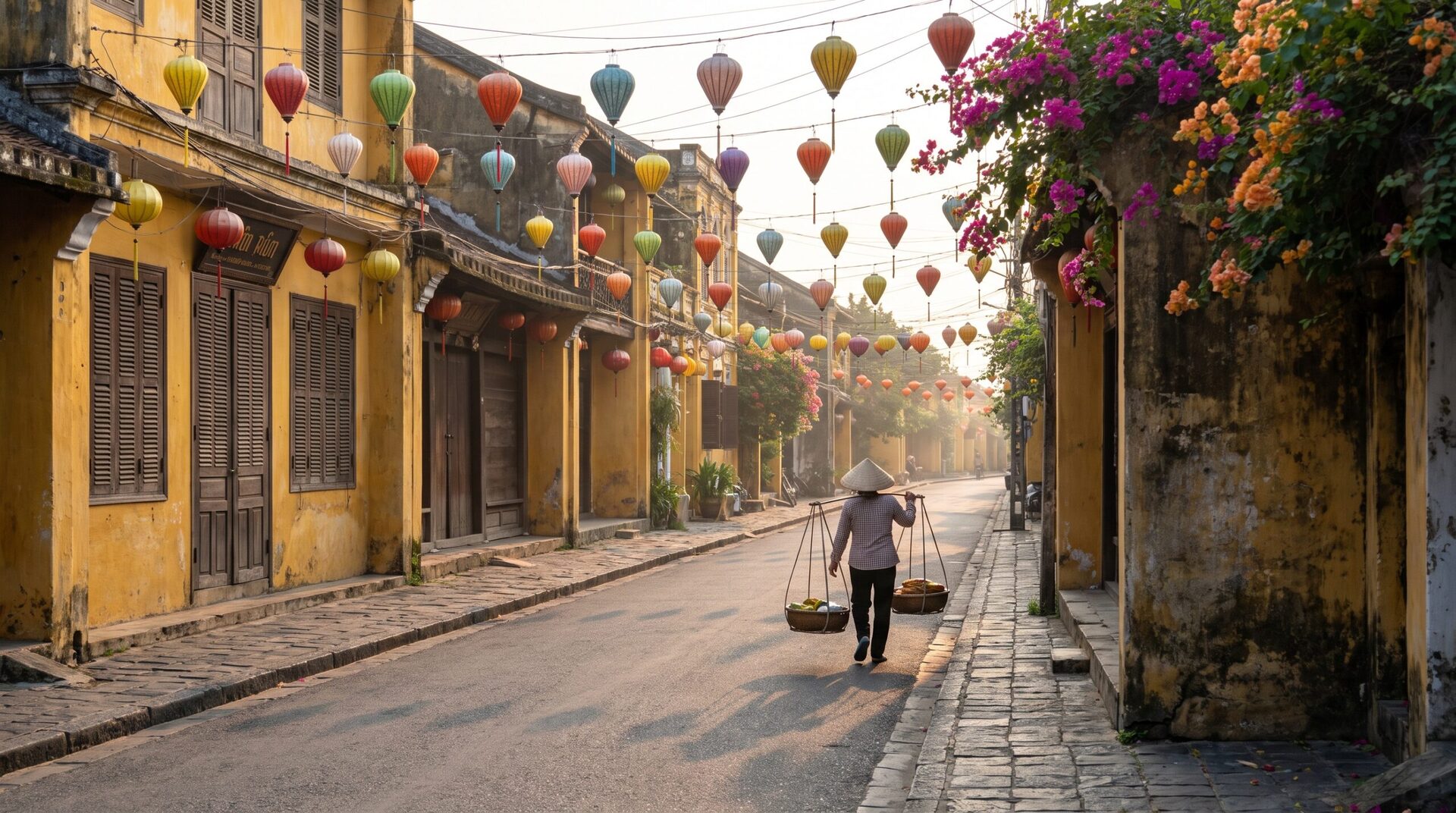
Hoi An is the most beautiful town in Vietnam and the most mistimed. Day-trippers arrive at 10 a.m. with the heat and the crowds, see a packed yellow-walled theme park, and leave calling it overrated. Stay two nights and you get a different town entirely: the ancient quarter empty at dawn, the lantern streets exhaling after the buses leave, the beach ten minutes away. This 2 day Hoi An itinerary is built around the only skill the town requires — being there at the right hours.
Short version: day one belongs to the old town at its two good ends — early morning and after 4 p.m. — with a tailor visit and the midday heat spent indoors. Day two goes outward: An Bang beach in the morning, the rice-paddy countryside in the late afternoon, and the lantern riverfront one last time after dark. The day-by-day table, the tailoring timeline and the honest verdicts are below.
The Two Days at a Glance
| Day | Morning | Afternoon | Evening |
|---|---|---|---|
| 1 | Old town at 6–8 a.m., heritage houses at opening | Tailor first fitting, long cafe lunch, pool or nap | Old town after 4, lantern streets, riverfront dinner |
| 2 | An Bang beach, seafront coffee | Second fitting, Tra Que herb village by bicycle | Night market, one honest lantern-boat decision, final cao lau |
Day 1: The Old Town, at the Right Hours
Walk into the ancient quarter by 6:30 a.m. and you will have Tran Phu street nearly to yourself — vendors with shoulder-pole baskets, unlit lanterns overhead, the yellow walls going gold in the first light. This is the Hoi An in the photographs, and it exists for about ninety minutes a day. Buy the old town ticket (120,000 dong, five heritage-house entries) when the booths open and use it on the Tan Ky and Phung Hung houses and the Japanese Covered Bridge before 9.
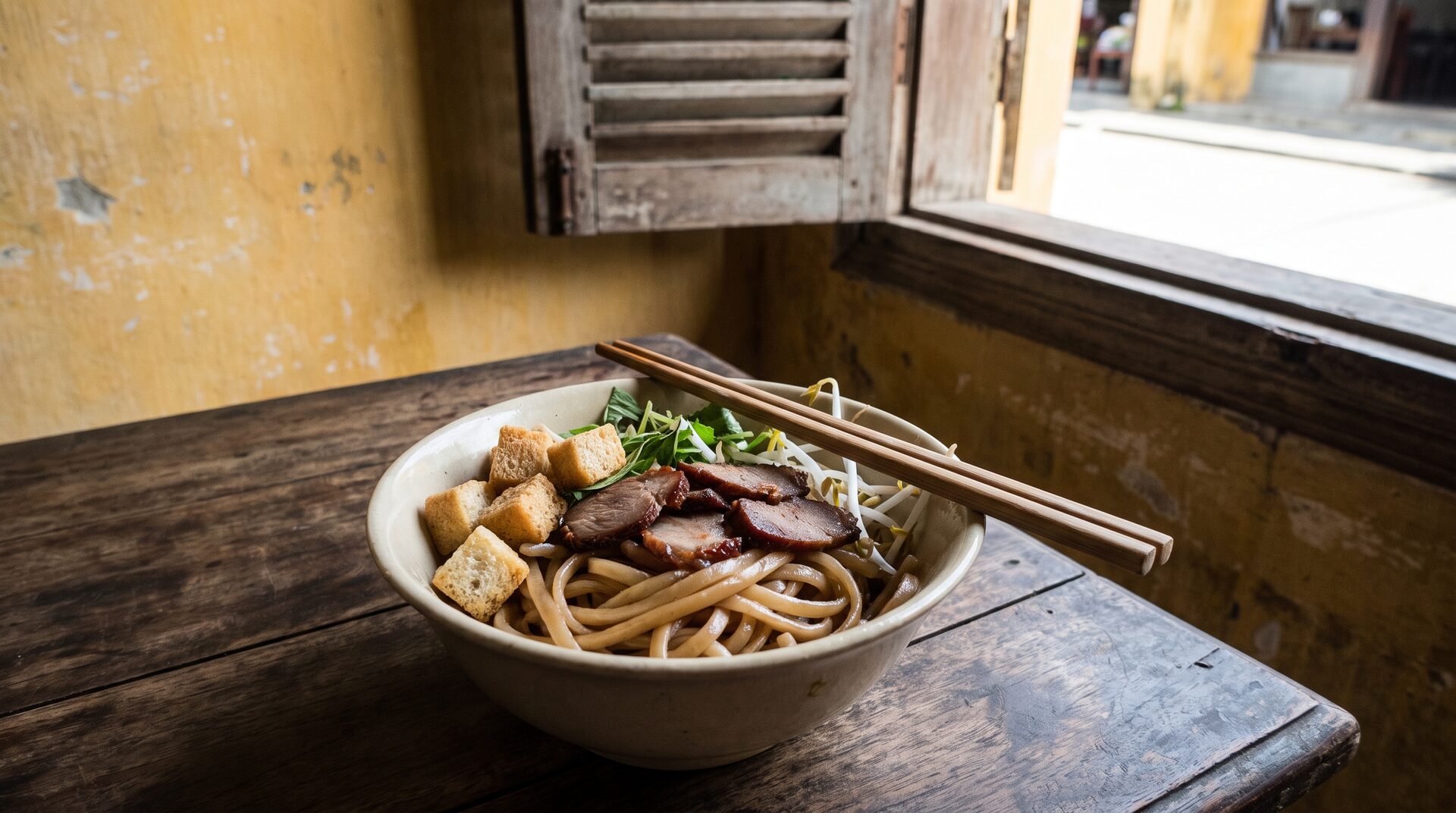
Use the middle of the day the way locals do: indoors. This is the slot for the town’s other signature industry — tailoring. Go in with photos of what you want, be measured, and schedule the first fitting for the evening or next morning; 24 hours is the honest minimum for good work, which is exactly why tailoring belongs on day one, not day two. Lunch is cao lau — the town’s own noodle dish, thick rice noodles in pork broth with crispy croutons, made properly nowhere else on earth. From 4 p.m., go back out: the tour buses drain away, the lanterns come on, and the riverfront turns into the evening the town is famous for — the hour-by-hour version of that transition is in our Hoi An at night guide, from our own June visit.
Day 2: Beach, Paddies, and One Last Evening
Morning two is An Bang beach, ten minutes north by bicycle or Grab: swimmable most of the year, lined with laid-back beach restaurants that will lend you a lounger for the price of a coffee. Go before 10 to beat both heat and crowds. On the way back, detour through the rice paddies — the five-minute transition from beach to buffalo is the whole argument for staying overnight instead of day-tripping from Da Nang (we tested the evening-trip version too; it works, but it is the highlight reel, not the album).
Afternoon: your second tailor fitting, then bicycle out to Tra Que, the herb-farming village between the town and the beach — an hour of watering cans and basil rows that fills the gap between lunch and golden hour. As for the coconut-boat tours of the water palm forest: they are cheerful, loud and assembly-line; go for fun, skip for tranquility. Evening two is the night market on the An Hoi side, a final cao lau or white-rose dumpling round, and the lantern boat decision: fifteen minutes, a few dollars, objectively touristy — and at full dark on a calm night, still worth it once. If your evenings run out before the list does, that is the sign to stretch to three nights — or to fold Hoi An into a longer center run like the one-week center route.
Where to Stay: Old Town or Beach
The town’s accommodation question is a genuine fork: riverside old-town boutiques put the lantern streets outside your door but come with evening crowds beneath the balcony; An Bang beach stays trade walkability for sea air and quiet nights, with the old town a cheap ten-minute ride away. Homestays in the paddies between the two are the budget sweet spot. Comparing Hoi An stays on Agoda shows the split clearly — good boutique rooms run $30–70, and the riverside ones sell out first in every season. The full zone-by-zone sorting — paddies and the Cua Dai honest note included — is in our Hoi An stay guide.
What Two Days in Hoi An Costs
| Style | Per person, 2 days | What that looks like |
|---|---|---|
| Backpacker | $50–90 | Homestay, street food, bicycle, old town ticket |
| Mid-range | $110–200 | $30–70 boutique stay, restaurant meals, a tailored shirt or dress |
| Comfortable | $250–450 | Riverside boutique or beach resort, a tailored suit, spa hour |
Tailoring is the wildcard line: shirts from $25, dresses from $40, suits $100–250 depending on fabric — still a fraction of home prices for made-to-measure. Nationwide menu-level numbers are in our Vietnam price index.
When to Come — and How Hoi An Fits a Bigger Trip
February to August is the reliable window, with March to May the sweet spot; October and November bring the central coast’s flood season, when the riverfront can go underwater for days — the trade-offs by month are in our best time to visit Vietnam guide. Hoi An anchors the center in every route we have mapped: the base for the one-week center route, the middle act of the 10 day itinerary and the two-week run, and the slow-travel case study of our full Hoi An guide. Day trips fan out easily: Da Nang for food and bridges, the My Son ruins at sunrise before the heat — comparing My Son sunrise tours on Klook shows the early-departure small groups worth taking — and Hue two hours up the coast.
FAQ
Is 2 days enough for Hoi An?
Two days with two nights is the honest minimum — it buys you the dawn old town, the after-4 lantern hours, a beach morning and a complete tailoring cycle. One day forces you into the town at its worst hours. Three nights is where Hoi An stops being sights and starts being a rhythm.
Is Hoi An too touristy?
At 11 a.m. on the main streets, yes. At 6:30 a.m., or after 8:30 p.m., or two blocks off Tran Phu, no — the town empties into something genuinely lovely. Hoi An is not too touristy; it is too touristy at the hours day-trippers keep. Staying overnight is the entire fix.
Do I need the Hoi An old town ticket?
For the heritage houses, the covered bridge interior and the assembly halls, yes — 120,000 dong buys five entries and funds the restoration. Simply walking the streets is free in practice, though staff at booths may ask during peak hours. Buy it once, use it on the morning of day one, and keep the stub.
Should I stay in Hoi An or Da Nang?
For this itinerary, Hoi An — the whole point is being in the old town at dawn and after dark, which no commute delivers. Choose Da Nang as the base only if beaches and city food outrank the ancient town for you; our Da Nang stay guide covers that version.
How much does tailoring in Hoi An cost?
Roughly $25–45 for shirts, $40–80 for dresses and $100–250 for suits, fabric depending. Quality tracks price and time: allow 24–48 hours and at least one fitting, and be suspicious of anything promised in three hours. Bring reference photos — the good shops work best from a picture.
Some links in this guide are affiliate links: if you book through them we may earn a small commission at no extra cost to you. It helps keep our guides honest and free.
Get our free Phu Quoc Trip Kit — the pre-departure checklist, a 5-day plan and our honest booking picks. No spam; at most one email a month.
By subscribing you agree to our privacy policy. Unsubscribe anytime.