March is the month the classic Vietnam itinerary — the top-to-bottom run every first-timer sketches on a napkin — actually works. For most of the year, that route fights the country’s split weather map: something is always in monsoon, flood season or winter. In March the map aligns. The south is running its last full month of dry-season certainty, the central coast has hit its warm stride, and the north has shaken off winter without yet reaching summer’s steam. If you can only pick one month to see the whole country, this is one of the two honest answers (the other is November — and March beats it on the central coast).
This guide is part of our month-by-month series — start with the best time to visit Vietnam for the full-year map.
Short version: everywhere works in March. The south is hot and dry, Da Nang and Hoi An are entering their best stretch, and the north is mild and warming week by week. The fine print is small but real: Hanoi’s sticky nồm humidity early in the month, a haze that can soften far-north mountain views late in it, and southern heat building toward April’s peak.
The One Map That Explains March
| Region | March weather | Verdict |
|---|---|---|
| Central coast (Da Nang · Hoi An · Hue) | Dry, sunny, mid-to-high 20s, sea calming and warming — the good stretch begins in earnest | ✅ Go — arguably the month’s star |
| South (Saigon · Mekong · Phu Quoc) | Last full dry-season month — hot, reliable, building toward April’s heat peak | ✅ Go — certainty continues |
| North lowlands (Hanoi · Ninh Binh · Ha Long) | Spring transition — 18–24°C, drizzle and nồm damp early month, brightening late | 🟡→✅ Improving by the week |
| Far north mountains (Sapa · Ha Giang) | Mild days, trekking season resumes; agricultural-burning haze can soften views late month | 🟡 Good walking, imperfect panoramas |
The Central Coast: The Star of March
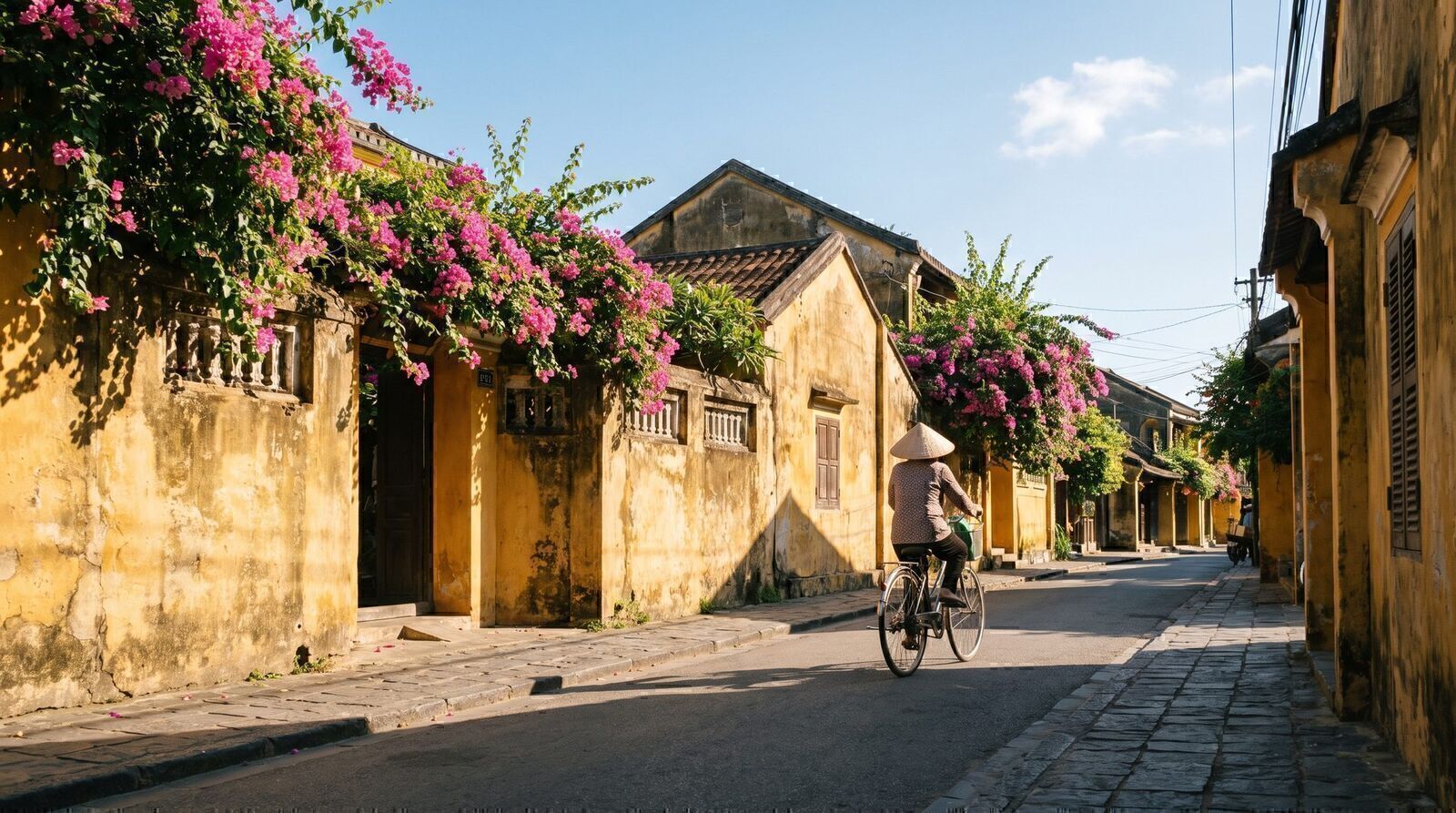
Da Nang and Hoi An spend March settling into the weather that carries them through August: dry days in the mid-to-high 20s, a sea that’s calmed down and started warming, and none of the furnace heat of midsummer. It’s the Goldilocks window — warm enough for the beach by afternoon, cool enough to walk the old town at noon — and it comes before the April–May domestic crowds and the European summer wave. Hotel pricing reflects the in-between: above the winter floor, below the summer peak, with availability still easy. This is the month we’d send a first-time Hoi An visitor: the slow guide covers the town’s rhythm, the Da Nang stay guide the beach-city base, and the evening lantern run the connection between them. Comparing Hoi An stays for March against the same rooms in May makes the timing argument by itself.
The South: Last Call for Certainty
March is the southern dry season’s final full month, and it goes out strong — Phu Quoc runs sunny, calm-sea days throughout, with the post-peak price slide we covered in Phu Quoc in March making it quietly better value than the December–February headline months. Saigon and the Mekong are hot, dry and functional. The one trend to respect is heat: by late March the south is building toward April’s annual maximum, and midday sightseeing starts wanting a pool break. Beach-first travelers get full marks all month; city-first travelers might prefer the north’s spring.
The North: Spring, With an Asterisk Called Nồm

Northern March is a month of emergence — temperatures climb into the pleasant low 20s, the winter grey breaks apart, and Hanoi’s outdoor life reboots. The asterisk is nồm: the early-spring humidity phenomenon where warm damp air meets cold walls and floors, leaving everything — pavements, tiles, laundry — clammy for days at a time. It peaks in February and early March, fades as the month runs, and is more nuisance than trip-wrecker; locals just run dehumidifiers and shrug. By late March, Hanoi is in genuinely lovely shape, and Ninh Binh’s karst-and-river scenery greens up as the year’s first rice crop rises — one of the prettiest windows on the Trang An boat routes. Ha Long Bay sheds its winter mist progressively; cruise conditions improve week by week. Day trips and city tours out of the capital run full schedules well before the summer rush — comparing Hanoi tours and Ninh Binh day trips is buyer’s-market shopping in March.
The far north deserves its honest note: March reopens the trekking season around Sapa and Ha Giang with mild days and dry trails, but this is also the season when agricultural burning across the wider region can drape the mountains in haze, muting those long karst panoramas — especially late in the month. Go for the walking, the villages and the culture; don’t stake the trip on crystal viewpoints. The full comparison is in Sapa vs Ha Giang.
The Everything Route: 14 Days, Top to Bottom
- Days 1–3: Hanoi. Spring city days — street food, lakes, museums as the weather brightens.
- Days 4–5: Ninh Binh or Ha Long. Karst scenery by boat; both work in March, pick river intimacy or sea spectacle.
- Days 6–9: Fly to Da Nang, base for Hoi An. The star leg — beach afternoons, old-town evenings, My Son or Hue as the day trip.
- Days 10–13: Fly to Phu Quoc. Close on the island while the dry season holds — sunsets, snorkeling, one boat day.
- Day 14: Out via Saigon, with a final food crawl if the flight allows.
This is the itinerary March uniquely permits — every leg in its good season, no weather gambles, domestic flights stitching it together cheaply. Travelers with less time should cut from the top (the north recovers value in autumn) rather than the middle or bottom. Those with more time should slow down rather than add stops — the case made across our slow travel guide and the where-to-base comparison.
Prices and Crowds: The March Economics
March is shoulder season almost everywhere, and it shows in the pricing. The south steps down from its winter peak — Phu Quoc rates slide 15–30% off the January–February highs while the weather holds. The central coast sits in its pre-summer valley: better weather than the winter rates suggest, cheaper than the April–August run to come. The north is between seasons and prices accordingly. Crowds follow the same logic — the Christmas–Tet international wave has gone home, European summer hasn’t started, and the one bump is domestic: Vietnamese travel picks up around the late-April holidays, so the final days of March stay quieter than the first days of April. For value-per-degree-of-certainty, March and November are the year’s twin sweet spots — and March is the one that includes the central coast.
What to Pack for Vietnam in March
- A light layer for the north — early-March Hanoi evenings still dip toward the mid-teens; by month’s end you won’t unpack it.
- Full sun protection everywhere south of Hue — the dry-season sun is at working strength and the sea breeze hides it.
- Quick-dry fabrics for the nồm weeks — northern humidity early in the month means cotton stays damp; synthetics forgive.
- Swim kit for two coasts — this is the first month both the central and southern seas welcome you in.
- An eSIM installed before you land — a multi-region route runs on domestic flight apps and live bookings (our Vietnam eSIM setup).
FAQ
Is March a good time to visit Vietnam?
One of the best — it’s the rare month when every region works at once. The south runs its last full dry-season month, Da Nang and Hoi An enter their prime, and the north warms into spring. It’s the strongest single month for a classic top-to-bottom itinerary, with shoulder-season prices in most regions.
Is March better than November for Vietnam?
They’re the year’s twin all-country months, and the tiebreaker is the central coast: in March, Da Nang and Hoi An are dry and warming; in November they’re still in flood season. November counters with the north’s golden autumn and Phu Quoc’s opening-week value. Route through the center — pick March. North-heavy — pick November.
Can you swim in the sea in Vietnam in March?
Yes, on both coasts that matter. Phu Quoc and the southern islands are in full calm-sea form, and the central coast’s water has settled and started warming — swimmable for most from mid-March, properly pleasant by April. Northern waters around Ha Long and Cat Ba remain cool until late spring.
Is it rainy in Vietnam in March?
It’s one of the driest months countrywide. The south and central coast see minimal rain; the north gets drizzle and the damp nồm spells early in the month, fading as spring establishes. Only the far-north mountains carry a real caveat, and it’s haze from regional agricultural burning rather than rain.
How hot is Vietnam in March?
A gradient worth planning around: Hanoi runs a mild 18–24°C, the central coast a comfortable 24–29°C, and the south 30–34°C with the year’s heat peak approaching. Nowhere is at its extreme — which is precisely why March suits itineraries that cover the whole country.
Some links in this guide are affiliate links: if you book through them we may earn a small commission at no extra cost to you. It helps keep our guides honest and free.
Get our free Phu Quoc Trip Kit — the pre-departure checklist, a 5-day plan and our honest booking picks. No spam; at most one email a month.
By subscribing you agree to our privacy policy. Unsubscribe anytime.