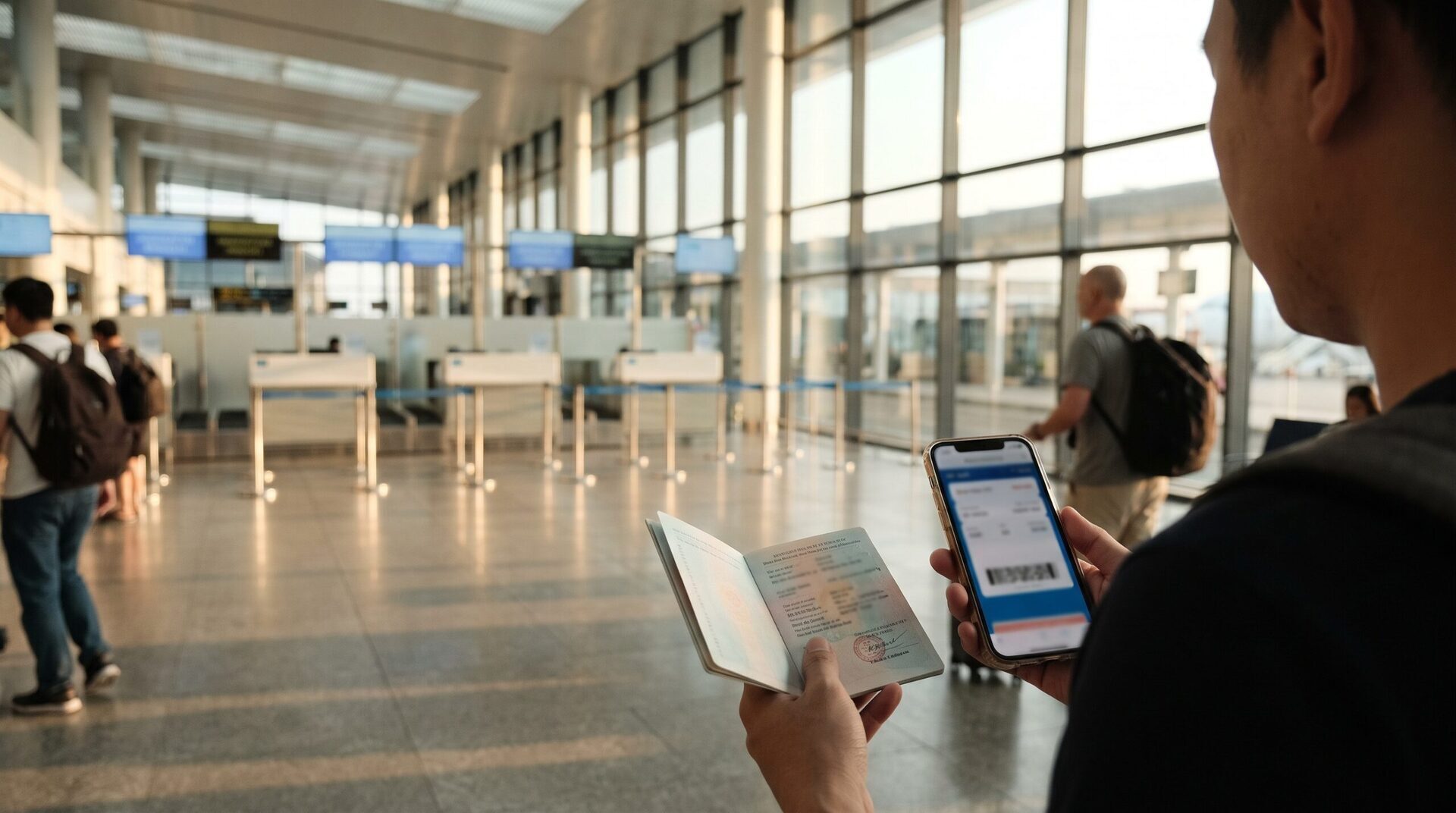
Here is the 2026 Vietnam visa answer in one breath: if you hold a passport from the UK, Germany, France, Spain, Italy, the Netherlands, Japan, South Korea or one of 24 listed countries, you enter visa-free for up to 45 days; if you are American, Canadian, Australian, New Zealander, Irish or most other nationalities, you apply online for a 90-day e-visa that costs $25, takes about three working days and is approved without fuss. There is one island shortcut (Phu Quoc, 30 days, any passport), one new form to fill in before you fly to Ho Chi Minh City, and a handful of traps that fill the “help, my visa was refused” threads every week. All of it below, in plain English.
Short version: check the visa-free list; if you are not on it, apply at the official portal 7–10 days before departure, choose your entry point and entry date carefully, and save the approval PDF offline. Then do the free pre-arrival declaration if you land in Saigon. That is the whole job.
Do I Need a Visa for Vietnam? Start With Your Passport
Vietnam runs three tiers, and which one you fall into is decided entirely by the passport you carry — not by how long you plan to stay or where you are flying from.
| Your passport | What you need | How long you can stay |
|---|---|---|
| UK, Germany, France, Italy, Spain, Denmark, Sweden, Norway, Finland, Japan, South Korea, Russia, Belarus | Nothing — visa-free (Resolution 44, valid to March 2028) | 45 days per entry |
| Belgium, Bulgaria, Croatia, Czech Republic, Hungary, Luxembourg, Netherlands, Poland, Romania, Slovakia, Slovenia, Switzerland | Nothing — visa-free (Resolution 229, valid 15 Aug 2025 to 14 Aug 2028) | 45 days per entry |
| ASEAN neighbors (Thailand, Malaysia, Singapore, Indonesia, Laos, Cambodia, Philippines, Brunei, Myanmar) | Nothing — regional exemption | 14–30 days depending on country |
| USA, Canada, Australia, New Zealand, Ireland, India, South Africa, most of Latin America and everyone else | 90-day e-visa, applied online | Up to 90 days, single or multiple entry |
| Any passport, flying direct to Phu Quoc only | Nothing — island exemption | 30 days on the island |
Two things trip people up here. First, the 45-day exemption is per entry: leave for a weekend in Bangkok and you get a fresh 45 days on return, which is legal and common. Second, a visa-free passport does not stop you from getting an e-visa anyway — if you want 60 or 90 days in one stretch, a British or German traveler simply applies for the $25 e-visa like everyone else. The exemption is a gift, not a cap.
Everything you need to know about the island-only rule — including the self-transfer trap that breaks it at Saigon airport — is in our Phu Quoc visa guide. This article is about the mainland.
The Vietnam E-Visa in 2026: Facts Before You Apply
- Who can apply: every nationality. The e-visa opened to all countries in August 2023 and that has not changed.
- Length: up to 90 days. Both single-entry and multiple-entry versions run 90 days.
- Cost: $25 single entry / $50 multiple entry. The government fee was re-confirmed by a Ministry of Finance circular effective 1 April 2026, and it is the same for every nationality. It is non-refundable, even if the application is refused.
- Processing: three working days officially (Monday–Friday, excluding Vietnamese public holidays). In practice, allow a full week, and two around Tet or the late-April holidays.
- Where: the government portal only — evisa.gov.vn, which also answers to thithucdientu.gov.vn. Anything else is an agent reselling the same document at two to five times the price.
- Entry points: the e-visa is now accepted at 83 border checkpoints (up from 42 at the end of 2025): all international airports, the main land crossings from Cambodia, Laos and China, and the major seaports.
How to Apply for the Vietnam E-Visa, Step by Step
1. Prepare two files before you open the site. A clear scan or phone photo of your passport data page (all four corners visible, no glare), and a passport-style portrait: plain light background, straight face, no glasses, no hat, shoulders in frame. The portal accepts JPG; keep each file under a couple of megabytes. Bad photos are the number-one reason for a refusal, and the fee is gone when that happens.
2. Fill in the form exactly as your passport reads. Name order, middle names, passport number, the expiry date — copy them letter for letter. Vietnamese immigration compares the approval letter to the passport at the desk; a mismatch is treated as a different person, not a typo.
3. Choose your entry date and your entry point. This is the step that matters. The 90 days start counting from the entry date you declare, whether you actually arrive that day or a week later — so declare the earliest date you could possibly land, not your ideal one. The entry point must be the airport or land border you actually cross first: pick “Tan Son Nhat” if you land in Saigon, “Noi Bai” for Hanoi, “Da Nang” for the center. Landing somewhere other than your declared checkpoint is a genuine problem at the desk.
4. Single or multiple entry? If there is any chance you will pop out — Angkor Wat from Saigon, a Bangkok weekend, a flight home for a family emergency — pay the extra $25 for multiple entry. Slow travelers should treat it as the default; the logic is spelled out in our long-stay and visa-run guide.
5. Pay, note your registration code, and wait. The card payment is the point of no return. Write down the registration code the site gives you; that plus your email and date of birth is how you check status and download the approval.
6. Download the PDF and check it before you fly. Read the name, passport number, dates and entry point on the approval letter against your passport. If anything is wrong, apply again now — not at the airport. Save the PDF to your phone, to cloud storage, and print one copy; airport Wi-Fi fails at exactly the moment you need it.

New for 2026: the Pre-Arrival Declaration at Saigon Airport
Since 15 April 2026, every foreign passenger landing at Tan Son Nhat International Airport in Ho Chi Minh City must complete a digital pre-arrival declaration and show the resulting QR code at immigration. It is free, it lives at prearrival.immigration.gov.vn, and it is filled in within the three days before your flight. Each traveler needs their own — children included — and it asks for the basics: passport details, flight, where you are staying for the first night, and your visa or exemption.
Three practical notes. Do it the evening before you fly, when you have the hotel address and flight number to hand. Screenshot the QR code as well as keeping the email — airport signal is not reliable. And although the rule is written for Saigon, the same form works for any airport and the system is being rolled out to other international gateways; filling it in for a Hanoi or Da Nang arrival costs nothing and removes a variable. Note this is separate from the e-visa: one is permission to enter, the other is the arrival card that replaced the old paper slip.
At the Border: What They Actually Check
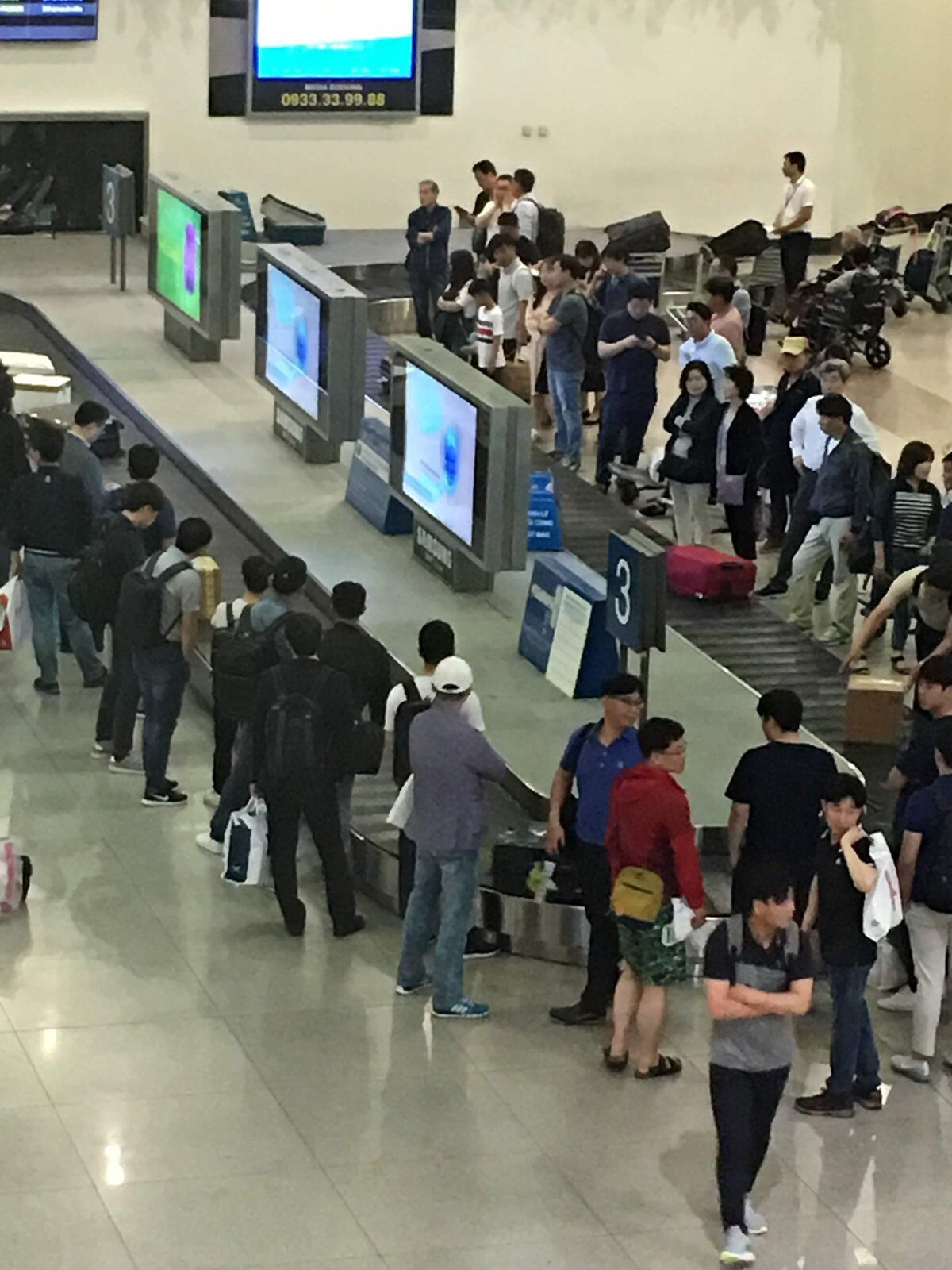
Passport with at least six months of validity from the day you enter — the single most common reason people are turned away at their departure airport, not in Vietnam. The e-visa approval letter (or your visa-free status). Increasingly, proof of onward travel: airlines enforce this more than immigration does, and a cheap bus or flight booking out of Vietnam within your permitted stay is enough. Nobody in our experience has been asked for bank statements or hotel bookings for a tourist entry, but the airline check-in desk can ask for the onward ticket, so have it in your email.
The stamp you get is the thing that counts. Check the exit date written on it before you leave the desk; if the officer stamped fewer days than your visa allows, say so politely right there. Once you are in the taxi, it is much harder to fix.
Agents, “Visa on Arrival” and Other Things to Ignore
The old approval-letter “visa on arrival” route that agents sold for years is obsolete for tourists: the e-visa replaced it, it is cheaper, and it does not involve a queue at a counter after a long flight. Sites that still advertise visa on arrival, “urgent 4-hour processing” or “guaranteed approval” are agents wrapping the same government application in a fee — sometimes useful if you are genuinely three days from a flight, otherwise pure markup. The government portal has no expedited tier; the only way to be fast is to apply early.
One thing to watch rather than act on: in late August 2026 the government adopted a tourism strategy that talks about longer-stay and preferential visas for some markets and floats a mandatory travel-insurance requirement. None of it is in force yet; when it is, this page will say so. For now, the rules above are the rules.
Overstays, Refusals and Fixes
Overstaying is fined by the day, becomes an ordeal at the departure airport past a couple of weeks, and can end in an entry ban — all to avoid a $25 document. Set a reminder at day 75 of a 90-day visa and decide: leave, or do a proper visa run. In-country tourist extensions are not a service to plan around any more; the honest mechanics are here.
If an application is refused, the portal tells you nothing useful. In nearly every case the cause is the photo (background, glasses, cropping) or a passport scan the system could not read; fix that, apply again, pay again. If you are already inside your 90-day window and want to change your entry point or dates, there is no edit function — you submit a new application.
Where Visas Fit in the Rest of the Trip
Sort the visa first, then everything else falls into a sensible order: an eSIM installed before landing so Grab and Maps work from the arrivals hall, a plan for cash and cards that avoids the airport exchange booths, and the transport logic in our getting-around guide. The 90-day clock is also the reason our slow-travel route is shaped the way it is — one visa, four bases, no wasted days. For the shape of a shorter trip, start with the country guide and the two-week itinerary.
Get a Vietnam eSIM Before You Land (Klook) →
Three Mistakes That Cost the Most
Declaring the wrong entry date. Your flight lands on the 3rd; you typed the 5th; the officer can refuse you or, more often, you lose nothing but sleep — declare the earliest possible day. Applying on a lookalike site. Search results are full of them; the government address is evisa.gov.vn, full stop. Trusting the photo on your phone. Selfies with a window behind you get refused; stand against a plain wall in daylight and let someone else take it.
FAQ
Do US citizens need a visa for Vietnam?
Yes. Americans, Canadians, Australians and New Zealanders are not on the visa-free list and apply online for the 90-day e-visa ($25 single entry, $50 multiple entry) at evisa.gov.vn. The only exception is a direct trip to Phu Quoc island of 30 days or less.
How long does the Vietnam e-visa take?
Three working days officially. Apply 7–10 days before you fly, and two weeks ahead around Tet (late January or February) and the 30 April holidays, when the immigration office is closed and the backlog grows.
Is there a visa on arrival in Vietnam?
Not in any form a tourist should plan on. The e-visa replaced the old approval-letter system; the same agents that sold visa on arrival now resell e-visa applications with a markup. Apply yourself, in advance, on the government portal.
Which countries can visit Vietnam visa-free for 45 days?
Twenty-four countries in 2026: the UK, Germany, France, Italy, Spain, Denmark, Sweden, Norway, Finland, Japan, South Korea, Russia and Belarus under one resolution, and Belgium, Bulgaria, Croatia, the Czech Republic, Hungary, Luxembourg, the Netherlands, Poland, Romania, Slovakia, Slovenia and Switzerland under the August 2025 expansion. Both run to 2028.
Can I extend my Vietnam e-visa?
Not reliably from inside the country. The practical route is a visa run: leave, hold a fresh e-visa applied for before you go, and re-enter on a new 90-day clock. Multiple-entry holders can also leave and return within their original 90 days.
Some links in this guide are affiliate links: if you book through them we may earn a small commission at no extra cost to you. It helps keep our guides honest and free.
Get our free Phu Quoc Trip Kit — the pre-departure checklist, a 5-day plan and our honest booking picks. No spam; at most one email a month.
By subscribing you agree to our privacy policy. Unsubscribe anytime.