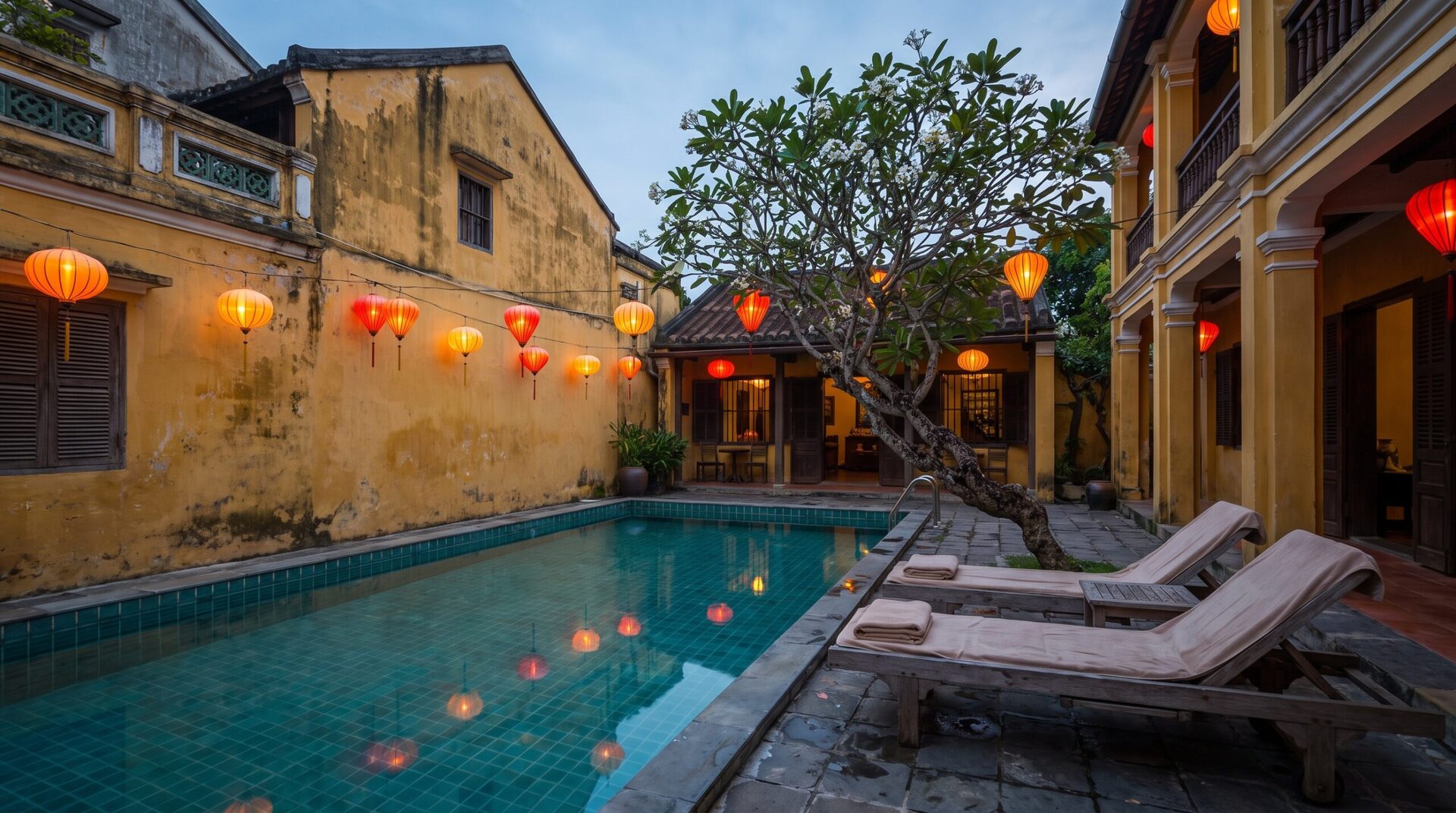
Where you stay in Hoi An decides which town you get. Book a riverside boutique and you live inside the lantern postcard — with the crowds beneath your balcony until ten. Book An Bang and you get sea air, quiet nights and a ten-minute ride to the old town whenever you want it. Book a homestay in the paddies between the two and you get buffalo outside the window at half the price. None of these is wrong; they are three different holidays wearing the same town’s name, and this guide is the honest sorting of them.
Short version: first visit on two or three nights — stay old town or riverside and accept the evening bustle. Beach-first travelers and families — An Bang, without hesitation. Budget or long-stay — the paddy homestays are the best value in central Vietnam. The comparison table, each zone in detail and the booking timing that actually matters are below.
The Four Zones at a Glance
| Zone | Typical price | Best for | The catch |
|---|---|---|---|
| Old Town / An Hoi riverside | $40–120 | First visits, the lantern evenings | Evening crowds and noise until ~10 p.m. |
| An Bang beach | $30–90 | Beach mornings, families, quiet nights | 10-minute ride to the old town |
| Rice-paddy homestays | $18–45 | Budget, long stays, bicycle life | You will want the bicycle |
| Cua Dai strip | $50–150 | Resort pools at discount prices | Aging properties, eroding beach |
Old Town and the An Hoi Riverside
Staying inside or beside the ancient quarter is the version of Hoi An most people came for: you walk out of breakfast into the heritage streets, and — the real prize — you are still there at 6 a.m. and 10 p.m., when the town belongs to the people who slept in it. The trade is honest: the riverfront and An Hoi island across the bridge run loud with lantern-boat commerce until around ten, and rooms facing the water hear all of it. Ask for a courtyard-facing room, check for a pool (the small courtyard pools are the difference between surviving and enjoying April to August), and in October–November flood season avoid ground-floor riverside rooms entirely — the Thu Bon river visits the front-row streets most autumns.
An Bang Beach
An Bang has quietly become the better base for half the people who visit. The beach is genuinely good — golden sand, swimmable most of February through September — and the village behind it has grown a full ecosystem of cafes, seafood restaurants and small pool guesthouses without losing its barefoot register. Nights are dark and quiet, mornings start with a sea swim, and the old town is a $2 Grab or a flat twenty-minute bicycle ride away — close enough that you will still make the lantern hours whenever you choose. Families default here for good reason; so do remote workers on week-plus stays.
The Paddy Homestays
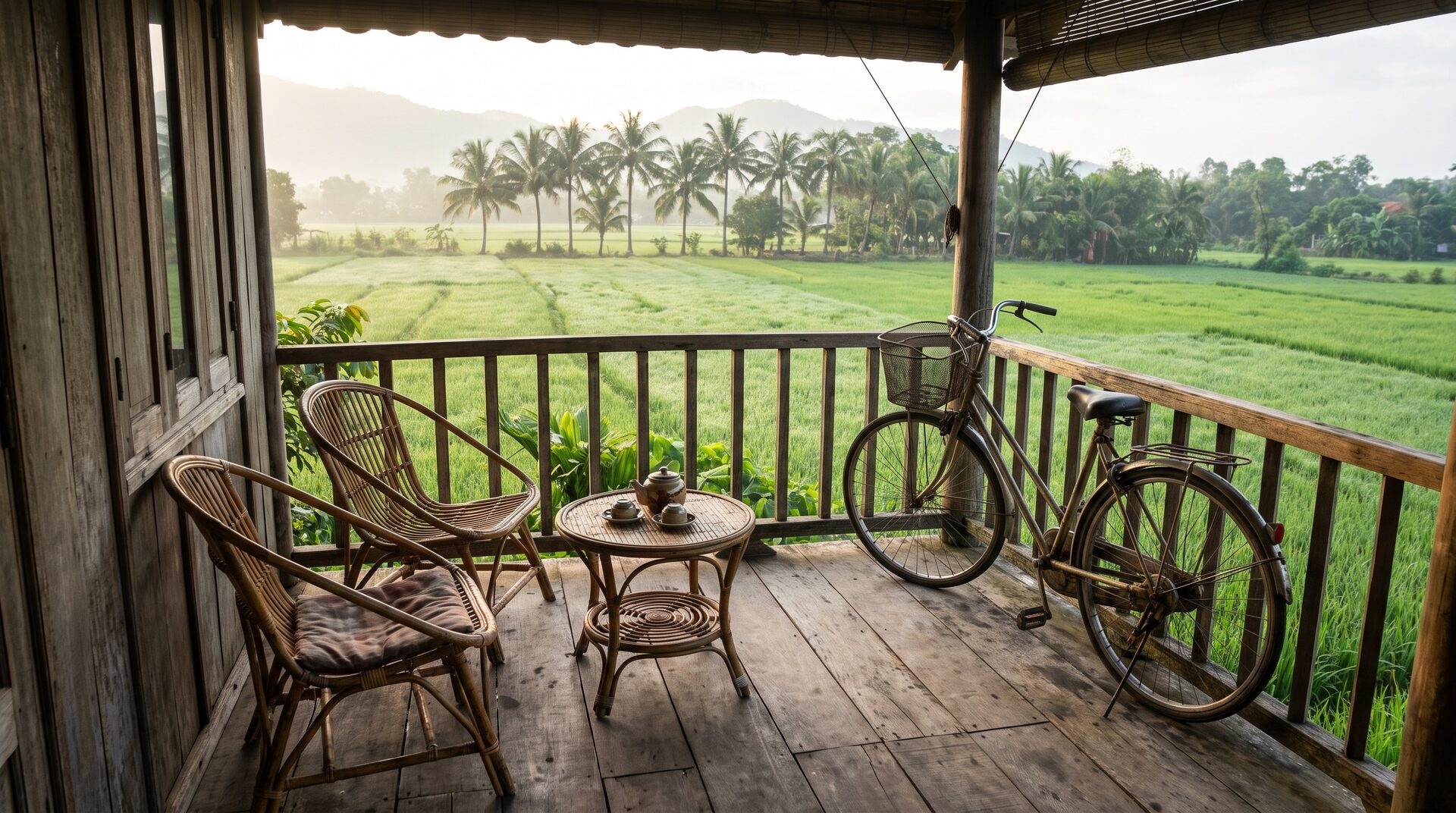
Between the town and the sea lies a two-kilometer belt of rice fields, vegetable gardens and family-run homestays that solves the whole equation for travelers who do not need a lobby: $18–45 buys a spotless fan-cooled or air-conditioned room, a veranda over the green, free bicycles and a family breakfast. From here the old town is ten minutes by bike one way and An Bang ten the other — you live in the middle of the sandwich. This is where Hoi An’s long-stay crowd settles, and the zone we would pick for any visit past three nights.
The Cua Dai Strip — Honest Note
The resort strip along Cua Dai road holds the town’s big-name properties at prices that look like bargains against their brochures. The reason is structural: the beach in front of much of the strip has been eroding for a decade behind sandbag barriers, and the properties are a shuttle ride from both the old town and the better An Bang sand. The pools and grounds remain excellent value if a resort day is the goal — just book it knowing you are buying the pool, not the beach out front.
Booking Tactics That Actually Matter
Hoi An is small and the good mid-range rooms are finite: the riverside boutiques and the best An Bang guesthouses sell out first in every season — book those two zones as soon as dates firm up, three-plus weeks ahead for February–April and July–August peaks. Prices drop hard in the September–November shoulder, with the flood-season caveat above. Comparing Hoi An stays on Agoda shows all four zones on one map, which is the fastest way to see the town’s geography do the sorting for you. Match the nights to our 2 day Hoi An itinerary and you have the whole visit planned in ten minutes.
Three mistakes we keep watching people make: booking a riverside balcony for a light sleeper (courtyard side, always); day-tripping from Da Nang to “save money” and missing the only hours the town is itself (the evening-trip version is the workable compromise); and defaulting to Cua Dai for the brand name when An Bang’s small places are the better beach at half the price. If your trip splits between the two cities, our Da Nang stay guide is the other half of the decision. For the northern leg, the Hanoi version does the same sorting.
FAQ
Is it better to stay in Hoi An or An Bang beach?
First visit of two or three nights: the old town or riverside, for the dawn and evening hours nothing else delivers. Beach-first travelers, families and anyone staying four-plus nights: An Bang, with the old town as an easy evening ride. The paddy homestays split the difference at the best prices.
How many nights should I book in Hoi An?
Two nights is the working minimum — it covers the dawn old town, the lantern evenings and a beach morning, as mapped in our itinerary. Three to four nights is the sweet spot; past that, move to a paddy homestay or An Bang and let the town become a routine instead of a visit.
Is Hoi An expensive to stay in?
No — it is central Vietnam’s best accommodation value. $30–70 buys a genuine boutique room with pool; $18–45 a paddy homestay with breakfast; $90–150 a riverside suite that would cost triple in Hanoi or Saigon. The only premium is timing: the good rooms go early, not expensive.
Which area should families pick?
An Bang. Quiet nights, the beach at walking distance, family rooms and small pools across the guesthouse tier, and restaurants that handle children without ceremony. Take the Grab into the old town at 4 p.m., do the lanterns before the late crowds, and be back for an early night.
Does Hoi An flood — and should it change my booking?
Most Octobers and Novembers, yes — the riverfront streets take water for a few days at a time. Visit in those months happily, but skip ground-floor riverside rooms, keep a flexible booking, and lean toward An Bang or the paddies, which sit higher and dry. The rest of the year it is a non-issue.
Some links in this guide are affiliate links: if you book through them we may earn a small commission at no extra cost to you. It helps keep our guides honest and free.
Get our free Phu Quoc Trip Kit — the pre-departure checklist, a 5-day plan and our honest booking picks. No spam; at most one email a month.
By subscribing you agree to our privacy policy. Unsubscribe anytime.