We spent a week eating our way through Da Nang this June, based in the An Thuong neighborhood behind My Khe Beach — and the biggest surprise wasn’t any single dish. It was the range. In seven days we went from 40,000 VND noodle soups at plastic tables to a Korean BBQ dinner ordered entirely in Hangul to a Texas-style smoked meat platter that would hold its own in Austin. This guide covers what we actually ate, what it actually cost, and where the money goes furthest.
All prices are from our June 2026 trip, in Vietnamese dong (roughly 25,000 VND to $1). Expect small variations by season and neighborhood.
Start With the Local Stuff: Da Nang’s Own Dishes
Da Nang sits in central Vietnam, and its food is distinct from both Hanoi’s and Saigon’s. Three dishes are worth hunting down before you touch anything international:
- Mi quang (35,000–55,000 VND) — the city’s signature: wide turmeric noodles in a shallow, intense broth with shrimp, pork, quail egg, peanuts and a sesame rice cracker on top. It’s a texture dish as much as a flavor one. The famous spots cluster on Hai Phong and Hoang Dieu streets, but honestly, the no-name shop near our apartment was excellent.
- Bun cha ca (30,000–45,000 VND) — fish cake noodle soup, a breakfast standard near the beach. Lighter than it sounds, with a tomato-pineapple tang.
- Banh xeo (60,000–90,000 VND for a set) — crispy turmeric pancakes you roll in rice paper with herbs. Central Vietnam’s version is smaller and crispier than the southern one, and better for it.
A meal at a local spot with a drink rarely passed 60,000 VND per person. If you eat Vietnamese for two of your three daily meals, your food budget almost doesn’t register.
The Korean Quarter: An Thuong’s Second Language
Walk two blocks inland from My Khe Beach and half the signage switches to Korean. An Thuong and the streets around Pham Van Dong have become a genuine Korean district — marts stocked with ramyun and soju, 24-hour BBQ joints, bakeries with bilingual menus. For travelers it’s two things: a comfort-food safety net, and genuinely good Korean cooking at Vietnamese-adjacent prices.
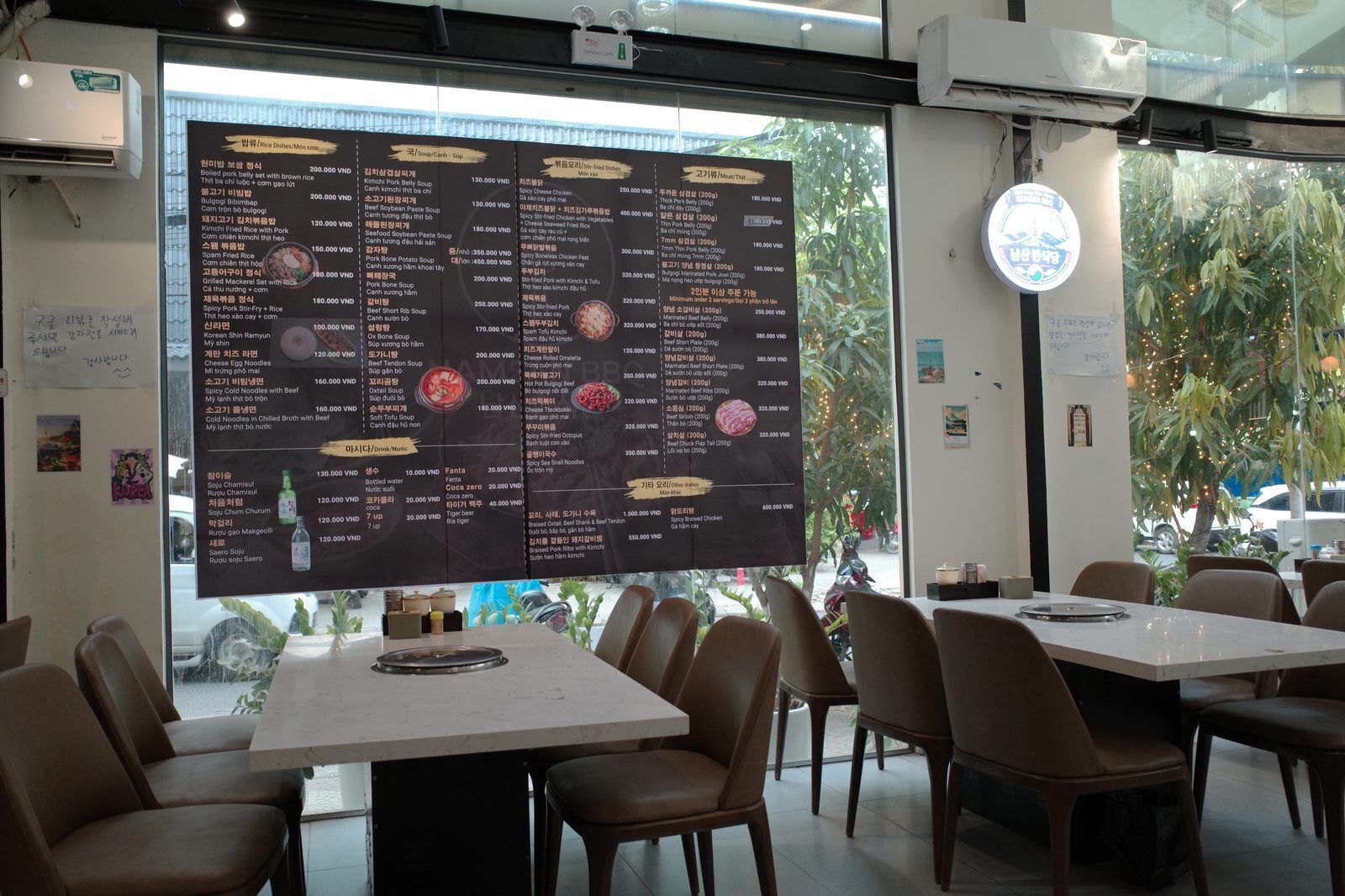
From that menu board above, here’s what Korean standards run in Da Nang (per dish, June 2026):
| Dish | Price (VND) | ~USD |
|---|---|---|
| Kimchi fried rice with pork | 120,000 | $4.80 |
| Shin ramyun | 100,000 | $4.00 |
| Bulgogi bibimbap | 200,000 | $8.00 |
| Kimchi pork belly soup | 130,000 | $5.20 |
| Pork belly BBQ (200g) | 180,000 | $7.20 |
| Soju (bottle) | 120,000–130,000 | $4.80–5.20 |
Roughly Seoul prices for the cooked dishes, cheaper for BBQ meat, pricier for soju. Portion sizes are honest, banchan refills included. When a rainy evening killed our beach plans, a bubbling kimchi jjigae here felt like a cheat code.
Western Food That Doesn’t Apologize
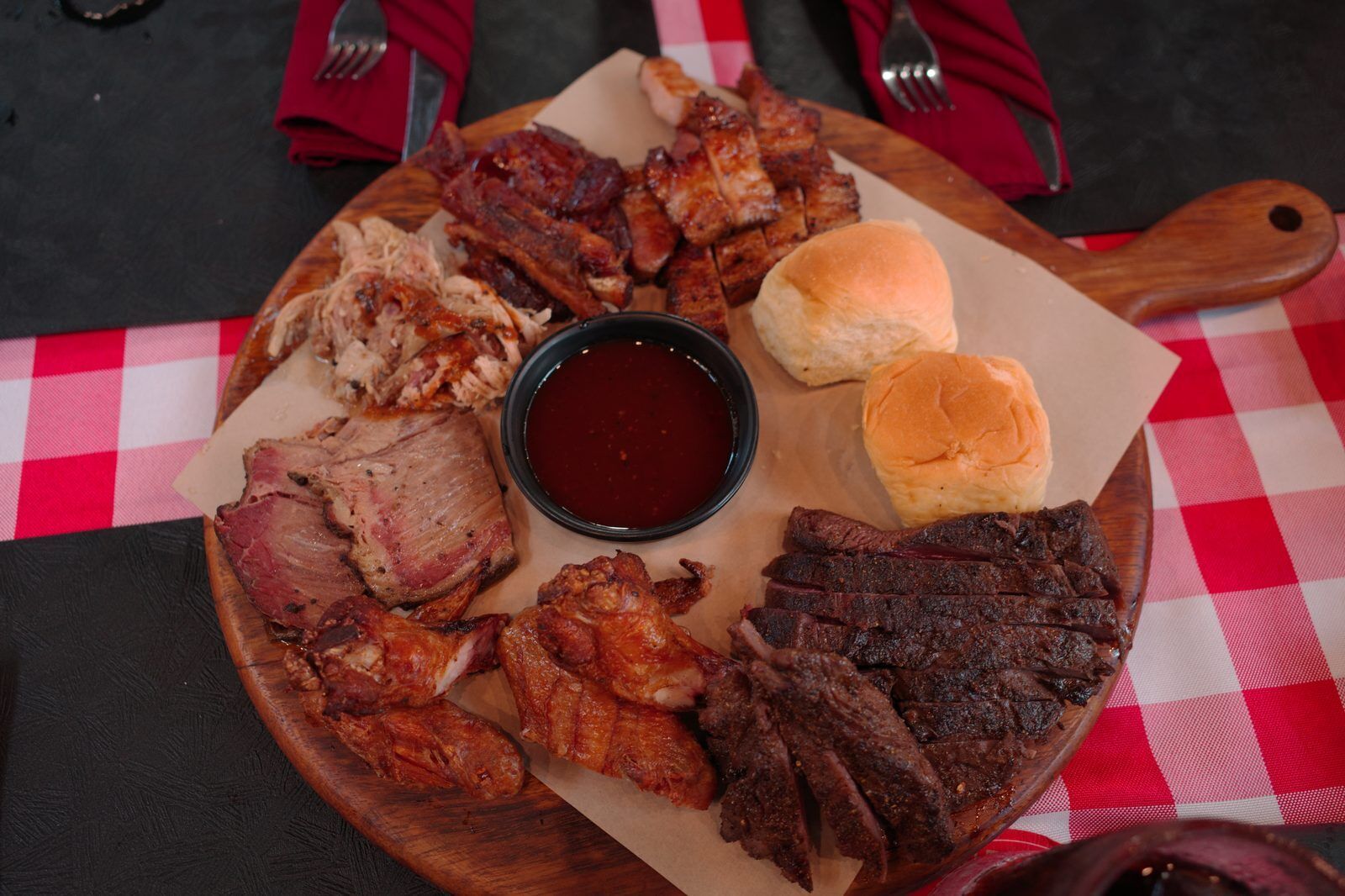
Da Nang’s expat population means the Western food scene skews serious rather than tourist-trap. The smokehouse platter in the photo up top — brisket, ribs, pulled pork, wings, house rolls — fed two of us to defeat. Western mains generally run 150,000–350,000 VND per person; a full BBQ platter for two lands in the 500,000–800,000 range depending on the spread. Pizza, pasta and burger places of real quality dot An Thuong and the Han River side too.
Our rule by the end of the week: Vietnamese for value, Korean for comfort, Western for the occasional blowout. The pleasant shock is that all three exist within a ten-minute walk.
The Seafood Streets
Da Nang’s seafood scene runs on a simple format: tanks of live everything out front, plastic stools or beer-hall tables behind, and pricing by the kilo. The strip along Vo Nguyen Giap north of My Khe and the local places on Ho Nghinh are where we ended up twice. A realistic seafood dinner for two — a kilo of clams in lemongrass, grilled prawns, morning glory, local beer — landed around 400,000–600,000 VND. Go up from there if crab or lobster enters the picture.
Two things save you money and disappointment: order what’s actually swimming (if the tank is empty, that species isn’t fresh today), and confirm both the per-kilo price and the cooking fee before anything gets weighed. Neither is a scam-avoidance tactic exactly — it’s just how the system works, and locals do the same.
One more local habit worth copying: bia hoi–style fresh draft beer at 10,000–15,000 VND a glass turns any seafood table into a two-hour evening. The Corona-and-cocktail places on the tourist strip charge five times that for the same view.
Breakfast, Fruit and the Sinh To Habit
Breakfast in Da Nang is a soup or a banh mi, eaten early before the heat. A banh mi from a cart runs 20,000–35,000 VND; bun cha ca or a pho near the beach, 35,000–45,000. By day three we’d developed what I can only call a sinh to habit — Vietnamese fruit smoothies (25,000–40,000 VND) made from whatever’s ripe: mango, avocado, custard apple, dragonfruit. June is mango season in central Vietnam, and a cold mango sinh to at 2 p.m. does more for morale than any air conditioner.
Convenience stores fill the gaps: every block in An Thuong has a 24-hour mart where cold coconut water, Korean snacks and decent onigiri cost pocket change. It’s the kind of infrastructure that makes a long stay here dangerously easy — one of the reasons Da Nang keeps coming up in our long-stay comparisons.
Coffee, Beach Cafes and the Daily Rhythm
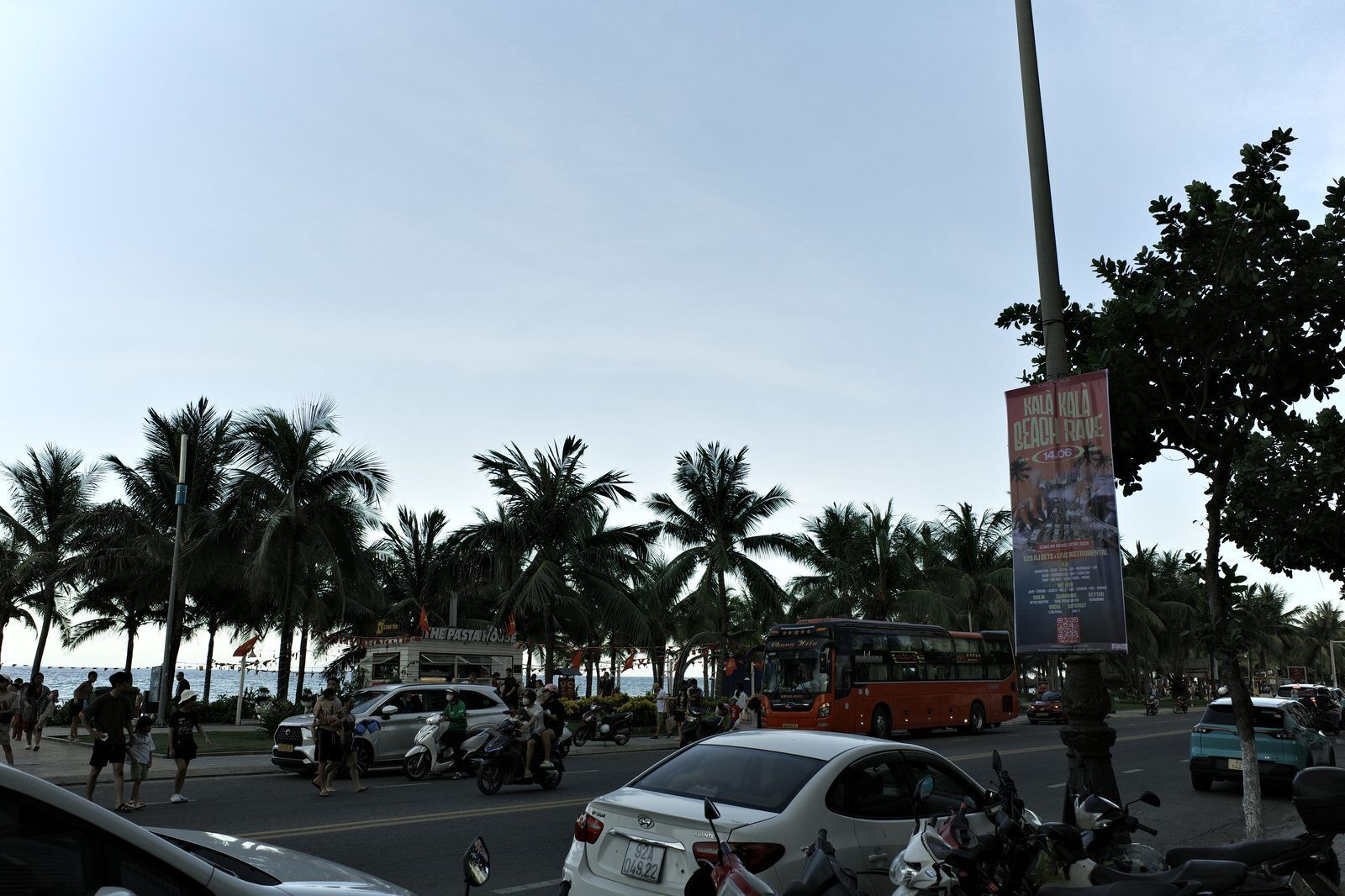
Vietnamese coffee culture is half the reason to linger in Da Nang. A ca phe sua da (iced milk coffee) at a local shop is 25,000–35,000 VND; the beachfront cafes with sea views charge 45,000–65,000 VND and are worth it exactly once a day, around 5 p.m., when the light goes gold and the heat breaks. Coconut coffee — a Da Nang cafe staple — runs slightly more and doubles as dessert.
What a Week of Eating Actually Cost
For two people, seven days, eating well and never cooking:
| Category | Spent (VND, approx.) |
|---|---|
| Vietnamese meals (10–12 meals) | ~1,100,000 |
| Korean dinners (3) | ~1,300,000 |
| Western meals (2, incl. the BBQ night) | ~1,100,000 |
| Coffee & drinks (daily) | ~700,000 |
| Snacks, fruit, convenience stores | ~400,000 |
| Total for two, 7 days | ~4,600,000 (~$184) |
Call it $13 per person per day, eating internationally without thinking about money. Sticking to Vietnamese food could halve it; a resort-restaurant habit could triple it.
Practical Notes
- Grab delivery works everywhere in the beach districts — useful for rainy-season evenings. Have data sorted before you rely on it (our Vietnam eSIM setup).
- Cash for street food, cards increasingly fine elsewhere. Korean and Western places nearly all take cards; some add nothing, some add a small fee — ask.
- Seafood streets price by weight. Confirm the per-kilo price and the cooking fee before your crab hits the scale.
- Spice is negotiable. Central Vietnamese food runs hotter than the south — “it cay” (less spicy) is a useful phrase.
If you’re planning the wider trip: our full Da Nang guide covers the sights beyond the table, the evening trip to Hoi An’s lantern town pairs perfectly with a food-focused stay (Hoi An’s cao lau deserves its own pilgrimage — our Hoi An food guide maps it), and if you’re torn between basing here or on an island, see Phu Quoc vs Da Nang. For organized eating, Da Nang food tours bundle a local guide with a motorbike ride through spots you’d never find alone.
FAQ
Is Da Nang good for food compared to Hanoi or Saigon?
Different rather than worse. Hanoi and Saigon have deeper street-food benches, but Da Nang has its own regional dishes (mi quang above all), the freshest seafood of the three, and — per square kilometer — probably the most international dining in Vietnam thanks to its Korean quarter and expat scene.
How much should I budget for food in Da Nang?
Eating only Vietnamese: $5–8 per person per day is comfortable. Mixing in Korean and Western meals like we did: $12–15. Even a deliberately indulgent week is hard to push past $25 a day per person outside of resort restaurants.
What is mi quang and where do I try it?
Mi quang is Da Nang’s signature noodle dish — wide turmeric noodles in a concentrated broth with pork, shrimp, peanuts and a crispy rice cracker. It’s everywhere: dedicated mi quang shops charge 35,000–55,000 VND, and it’s usually best at busy local places rather than tourist-street restaurants.
Is street food in Da Nang safe to eat?
We ate street food daily for a week with zero problems, and Da Nang is generally considered one of Vietnam’s easier cities for sensitive stomachs — the seafood turnover is fast and the beach districts are used to foreign customers. The usual rules still apply: pick busy stalls where food is cooked to order in front of you, be a little cautious with raw herbs on day one while your gut adjusts, and stick to bottled or filtered water. Ease in with cooked soups like mi quang before attacking the raw seafood salads.
Why does Da Nang have so much Korean food?
Direct flights from multiple Korean cities and a large Korean expat and tourist population turned the An Thuong / Pham Van Dong area into a genuine K-town over the past decade. The upside for every traveler: high-quality Korean BBQ, stews and bakeries at prices well below Seoul’s, two blocks from the beach.
Some links in this guide are affiliate links: if you book through them we may earn a small commission at no extra cost to you. It helps keep our guides honest and free.
Get our free Phu Quoc Trip Kit — the pre-departure checklist, a 5-day plan and our honest booking picks. No spam; at most one email a month.
By subscribing you agree to our privacy policy. Unsubscribe anytime.