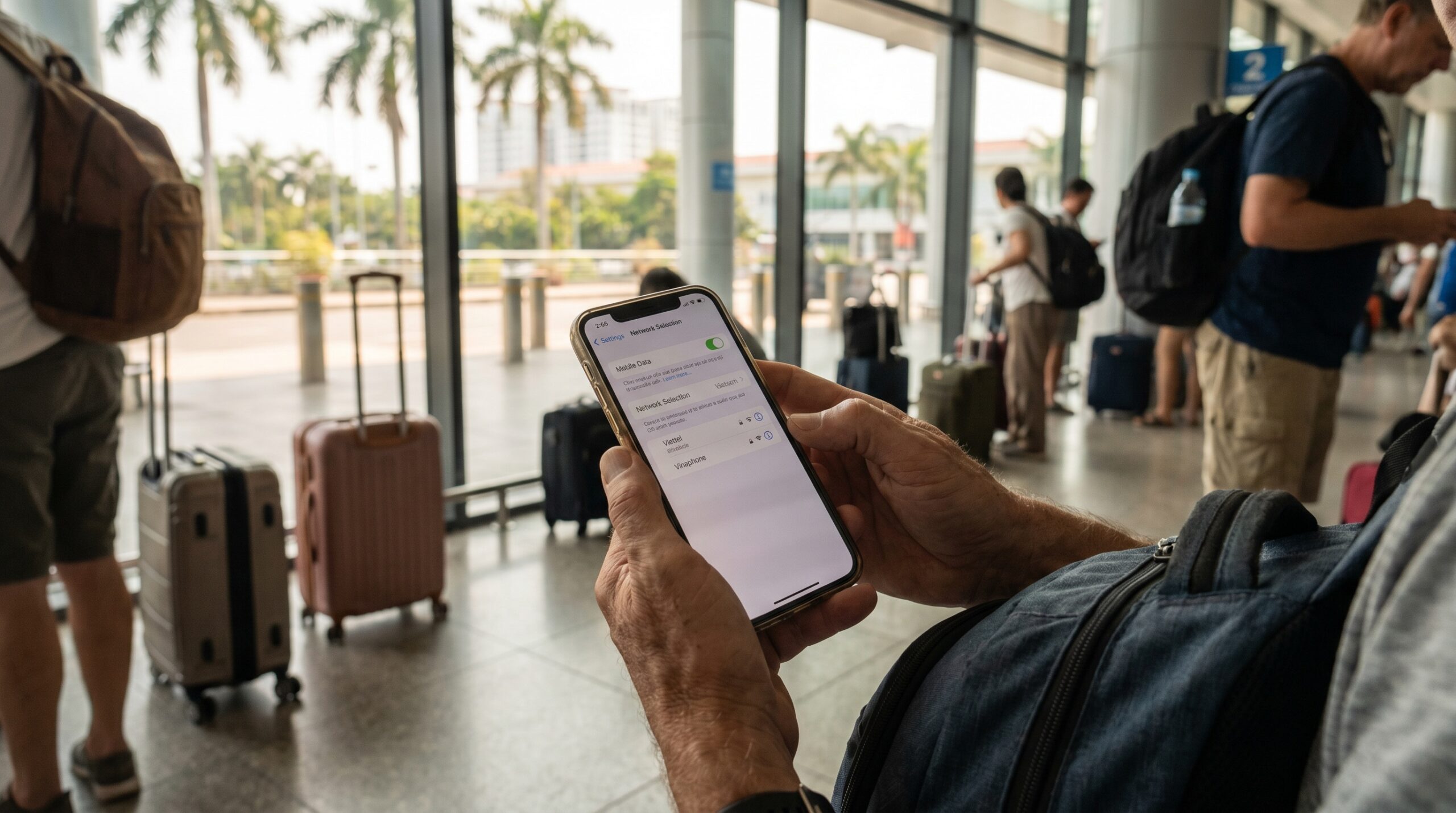
The quick answer: the best eSIM for Vietnam in 2026 is Saily (from $3.99) if you want the cheapest entry price and the most generous unlimited plans, or Airalo (from ~$4.50) if you’re heading anywhere remote — it rides on Viettel, Vietnam’s #1 network for coverage. Either covers a Phu Quoc or Vietnam trip for the price of a coffee; heavy streamers should look at unlimited plans, everyone else needs far less data than they think.
Landing in Vietnam without data is a rookie mistake you only make once — Grab, Google Maps, translation apps and hotel bookings all live on your phone here. The good news: Vietnam is one of the cheapest countries on earth to stay connected, and an eSIM means you’re online before you’ve even left the plane. The honest news: the “best” eSIM depends on how you travel, and most articles just push whatever pays the highest commission. Here’s the real comparison for 2026.
First: Do You Even Need an eSIM?
Three ways to get connected in Vietnam:
- Travel eSIM (Saily, Airalo, Holafly, Nomad): buy online in 5 minutes, activate before you fly, working data the second you land. No kiosk, no passport queue, no fiddling with SIM trays. This is what we recommend for almost everyone.
- Airport tourist SIM: physical SIM from a counter after arrival (~$7–10 for big-data packages). Slightly cheaper per GB, but you queue after a long flight and need an unlocked phone tray anyway.
- Roaming with your home carrier: almost always the worst deal — often $5–10 per day for what an eSIM gives you for a whole week.
One requirement for eSIMs: your phone must be eSIM-compatible and carrier-unlocked (iPhone XS/XR or newer, most recent Samsung/Google flagships — check your settings before buying).
The 2026 Comparison, Honestly
Saily — best entry price & best unlimited
- From $3.99 for 1GB / 7 days — the cheapest short-trip plan among the big names
- Unlimited plan: ~$71.99 / 30 days with a 5GB/day fair-use cap before throttling — the most generous cap in this group
- Solid 5G performance in cities, clean app, made by the NordVPN team
- Weakness: slightly fewer network options than Airalo in rural corners
Airalo — best coverage (Viettel network)
- From ~$4.50 for entry plans; frequent promo codes
- Connects to Viettel and Vinaphone — the #1 and #2 networks in Vietnam. If your trip includes rural Phu Quoc corners, the Mekong Delta or the Ha Giang loop, Viettel’s reach is a genuine advantage
- Weakness: customer support is the slowest of the group (hours, not minutes, at peak times) — fine if nothing goes wrong
Holafly — unlimited, but read the fine print
- Roughly $6/day for “unlimited” — throttled after ~2GB/day
- 24/7 live support (WhatsApp) is genuinely good
- Only worth it for short, heavy-usage trips; for a week-plus, Saily’s unlimited beats it on both price and cap
Nomad — fine, not special
- 7-day plans around $18; throttles to a painful 512 Kbps after cap
- Nothing wrong with it, but in Vietnam it’s usually beaten on price or cap by the two above
Klook — the bundle-with-your-tours option
- If you’re already booking your cable car tickets or tours on Klook, it also sells Vietnam eSIMs and airport SIM pickup — prices are competitive and its app promo codes sometimes make it the cheapest of all
- Handy consolidation play: one account, one currency, tours and data on the same receipt
- Weakness: plan lineup changes more often than the specialists above — check the data cap fine print before buying
How Much Data Do You Actually Need?
- Light (maps, messaging, Grab, a few photos): 1GB/week is genuinely enough — the $4 plan
- Normal (social media, photo uploads, occasional video): 3–5GB/week — usually $8–15
- Heavy (streaming, video calls, hotspot for a laptop): unlimited plans — and if that’s you for a month, consider a local Viettel SIM as the power-user option
Hotel and café Wi-Fi in Vietnam is fast and everywhere (this surprises people) — most travelers massively overbuy data. Phu Quoc resorts all have solid Wi-Fi; your eSIM mostly works during the in-between moments.
Coverage on Phu Quoc Specifically
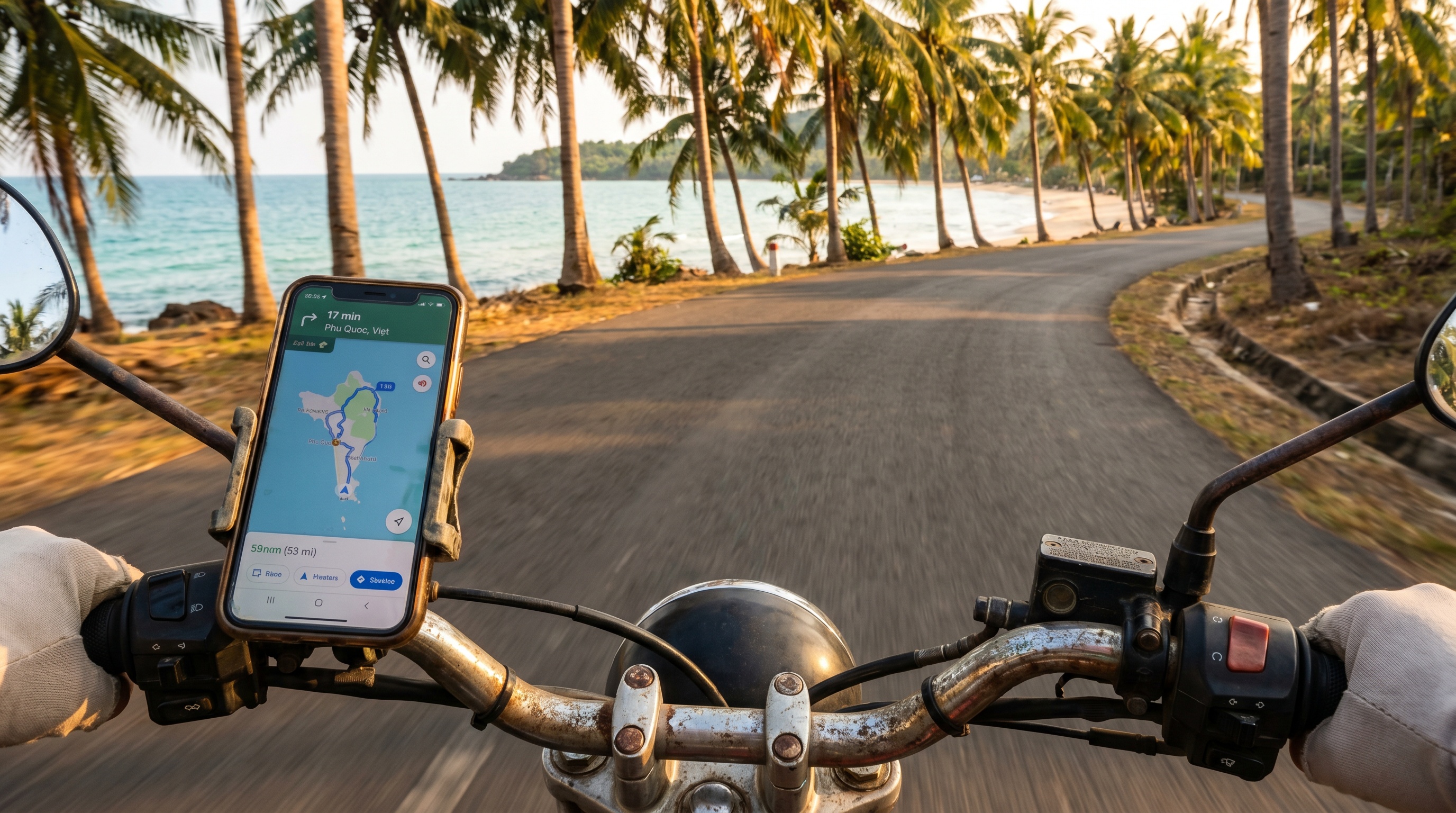
All major networks cover the island’s developed west and south well — Duong Dong, Long Beach, An Thoi, the resort zones. Head into the northern national park roads or the quieter east coast and Viettel (Airalo) holds signal noticeably better. In practice: on a resort trip you won’t notice a difference; on a scooter-explorer trip, Viettel-based plans win.
Setup in 4 Steps (Do This Before You Fly)
- Buy your eSIM online the day before departure (5 minutes, email delivery)
- Install it on Wi-Fi at home: scan the QR code in Settings → Cellular → Add eSIM
- Keep it off until you land, then toggle it on and enable data roaming for that line
- Keep your home SIM active for calls/SMS verification, but data off — so you don’t get bill-shocked
What Are the Most Common eSIM Mistakes Travelers Make?
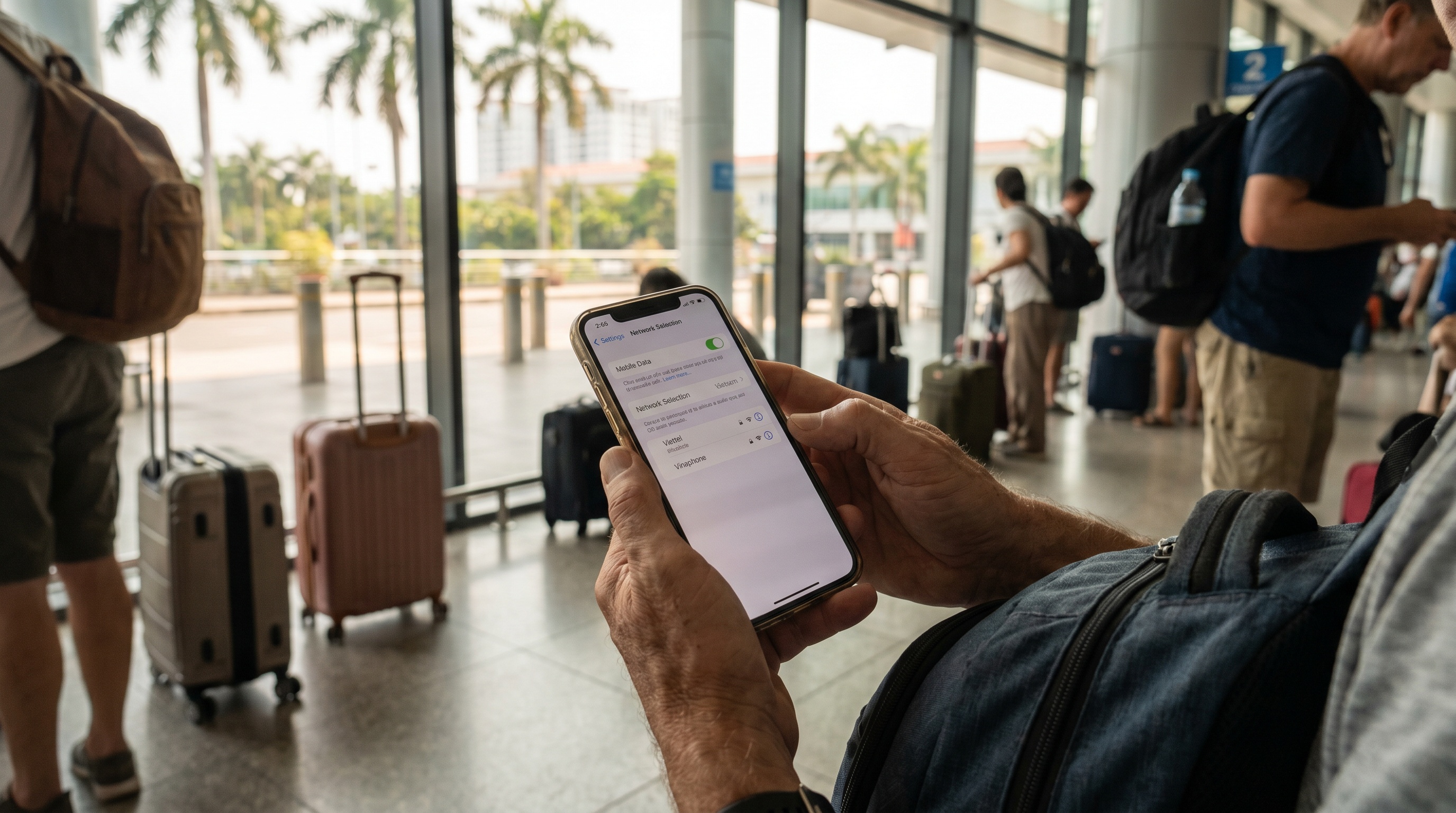
Four errors cause almost every “my eSIM is broken” moment: deleting the profile after installing it, installing it on shaky airport Wi-Fi, forgetting to enable data roaming for the travel line, and leaving the home SIM selected as the data line. None of these mean the eSIM actually failed — and each takes under a minute to fix once you know which one you hit.
We have watched more than one traveler troubleshoot at baggage claim, so here is the cheat sheet we wish everyone screenshotted before flying:
| Symptom | Likely cause and fix |
|---|---|
| No signal bars at all | The eSIM line is still toggled off. Go to Settings > Cellular (or Connections) and switch the travel line on. |
| Bars, but nothing loads | Data roaming is off for the travel eSIM. Enable it for that line only — this does not trigger home-carrier roaming charges. |
| Works, then a scary text from your home carrier | The phone is quietly using your home SIM for data. Set the travel eSIM as the default data line and turn home data off. |
| QR code says “already used” or “invalid” | The profile was deleted — most eSIMs install exactly once. Contact support for a reissue instead of buying again. |
That last one is the heartbreaker. An eSIM is not an app you can reinstall from your email; treat the installed profile like a physical SIM card and never delete it mid-trip, even while troubleshooting.
Coverage Reality: What the Maps Don’t Show
Official coverage maps paint most of Vietnam solid green. Reality is more textured. Cities, beach strips and anywhere with a resort are close to flawless. The gaps appear in exactly the places slow travelers love: mountain passes, national park roads, small islands off the boat-tour routes and the long rural stretches between towns.
A few honest expectations from our own trips:
- Highway and train corridors: mostly solid, with brief dead patches in tunnels and between towns — downloads resume on their own.
- Mountain regions: plan for hours offline. Download offline maps and translation packs while you still have Wi-Fi.
- On the water: signal fades fast past the swimming buoys. Boat-day photos upload when you are back on land, not from the snorkel stop.
- Phu Quoc back roads: as noted above, Viettel-based plans hold on longest when you are scootering the island’s quieter corners.
Hotspot Etiquette and Topping Up Without Drama
Hotspotting a laptop is the silent data killer. Phones sip data; laptops gulp it — one unnoticed cloud sync or system update can eat a week’s allowance in an afternoon. Our rule of thumb: hotspot only for focused work, pause the sync apps first, and save big uploads for cafe or hotel Wi-Fi, which is genuinely fast across Vietnam.
Top-up logic is simpler than the apps make it look. Start with a small plan, watch real usage for a few days, and top up inside the app once you drop below roughly a day’s worth of data — not after you hit zero, because a dead line is much harder to fix from the back of a taxi. If your trip stretches past three weeks, stop topping up entirely: a local SIM becomes the better math, which is exactly the setup we walk through for a month-long stay on Phu Quoc.
FAQ
Can I make phone calls with a travel eSIM?
These are data-only plans. In practice it doesn’t matter: calls in Vietnam happen over WhatsApp, Zalo and Messenger anyway, and Grab messages drivers in-app.
Will my WhatsApp number still work?
Yes — WhatsApp stays tied to your home number even when using eSIM data. Keep your home SIM installed (data off) and everything works normally.
Is airport Wi-Fi enough to set up an eSIM after landing?
Usually yes, but why risk it — install at home, activate on landing. If you do buy last-minute, both Saily and Airalo deliver instantly by email.
eSIM or local SIM for a month-long stay?
For 30+ days, a local Viettel SIM/eSIM from an official store (passport required) gets you the most data per dollar. For anything under three weeks, the convenience of a travel eSIM wins. We cover the long-stay version in our Vietnam long-stay guides.
Does 5G work for tourists in Vietnam?
Yes — Vietnam’s 5G rollout covers the main cities and tourist areas, and travel eSIMs on Viettel/Vinaphone connect to it where available. Phu Quoc’s developed areas included.
Bottom Line
Don’t overthink a $5 purchase — but don’t land dataless either. Saily if you want the cheapest solid option or generous unlimited; Airalo if your route goes remote and you want Viettel’s coverage. Install it the night before you fly, land in Phu Quoc, and your Grab is booked before the seatbelt sign turns off.
Some links in this guide are affiliate links: if you book through them we may earn a small commission at no extra cost to you. It helps keep our guides honest and free.
Get our free Phu Quoc Trip Kit — the pre-departure checklist, a 5-day plan and our honest booking picks. No spam; at most one email a month.
By subscribing you agree to our privacy policy. Unsubscribe anytime.