Hoi An at night is the single most photographed scene in Vietnam — and the most misunderstood. The postcard version (empty lantern-lit streets, a lone boat drifting under paper light) exists for about forty minutes a day, and not in the places the crowds gather. The real version is better in some ways, worse in others, and entirely manageable once you know its schedule — the full two-day plan around these hours is our Hoi An itinerary. We spent our evenings there this June with a camera; here’s what the lantern town actually looks like after dark, and how to have the good night instead of the sweaty shuffle.
Short version: golden hour through about 8:30 p.m. is beautiful chaos — go with it, don’t fight it. The magic windows are the edges: the 5–6 p.m. blue hour before the tour groups land, and the last hour before the lanterns switch off, when the old town quietly empties. The side streets two blocks off the river are the town the postcards promised, all evening long.
The Evening, Hour by Hour
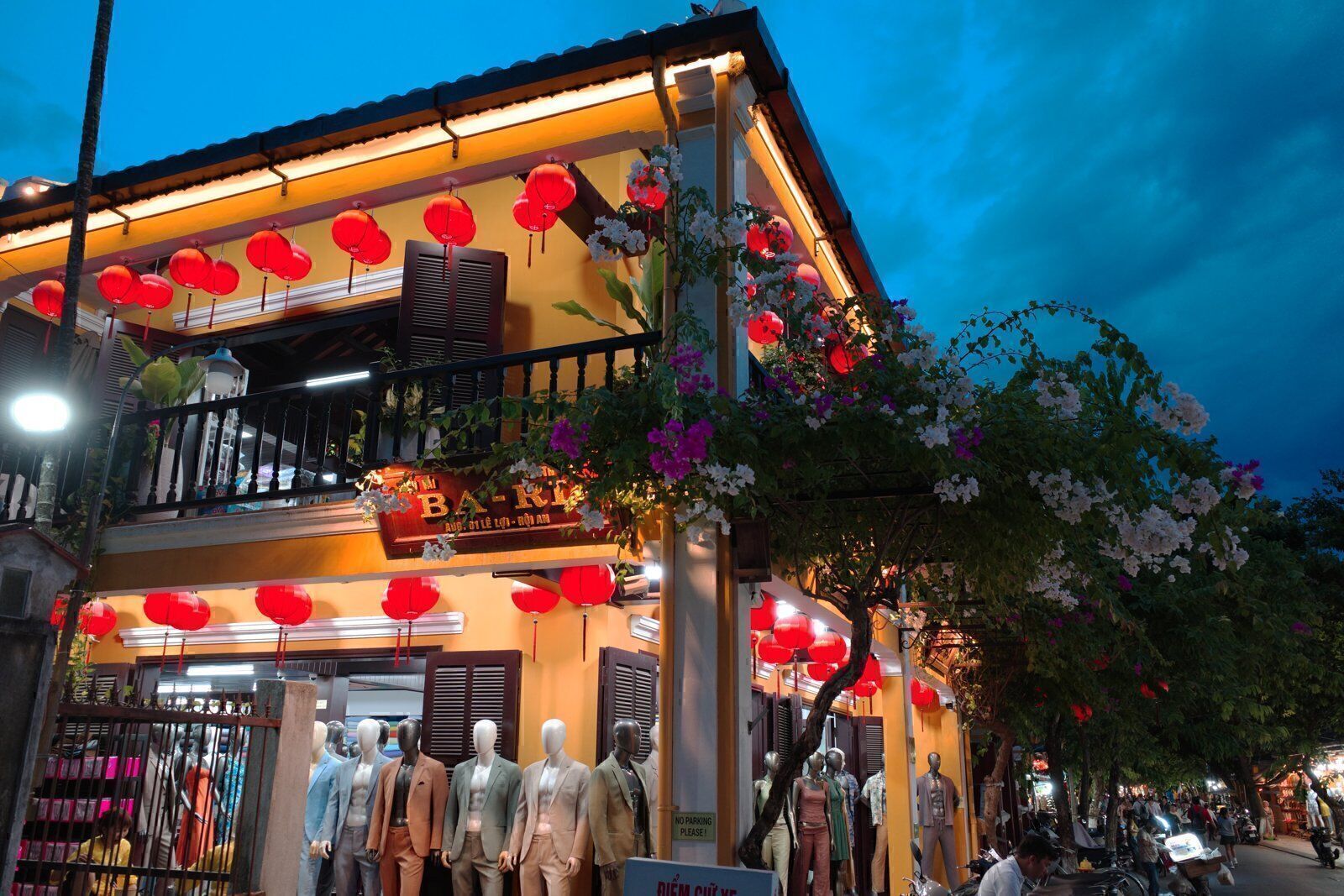
5:00–6:15 p.m. — the blue-hour window. The lanterns come on while the sky still holds color, the day-trip crowds are at dinner or on buses, and the heritage streets photograph the way you hoped. This is when we shot most of the pictures on this page. If photos matter to you, this window outranks everything after it.
6:15–8:30 p.m. — peak lantern, peak crowd. The riverfront and Nguyen Thai Hoc street fill shoulder-to-shoulder — domestic tour groups, boat touts, the whole warm carnival of it. It’s genuinely festive, and genuinely dense; navigating An Hoi bridge at 7:30 is a contact sport in high season. Do the famous things now if you want their full energy: the lantern boats, the candle-wishing, the riverside promenade.
8:30–10:00 p.m. — the exhale. Tour groups leave in waves after dinner. By 9, the same streets that were impassable run half-empty; by 9:45, shopkeepers are folding shutters and the town belongs to whoever stayed. The last-hour walk through the cooling streets — lanterns still lit, crowds gone — is the version of Hoi An people fall in love with.
The Lantern Boats: Honest Verdict
The rowing-boat-with-lanterns ride is Hoi An’s signature purchase, and it’s exactly what it looks like: a slow 20-minute drift on a crowded stretch of river, elbow to elbow with fifty other boats, for a few dollars a head. As transport it’s nothing; as theater — being inside the spectacle everyone on the bridge is photographing — it earns its ticket, especially with kids or on a first visit. Pay the posted rate at the official ticket points rather than negotiating mid-bridge, go in the 6–7 p.m. color or after 8:30 for calmer water, and skip the paper wishing-candles if the river’s already carpeted with them (it is, most nights — the town collects them, but still).
Where the Postcard Version Lives
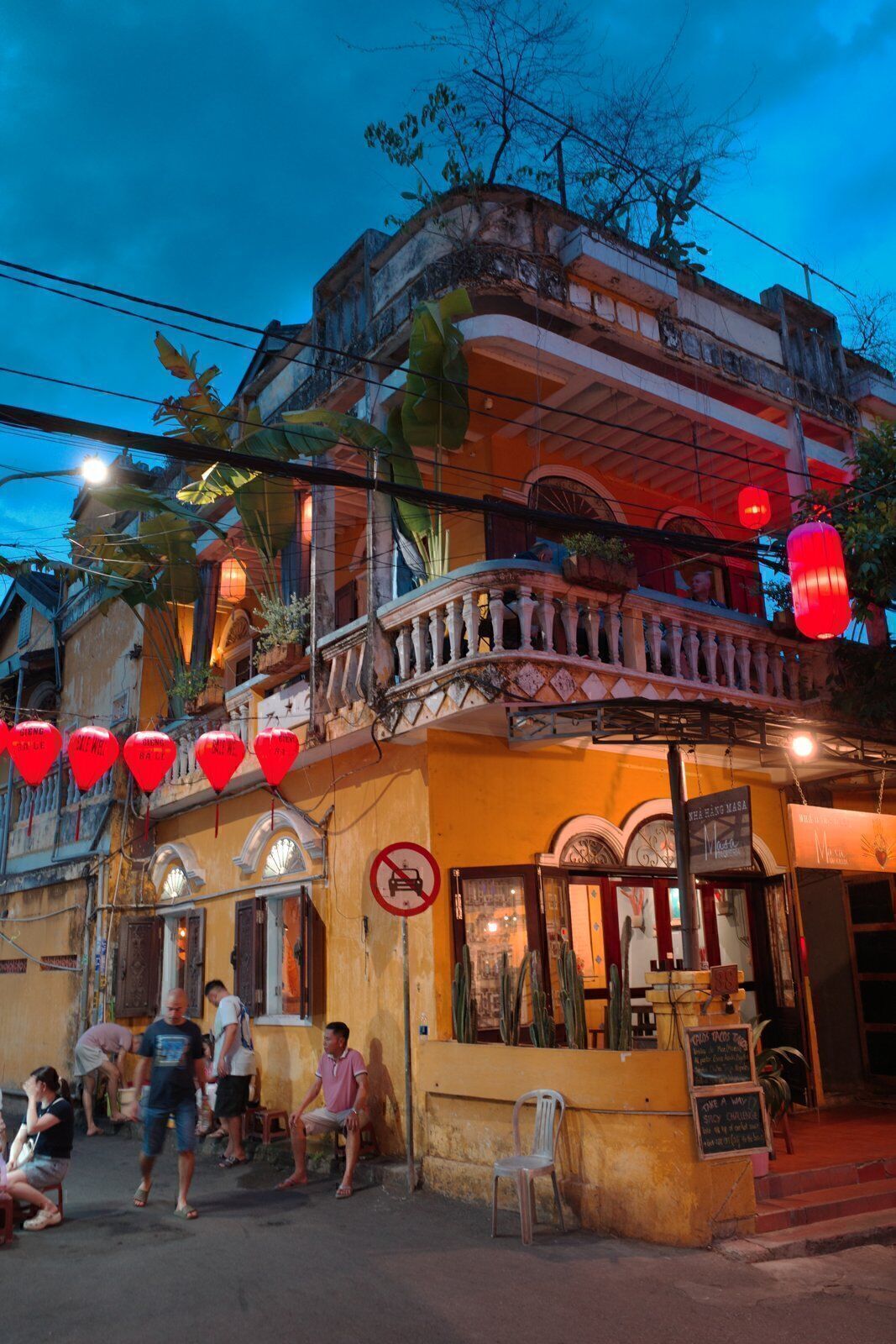
Walk two blocks away from the river — up Le Loi, along Phan Chu Trinh, into the alleys toward the market’s quiet end — and the crowd thins to strollers and cyclists even at peak hour. The same yellow walls, the same lanterns, a tenth of the people. This is also where the town’s evening life gets local: family dinners spilling onto pavements, tailors working late (fittings run well into the evening — order early in your stay), cafes with balconies where you watch the lantern glow instead of swimming in it. Our Hoi An slow guide maps the daytime version of these streets; at night they’re better.
Eating After Dark
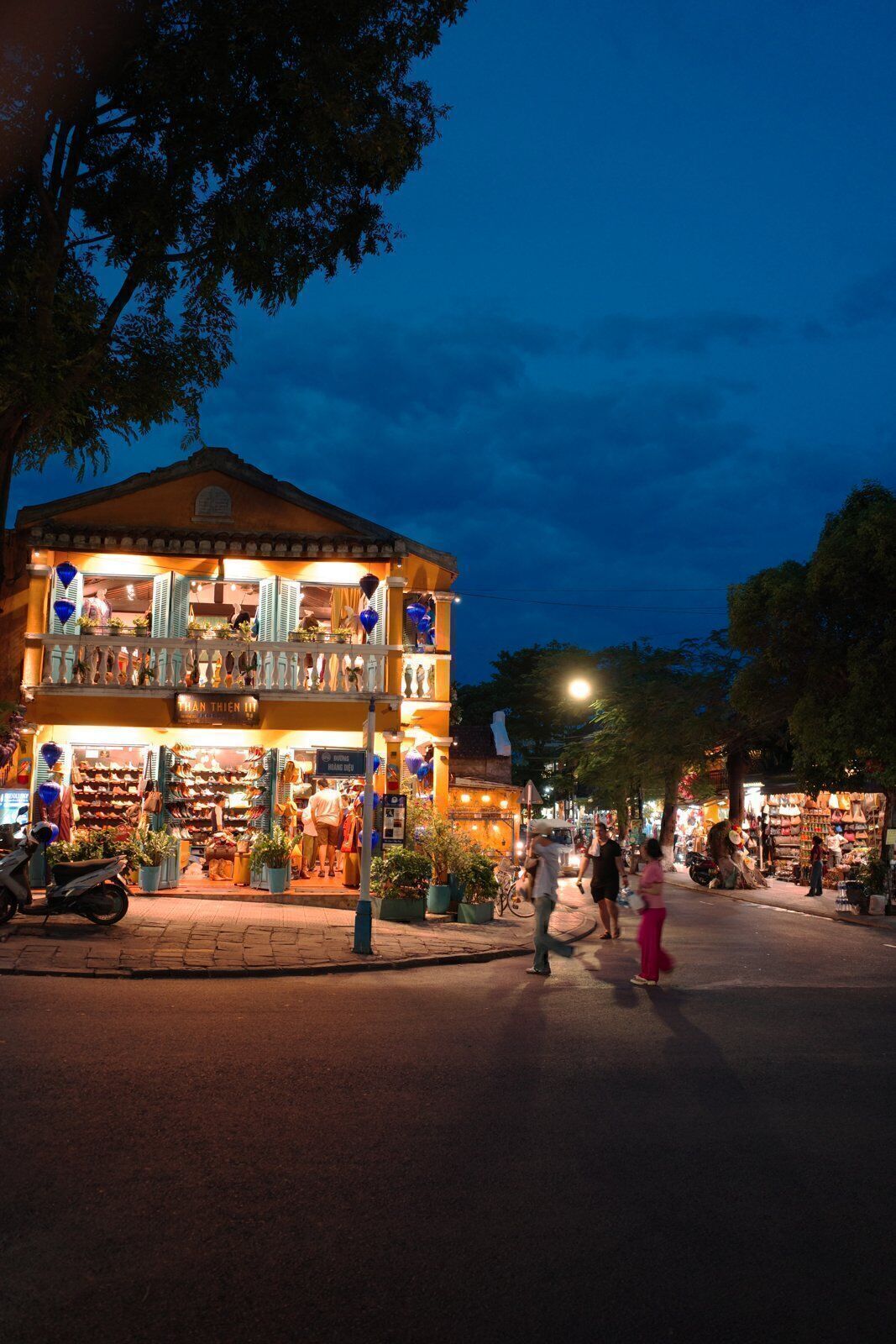
Night is when Hoi An’s specialties make the most sense: cao lầu noodles from a market stall, white rose dumplings, a banh mi eaten standing up. The central market’s food hall runs into the evening at prices a riverfront table doubles; the riverside restaurants sell the view (fair enough — pick one drink there, then eat where the plastic stools are). Da Nang-based travelers doing the classic evening run — covered in our Da Nang-to-Hoi An evening guide — should eat in Hoi An rather than racing back: the kitchens are half the reason to come.
Practical Notes
- The old town “ticket”: the heritage-site entry ticket is checked at booths on the approach streets, mainly in daytime hours — evenings are looser, but carry it if you bought one; it funds the buildings you’re enjoying.
- Timing by season: lantern glow starts around 5:45 in winter, closer to 6:30 in midsummer. The monthly full-moon lantern festival (14th lunar day) turns everything up — more lanterns, more crowds, book that night’s dinner ahead.
- Getting back to Da Nang late: Grab cars run reliably until around 10 p.m. from the old-town edge; after that, agree a price with a waiting driver or have your hotel arrange it. The evening-trip guide has the full logistics.
- Tours and shows: the big-production Hoi An Memories night show sells out weekends and holiday weeks — checking dates ahead beats the gate queue. Staying the night instead of day-tripping unlocks the 9 p.m. exhale; old-town-adjacent rooms cost less than most people assume outside holiday weeks.
FAQ
Is Hoi An worth visiting at night?
Yes — night is the point of Hoi An. The lanterns, the river theater and the street food all peak after dark. The caveat is crowds: the 6:15–8:30 p.m. core is packed in season. Come for blue hour, stay past 8:30, and use the side streets, and the town delivers exactly what the photos promise.
What time do the lanterns come on in Hoi An?
Around dusk — roughly 5:45 p.m. in winter and 6:30 p.m. in midsummer — and they stay lit until about 10 p.m., later on weekends and festival nights. The monthly lantern festival on the 14th day of the lunar month adds thousands more, along with the year’s biggest evening crowds.
How much is the lantern boat ride in Hoi An?
A posted, official rate per boat (not per person) at the ticket points along the river — a few dollars’ worth of dong for a 20-minute drift; exact figures move with seasons and inflation, so check the board rather than a tout’s opening offer. Boats run from late afternoon until around 9:30 p.m.
Is Hoi An crowded at night?
The riverfront core is, from about 6:15 to 8:30 p.m. in any decent season — genuinely dense on summer weekends and festival nights. The fix is timing and geography: blue hour before the rush, the final hour after it, and the streets two blocks inland at any hour. The crowd is also part of the show; treat it that way and it stops being a problem.
Should I stay overnight in Hoi An or day-trip from Da Nang?
If the evening matters to you, stay at least one night — the town’s best hour (after 8:30) belongs to overnighters, and morning Hoi An before the buses is a second reward. The Da Nang evening run works well too; it just returns you home right as the old town gets good — though Da Nang at night has a consolation show of its own. Both options are mapped in our Da Nang stay guide and Hoi An slow guide.
Some links in this guide are affiliate links: if you book through them we may earn a small commission at no extra cost to you. It helps keep our guides honest and free.
Get our free Phu Quoc Trip Kit — the pre-departure checklist, a 5-day plan and our honest booking picks. No spam; at most one email a month.
By subscribing you agree to our privacy policy. Unsubscribe anytime.